In my fourscore years on Earth, I’ve learned some wide-ranging skills, with an array of abilities from rudimentary to reasonably proficient. Most have been related to the plethora of jobs I’ve held, some hands-on, others involving more head work. An unexpected benefit was transference: job to hobby and vice-versa.
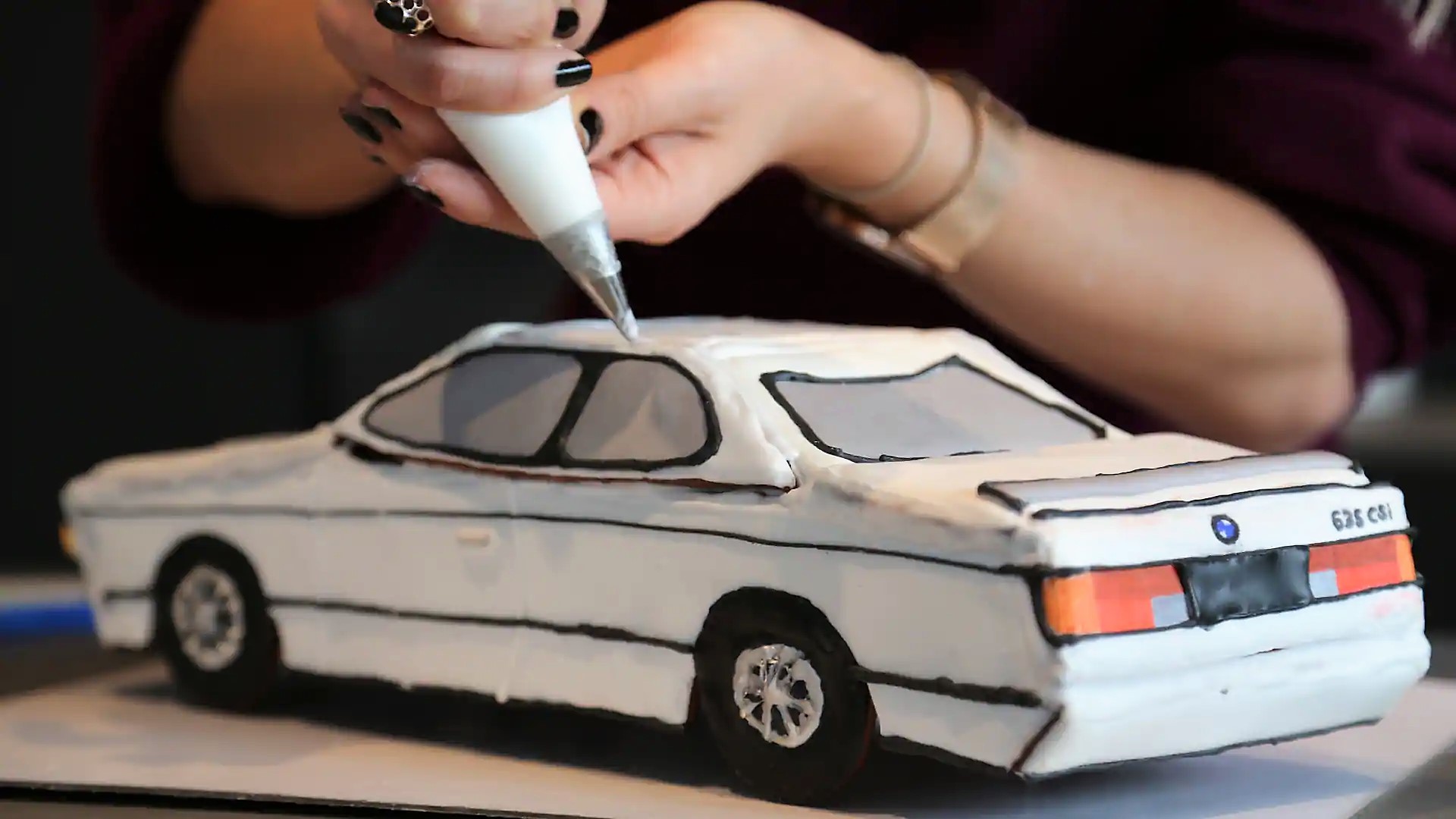
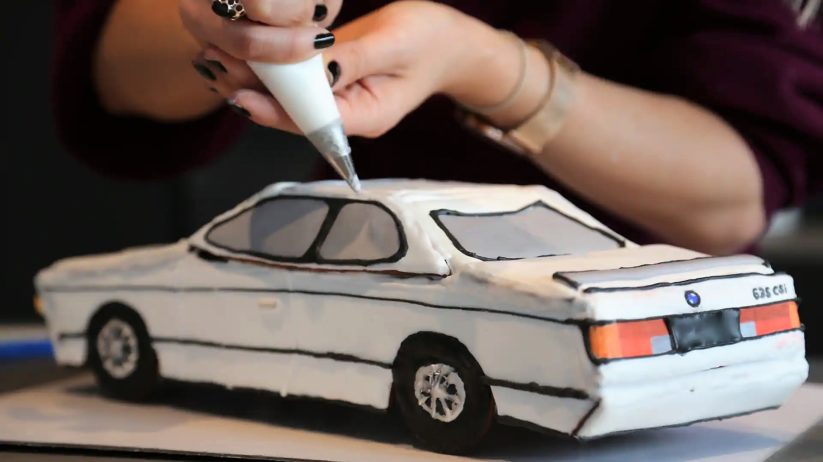
My wife, Carol, is fond of telling friends, “As a cook, Mike’s a pretty good mechanic.” It’s not that I can’t cook; recipes are like shop-manual procedures: Just follow ’em to success. But cooking is just not something I really like to do. I have, however, been known to bake—cakes, cookies, brownies etc, following those cookbook or mix-box instructions.
Early in our marriage, the first thing I baked for Carol was her birthday cake. We lived in a trailer—not a “mobile home,” a trailer, one with a five-degree list to starboard.
Thus the layers came out of the oven lopsided, and had to be carefully aligned to prevent the Leaning Tower syndrome. I finished icing the cake just before Carol arrived home from work.
“Mike, the frosting is beautiful,” she said. “Did Margie [our next-door neighbor] do it?”
“No, I did.”
“Where did you learn to ice a cake like that—your mom?” (She was a great cook, by the way.)
“Nope. You really don’t want to know.”
This conversation continued for a few more exchanges; then I finally revealed where I had learned my transferable skill: applying auto-body filler. As I explained to Carol, frosting is about the same consistency as filler, and sets up at about the same rate. “You’re right,” she mused. “I didn’t want to know.”
Going back even further, like most junior-high boys of my generation, I took wood shop, making the requisite foot stool and turning a gavel on the wood lathe. While not planning a woodworking career, I enjoyed the class. Those skills came in handy when I acquired a 1949 Fiat woody station wagon: structural wood, not trim. I was able to reconstruct the doors, whose mortised horizontal ribs had rotted ends where they joined the doors’ perimeter frame, plus other wood problems. Although I hadn’t learned cabinetry skills in my ninth-grade wood shop, I wasn’t afraid to tackle the wagon’s woodwork. And the time spent on the wood lathe taught me how to turn some attractive shift knobs for my cars.
After many years of teaching myself auto-body work, I enrolled in an evening auto-body class at our local vocational school. But having recently acquired an acetylene torch set, I registered for a welding class first, wanting to learn how to use that torch without hurting myself. I learned torch and arc welding, and later MIG welding, becoming reasonably competent; my welds weren’t always pretty, but they stuck. (Besides, that’s what a grinder’s for.) That skill stood me in good stead when repairing the ravages of 30 salty Ohio winters on my 2002—and I didn’t even burn out my grinder smoothing the welds.
When the Ocracoke Preservation Society asked members to make small paintings of Ocracoke-themed scenes for a fund-raising art auction, I wanted to participate, but my painting abilities run more to cars and houses. However, I unlimbered my torch and brazed sheet metal together to picture Ocracoke’s iconic 1822 lighthouse, framed by two L-shaped steel rods. Not only did it sell, it garnered one of the highest auction bids!
From another direction, I learned how electrical circuits function by sorting out problems—and installing new accessories—on my cars long before I ever had to do any household wiring. When we built a detached garage, I decided to wire it myself. I borrowed a household wiring book from the library, bought the requisite materials, and proceeded to wire six circuits, plus 220 volts for my compressor.
An actual electrician came out to run the drop from the house to the garage and check my work. He passed my wiring with flying colors. It’s still functioning properly after 48 years, so I must have learned something.
My primary responsibility as an Air Force civilian involved planning logistical support for Air Force units, especially when deploying from their home base to support a contingency. That involves determining what spare parts must accompany the deploying unit, allowing them to continue functioning for up to a month without resupply.
Choosing which parts to send is a detailed process, and begins with determining those parts that either need regular replacement (think oil filters on cars) and those parts that have a history of failure—based on maintenance records—for a particular aircraft. The completed deployment kit must be as compact as possible, but still contain—with a high probability of success—the parts necessary to “keep ’em flying” for that critical first month.
Those skills transferred neatly to my automotive fleet. I keep a small notebook in each car’s glovebox, noting any repairs made or replacement parts installed. Based on that information, over time I can predict when an individual part’s likelihood of failure starts to increase. If I have a long trip coming up, I can either make the repair/replacement in advance, or at least carry the part along, just in case.
It’s always the one you didn’t bring that you need.