The post BMW NA 50th Anniversary: BMW Bets Big on Carbon Fiber appeared first on BimmerLife.
]]>Klatten’s investment constituted a masterstroke of vertical integration. BMW had begun using carbon fiber on its M cars in 2005, when the E63 M6 was equipped with a roof and bumper supports in carbon fiber reinforced polymer (CFRP). And in 2007, BMW Chairman Norbert Reithofer announced a multi-faceted program called Efficient Dynamics that aimed to improve all aspects of BMW’s vehicles, from engine performance to aerodynamics, and which promised a significant weight loss, as well. Carbon fiber would help BMW realize that, and it would also be essential to containing the weight on the battery-electric Megacity Vehicle being developed under Project i, another initiative that began in 2007.
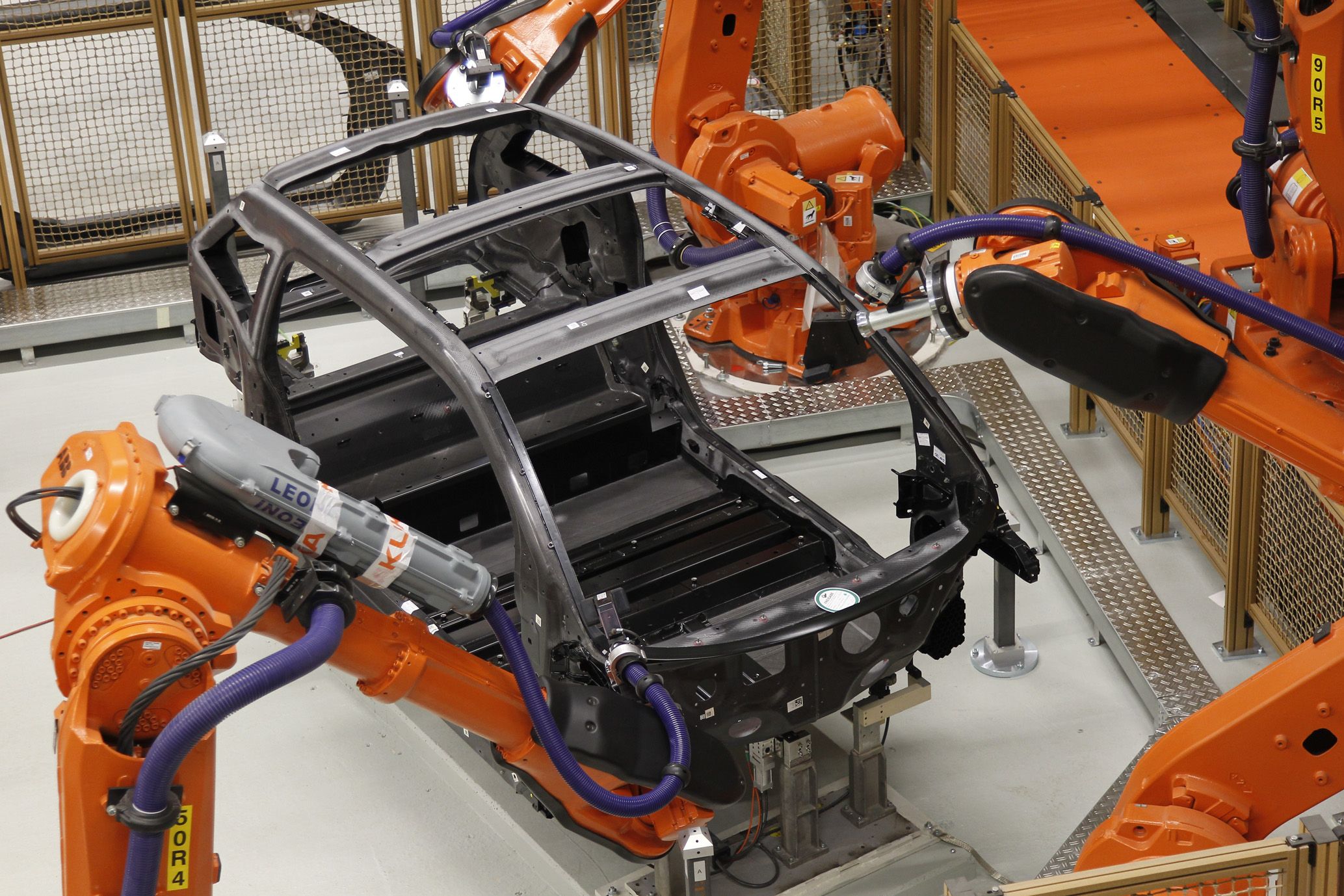
The supply of suitable carbon fiber isn’t infinite, however, but Klatten’s investment in SGL Carbon would ensure that BMW had access to as much of the material as it needed. It would also ensure that BMW’s competitors didn’t, especially after Klatten raised her stake in SGL Carbon to 22 percent shortly after making her initial investment. In 2009, BMW and SGL formed a new joint venture, SGL Automotive Carbon Fiber, in which BMW held 49 percent of shares.
On July 7, 2010, SGL Automotive Carbon Fiber broke ground for a $100 million plant in Moses Lake, Washington, a joint venture between SGL and BMW. The site was chosen not for its proximity to SGL headquarters in Wiesbaden, Germany or to BMW’s plants in Bavaria and beyond, but for the clean, abundant, and relatively inexpensive hydroelectric power generated by dams along the Columbia River.
As BMW Board Member for Finance Friedrich Eichiner announced at the plant’s groundbreaking, “Lightweight construction is a core aspect for sustainable mobility improving both fuel consumption and CO2 emissions, two key elements of our EfficientDynamics strategy. By combining the know-how of SGL Group and our expertise in manufacturing CFRP components, we will be able to produce carbon fiber enhanced components in large volumes at competitive costs for the first time. This is particularly relevant for electric-powered vehicles such as the Megacity Vehicle.”
BMW wasn’t alone in recognizing carbon fiber’s potential, however. In February 2011, rival automaker Volkswagen and its supplier Voith combined to acquire 17 percent of SGL, threatening Klatten’s control. She countered by increasing her holdings to 27.3 percent, and with it gained veto power over any decisions made by the SGL board. That November, her position was strengthened by BMW’s institutional acquisition of an additional 15.16 percent of SGL; with Klatten, BMW now controlled nearly half of this essential manufacturing resource, and it would increase its stake still further over the next few years. In April 2013, Klatten would be named Chairperson of the SGL board of directors.
The Moses Lake plant became operational in 2011, just as Klatten and BMW were expanding their control over SGL as a whole. Then and now, the plant handles the second stage of a production process that begins with polyacrylonitrile (PAN) precursors spun into threads at SGL factories in Otake, Japan and Lavradio, Portugal. At Moses Lake, those precursors are converted into carbon fiber through exposure to extreme heat—first about 460 degrees, then 1,300 degrees, and finally 2,550 degrees—which doesn’t burn the fibers but expels all of their non-carbon components and leaves long chains of interlocked carbon atoms. These carbon fibers are then sent to SGL’s factory in Wackersdorf, Germany, where they’re woven into sheets that can be formed into parts at factories like BMW’s plant in Landshut, Bavaria. There, BMW had devised new manufacturing processes, including a resin transfer molding process that allowed carbon parts to be produced in about one minute, and which didn’t require the use of an autoclave for curing.
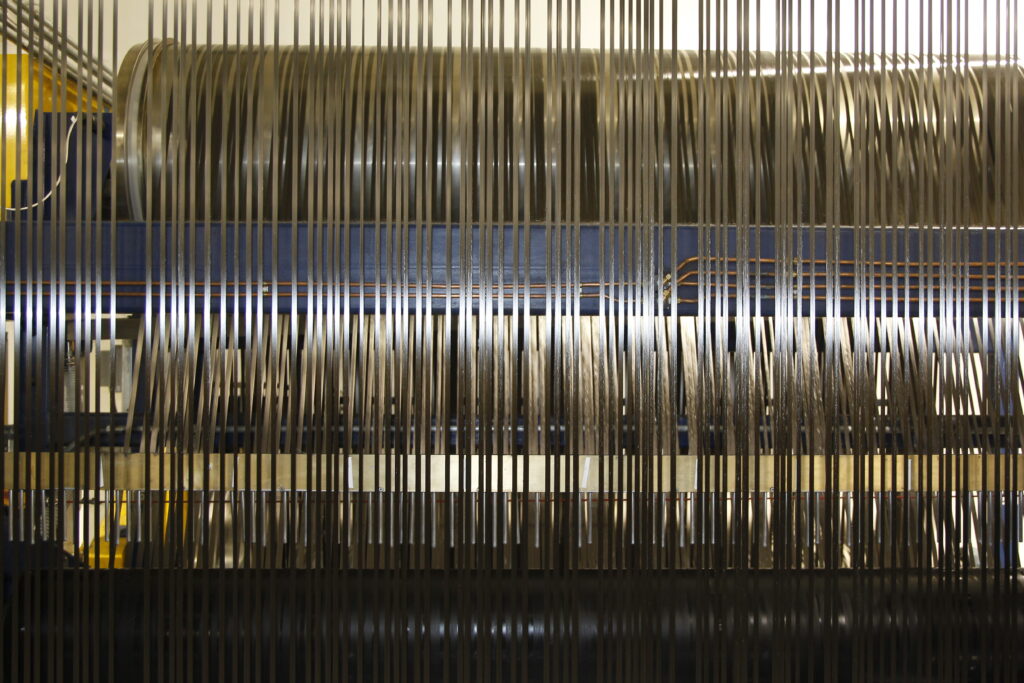
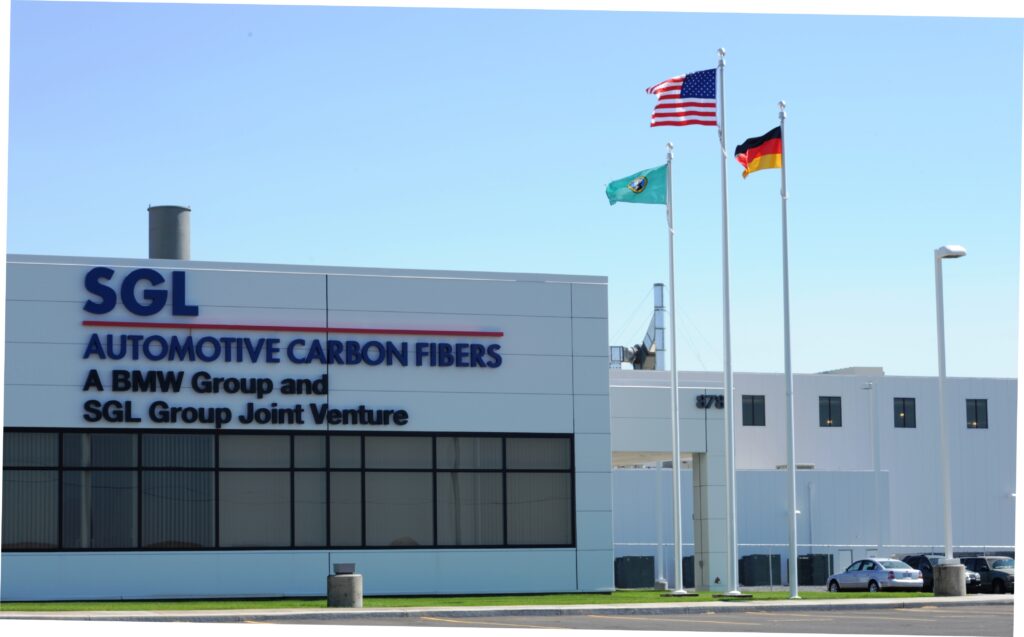
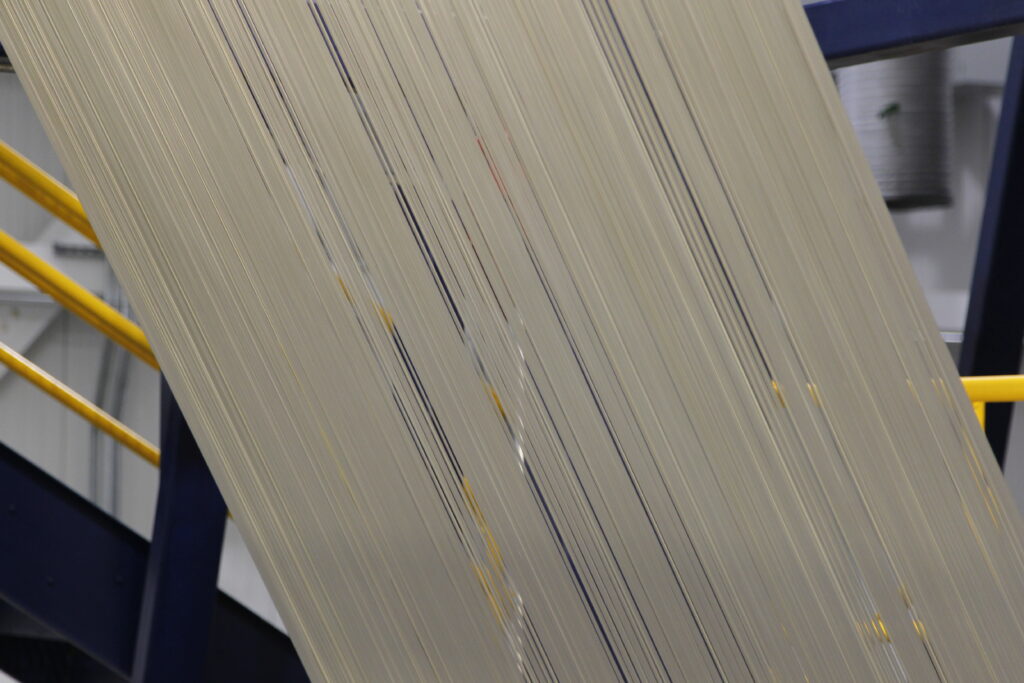
The start of operations at Moses Lake and the collaboration with BMW represented “a major renaissance and paradigm shift for the automotive industry,” said Andreas Wuellner, SGL’s Managing Director for Automotive Carbon Fibers.
The first products of the SGL-BMW partnership were indeed revolutionary. The carbon fibers created at Moses Lake were used to build the chassis for BMW’s all-new Megacity Vehicle, which went into production in 2013 as the i3. The i3 used what BMW called “Life-Drive Architecture”, in which the carbon-fiber body shell constituted the “Life Module” which provided the crash structure for the occupants while the aluminum battery tray, electric powertrain and suspension comprised the “Drive Module”. It was the first series-production vehicle to use a CFRP body shell, and it was followed in 2017 by the similarly constructed gasoline-electric hybrid i8 sports car in 2014.
In both cases, construction of the CFRP body required fewer parts and less time than a steel body, though it remained significantly more expensive despite the advantages of vertical integration. In the case of the i3 and i8, however, CFRP was essential to keeping the cars within their weight targets. BMW had set a target of 2,750 pounds for the i3, which the production car met easily at 2,635 pounds. That allowed BMW to equip both cars with smaller and less expensive batteries, balancing the cost.
Interestingly, Boeing made a similar calculation when it chose carbon fiber for the fuselage of its 787 Dreamliner jet. In 2012, BMW and Boeing announced their plans to collaborate on the recycling of carbon fiber, enhancing the material’s environmental friendliness at the end of its life cycle.
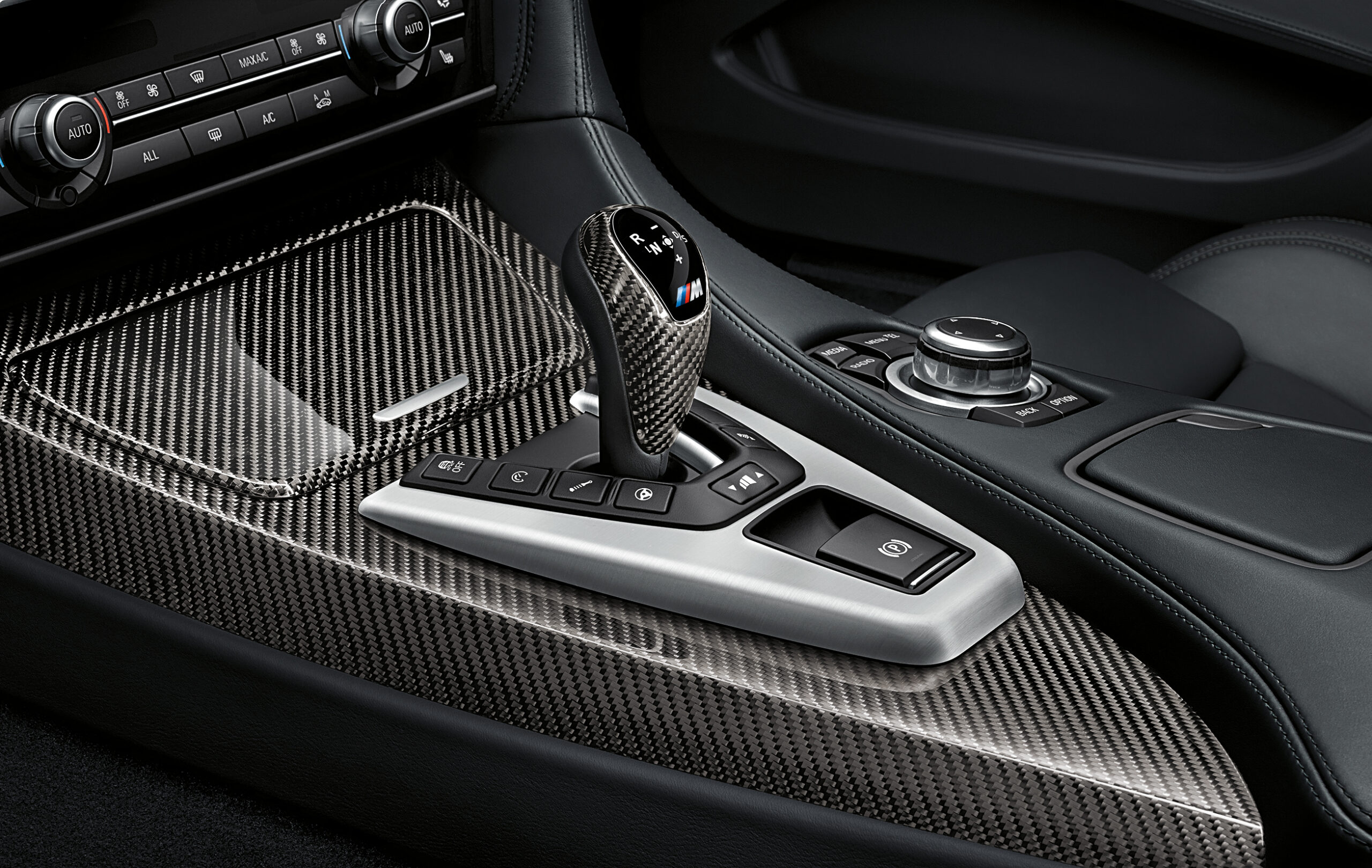
Carbon fiber would be used more sparingly in BMW’s conventional cars, and only where its lighter weight would make a real difference to performance. In 2014, the new E9X M3 and M4 used carbon fiber for their driveshafts, roof panels, and bumper bars, saving 36 pounds from those three components alone. In the F82 generation that followed, the limited-production 2016 M4 GTS would be equipped with CFRP aerodynamic elements, and it could be ordered with optional carbon fiber wheels that saved 14.5 pounds of unsprung weight.
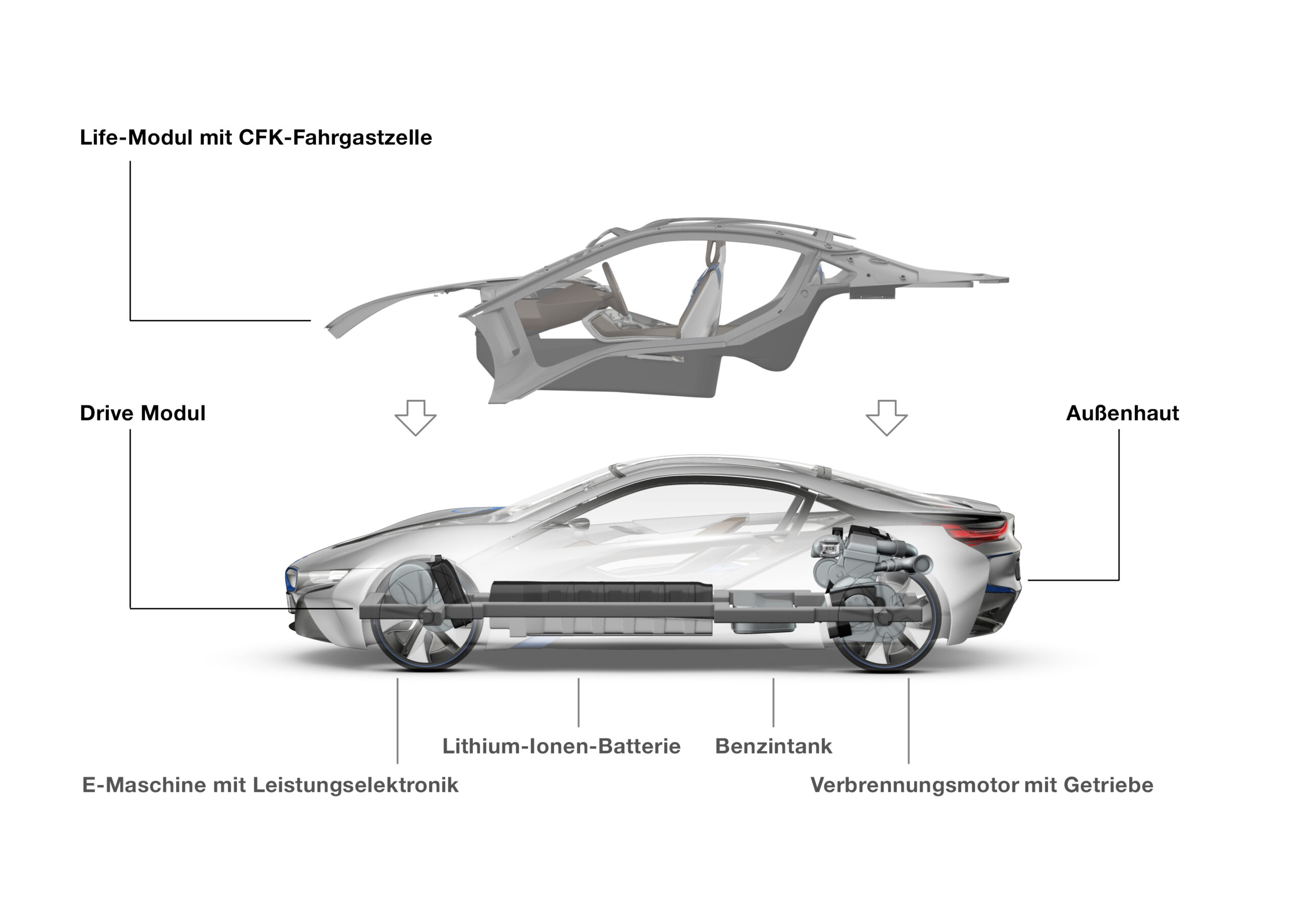
BMW i8 Concept, LifeDrive-Architecture (07/2011)
In the non-M sector, BMW equipped the sixth-generation 2015 7 Series with a “Carbon Core” chassis, which combined CFRP with steel and aluminum to maximize rigidity while minimizing weight. That hybrid approach was undoubtedly expensive, however, and it wasn’t applied to other cars in the BMW lineup, nor on the seventh-generation 7 Series.
Indeed, BMW was shifting from widespread use of carbon fiber, and in particular from bespoke carbon fiber body shells like those used on the i3 and i8. Discontinued in 2022 and 2018, respectively, those cars would remain outliers in the BMW automotive universe. Though the forthcoming Neue Klasse electric cars will be revolutionary in their own way, they’re unlikely to make extensive use of carbon fiber.
In 2017, SGL and BMW announced that SGL would purchase BMW’s 49 percent stake in its Automotive Carbon Fibers joint ventures in Germany and the US. BMW would retain its 18.3 percent shareholding in SGL Carbon, and the companies would continue to collaborate on smaller parts, like the enclosures for BMW’s EV batteries. (Volkswagen continues to hold 7.4 percent of the company.)
BMW’s decision had a strongly adverse effect on SGL’s fortunes. “Due to the termination of a supply contract and weak demand from the automotive industry, Composite Solutions was unable to repeat its good figures from the previous year,” said SGL CEO Dr. Torsten Derr last summer. “We do not see any recovery for the business unit Carbon Fibers even after six months in 2024.”
It was an interesting experiment, one that captivated tech-minded enthusiasts, but it’s one that BMW is unlikely to repeat, especially as energy costs continue to rise worldwide.
The post BMW NA 50th Anniversary: BMW Bets Big on Carbon Fiber appeared first on BimmerLife.
]]>The post BMW NA 50th Anniversary: Lending Technology Expertise to the U.S. Olympic Team appeared first on BimmerLife.
]]>In 1996, the Olympic Games were held in Atlanta, Georgia, just two hours up the highway from BMW’s new assembly plant in Spartanburg, South Carolina. That presented BMW of North America with the perfect opportunity to sponsor the Games, supplying a fleet of cars and motorcycles for the nationwide Torch Rally as well as the Games themselves. That sponsorship resumed when Salt Lake City hosted the 2002 Winter Olympics, and parent company BMW AG followed with its own sponsorship of the London Olympic Games in 2012.
Those efforts put BMW in front of global audiences during the immensely popular Games, but they didn’t mark the limits of BMW’s Olympic effort. As sports came to rely on technical innovation and data analysis, BMW’s expertise became a valuable commodity for Olympic athletes. In 2008, BMW AG lent its Munich wind tunnel to Germany’s bobsled and luge teams, helping them increase their aerodynamic efficiency in advance of the 2010 Winter Games in Vancouver, British Columbia. The result? Three gold, three silver, and two bronze medals for the German athletes.
When BMW of North America became the Official Mobility Partner of the US Olympic Committee in 2011, the company wanted to do more than simply provide the team with vehicles. Like BMW in Munich, BMW NA wanted to lend its technical expertise to athletic performance. Somewhat surprisingly, USA Track & Field asked for help with the long jump, an event that involves nearly no equipment—just a jumper, a take-off board, and a sand pit. Despite that simplicity, world long jump records have proved remarkably durable. Bob Beamon’s world record of 29.2 feet stood from 1968 to 1991, and Mike Powell’s record of 29.4 feet had stood for twenty years when BMW began helping USA Track & Field athletes try to break it.
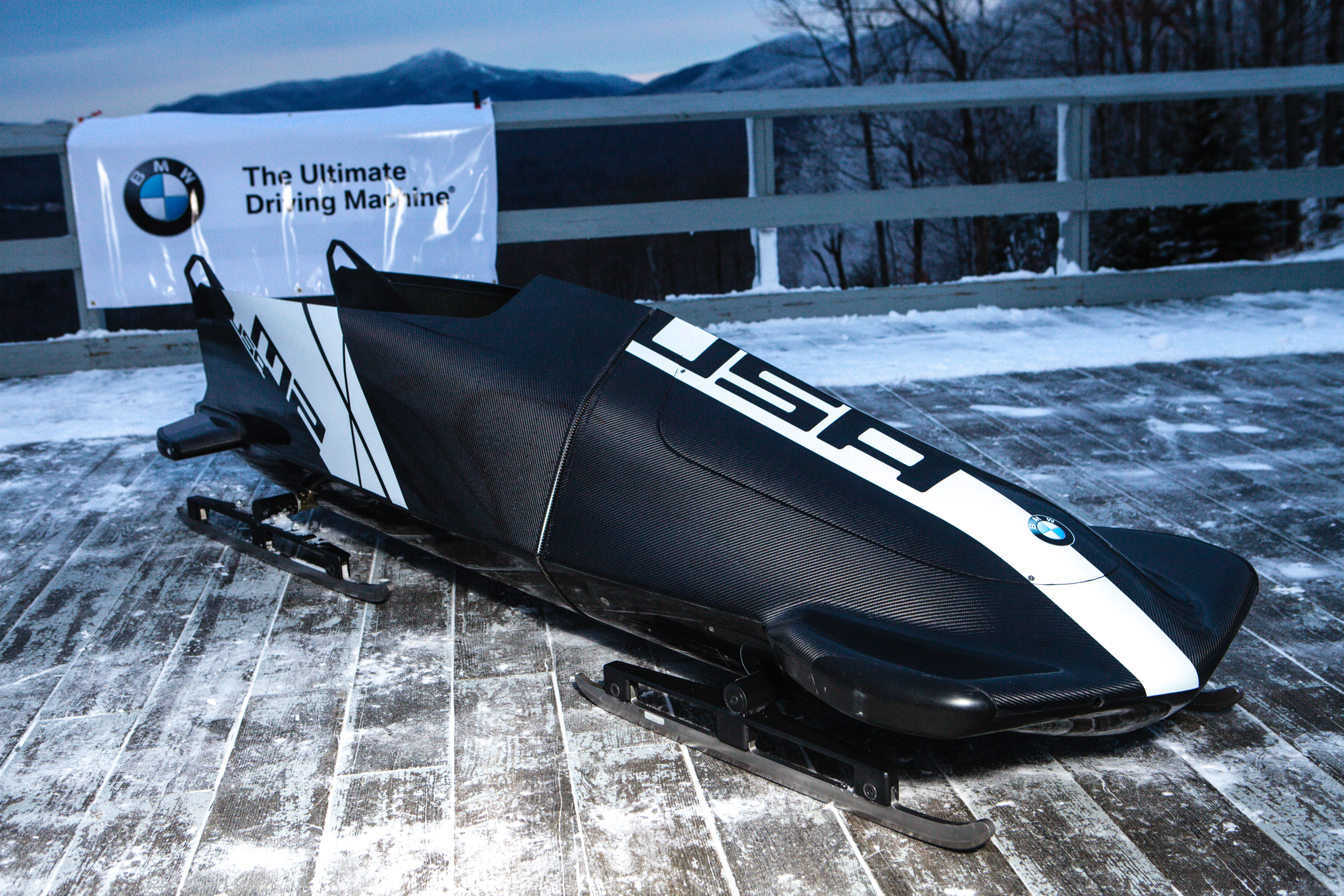
20 Dec. 2012: BMW unveils and tests the M2 2-man Bobsled at the Olympic Sports Complex in Lake Placid, N.Y. (Photo/Todd Bissonette)
Technique and training play an outsized role in an athlete’s success, and long jumpers were accustomed to analyzing their form using film or video. The utility of that method was limited, however, as it couldn’t tell them their speed down the approach or at launch, and neither could it precisely analyze their take-off angle.
Enter the BMW Technology Office in Palo Alto, California, where advanced technology engineer Cris Pavloff decided to apply the camera techniques used on BMW’s cars to prevent accidents. Rather than a single camera angle, this equipment provided a “stereo” view of an athlete in motion. Initially, this resulted in an information overload, which Pavloff solved by having the athlete wear a white cap that could be tracked by the cameras. That made the data usable—and in real time.
“The feedback this tool is able to provide during a practice, as opposed to days after, will enable me to make minor adjustments in my jumps that could equate to significant performance gains,” said Bryan Clay, who won the Olympic gold medal in decathlon at the 2008 Games.
Alas, Clay didn’t make the US Olympic Team in 2012, but American Will Claye won a bronze medal. Claye didn’t break the world record, however, and neither did the athletes who took gold or silver ahead of him. As of this writing, Powell’s 1991 long jump record still stands.
Pavloff and the BMW Technology Office provided similar “stereo-vision” technology to USA Swimming, which used it to analyze a swimmer’s dolphin kick within the 15 meters that swimmers are allowed to remain underwater after the start. Swimming is always a strong sport for Team USA, and the American athletes came home from London with 16 gold, eight silver, and six bronze medals.
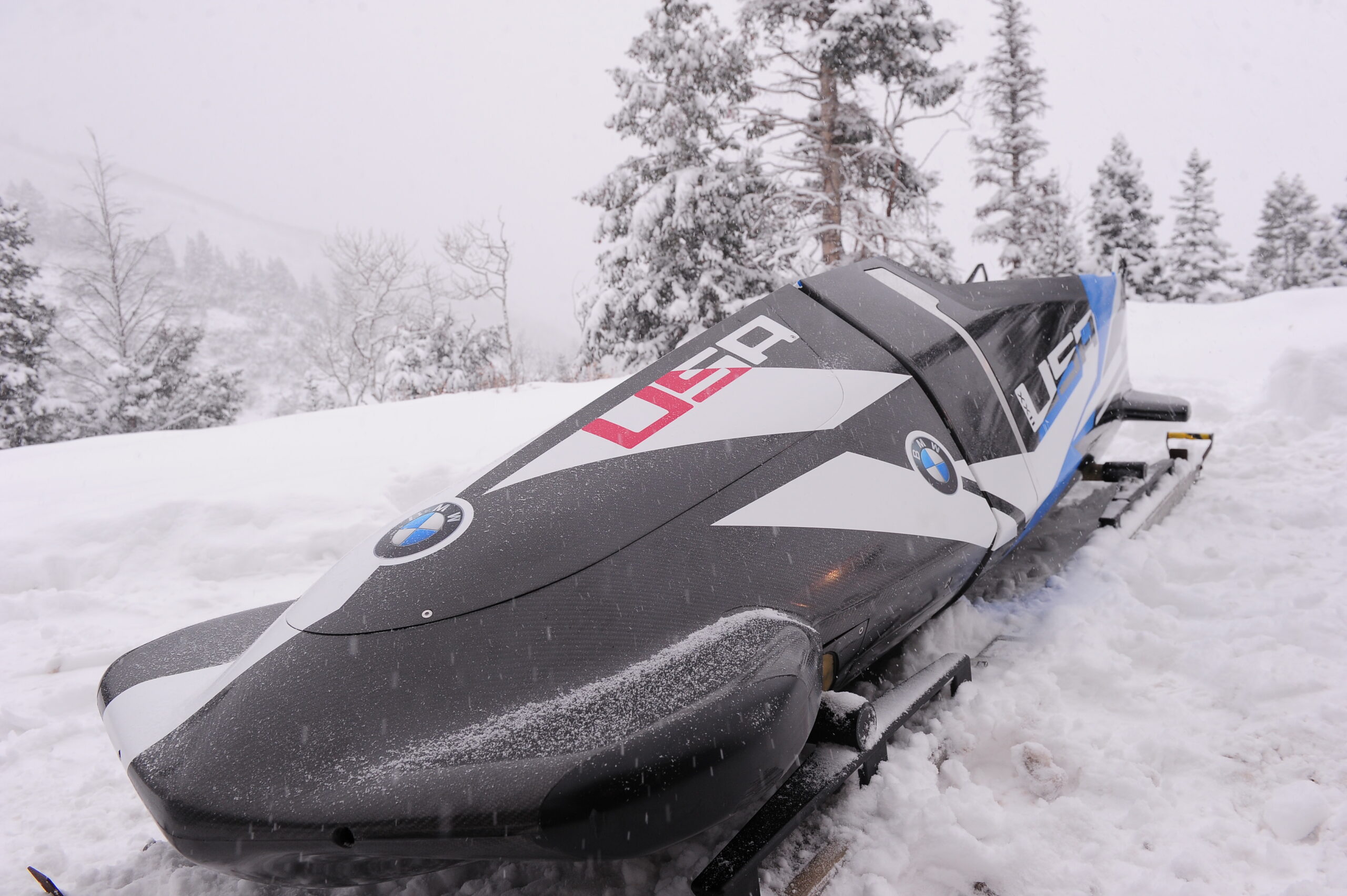
In advance of the 2014 Winter Games in Sochi, BMW DesignworksUSA would apply its technical expertise to build a two-man bobsled for the US Olympic Team. “This is a uniquely challenging project for BMW, yet is as close to automotive design as possible,” said Michael Scully, then the Creative Director for Global Design at BMW DesignworksUSA in Southern California. “That allows us to utilize our race car experience combining aerodynamic design, new materials, CFD (Computational Fluid Dynamics) testing and evaluation, and wind tunnel testing for a non-automotive vehicle.”
Scully chose to build the sled not in the usual fiberglass but in lightweight carbon fiber. BMW had more expertise with carbon fiber than most auto manufacturers, having elected to use it for the chassis of its i3 and i8 automobiles as well as the America’s Cup yachts BMW built for Oracle Racing. As in other disciplines, carbon fiber’s light weight would allow the bobsled chassis to situate weight in the ideal position to optimize performance, though most improvements would be gained through aerodynamic efficiency. In this area, Scully’s team was able to compare data from CFD testing with that generated in the wind tunnel, correlating the two data sets to ensure accuracy and reduce drag from specific components.
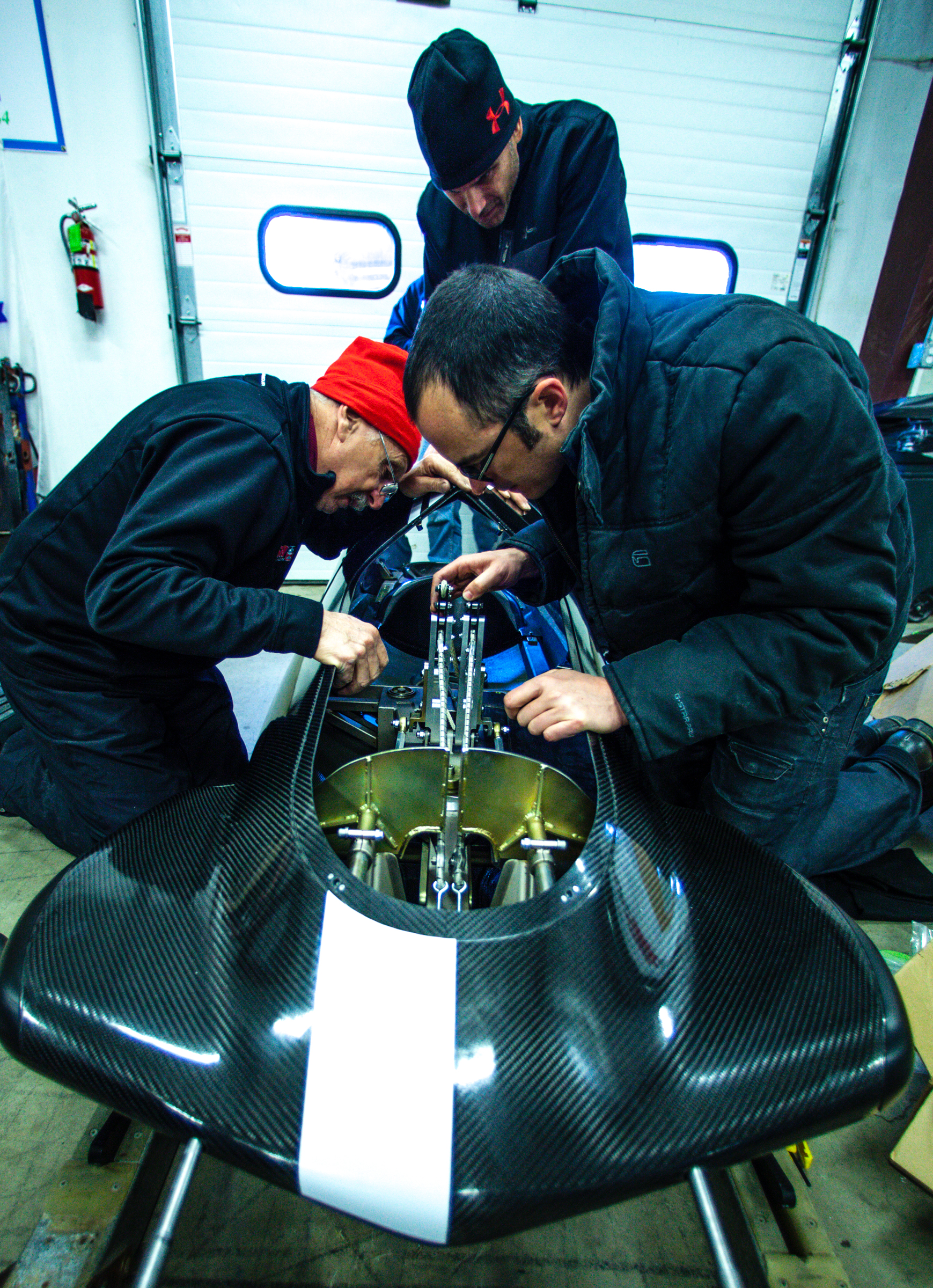
20 Dec. 2012: BMW unveils and tests the M2 2-man Bobsled at the Olympic Sports Complex in Lake Placid, N.Y. (Photo/Todd Bissonette)
While the chassis was getting the high-tech treatment, so was the bobsled’s steering mechanism. Though the driver controls the sled via a rope attached to the front runners by D-rings, BMW NA’s IMSA race team, BMW Team RLL, improved the steering mechanism to which the ropes are attached, and lowered it for better weight distribution.
“The cool thing about our new BMW sleds is that they really smoothed out the steering mechanism,” said driver Elana Meyers Taylor, who’d raced a pre-BMW bobsled to a bronze medal in the 2010 Games. “If that motion is really jerky, a lot of friction is created as the sled moves across the ice, which makes it hard to have a good, smooth line and time. But BMW has really worked hard to make it a smooth mechanism, which allows us to make mistakes and still be fast. It’s given us the opportunity to compete week after week at the highest level.”
The BMW-built bobsleds raced for the first time at the 2013 World Cup in St. Moritz. Although they didn’t triumph outright, they scored second-place finishes for Meyers Taylor and Katie Eberling, and Steven Holcomb and Curt Tomasevicz. (Prior to BMW’s involvement, Holcomb had driven Team USA’s four-man bobsled to a gold medal at Vancouver in 2010.)
At Sochi for the 2014 Winter Olympics, Meyers Taylor and Lauryn Williams raced to a silver medal, while Jamie Greubel Poser and Aja Evans took bronze. “When I come down the track and knew I’d made mistakes, I realized I would have to be happy with the silver medal,” Meyers Taylor said. On the men’s side, their compatriots Holcomb and Steve Langton scored another silver medal—the USA men’s first in 62 years—racing their BMW-built bobsled.
BMW of North America continued to partner with Team USA through 2016, and DesignworksUSA made another big effort to improve the team’s performances in Rio de Janeiro. This time, the impetus came from Team USA’s Paralympic athletes.
“I went to BMW Designworks to help pitch the idea of building a racing chair for the team,” said Paralympic wheelchair racer Josh George, who’d won a gold medal at Beijing in 2008. “Five minutes into our very first conversation, they were rattling off ideas. I’d never gotten to work with a group of people that wholeheartedly dove into my world and were able to offer productive, insightful feedback. It was amazing.”
That was necessary, said Designworks Associate Director Brad Cracchiola. “We needed to know about the intricacies of the sport. There are thirteen rules and regulations that cover the design of a racing wheelchair, and we would have to work with those as well as find out what worked well for the athletes. It looks fairly simple, but it’s far more technically complex.”
As Scully’s team had with the bobsled, Cracchiola’s team used BMW’s racing experience to maximize the aerodynamic efficiency of the chair and the athlete. Instead of the traditional aluminum or titanium tubes, they crafted the chassis in carbon fiber, which increased stiffness, reduced weight, and improved aero performance by allowing components to be formed in different shapes. As they would a racing car, they also molded a carbon fiber seat to each athlete’s body, giving them maximum security and perfect alignment when they hit the wheels with their hands to gain forward momentum.
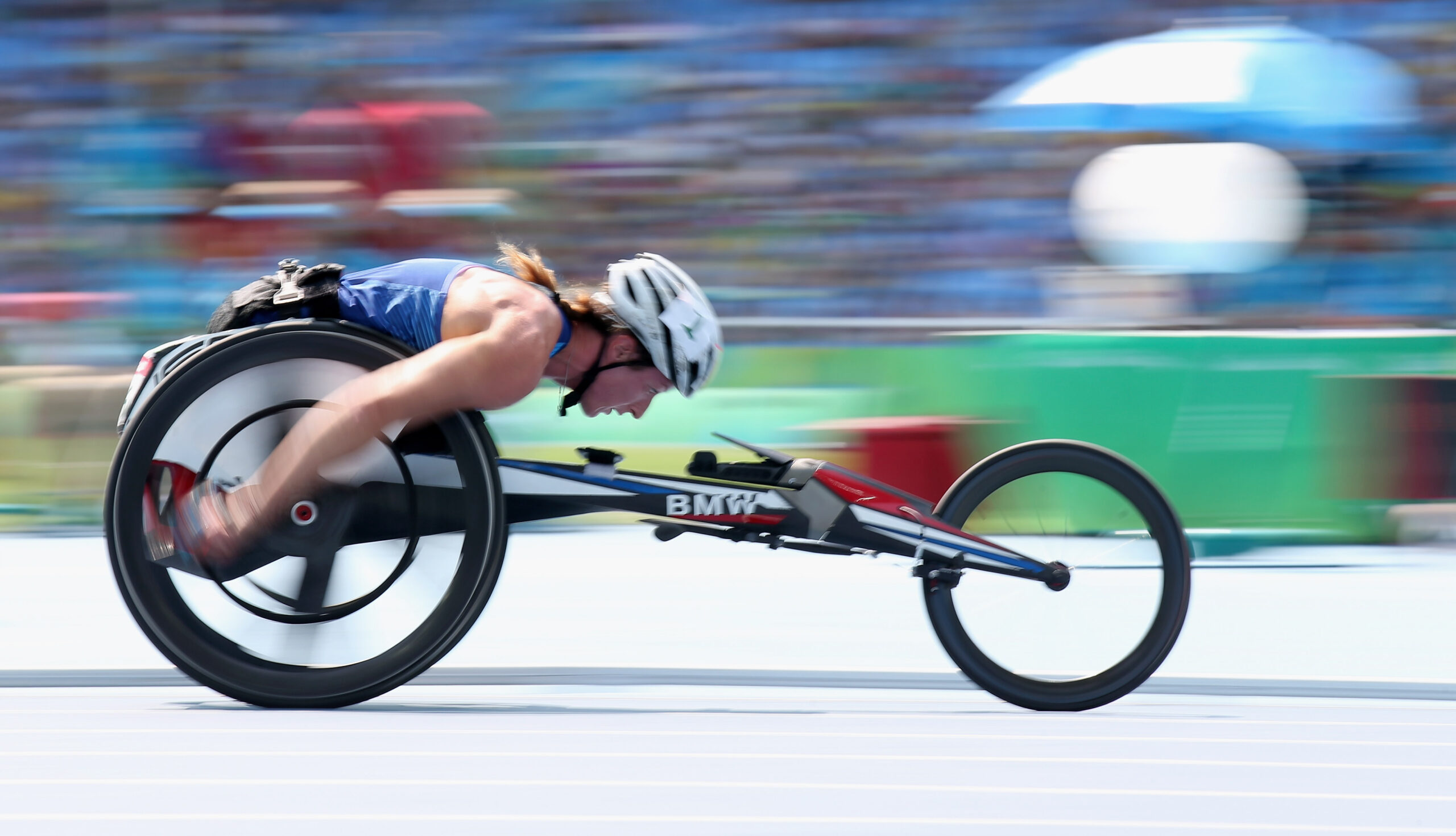
RIO DE JANEIRO, BRAZIL – SEPTEMBER 14:Tatyana McFadden of the United States competes in the Women’s 5000m – T54 Heat on day 7 of the Rio 2016 Paralympic Games at the Olympic Stadium on September 14, 2016 in Rio de Janeiro, Brazil. (Photo by Friedemann Vogel/Getty Images)
Before the Rio Games, Team USA’s Tatyana McFadden tested the BMW chair, which she found much improved over her previous equipment. “The new chair was very stiff,” McFadden said. “The old titanium chairs had a lot of flex over time, and a lot of drag. It was built to be semi-aerodynamic, but it wasn’t as aerodynamic as we thought it was.”
Along with the racing chair, the athletes’ gloves came in for analysis at Designworks. Previously, each athlete had made the gloves themselves, using a moldable but hard-setting putty to create a striking surface that would fit precisely the ring that propels the wheels. BMW replaced that putty with lightweight, heat-resistant material formed with 3D printing technology, which allowed Designworks to perfect the gloves incrementally until they were perfect for each athlete.
“I’ve been racing with the U.S. team since 2004, and I’ve gone through pairs of gloves I’ve had to make myself,” George said. “There’s always a huge worry factor: Are the new gloves going to be worse than those you’re currently using? BMW changed that, and it’s just a huge step forward for us.”
George didn’t win a medal at Rio, but other athletes racing the BMW-designed chairs did. McFadden won four golds to add to the three she’d won four years earlier in London, while her teammate Chelsea McClammer racked up two silvers and one bronze medal. BMW of North America also sponsored Olympic swimmers Nathan Adrian, who won two gold medals in the relay events, and Maya DiRado, who won two golds, one silver, and one bronze in individual races.
BMW of North America’s sponsorship of Team USA expired in 2016, but the impact of Designworks’ efforts to improve the equipment used by American athletes continues to reverberate throughout the Olympic and Paralympic movements. BMW of North America’s technology expertise helped Team USA Olympic and Paralympic athletes bring home 40 medals. The design world noticed, too: In 2016, the BMW-built bobsled won a Red Dot award, the equivalent of an Oscar for designers, and in 2017 the racing wheelchair won another Red Dot award.
The post BMW NA 50th Anniversary: Lending Technology Expertise to the U.S. Olympic Team appeared first on BimmerLife.
]]>The post BMW NA 50th Anniversary: Project i Looks Forward appeared first on BimmerLife.
]]>For automakers, these questions are existential, and most expend considerable resources trying to answer them. That was relatively easy throughout most of the 20th century, but it became more difficult in the 21st, as the pace of change increased exponentially—not only with respect to technology, but also where demographics are concerned.
“The world around us is changing,” said BMW Board Chairman Norbert Reithofer in his address to the annual meeting of BMW shareholders on May 15, 2007. He identified several near-term challenges, including new competition from China and an aging workforce in Germany.
More interestingly, Reithofer cited “mobility in the world’s largest cities” as a potential impediment to BMW’s business prospects. “We expect mega-cities such as Shanghai, Tokyo, Mexico City, Rio de Janeiro or Los Angeles, but also London and Paris, to grow further. Traffic density in urban spaces is rising dramatically. Already, some cities are trying to intervene by implementing regulations on traffic flow. The question is: What consequences does this trend have for us?”
Within the same speech, Reithofer noted the need to address climate change by developing powertrains that use less fossil fuel, or none at all. “The number of environmental disasters around the world is rising, and the UN report clearly shows how fast climate change is happening, even though this is not visible to the naked eye,” Reithofer said. “Everyone has to be prepared to make a contribution to climate and environmental protection.”
To achieve those goals, Reithofer announced BMW’s Strategy Number ONE, which included the creation of an in-house think tank dubbed Project i. Project i, Reithofer said, was “working on completely new car and mobility concepts for megacities.” The team was “fully independent and even free to act beyond BMW structures if necessary. The task of Project i is to present specific solutions in the first half of the next decade [2010-2020].”
Given the goals of Strategy Number ONE, it seemed likely that Project i would focus on an electrified powertrain, and not only for zero-emissions mobility. “The technology is now sophisticated enough to offer sheer driving pleasure,” Reithofer noted.
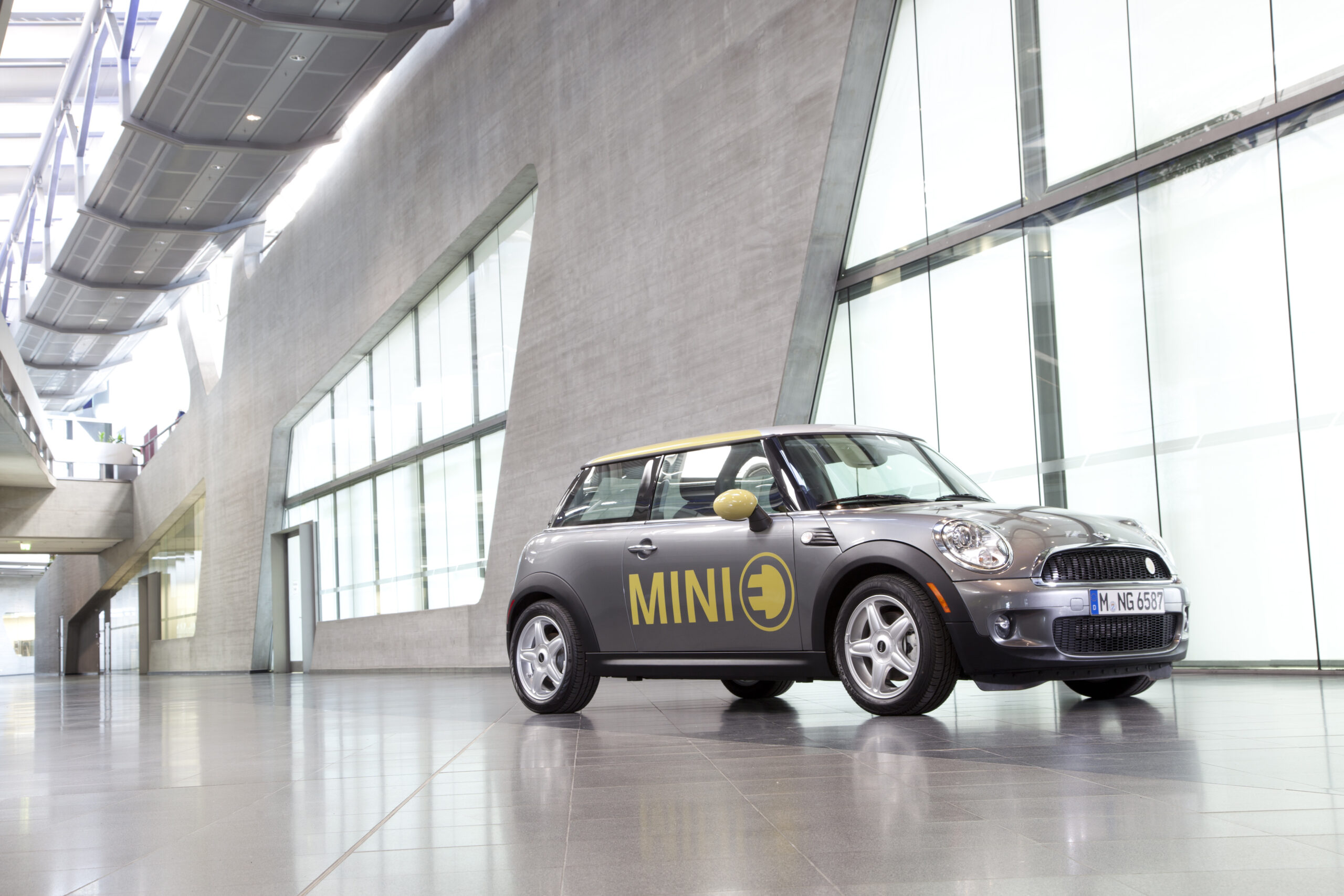
Initially, the Project i team led by Dr. Ulrich Kranz used off-the-shelf components to develop a prototype battery-electric powertrain, which would be tested in a MINI platform that reflected the planned dimensions of the forthcoming Megacity Vehicle. In 2009, the team built 500 MINI E test cars, 450 of which would be field-tested for two years by customers in the Los Angeles and New York metropolitan areas. BMW of North America engineers took the lead in analyzing the MINI E’s performance under a variety of conditions—including cold weather—and use scenarios.
“We know our customers well,” said Rich Steinberg, BMW NA’s then Head of Electric Vehicle Operations, “so not only are we looking at it from a technological standpoint—what we need to incorporate in the next-generation car—but also the psychographics and the mindset issues: What do they need in terms of range anxiety? What do they need from public charging network standpoint? We’re feeding all that back to the team working on Project i [in Munich].”
In its second phase, Project i moved from off-the-shelf components to an asynchronous electric motor designed in-house at BMW, powered by battery cell technology from a new Samsung/Bosch joint venture. This powertrain would be tested in 1 Series dubbed the ActiveE, with 700 of 1,000 prototypes tested by US customers under supervision from BMW of North America.
As with the MINI E, the engineers were keen to determine exactly how much battery capacity was required to make the ActiveE functional in real-world use. Range and performance would suffer if the battery was too small, but a larger battery would add weight, which itself would compromise performance. They settled on a battery weighing close to 600 pounds—far heavier than an internal combustion engine—which in turn required the weight of other components to be minimized. Crucially, the battery in the Megacity Vehicle would be located in the floor of the car, the optimum location for agile handling.
In July 2010, BMW announced that the Megacity Vehicle would be the world’s first series-production car to have a chassis built from carbon fiber reinforced plastic (CFRP) – an ultra-lightweight material used to build Formula One cars and the Boeing 787 Dreamliner. Carbon fiber is expensive, but BMW would mitigate its cost through weight reduction and thereby a smaller battery, less expensive battery pack for an equivalent range. Also, rather quietly, BMW (and one of its principal shareholders, Susanne Klatten) had made a significant investment in SGL Carbon, the world’s largest supplier of carbon fiber and carbon fiber products. Together, BMW and SGL had formed a new joint venture, SGL Automotive Carbon Fiber, building a new factory in Moses Lake, Washington to supply carbon fiber for BMW’s Megacity Vehicle.
A carbon fiber chassis and a battery-electric powertrain would attract technology enthusiasts to the Megacity Vehicle, but the car needed to reach a wider audience to justify BMW’s investment. Toward that end, BMW embarked on a public-relations campaign in September 2010, launching a dedicated website to share the philosophy and future projections that underpinned the car’s development. The website featured slickly-produced videos that made compelling arguments for electric mobility.
The Megacity Vehicle was the prime focus of Project i, but it would soon be joined by a futuristic sports car that originated with the Vision EfficientDynamics Concept that premiered at the Frankfurt IAA in September 2009. The Vision EfficientDynamics was received enthusiastically, which persuaded BMW to develop it as a sporty companion to the Megacity Vehicle.
In February 2011, BMW announced the creation of the “i” sub-brand, along with a new slogan: Born Electric. The Megacity Vehicle would go into production as the battery-electric i3, while the Vision EfficientDynamics would become the i8, with a gasoline-electric plug-in hybrid powertrain. Both cars would be built at BMW’s Leipzig plant, in a new hall dedicated to CFRP body shell construction, thermoplastic outer body panel formation, and electric powertrain installation.
Both cars made their debut in near-production form at the Frankfurt show that September. The super-sexy i8 drew rapturous applause, while the boxier, more upright i3—and its minimalist interior made of recycled or renewable materials—elicited a more restrained response.
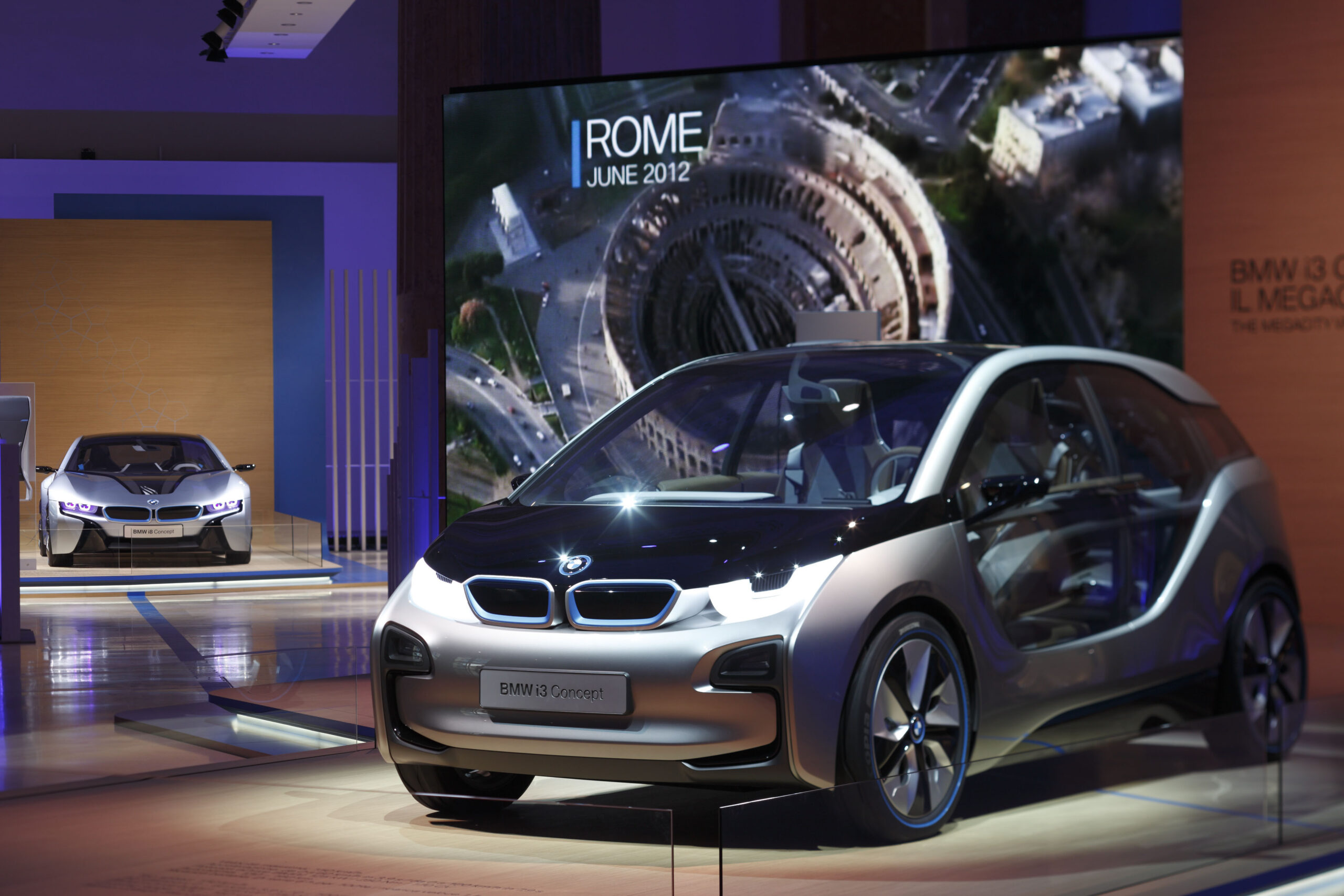
Roma 20 giugno 2012, Palazzo delle Esposizioni BMWi. Born Electric Tour
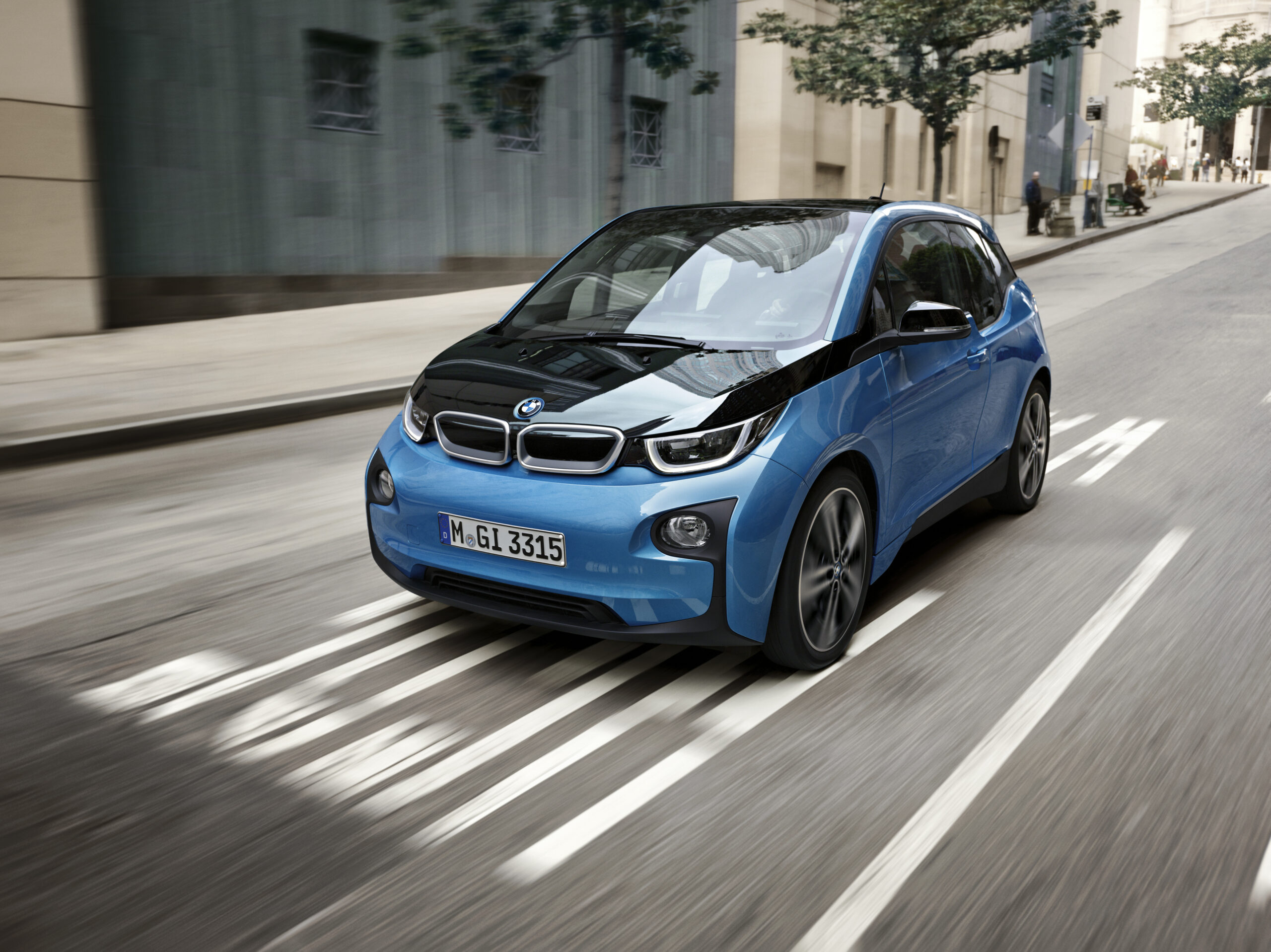
After a six-year gestation, the i3 went into production in September 2013. The first cars arrived in the U.S. in the second quarter of 2014, with a retail price of $41,350 that was offset by a $7,500 federal tax credit that increased by another $2,000 in states like California.
Thanks to its CFRP body shell and aluminum chassis, the i3 tipped the scales at a very svelte 2,635 pounds, and the electric motor provided the equivalent of 174 horsepower, enough to propel the i3 from zero to 37 mph (60 km/h) in just 3.7 seconds. Initially, its battery capacity was rated at 60 amp-hours or 18.8 kilowatt-hours, enough for about 80-100 miles of driving. In 2017, BMW increased the i3’s battery capacity to 94 amp-hours, and complemented the standard model with the sport-tuned i3s.
“Our customers told us that wanted to have the i3 even sportier,” said Dr. Robert Irlinger, who took over Project i leadership at the beginning of 2017. “BMW i customers are still BMW customers, and BMW is about sheer driving pleasure. That’s the reason we worked on the powertrain. found some extra horsepower, some extra torque, worked on the suspension. It’s a little wider, and we brought it down by 10mm, so the chassis was optimized. The result is really great.”
In 2019, the i3 got a further increase in battery capacity, to 120 amp-hours. Throughout its production cycle, the i3 had been available with an optional ICE range extender ($3,850) that roughly doubled its range but didn’t provide motive power.
The range extender was convenient, but using it negated one of the i3’s most compelling qualities: the ultra-quiet interior. BMW had modeled the i3’s interior acoustics on an anechoic chamber, and the combination of its vibration-damping carbon chassis and near-silent electric powertrain created a truly serene driving environment. It was spacious, too, with no transmission tunnel to interrupt the flat floor, and filled with light from its tall greenhouse.
Though it handled like a go-kart, the i3 was precisely the opposite of raucous, enthusiast-oriented cars like the M3 or M5. It represented a true departure from the BMW status quo, and not all of BMW’s traditional customers would embrace it. Neither would all of BMW NA’s dealers, though the number who did “was by far bigger than we had anticipated,” said BMW NA CEO Ludwig Willisch. Those dealers had to create a dedicated space in their showrooms to separate the i-cars from their conventional counterparts, and they also had to ramp up their knowledge of battery-electric and hybrid powertrains, not to mention their skill in repairing new materials like carbon fiber.
The i3 was Project i’s bread-and-butter model, but the halo was provided by the i8, which went into production in April 2014 and carried a retail price in the US of $135,925 before government incentives. That was downright cheap for a stylish sports car with a state-of-the-art hybrid powertrain, particularly one with a CFRP body and aluminium chassis. The car weighed just 3,278 pounds and had a drag coefficient of just 0.26, which allowed it to reach 62 mph in just 4.4 seconds—3.8 seconds using Launch Mode—despite having a fairly modest 362 combined horsepower from its three-cylinder turbocharged engine and electric motor.
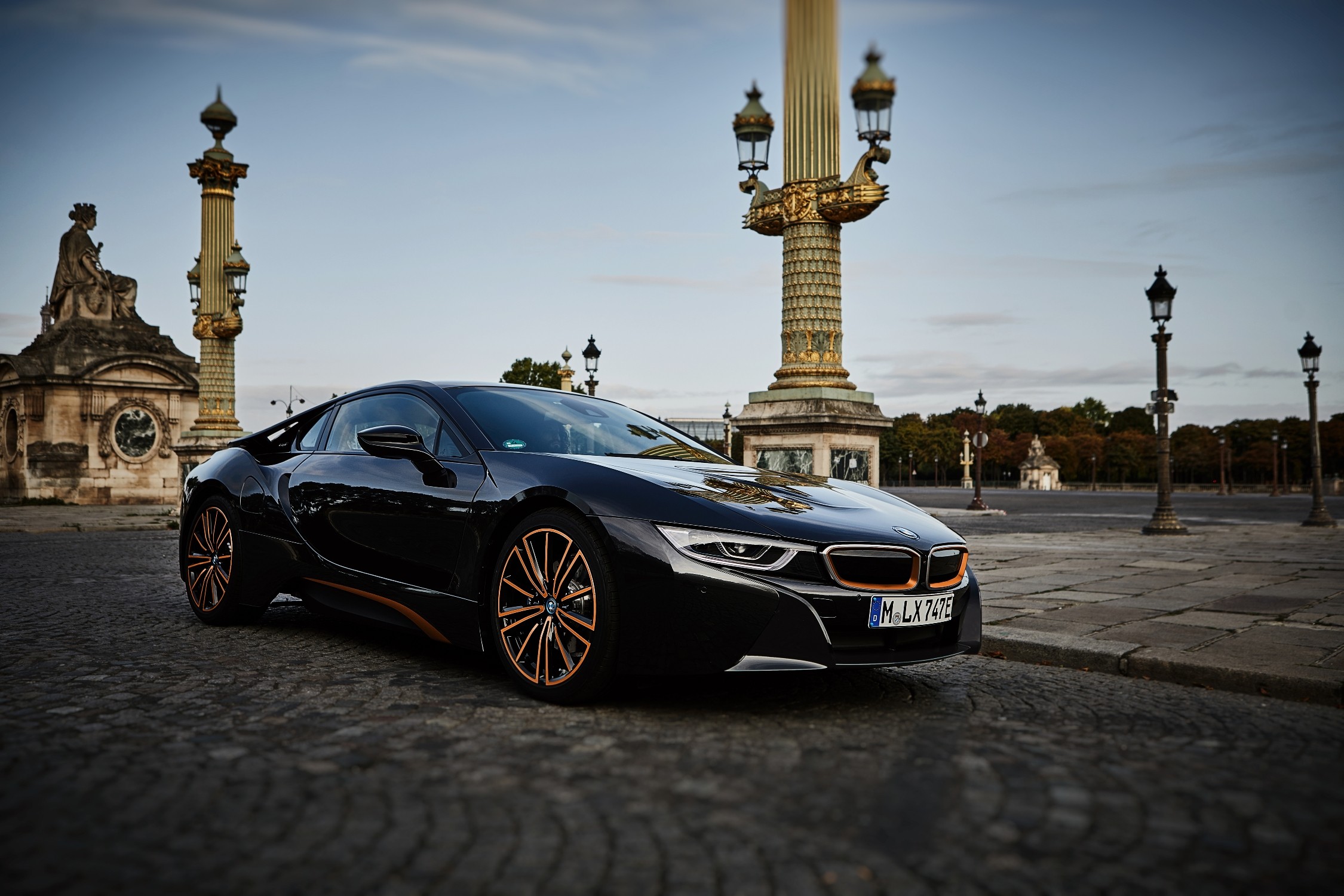
Alas, the i8 was discontinued in June 2020, by which time 20,465 examples had been built for worldwide consumption; of those, over 6,700 reached the U.S..
The i3, meanwhile, was becoming far more popular following a slow start. From just 16,052 units in 2015, annual sales topped out at 39,501 in 2019. Production of both cars was limited by the capacity of the Leipzig plant.
Though the i3 and i8 had a limited lifespan, those who purchased these cars became ardent boosters. In Los Angeles, a group of i3 enthusiasts who call themselves “The Electronauts” hold regular rallies and tech sessions, just as enthusiasts of conventional BMWs have done for decades. Most Electronauts have installed solar panels and battery storage units at their homes, and all appreciate its undersung performance. “It’s a zippy little devil!” said Electronaut Andrew Kim.
Project i’s sales figures may seem fairly modest considering BMW’s estimated $2 billion investment in Project i, but the i3 was the third best-selling electric car in the world for much of its lifespan. Moreover, the numbers were secondary to the transformation Project i effected within BMW.
With negligible fuel consumption—even the hybrid i8 returned close to 50 mpg—the i cars made an important dent in BMW of North America’s Corporate Average Fuel Economy rating. The i cars also served as the pioneers for BMW’s electrified powertrains, which began making their way into mainstream BMW vehicles shortly after the i3’s debut.
The long-term effects of Project i were acknowledged by new BMW Board Chairman Harald Krüger—who replaced Norbert Reithofer in May 2015—in his March 2016 address to shareholders. That speech seemed to signal the end of Project i, as did Kranz’s departure at the end of 2016.
Under Krüger’s brief leadership, which lasted only through August 2019, BMW used the lessons learned with Project i to initiate the next steps of BMW’s electrification. One of the key lessons was that BEV adoption varied widely around the world and that BMW – at least in the medium term – would need to have the flexibility to adjust its BEV mix based on local market demands. In the USA for example, Los Angeles, San Francisco and Seattle quickly adopted the BMW i3 whereas other areas of the country were far behind. The result was BMW’s “Power of Choice” architecture in which two flexible vehicle architectures (one for larger front engine-rear drive vehicles, the other for transverse front engine-front drive vehicles) would be developed that could accommodate any powertrain type (from pure ICE to PHEV to BEV). This would give BMW the flexibility to quickly shift production mix to market demand as the worlds markets shift toward electric powertrains.
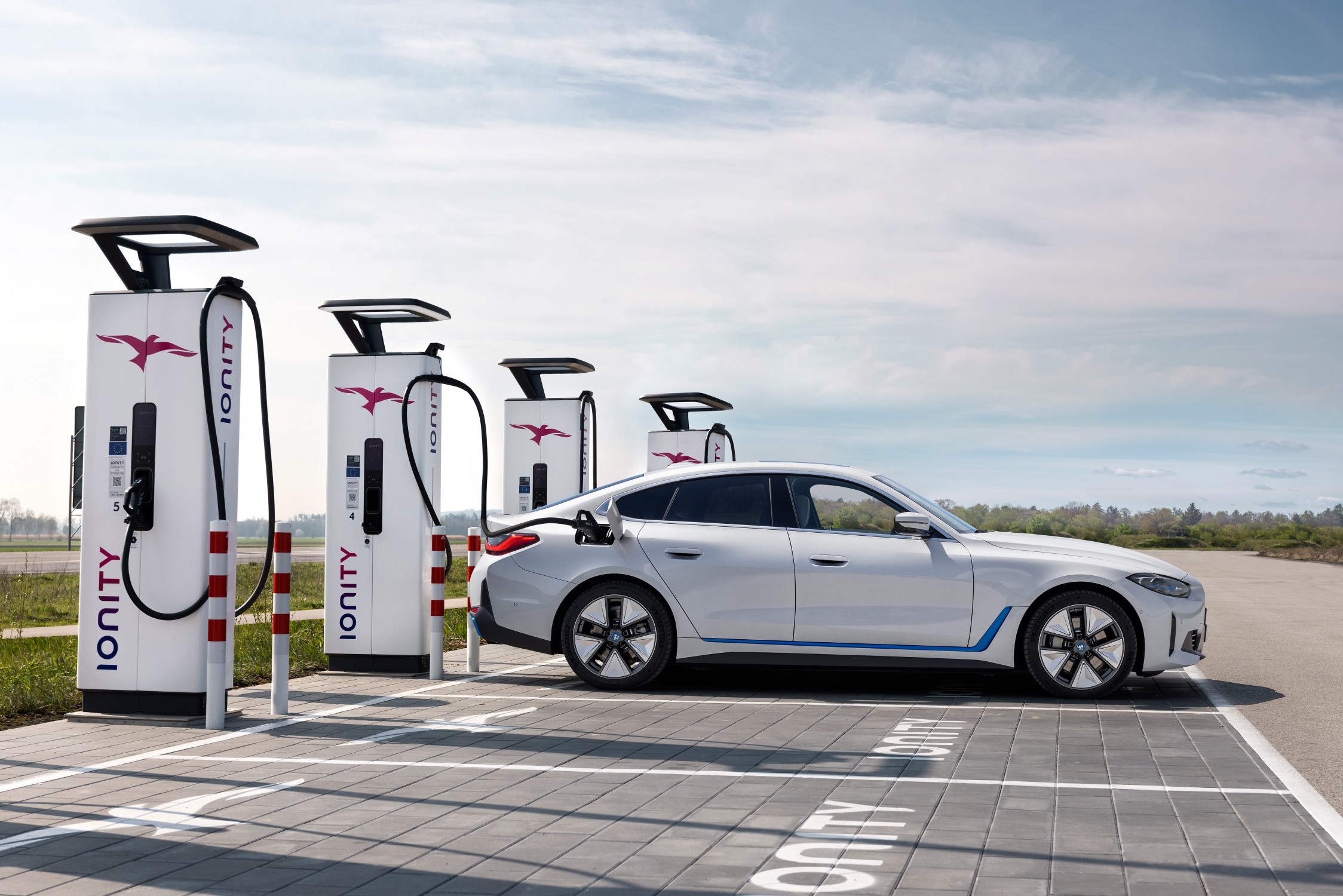
In 2021, BMW released the first of the new “Power of Choice” architecture vehicles in the USA: The BMW i4 and the 4 Series Gran Coupe. But for the front grilles and the badges on their trunk lids, all were outwardly identical to their internal-combustion counterparts, as are more recent battery-electric BMWs like the i5 and i7. As of the end of Quarter 2, 2025, BEVs built on the aforementioned flexible architecture represent 14% of total BMW sales in the USA. If hybrids are included, electrified vehicles currently account for over 21%.
The flexible Power of Choice architecture was initially criticized in Europe for being too conservative and not fully embracing the switch to BEV only. However, history has shown that it was a shrewd and effective solution to satisfy the demand for all powertrain types in the markets that BMW competes in around the world.
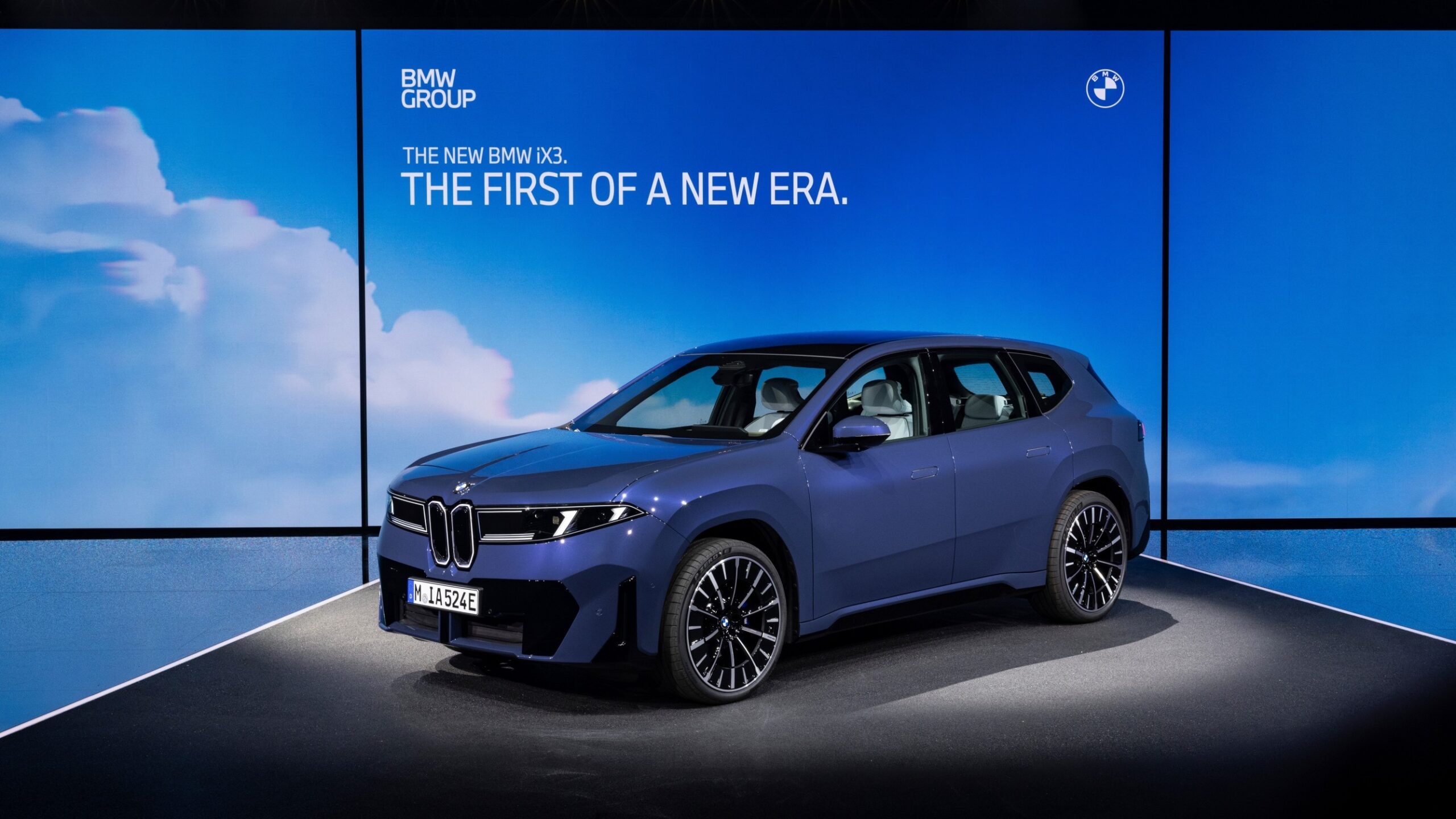
Nevertheless, BMW was already hard at work developing the next vehicle architecture – in this case another full BEV architecture known as the Neue Klasse. In September 2025, BMW introduced the all-new BMW iX3 – the first of the Neue Klasse models. This iX3 is built on all the lessons learned in its electrification journey and is expected to be available for sale in the USA towards the middle of 2026. More on that vehicle in a future chapter.
The post BMW NA 50th Anniversary: Project i Looks Forward appeared first on BimmerLife.
]]>The post BMW NA 50th Anniversary: BMW Responds to 9/11 appeared first on BimmerLife.
]]>“I had ridden my motorcycle to work that morning, and I distinctly remember the deep blue, cloudless sky and the crisp fall air,” said Tom Plucinsky then General Manager of BMW Motorcycles. “The air was so clear that the Manhattan skyline—including the twin towers—were backlit beautifully as I rode south on Highway 17 towards the office in Woodcliff Lake. To this day, I think of those conditions as ‘September 11’ weather.”
As the crow flies, the World Trade Center is barely 25 miles from BMW of North America’s headquarters in New Jersey. Most senior managers were out of the office on September 11, attending the Frankfurt auto show, and those who remained in Woodcliff Lake were just starting their work day when the first aircraft hit the tower at 8:46 am.
“My assistant came into my office and said, ‘I just heard that a plane flew into one of the twin towers,’” Plucinsky recalled. “Our initial thought was that a private pilot in a small plane had somehow hit one of the towers. We only had one television in the building, so I went down to the cafeteria to see what was on the network news. All of the stations were breaking away from the morning shows to live footage of the tower burning.
“Then, on live TV, the second plane hit [at 9:03 am]. All of us huddled around the TV knew that it was no accident, and that we had just witnessed a terrorist attack on American soil using passenger jets as weapons.”
Half an hour later, at 9:37 am, American Airlines Flight 77 crashed into the Pentagon, making it clear that a coordinated attack was taking place. A fourth jetliner had also been hijacked, but it failed to reach its target—presumed to be the White House or US Capitol—after its passengers overwhelmed the hijackers and forced the plane to crash.
That was United Flight 93, en route from Newark to San Francisco with 44 passengers and crew. The flight had been delayed at takeoff, and left the runway at 8:42 am, just as the first plane hit the World Trade Center just across the Hudson River from New Jersey. Some passengers might have seen that happen by looking out the windows, while others found out about the attacks via cell phone messages from people on the ground.
Forty-six minutes after takeoff, hijackers stormed the cockpit, attempting to turn Flight 93 into another weapon of mass destruction.
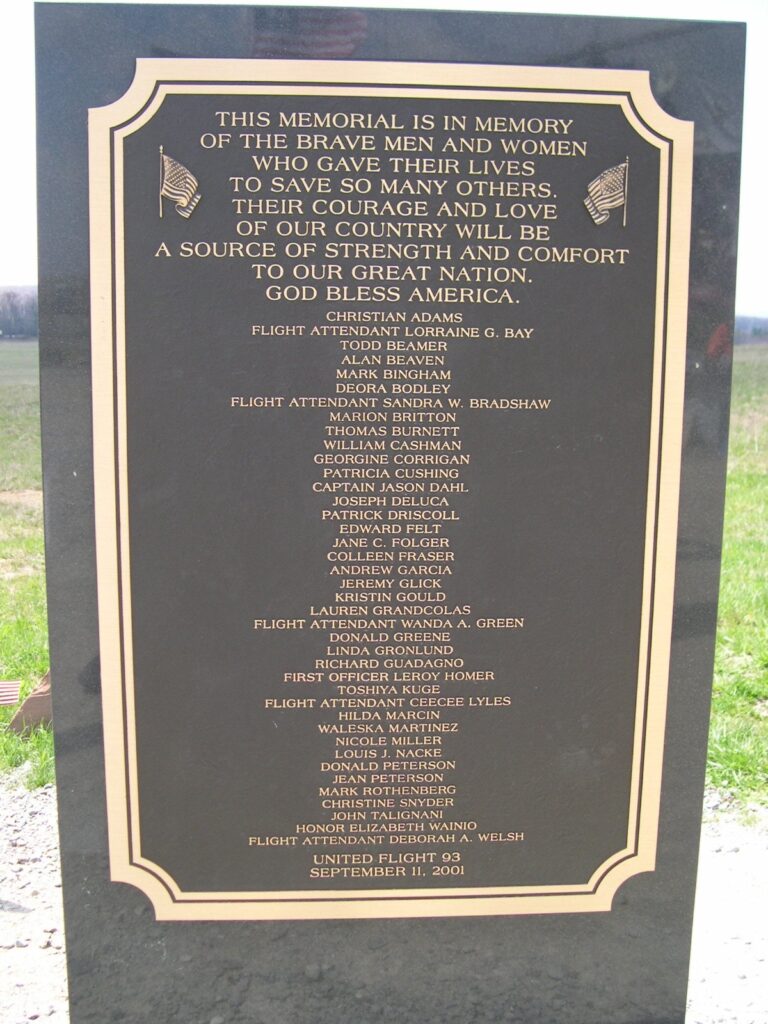
Its passengers didn’t let that happen. Instead, they fought the hijackers for control of the aircraft, and the plane went down near Shanksville, Pennsylvania at 10:03 that morning. None on board survived, but a greater disaster had been averted.
Like the planes flown into the World Trade Center and the Pentagon, Flight 93 had been hijacked by Al-Qaeda terrorists. Their attack claimed the lives of 2,977 people in the initial incidents, followed by many who later died from exposure to debris.
Among those killed on Flight 93 was BMW of North America’s Environmental Compliance Manager, Linda Gronlund. Gronlund was traveling to San Francisco with her boyfriend, Joe Deluca. Following a business meeting, Gronlund and Deluca planned to celebrate her 47th birthday in the Napa Valley.
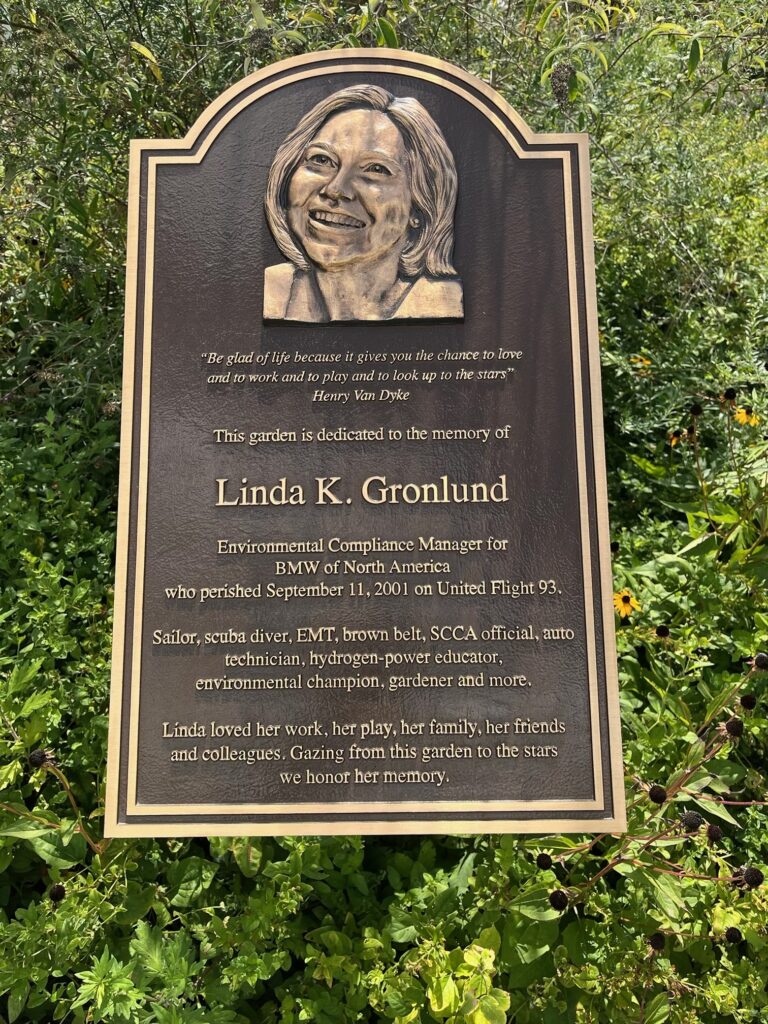
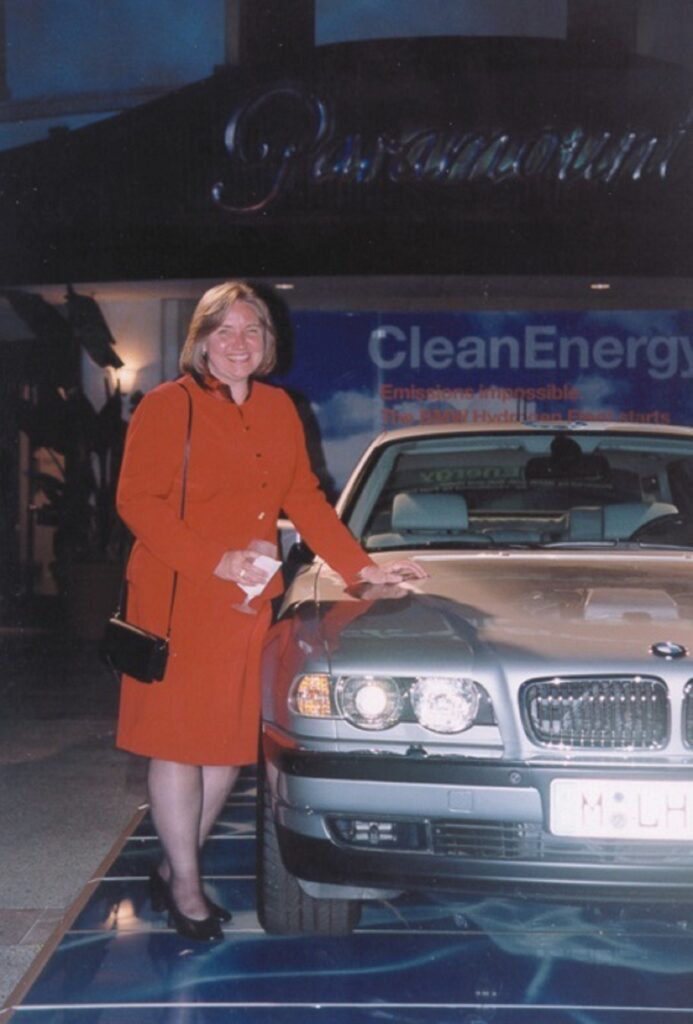
Gronlund had worked for BMW NA since 1990, having joined the company after five years in Volvo’s product compliance office. She was a serious foreign car enthusiast, having grown up working on cars with her father in Sag Harbor, New York; later, she served as chief of flagging and communications for the Sports Car Club of America in Northern New Jersey. She’d studied English and chemistry at Southampton College, then earned a law degree at American University in 1983.
At BMW, Gronlund was able to combine her love of cars with another of her passions: the environment. As Environmental Compliance Manager, her responsibilities ranged from obtaining permits for BMW Manufacturing in South Carolina to overseeing the installation of BMW’s hydrogen refueling station in Oxnard, California.
Some 45 minutes after Flight 93 took off from Newark, Gronlund called her sister Elsa. As reported in Sag Harbor newspaper 27 East in 2021, Gronlund told her sister that the plane had been hijacked by terrorists who said they had a bomb. A few minutes later, several passengers rushed the cockpit in an attempt to thwart the hijacking. Trained in martial arts, Gronlund may have been among them. They were unable to take control of the aircraft, and the pilot crashed the plane into a field near Shanksville, Pennsylvania before it could reach its presumed target, the White House in Washington, DC. All 44 people on board were killed.
A day or two later, the news that Gronlund had been on Flight 93 reached BMW NA headquarters, bringing the terrible events of 9/11 even closer to home. Gronlund had been a valued colleague, of whom BMW NA’s General Manager of Engineering Karl-Heinz Ziwica said, “I could rely on her to do anything. She got things done and she got them done right. Always.”
Her colleagues held a memorial for Gronlund at BMW NA, which was livestreamed to BMW Manufacturing in Spartanburg, South Carolina. Shortly thereafter, BMW of North America endowed a scholarship for female engineering students at the Massachusetts Institute of Technology, while her home town of Sag Harbor, New York, renamed a nature preserve in her honor. In Woodcliff Lake, BMW of North America installed a permanent memorial to Linda Gronlund—a garden and bronze plaque—between the 200 and 250 buildings of its headquarters campus.
In 2012 the BMW Group partnered with the National Park Foundation making a $10,000 contribution to the Flight 93 National Memorial Campaign as part of our commitment to remembering and celebrating the life of our former colleague. With the contribution, BMW of North America became a co-sponsor of the project to beautify the memorial through the planting of thousands of trees. The crash site and memorial is atop a former coal mine which had been devoid of any natural beauty.
In the immediate aftermath of the disaster, BMW of North America donated $1 million in cash to the American Red Cross Disaster Relief Fund and the City of New York. (BMW NA continues to support the American Red Cross, most recently by making two donations of $1 million each in the wake of Hurricane Helene and the wildfires in Los Angeles.) The company also donated $2.4 million in vehicles—ten new X5s and 100 ex-CHP police motorcycles—to replace those lost by various agencies on September 11.
The Pentagon had lost vehicles and equipment in the attack, too, along with 125 of its people. Following an initiative by VP of Legal Affairs Howard Harris, BMW NA donated ten bikes to the Pentagon Police, which was happy to receive them. Over the ensuing decades, the agency has purchased several more authority motorcycles from BMW.
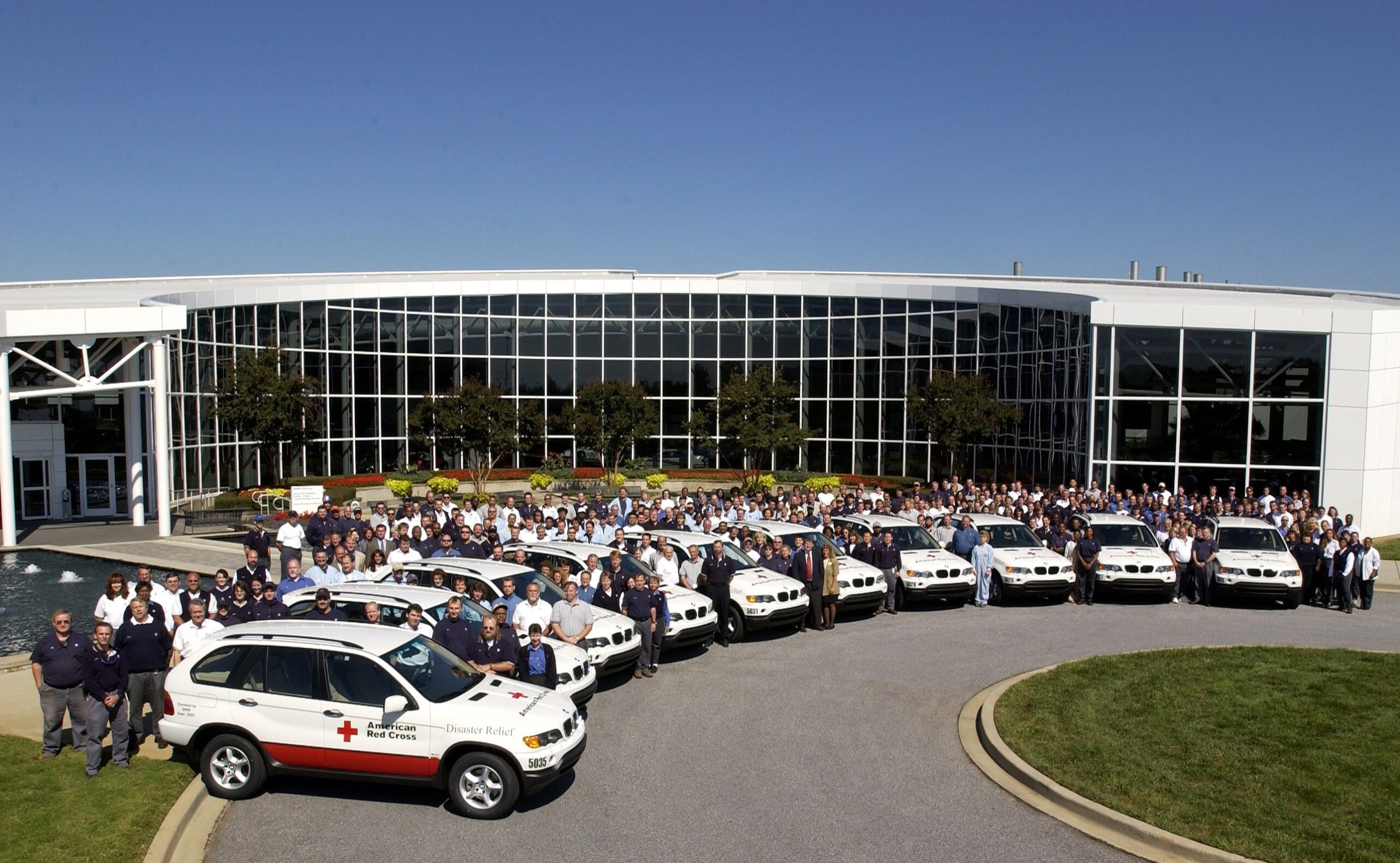
Though the story of 9/11 is one of terrible loss, every tragedy contains stories of lucky escapes like the one made by BMW enthusiast Colonel Mark Volk, whose office in the Pentagon took a direct hit from American Airlines Flight 77. “He had just left his office for a cup of coffee,” said Kenn Sparks, then a Communications Manager at BMW Manufacturing. “He immediately ran back to rescue people, and he was one of the great American heroes of 9/11.”
Sparks heard Volk’s story during a Roadster Homecoming at BMW Manufacturing, which Volk attended as a Z3 owner. “The keys to his Z3 were in his briefcase, and he couldn’t get back to his office to see if his keys were still there,” Sparks said. “Two weeks later, he found the remains of his briefcase. The keys were still inside, and he drove his roadster home.”
The Spartanburg plant itself had an accidental connection to 9/11, thanks to a fortuitous display of patriotism. Since 1999, BMW Manufacturing had constituted BMW’s sole assembly facility for X5s. In July 2001, an engineering pre-production X5 was damaged in a crash during an internal management ride and drive event. The vehicle was sent to Performance Center workshop across the highway from the plant for repairs. There, it would be repaired by technicians and body shop personnel under Workshop Manager Dan Doot.
By August, the bodywork had been repaired, and the vehicle was ready to be painted. Rather than the original silver, Doot, always ready for an interesting paint project, opted for an American flag motif inspired by the fuel tank on the motorcycle ridden by Peter Fonda in the film Easy Rider. Since this wasn’t an officially approved project, Doot and some of the Body and Paint STEP students painted the vehicle on evenings and weekends, taking about three weeks to finish it. When it was due to be returned to the engineering department, they didn’t appreciate Doot’s initiative and insisted that it be repainted back to silver. Doot refused, and a stalemate ensued.
Shortly after 9/11, BMW Manufacturing Vice President Carl Flesher saw the flag-painted X5 at the Performance Center and immediately saw its potential as a communications tool. He requisitioned for it to be transferred to the Corporate Communications department and placed it in front of the Zentrum, where it could be seen by drivers passing by along Interstate 85.
In the wake of 9/11, said Business Communications Manager Kenn Sparks, the flag-motif X5 “took on a life of its own. People started taking photos of it, and it became an icon of BMW’s commitment to the US.”
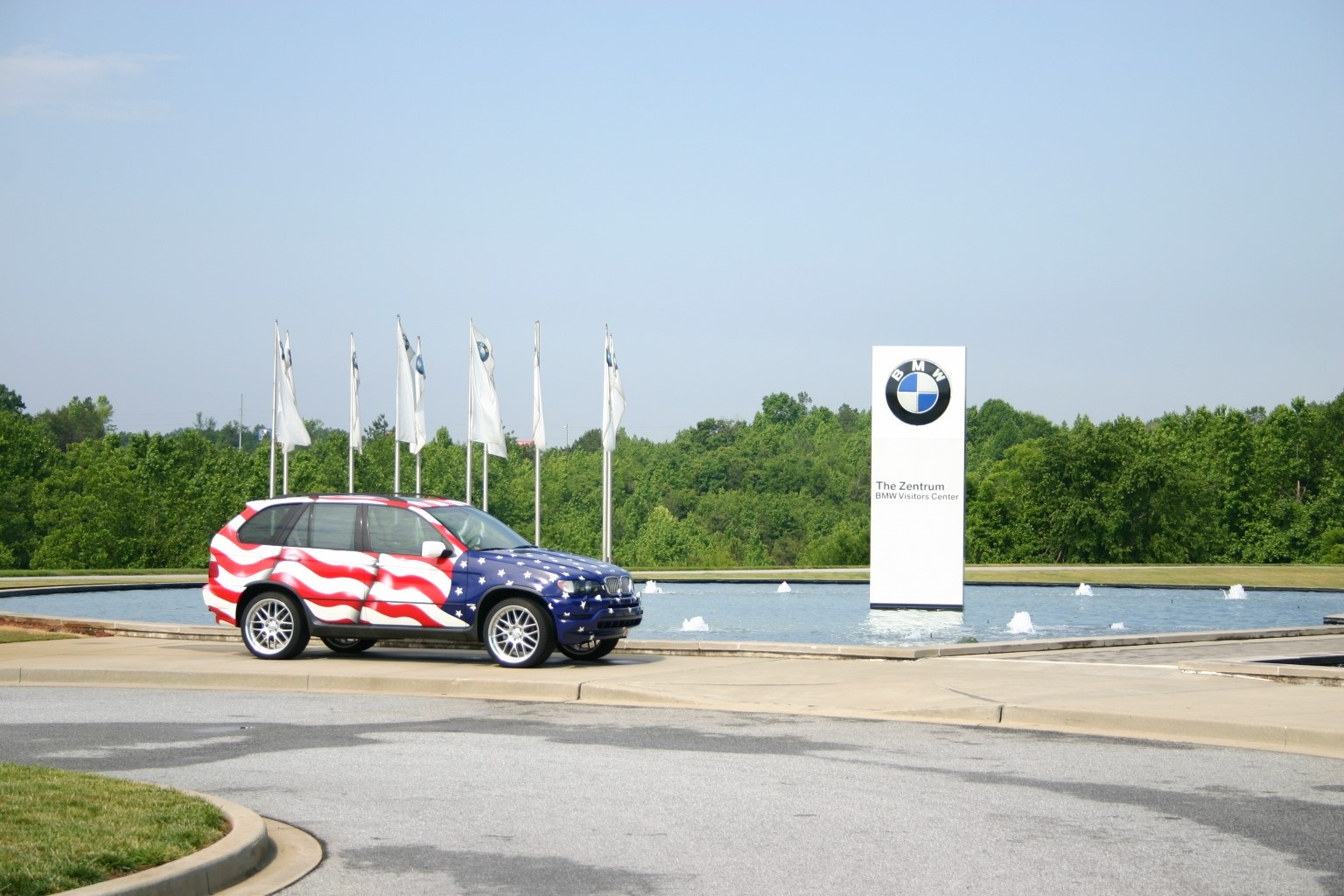
Doot’s X5 ended up being used in parades around the country. The vehicle has made countless public appearances, including a trip to SEMA in Las Vegas with wheel manufacturer BBS, outfitted it with a set of BBS wheels that remain on the vehicle today.
The flag X5 remains one of a kind, though it’s not the only BMW with a patriotic paint job. It has a counterpart within the BMW Classic USA race car collection, the #6 E46 M3 GTR that won the final round of the 2001 American Le Mans Series. That race was scheduled for October 6, barely three weeks after the attacks.
“We were debating whether to pull out, what’s proper after that horrible event,” said Bill Auberlen, one of BMW’s factory drivers that year.
The 2001 season had already been challenging for BMW of North America’s Team PTG, which was racing against not just archrival Porsche but a two-car team entered by BMW Motorsport Team Schnitzer. The German team’s technical advantages had allowed it to take five wins to just one for BMW of North America’s Team Prototype Technology Group (PTG), and the American team was considered the underdog going into the four-hour Petit Le Mans at Road Atlanta. In the wake of 9/11, Team PTG would race under the weight of a national tragedy, too.
The PTG livery already featured red fenders and spoilers to distinguish the BMW NA cars from their white-blue BMW Motorsport counterparts. For Petit Le Mans, PTG boss Tom Milner replaced the logo of tire sponsor Yokohama with a blue field covered in white stars, turning the hood, roof and rear deck lid on each of the team’s three M3s into a rolling American flag.
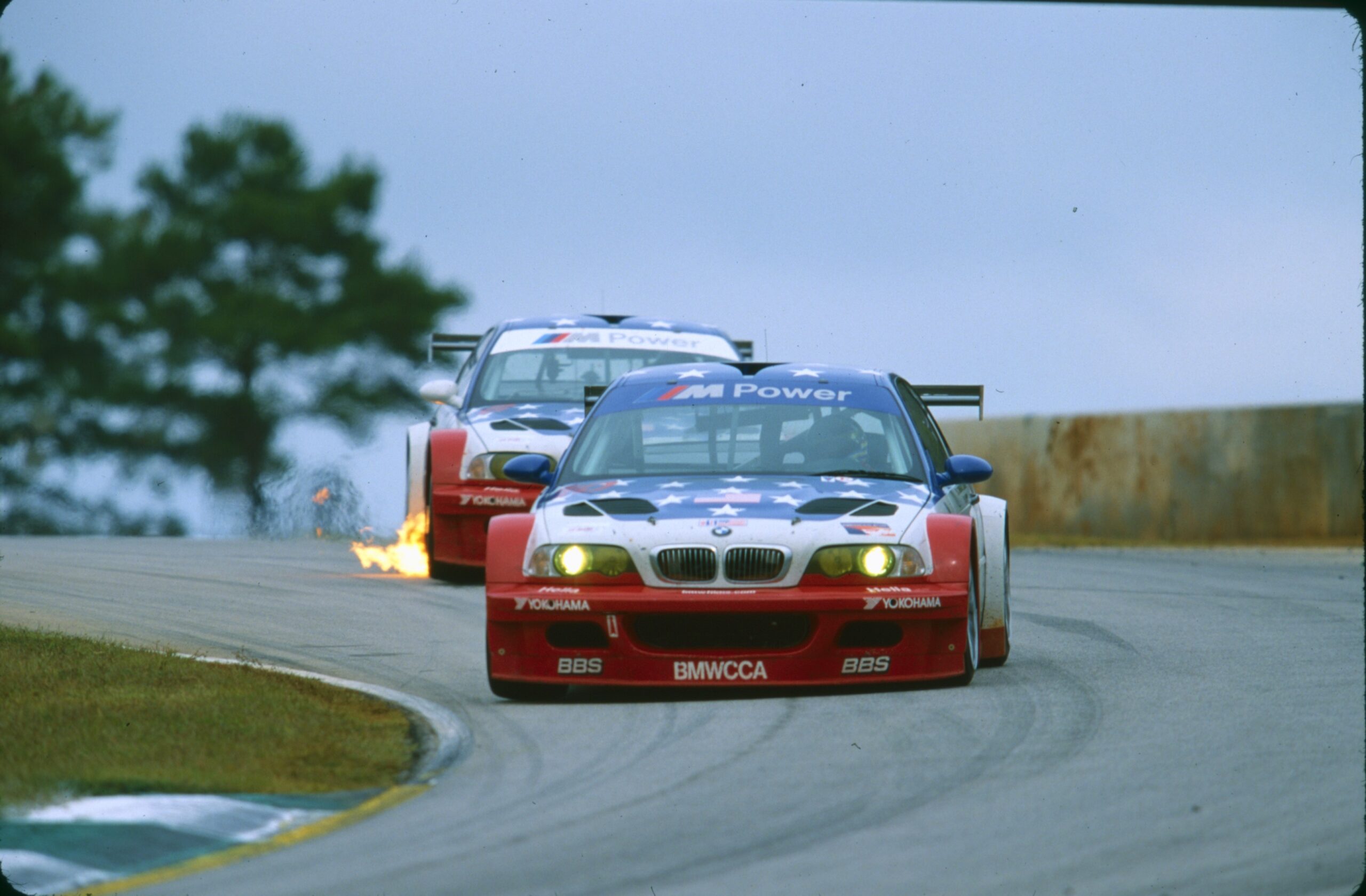
Two of three PTG entries went out of the race in the early running, but PTG’s #6 car had been fast throughout. As the laps wore down, the car driven by Auberlen, Hans Stuck, and Boris Said was in a position to defeat not just the Porsches but both M3s entered by BMW Team Schnitzer. “We just ran it like crazy,” Auberlen said. “I came in for the last pit stop on the lead, and Tom [Milner, head of PTG] wanted to put on super-soft tires just to rub it in.”
After four hours, Auberlen took the checkered flag one lap head of the second-place #43 BMW Motorsport Team Schnitzer car. “That race was very emotional,” Auberlen said. “The only time we had that paint job, it wins. People didn’t know whether to smile or cry.”
Today, the #6 E46 M3 GTR is a treasured part of the BMW Classic USA collection, as is the American flag X5. Both vehicles serve as poignant reminders of the tragedy of 9/11, and the unity of spirit that followed.
The post BMW NA 50th Anniversary: BMW Responds to 9/11 appeared first on BimmerLife.
]]>The post BMW NA 50th Anniversary: BMW Goes Electric appeared first on BimmerLife.
]]>That’s exactly what happened after 1966, when the State of California enacted the world’s first vehicular emissions regulations, followed in 1970 by the federal Clean Air Act that would require smog testing of all new vehicles from 1972-on. In response to that legislation, BMW began replacing carburetors with fuel injection, creating the 2002 tii and other models that not only emitted fewer pollutants but used less fuel and produced more power than their carbureted counterparts.
Reducing motor vehicle emissions was a step in the right direction, but eliminating them entirely would be even better. To meet that goal, at least at the tailpipe, automobile manufacturers would need to shift from internal combustion engines to the battery-electric powertrains that were common in the late 19th and early 20th centuries, but which faded from use as gasoline became widely available.
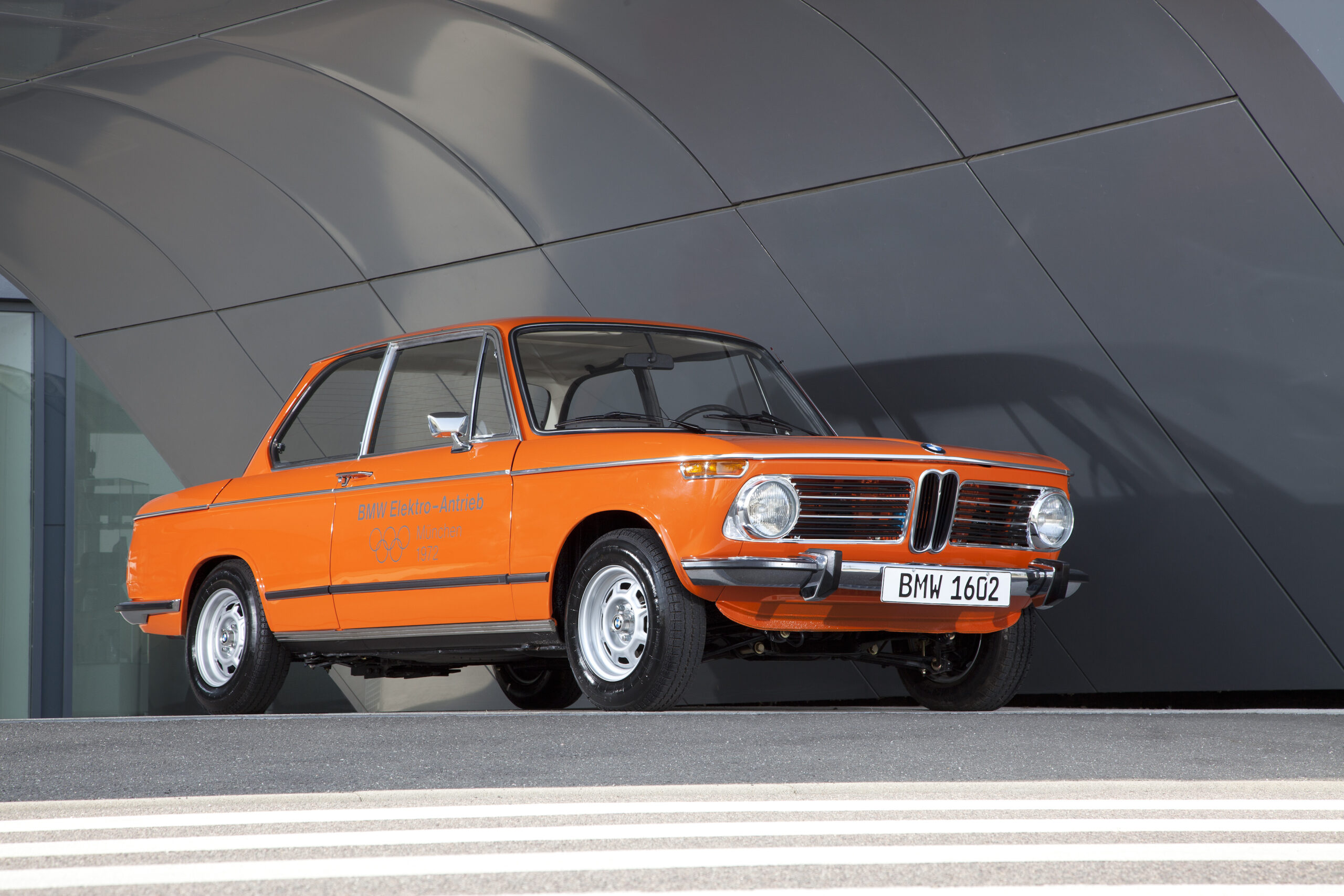
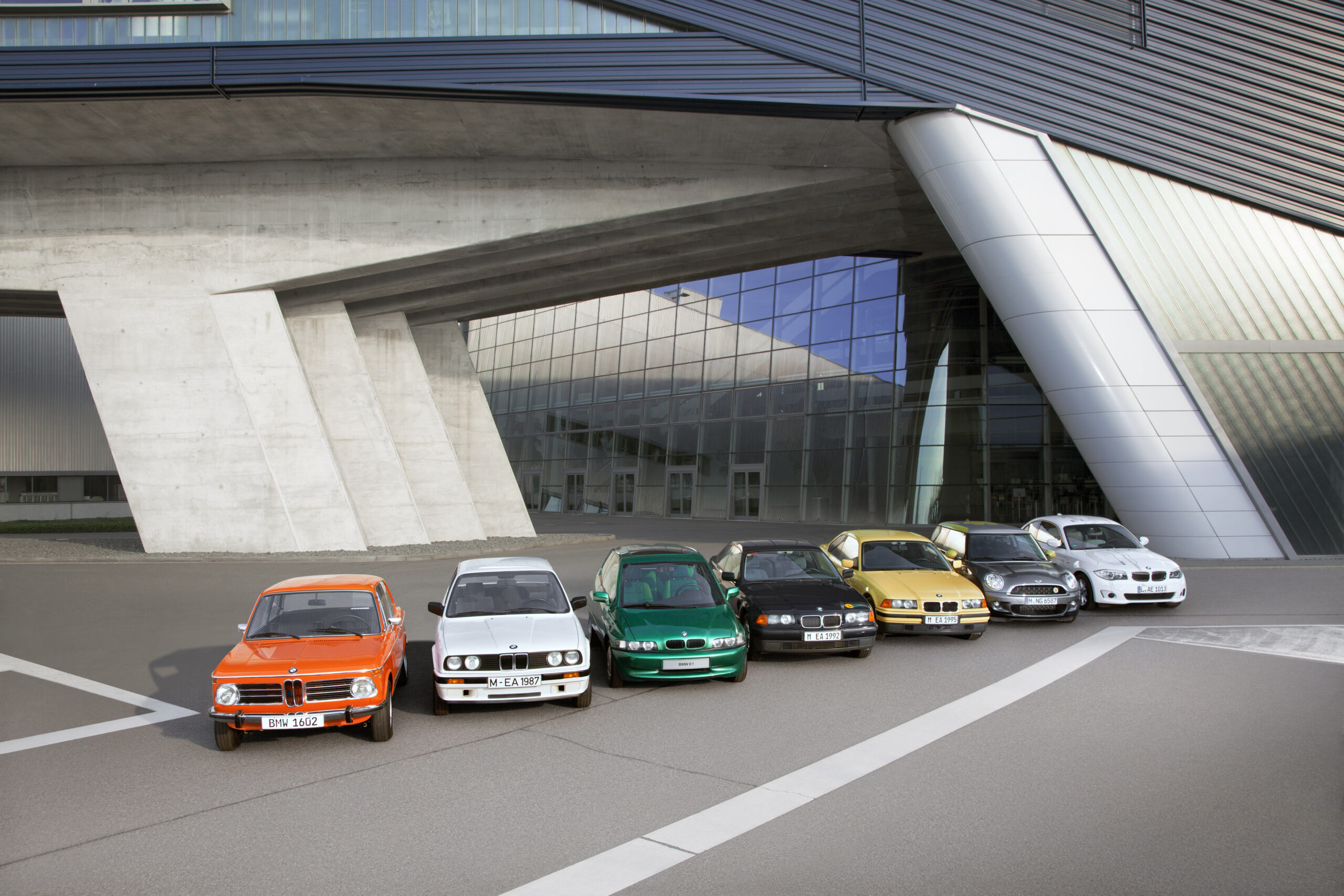
BMW wasn’t building cars during the first electric age, having been founded as an aero engine manufacturer in 1916 and only adding motorcycles and cars in 1923 and 1928, respectively. The company didn’t make its first foray into electromobility until 1972, when BMW premiered its first electric car during the Olympic Games being held right across the street from its Munich headquarters.
At first glance, the Elektro 1602 looked like an ordinary BMW two-door, and as such it drew less attention than BMW’s futuristic Turbo Concept, which also debuted during the Munich Olympics. As a harbinger of the actual future, however, the Elektro was far more significant, pacing the Olympic marathon and speed-walking events in near-silence and with zero tailpipe emissions.
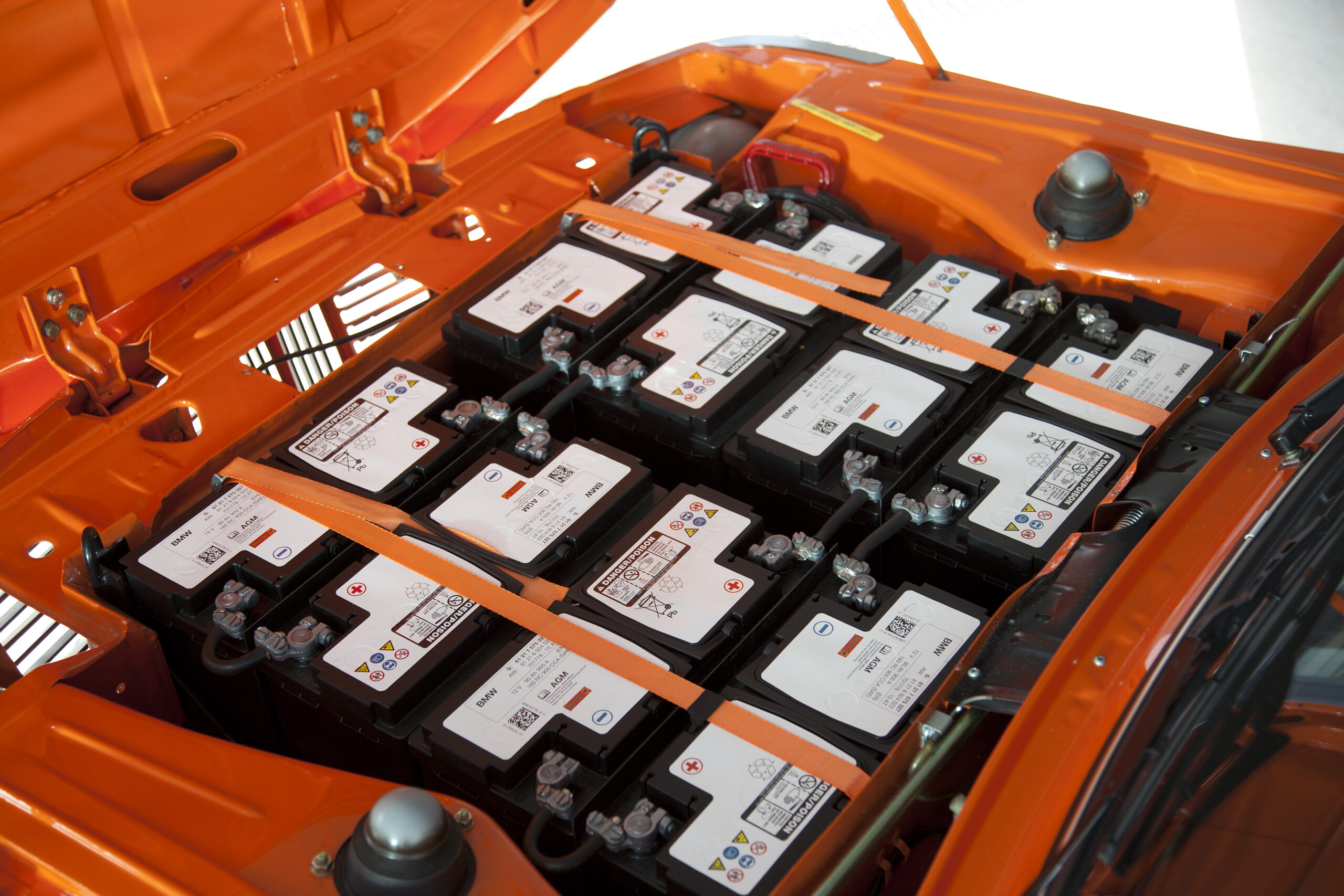
The Elektro 1602 was powered by 12 lead-acid batteries, and its range was limited to about 44 miles. That may have been an optimistic estimate: BMW had built not one but two Elektro 1602s, and it’s rumored that one took over from the other when the marathon passed through a tunnel. In any case, the car’s range couldn’t be improved upon without adding considerable battery weight to the vehicle, so BMW began exploring liquified hydrogen as its preferred route to zero-emissions mobility.
In the meantime, electric vehicles received a major boost from the US government’s Electric and Hybrid Vehicle Research, Development and Demonstration Act of 1976. That legislation provided funding to develop the battery-electric powertrains that would become increasingly important after 1990, when the State of California instituted its Zero Emission Vehicle mandate. From 1998-on, ZEVs would need to constitute 2 percent of all vehicles sold in California, the nation’s largest market for automobiles and one of the largest worldwide.
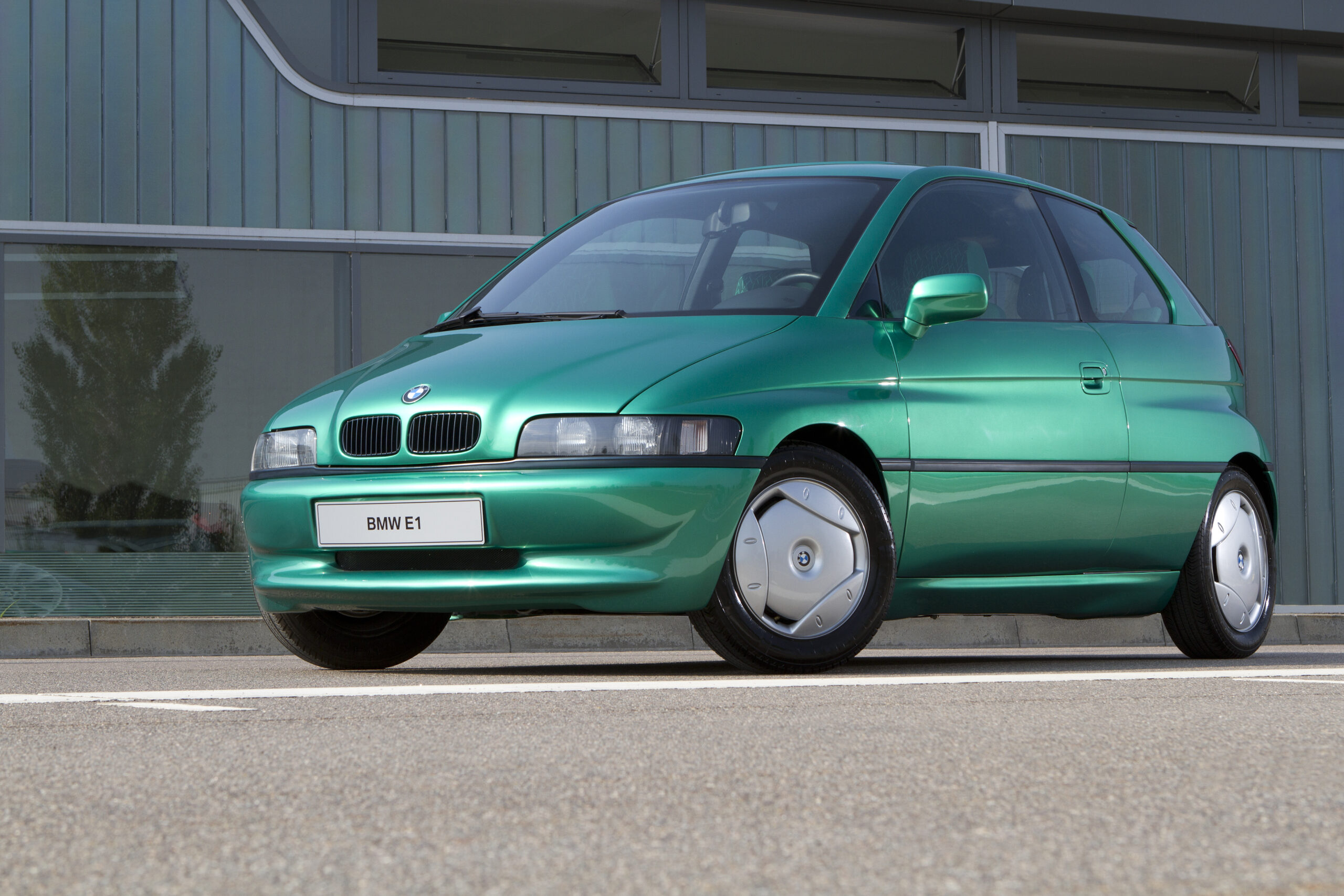
Even while focusing on hydrogen power, BMW experimented with electric cars that could meet California’s ZEV mandate. The E1 and E2 concepts of 1991 used sodium-sulfur batteries for a theoretical range of 155 miles, but those were ultra-lightweight city cars, and the technology didn’t fare as well in a series-production BMW. In 1995, the company built a small fleet of 3 Series coupes that used the standard four-cylinder internal combustion engine not to drive the rear wheels but to charge the sodium nickel chloride battery and extend the car’s range beyond 27 miles. It wasn’t a success.
“The E36 electric vehicles were terrible,” said Rich Brekus, then head of product planning and strategy for BMW NA. “Karl-Heinz Ziwica was head of compliance, and I asked him if it was possible to make gasoline cars that would pollute the same amount of NOx and hydrocarbons as the power plant used to produce the electricity. It was theoretically possible, so we met with the California Air Resources Board, which agreed to back off on the electric vehicle mandate if we built Partial Zero Emissions Vehicles that would put out one-tenth of the US standard for pollution, with zero evaporative emissions and a ten-year warranty.”
Indeed, when California’s ZEV mandate was set to increase to ten percent in 2003, the state adjusted that figure to allow credits for Partial Zero Emissions Vehicles like BMW’s new Super Ultra Low Emissions Vehicles. “Now millions of PZEVs are on the road, and it’s made a huge difference to the quality of air in California,” Brekus said.
In 2007, BMW announced its new Efficient Dynamics program, which chairman Norbert Reithofer said would reduce BMW’s overall fleet emissions by 25 percent by the year 2020. (It’s worth noting that BMW, like the European Union, focused exclusively on reducing CO2 emissions, which relate directly to fuel consumption, while excluding the NOx emissions that the US and its states regulate.) At the same time, BMW concluded its experiments with liquified hydrogen, which had proven impractical as a motor fuel. Instead, the company would focus on improving efficiency by reducing vehicle weight—a somewhat Quixotic goal—and by offering ever-more-efficient internal combustion engines alongside new hybrids and battery-electric vehicles.
The latter would be developed separately, under the rubric of Project i. An in-house think tank led by Dr. Ulrich Kranz, Project i wasn’t merely about developing a viable EV, but about understanding how we would live and move about in the not-so-distant future. Having determined that human populations were increasingly concentrated in “megacities” with 15 million or more inhabitants, Project i set about creating a so-called Megacity Vehicle that would emit neither noise nor pollution, and which would take up as little space as possible in those crowded urban environments.
By focusing on urban mobility, Project i managed to avoid one of the biggest psychological drawbacks of electric mobility: range anxiety. As the Elektro 1602 and later 3 Series had demonstrated, the usable range of electric cars had long been hampered by the limited storage capacity of their batteries. Fortunately, research was underway that would begin to solve that problem.
Since the 1970s, engineers had been developing lithium-ion batteries, which combined high capacity with relatively light weight and rechargeability. By 1991, these new batteries had been widely adopted for use in consumer electronics, and in 1998 they found their first automotive application in Nissan’s experimental Altra EV. In 2003, the AC Propulsion T-Zero was designed by Tom Gage to use lithium-ion batteries, and it inspired Tesla Motors’ engineers Martin Eberhard and Marc Terpenning to do the same on the Tesla Roadster, which reached the public in 2008. With an EPA-rated range of 244 miles, the Tesla Roadster could nearly match that of an internal-combustion vehicle, and it was as quick as any supercar.
Lithium-ion batteries would power the Megacity Vehicle being developed by the Project i team, which reached its first prototype stage as the MINI E. The MINI was chosen for its small size, which mirrored that of the planned Megacity Vehicle, and for its ability to accommodate Gage’s AC Propulsion battery-electric powertrain following the removal of its rear seats.
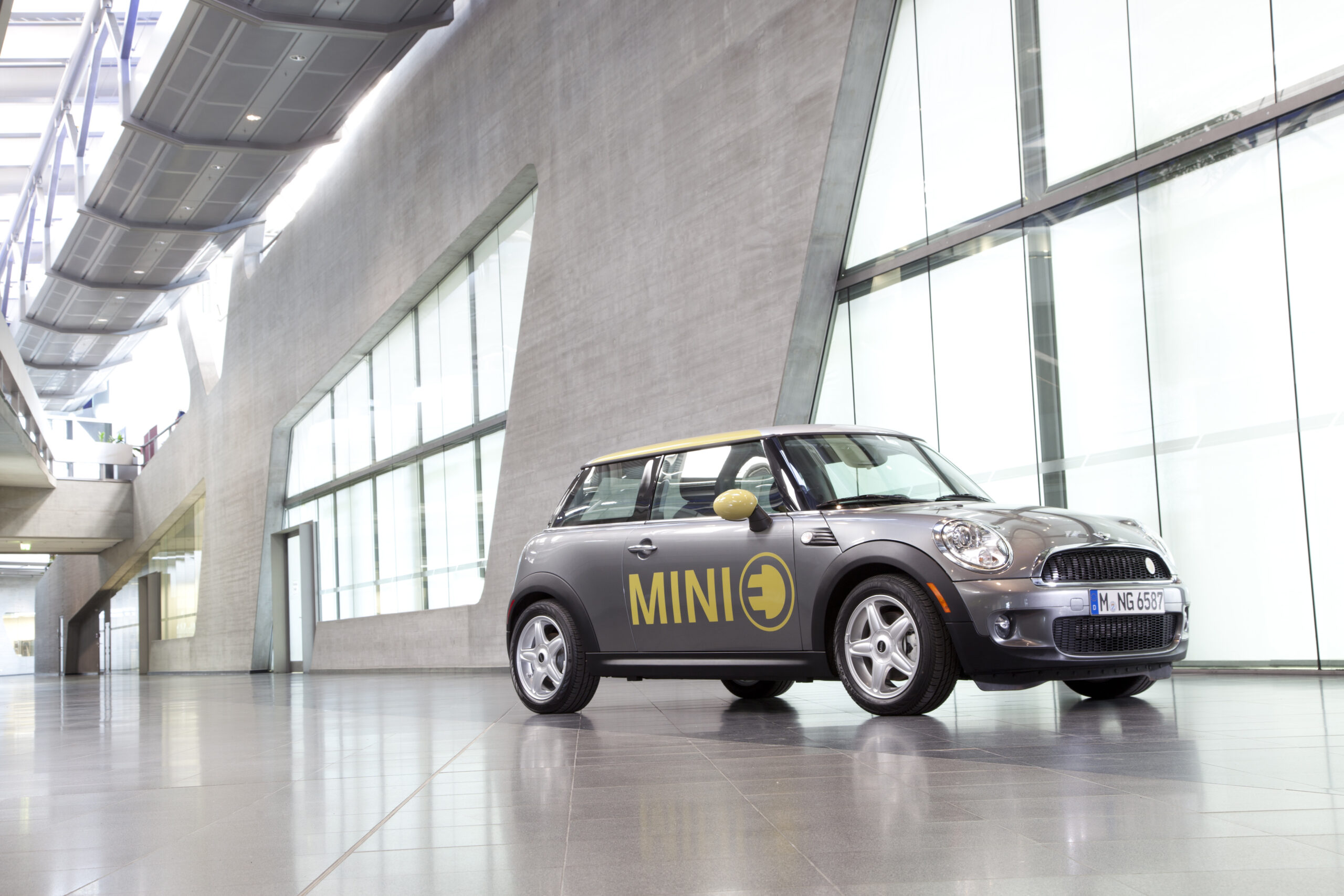
That powertrain used 1,088 lithium-ion cells strung together within a 573-pound battery back, which gave the MINI E the equivalent of 201 horsepower. It could accelerate from zero to 62 mph in 8.5 seconds en route to a top speed of 95 mph. Needless to say, it would have to be driven far more sedately to achieve its claimed 156-mile range.
Though BMW tested 50 of its MINI E prototypes in Munich and Berlin, 450 would be tested in the US—specifically in Los Angeles, New York City, and New Jersey—and with ordinary customers at the wheel rather than engineers. According to Rich Steinberg, then Head of Electric Vehicle Programs for BMW of North America, the locations were chosen for their proximity to BMW NA workshops, where the cars could be serviced if needed. “The dealers weren’t trained in high voltage yet. We also had ‘flying doctors’ who would be dispatched to service vehicles at a local dealer if needed.”
As another benefit to testing vehicles in California, the program would help BMW of North America earn significant Zero Emissions Vehicle credits, as well as lowering BMW’s Corporate Average Fleet Economy rating in the US.
It would also draw plenty of interest from customers eager to go electric. When the program was announced, BMW received thousands of applications, from which it selected participants on the basis of their driving habits and ability to install a charging system in their home garage. That factor proved more complicated than expected when the cars used a plug developed in Europe. “It didn’t have UL approval, and local electrical inspectors made home installation a real chore,” Steinberg said.
The cars would be leased to customers for one year, though that was later extended for a second year. The price was set at $850 per month, and customers would be required to provide feedback on the experience.
In May 2009, Pacific Palisades, California resident Peter Trepp became the first customer to take delivery of a MINI E. A venture capitalist specializing in clean energy funding, Trepp blogged about his experiences beginning with his acceptance to the program and the installation of the 50-amp charging outlet in his home garage. That was crucial, since public charging was basically nonexistent. Upon taking delivery, Trepp noted that the MINI E handled like a sports car despite carrying some 600 additional pounds of battery weight compared to a standard MINI, and that its regenerative braking feature made it unnecessary to touch the brake pedal except in emergencies. Driving enthusiastically, Trepp reported 95-100 miles of range on a full charge, and he didn’t miss the sound of an internal combustion engine or having to stop for gas.
Living in sunny Southern California, Trepp didn’t get to experience the biggest downside to battery-electric driving: severely reduced range and performance in cold weather. “They were absolutely miserable on cold days,” said Jim McDowell, then head of MINI USA. “If you used the heat, you had a very short range, which meant you had to pick between heat and getting home.”
That deficiency was addressed during the second phase of Project i testing, which would be done not in a MINI but in the BMW ActiveE, a battery-electric version of the 1 Series Coupe. The ActiveE got a much-improved battery developed in collaboration with SB LiMotive, a joint venture between Samsung and Bosch. The battery had its own liquid cooling system to help maintain storage capacity regardless of outside temperatures, and it could be activated while the car was plugged into the power grid. “That will allow you to pre-heat or pre-cool the cabin from your smartphone instead of using the battery of the car,” said Steinberg.
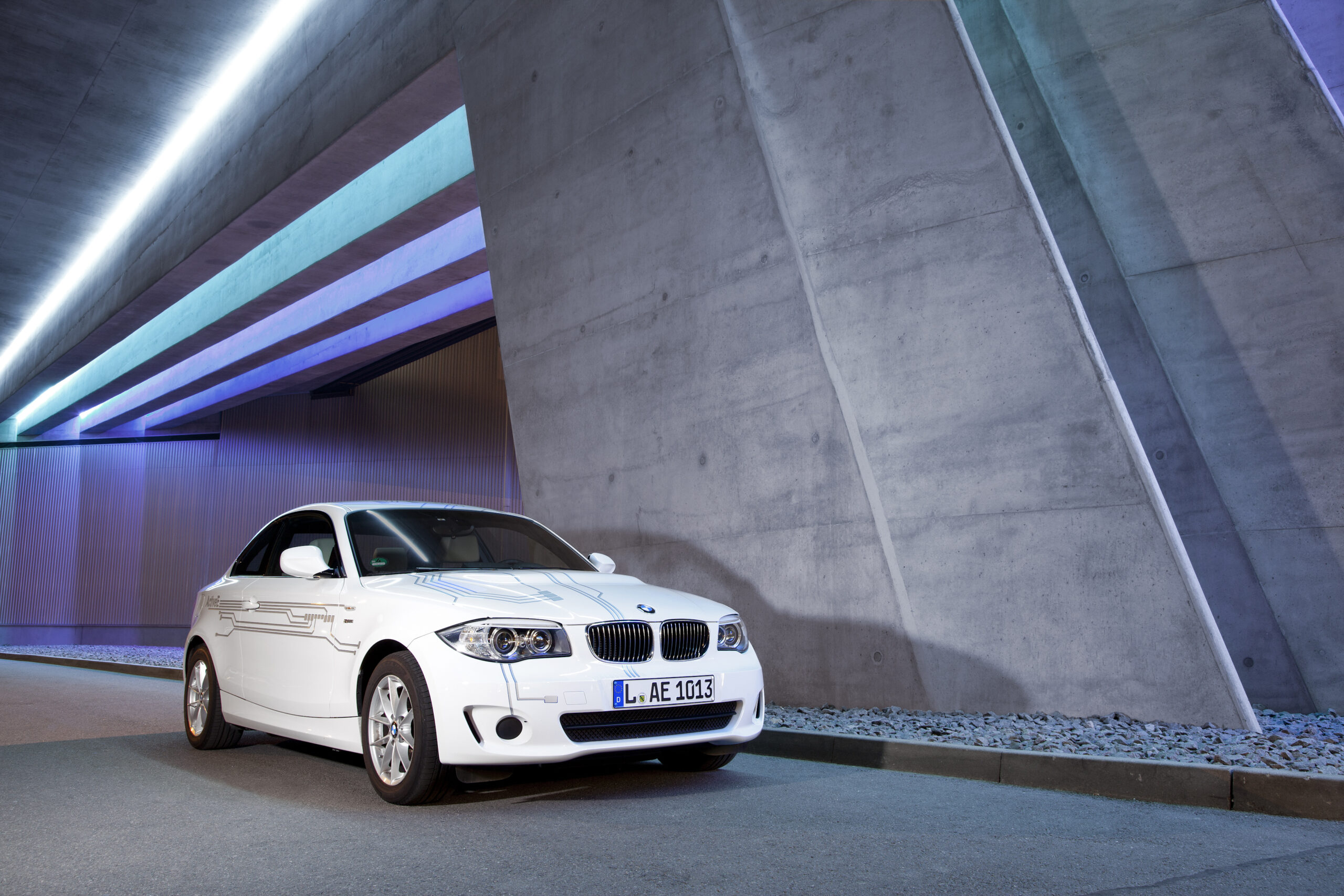
The battery was actually three “energy storage units” located where a normal vehicle would place its engine block, transmission, and fuel tank. The electric motor sat directly over the rear axle, and the car was driven by its rear wheels just like any other 1 Series coupe. Even with better thermal management, however, the ActiveE failed to improve upon the MINI E’s range of approximately 100 miles under normal driving conditions, though that could be extended somewhat using the new ECO PRO mode. The car was heavier than the MINI E, and its zero-to-62 mph acceleration was slightly slower at 9.0 seconds.
BMW built some 1,000 ActiveE prototypes, of which 700 came to the US for real-world testing. MINI e test driver Trepp had opted to renew his MINI e lease for a second year, which put him at the top of the list for an ActiveE in 2012. He didn’t blog about his experiences with that car, but reported upon taking delivery that the ActiveE had “more refinement, more gadgets, more BMW. The MINI E was great, but the ActiveE is a step up, to be sure.”
Not everyone who tested an ActiveE had leased one from BMW. The cars were also available to those using BMW’s DriveNow car-sharing service, another component of Project i which operated in several European cities as well as San Francisco from 2011 to 2019. (From 2016 to 2019, the program operated as ReachNow in Seattle, Portland, and Brooklyn.) Car sharing was an important part of Project i’s mission, as it would allow BMW to expand its customer base beyond traditional ownership models. Unfortunately, local parking codes made it inordinately difficult to place cars throughout cities, dooming the program in virtually every important market.
With both prototype electric vehicles, BMW of North America and its customers played a major role in the development of a new powertrain, one that was set to take on increasing importance within BMW and throughout the world. The cars also helped develop BMW’s “circular” product economy, as the batteries from cars taken out of service were repurposed to provide stationary energy storage, particularly where solar or wind is used for generation.
Customers helped to perfect the technology, and their feedback also allowed BMW to understand what customers wanted and expected from their cars, and to deliver that when the company’s battery-electric vehicles went into production. “What do they need in terms of range anxiety? What do they need from a public charging network?” Steinberg asked.
BMW also learned about customers’ charging habits, which varied from country to country. “In Europe, they wait until they need to plug in, but American drivers plug in every day,” said Dr. Herbert Negele, who was responsible for electrification projects at BMW AG from 2007 to 2010. “Maybe it’s the Wild West…you know you need to stock up on water when it’s available!”
Somewhat counterintuitively, that behavior helped alleviate the concerns of utility companies fearful of overtaxing the electrical grid while also encouraging the use of renewable energy sources like wind and solar.“Having a large fleet of EVs across America that could absorb and consume the energy from a renewable like wind is a benefit to the utilities, and vice-versa,” Steinberg said. “If there’s a real peak demand load and there are a lot of EVs plugged in, the grid allows the supplemental energy from these vehicles to flow back into the grid so they don’t have to fire up the plant to generate more energy.”
That sounded almost impossibly futuristic in 2012, and yet it’s become today’s EV reality. A sizable percentage of EV drivers have installed solar panels on the roof of their homes, helping to reduce not just tailpipe emissions but energy consumption overall. That’s been the goal of regulators in California and worldwide for decades, and EVs have been crucial to achieving it.
It’s worth noting that much of that reality was made possible by Tesla, a company that BMW didn’t take seriously even as Tesla was introducing its full-size Model S in 2012. With the Model S—developed using a $465 million loan from the US Department of Energy—Tesla achieved what traditional automakers had long thought impossible: a 300-mile range. That allowed the Model S to roam farther afield than any electric car of its day, even across the US thanks to Tesla’s extensive charging network. More recently, the company has begun offering solar roof tiles that generate electricity for driving and daily life, and battery storage systems for containing it. Regardless of what one thinks of the company in 2025, or its safety record throughout, Tesla Motors deserves credit for making electric vehicles viable, and for furthering the acceptance of EVs among the driving public.
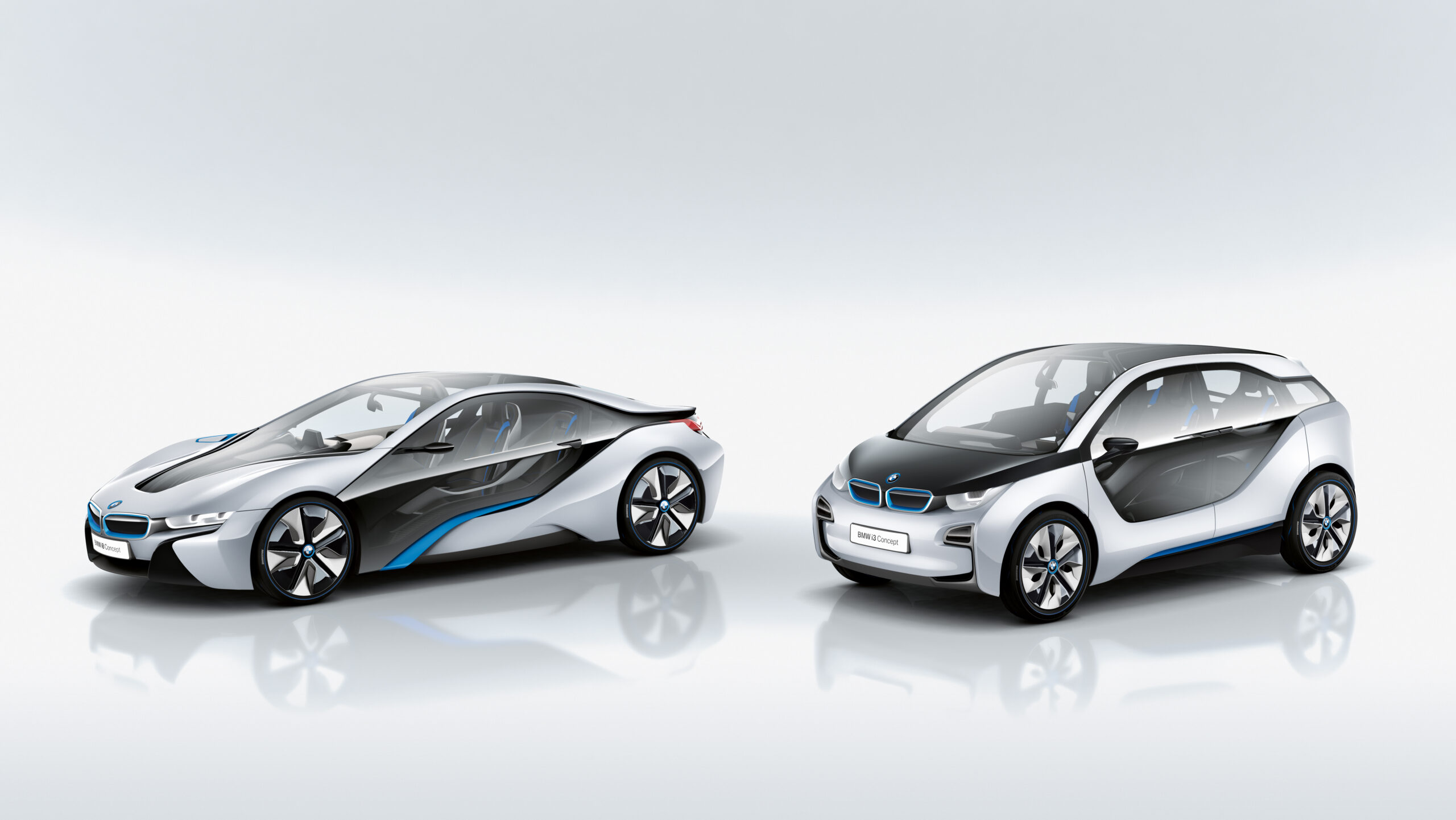
BMW i3 Concept and BMW i8 Concept (07/2011)
In the meantime, BMW pressed forward with its Megacity Vehicle, the BMW i3, which would share the range limitations of the MINI E and ActiveE. Overcoming those limitations would take another decade, and an entirely new generation of vehicles.
The post BMW NA 50th Anniversary: BMW Goes Electric appeared first on BimmerLife.
]]>The post BMW NA 50th Anniversary: BMW Branding Goes Global appeared first on BimmerLife.
]]>That question is at the heart of a controversy surrounding a 2010 BMW ad campaign that seemed to abandon BMW of North America’s longstanding The Ultimate Driving Machine tagline for the more nebulous “Joy is BMW.” The move outraged brand loyalists, not least because the campaign coincided with the introduction of cars like the 5 Series GT, aimed not at enthusiasts but at mainstream car buyers looking for a roomy interior rather than scintillating driving performance.
To brand loyalists, and to BMW of North America’s marketing executives, The Ultimate Driving Machine was more than a mere ad slogan. Coined by Martin Puris in 1975, the phrase was at the heart of what they loved about the brand, a perfect expression of their emotions surrounding BMW.
By contrast, those in the marketing department at BMW AG in Munich preferred “Aus Freude am Fahren,” the German tagline coined by the Gramm & Grey agency of Dusseldorf in 1965. In 1975, BMW dropped the “Aus,” reducing the tagline to simply “Freude am Fahren.” That translates most directly to “For the joy of driving,” which became the British tagline “Sheer Driving Pleasure” and the French “Le plaisir de conduire.”
BMW AG tolerated The Ultimate Driving Machine nonetheless, at least while BMW of North America’s sales were skyrocketing in the late 1970s and 1980s. By the end of that decade, however, BMW NA’s sales began falling thanks to Deutschmark-dollar currency fluctuations and a fresh challenge from Lexus. That put new pressure on BMW NA to abandon The Ultimate Driving Machine tagline, as well as the Ammirati & Puris agency that created it.
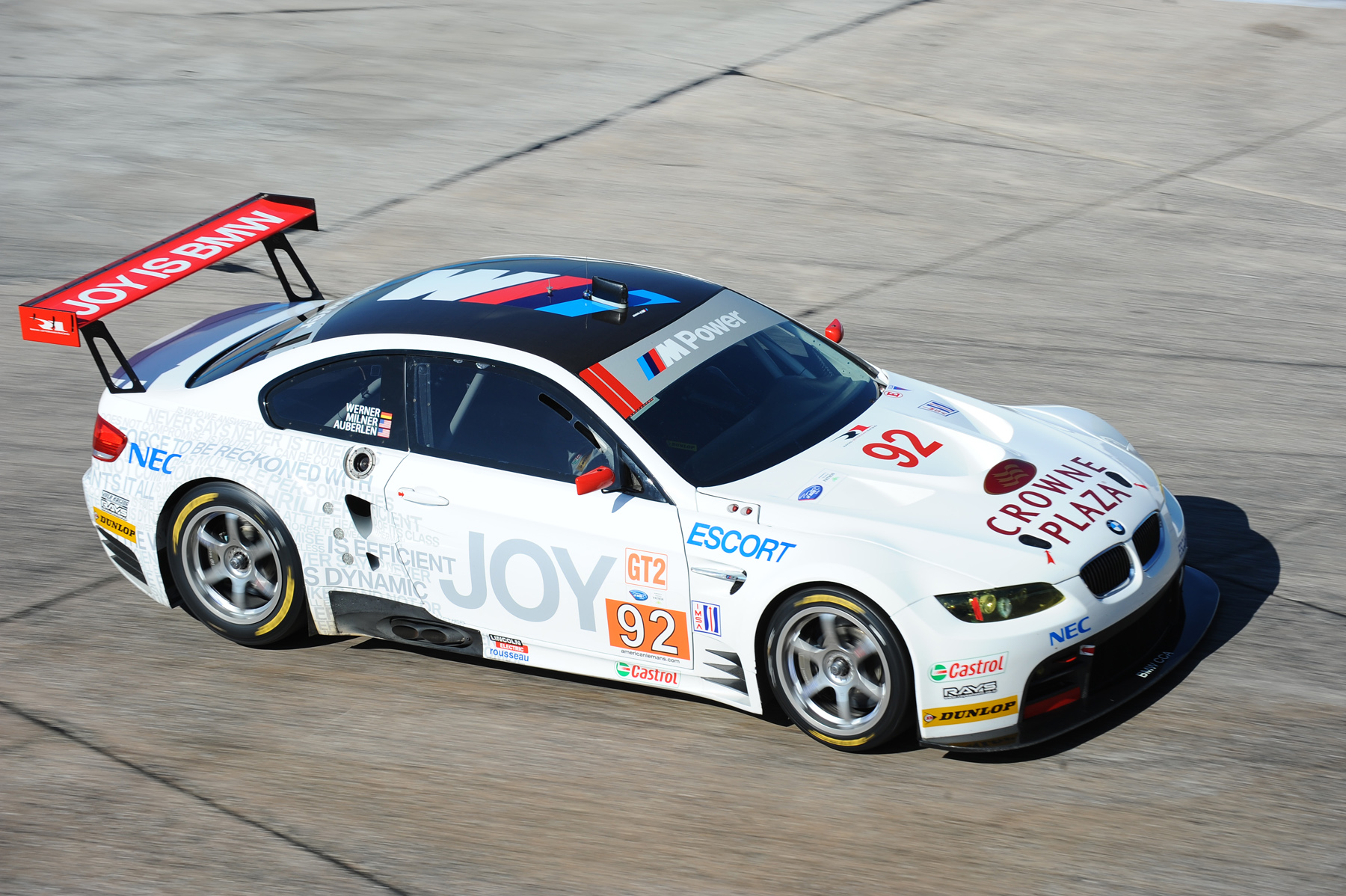
“Munich felt we needed fresh thinking in terms of advertising, and there was even a request of me to drop The Ultimate Driving Machine,” said Carl Flesher, then BMW NA’s Marketing Director. “I refused. I fought for Ammirati & Puris, saying they are an excellent agency, they have a feel for the brand, and advertising is not going to turn this business around. It’s got to be through product and pricing. They suggested we do the German thing, the Joy of Driving. I said, ‘I’m sorry, but the Joy of Driving just doesn’t land over here the way it does in Germany.’ It really is a linguistic issue.”
In 1992, Flesher was reassigned to BMW Manufacturing in Spartanburg, South Carolina, and BMW of North America put its advertising contracts up for review. Ammirati & Puris declined to participate, but the agency’s short-lived successor retained The Ultimate Driving Machine tagline, as did the Fallon agency hired in 1995 by new VP of Marketing Jim McDowell. Working with McDowell’s team, Fallon created innovative advertising that highlighted BMW’s identity as The Ultimate Driving Machine, as well as the technical sophistication underlying that claim. The Fallon ads used new camera angles, putting viewers in the driver’s seat as a BMW was driven with gusto on a twisty road or dry lake bed.
Those performance-oriented ads had particular resonance in the US market, McDowell said. “The psychographic of the BMW customer is much different here than in Europe. We’ve always had a higher level of specification and standard equipment in the US. In Europe, they sell some low-powered BMWs that we would not think of as being the Ultimate Driving Machine.”
In 2001, the conceptual divide between BMW NA’s advertising and that of BMW worldwide was further highlighted by the Fallon-produced BMW Films, aka The Hire. The films were intensely focused on performance, and they drew massive attention and universal praise for their high quality and emotional impact. Although they were well received in Munich—Board Chairman Dr. Helmut Panke showed them to a massive audience of BMW employees at the Olympic Stadium—the films also prompted BMW AG to exercise greater influence on sales subsidiaries like BMW NA.
In 2005, McDowell swapped jobs with Jack Pitney, taking over as Head of MINI USA while Pitney became VP of Marketing. Pitney was inclined to collaborate more closely with Munich, and also to “humanize” BMW’s image in the US.
“One criticism of BMW’s advertising over the years was that the intense focus on the cars was too cold and clinical,” said Patrick McKenna, then BMW NA’s Department Head for Marketing Communications. “Even dealers would ask, ‘Why don’t we show people in our advertising?’”
In search of a new direction, Pitney put BMW NA’s account up for review. Fallon declined to participate, and the creative account was awarded to Gurasich, Spence, Darilek & McClure of Austin, Texas, better known as GSD&M Idea City. The agency was known for the “Don’t Mess With Texas” anti-litter campaign, and for taking a humorous, offbeat approach to its subjects. Digital marketing would be handled by Kirschenbaum Bond Senecal + Partners of New York, and the two firms would work together to create a coordinated campaign across all media.
GSD&M’s work for BMW kicked off with the “Company of Ideas” campaign that premiered on May 8, 2006. The print ads were almost entirely text-based, such as the one entitled “NO” that declared BMW’s unwillingness to compromise while saying yes to the innovative ideas that make its cars Ultimate Driving Machines. For television, GSD&M used Zaha Hadid’s dramatic architecture for BMW’s Leipzig plant to highlight the firm’s openness to creativity.
The ads were well received, not only in North America but in Munich, where Board Chairman Helmut Panke was especially enthusiastic about GSD&M’s approach. “When I presented those ads to Panke, he slammed his fist on the table and said, “YES! You’ve managed to share our corporate strategy and make it understandable,’” McKenna said.
The ads resonated with the public, as well. BMW of North America’s annual sales increased from 266,200 in 2005 to 274,432 in 2006, then to an even more impressive 293,794 units in 2007.
It wasn’t to last. In early 2008, the market for mortgage-backed securities collapsed, followed by the stock market as a whole in September. BMW of North America’s sales fell commensurately, to 249,113 cars in 2008 and to 195,502 cars a year later. In response, BMW AG made significant changes at the top of the NA org chart. After nine years as BMW NA CEO, Tom Purves was sent to Britain to head up Rolls-Royce, while his fellow Scot Jim O’Donnell took over as CEO in Woodcliff Lake.
With that, the last bastion of BMW NA’s resistance to “Freude am Fahren” was removed. “Purves always said that ‘joy’ was not the ideal translation for ‘freude.’ He was always pretty staunchly against using the word joy in communications,” McKenna said.
O’Donnell had no such reservations. Moreover, he was on a mission to contain costs, as was BMW worldwide. Naturally, that would affect the marketing budget.
“When the E46 3 Series launched in 1998, there were 40 different ad campaigns around the world,” McKenna said. “When the company examined that, they just saw so much inefficiency. By 2005, advertising was focused on three main campaigns around the world: Europe, Asia, and the Americas. After the financial crisis, there was an intense focus on having one campaign for the world: Joy. GSD&M was invited to pitch against every major global agency, and they won.”
On May 14, 2009, GSD&M became BMW’s agency of record worldwide. The first of the “Joy” ads began appearing in other markets in June 2009, but BMW NA waited to debut the Joy campaign until February 2010, airing the ads during the Vancouver Winter Olympics and in support of the advertising-themed television series Mad Men.
The ads showed BMW’s cars cruising along sunny seaside streets or frolicking in the snow to an upbeat soundtrack, but the real focus was on those driving the cars, all of whom were smiling. “We realized a long time ago that what you make people feel is just as important as what you make,” intoned the distinguished voice of Will Lyman. “At BMW, we don’t just make cars. We make joy.”
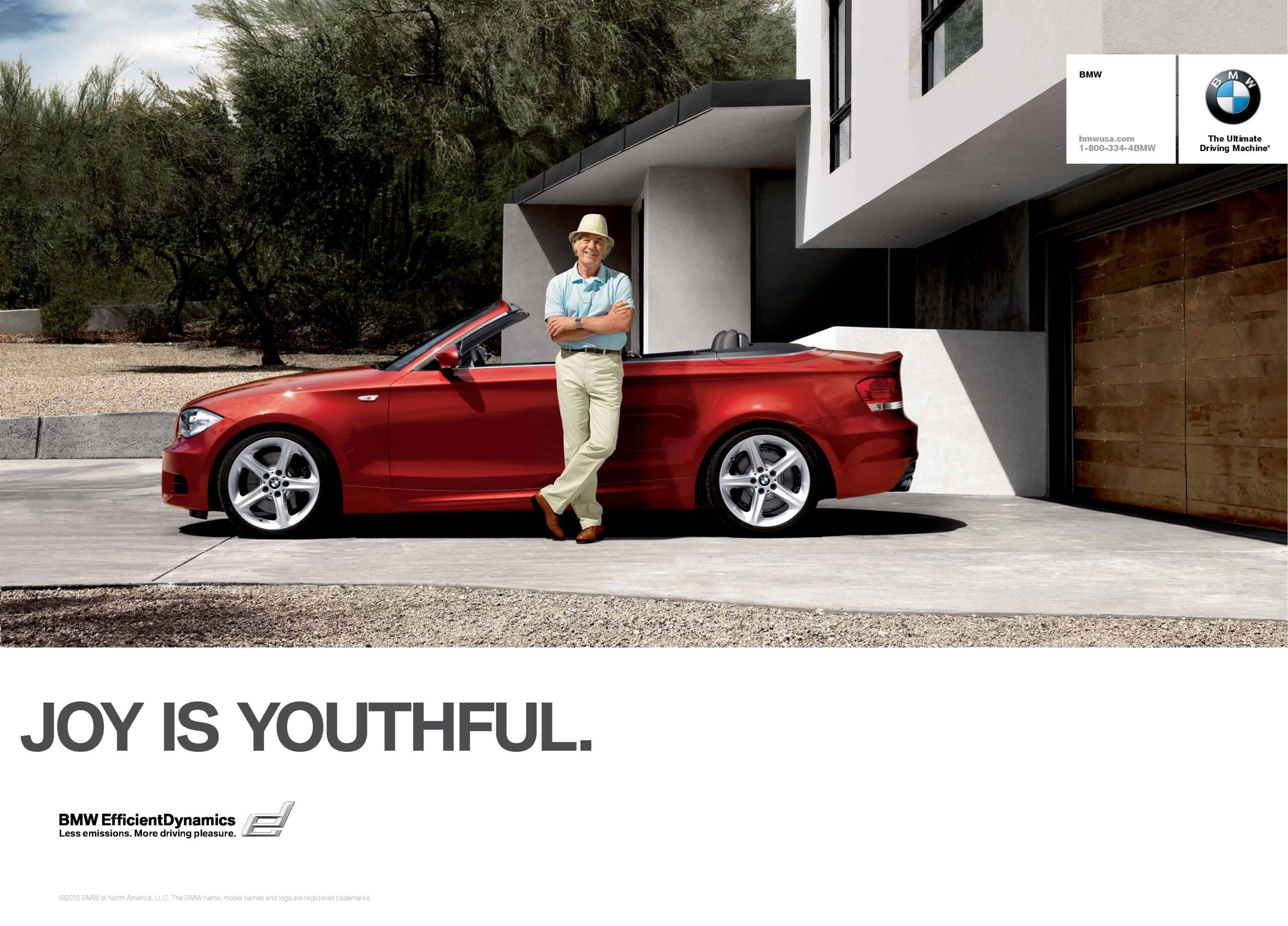
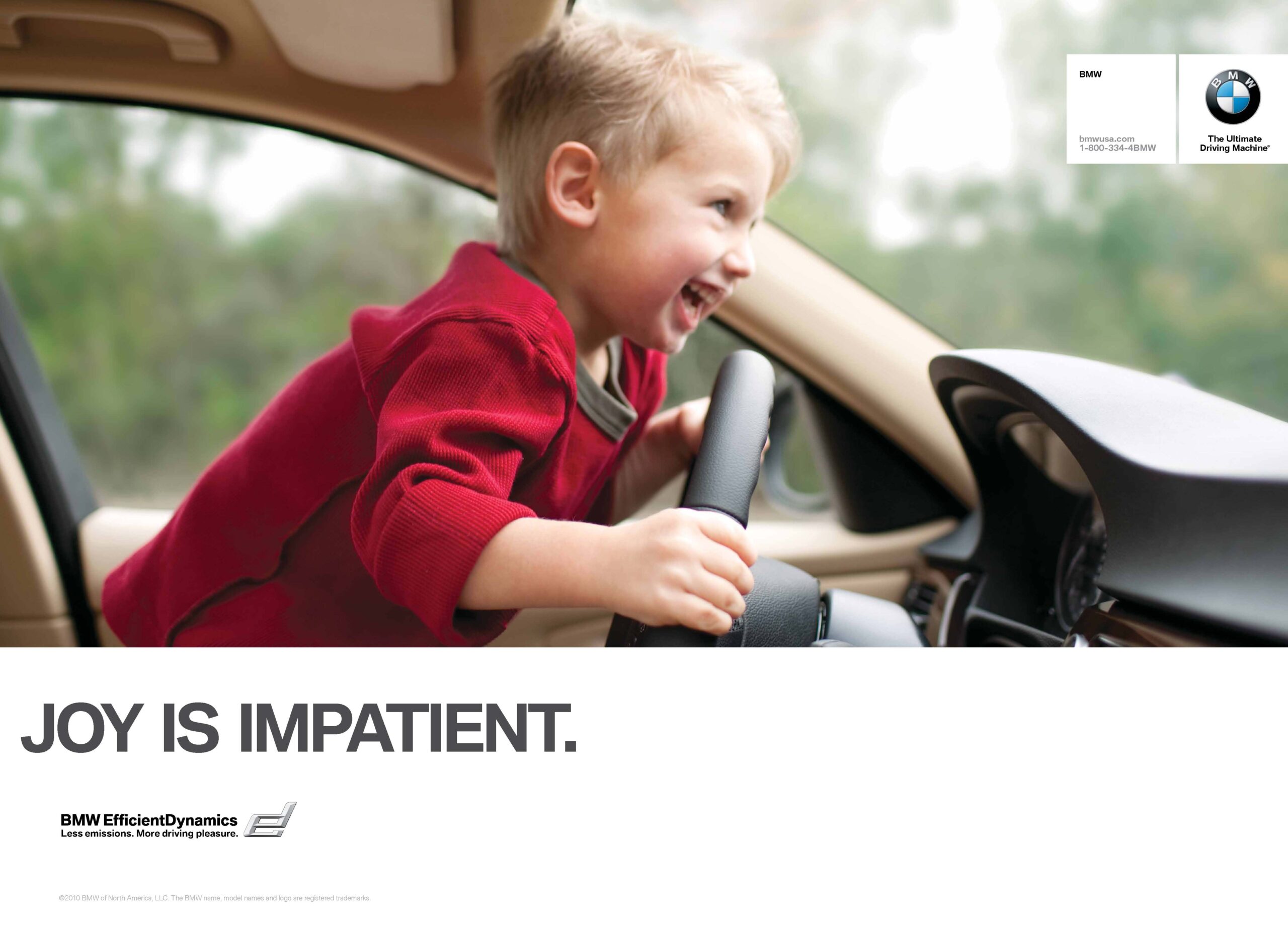
Some of the print ads showed the car only in fragments, emphasizing a small child clinging to the steering wheel above an all-caps “JOY IS IMPATIENT” headline, or a montage of model badges above the words “JOY CAN BE COUNTED.”
“The idea was largely driven by Jack [Pitney],” McKenna said. “It’s joy, and who doesn’t like joy? Who doesn’t like showing the human, emotional side of BMW?”
Probably no one, but within days the ads had inspired sharp criticism. The Wall Street Journal said that BMW had “parked ‘the ultimate driving machine, at least for a while. The slogan still appears in the ads, but only in small print. Many of the ads also suggest cars aren’t what BMW is offering. The text reads, ‘At BMW, we don’t [just] make cars. We make joy.’”
The Autoextremist’s Peter DeLorenzo was even more scathing. “You don’t just walk away from one of the most memorable and accurately descriptive advertising themes in automotive history ‘for a while’ as BMW says, and expect to blissfully escape any lasting repercussions or long-term effects.”
A month after the Joy campaign got underway in the US, this author discussed it with Pitney at BMW of North America headquarters. Pitney defended the campaign as an antidote of sorts to the popular perception not of BMW itself but of BMW drivers.
“Independent third-party research always seems to say that people have a very good opinion of the brand from a technical competence standpoint, but they equate BMW drivers with aggression and arrogance,” Pitney said. “That’s why we’re working to be more inclusive and add a bit more humanity in the way we talk about the brand, to try to make us a bit more approachable. What’s nice is that it actually has changed perceptions of the brand. It’s made us a bit warmer and more approachable, and it seems to be helping bring more new customers to the BMW family.”
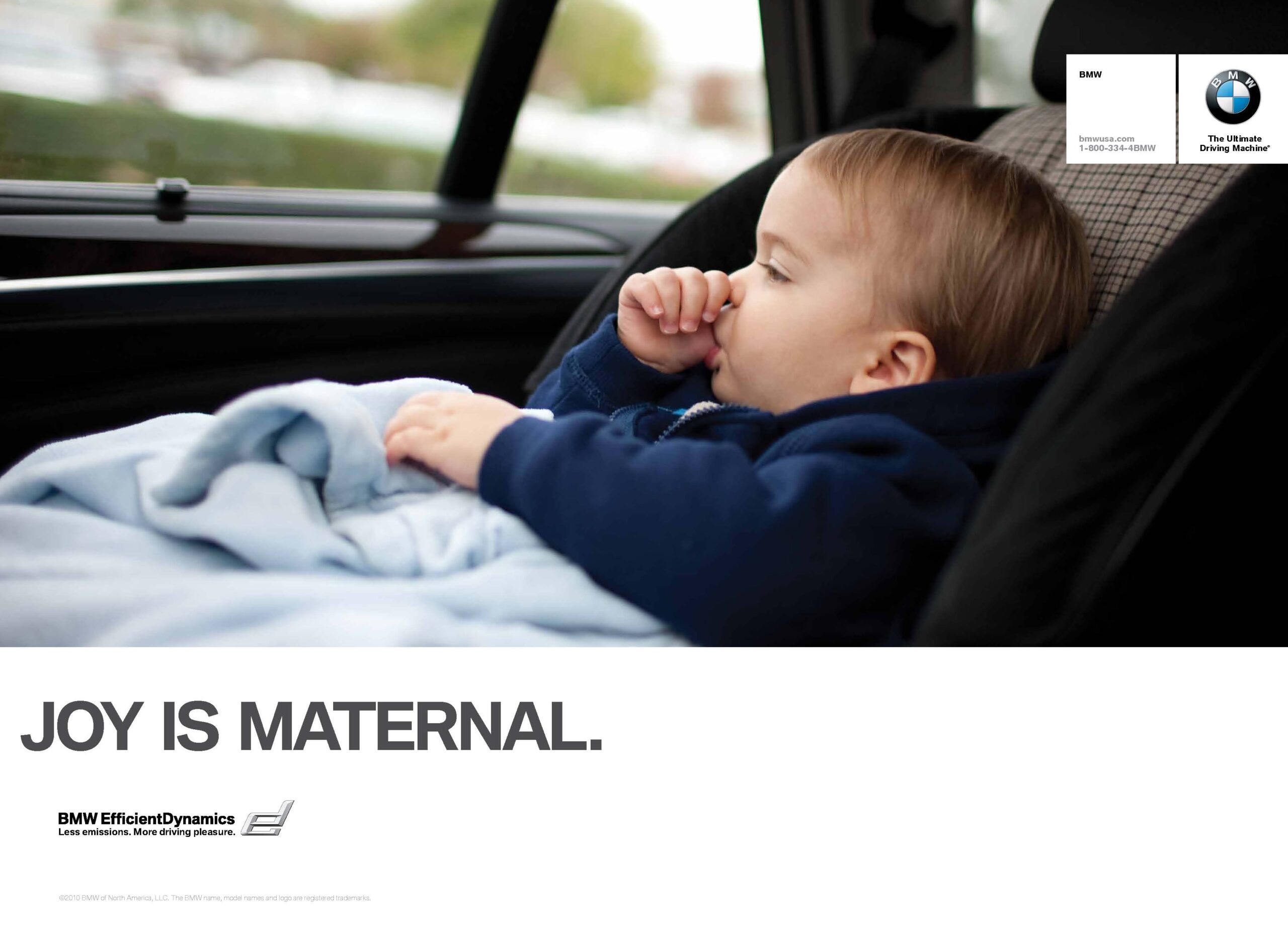
Perhaps, but the ads themselves and the subsequent media coverage had created confusion—and distress—among BMW’s most loyal customers. Some responded by sending Pitney death threats for his supposed “parking” of The Ultimate Driving Machine, even though the tagline was still present on the ads. As disturbing as that was, Pitney said, “I’d rather have that passion for the brand rather than just send things out there and wonder. This is a good thing. This is a very good thing.”
O’Donnell agreed. “It’s great. It proves that there are passionate BMW loyalists out there,” he said. Nonetheless, O’Donnell acknowledged, minimizing The Ultimate Driving Machine tagline hadn’t been universally appreciated. “I’ve been shocked, almost horrified, by the number of dealers who’ve come up to me and said, ‘What the hell is this? You’re giving up The Ultimate Driving Machine?’ No, we’re not!”
Despite the controversy, and despite having debuted in the midst of a global financial crisis whose effects would linger for years, the Joy campaign helped BMW’s sales increase from 195,502 cars in 2009 to 220,113 cars in 2010. (So did the incentives on auto sales within the American Recovery and Reinvestment Act of 2009, enacted under President Barack Obama.)
Before the yearly sales total could be announced, Pitney was killed in a tractor accident on August 26, 2010—days before he was set to take a new job as head of BMW NA’s Eastern Region. He’d be replaced as VP of Marketing by Dan Creed, promoted by O’Donnell from the Aftersales Division.
Shortly thereafter, GSD&M announced that it would not seek a renewal of its contract with BMW, which was set to expire at the end of 2010. Prior to GSD&M’s announcement, digital media agency KBS+P had been assigned to create BMW NA’s Super Bowl ad for early 2011—a responsibility that normally would have fallen to GSD&M. Following a review, KBS+P was awarded the entire BMW of North America account in September 2011.
KBS+P’s Super Bowl ad promoted the 335d to the tune of David Bowie’s “Changes.” It juxtaposed other manufacturers’ sluggish, soot-belching diesels with what narrator Chris Pine described as BMW’s “clean, quiet, and powerful” Advanced Diesels. The word “Joy” was nowhere to be seen, though the 335d’s driver was clearly having fun. Instead, The Ultimate Driving Machine appeared at the end, returned to its rightful place as the ideal descriptor of BMW’s cars.
Though the partnership with KBS+P had been fruitful, BMW of North America put its advertising account up for review in 2018. The contract was awarded to San Francisco firm Goodby, Silverstein and Partners, which had made its reputation with the “Got milk?” campaign. Goodby, Silverstein knows a good tagline when it sees one, and the agency has left The Ultimate Driving Machine where it belongs, in a prominent position in every BMW ad.
The post BMW NA 50th Anniversary: BMW Branding Goes Global appeared first on BimmerLife.
]]>The post BMW NA 50th Anniversary: Cars For U.S. Performance Enthusiasts appeared first on BimmerLife.
]]>Despite those challenges, BMW of North America’s product planners have always looked for ways to bring exciting cars to their customers, and to create limited-production models aimed squarely at performance enthusiasts. The first of these, however, nearly killed the prospects for special editions altogether.
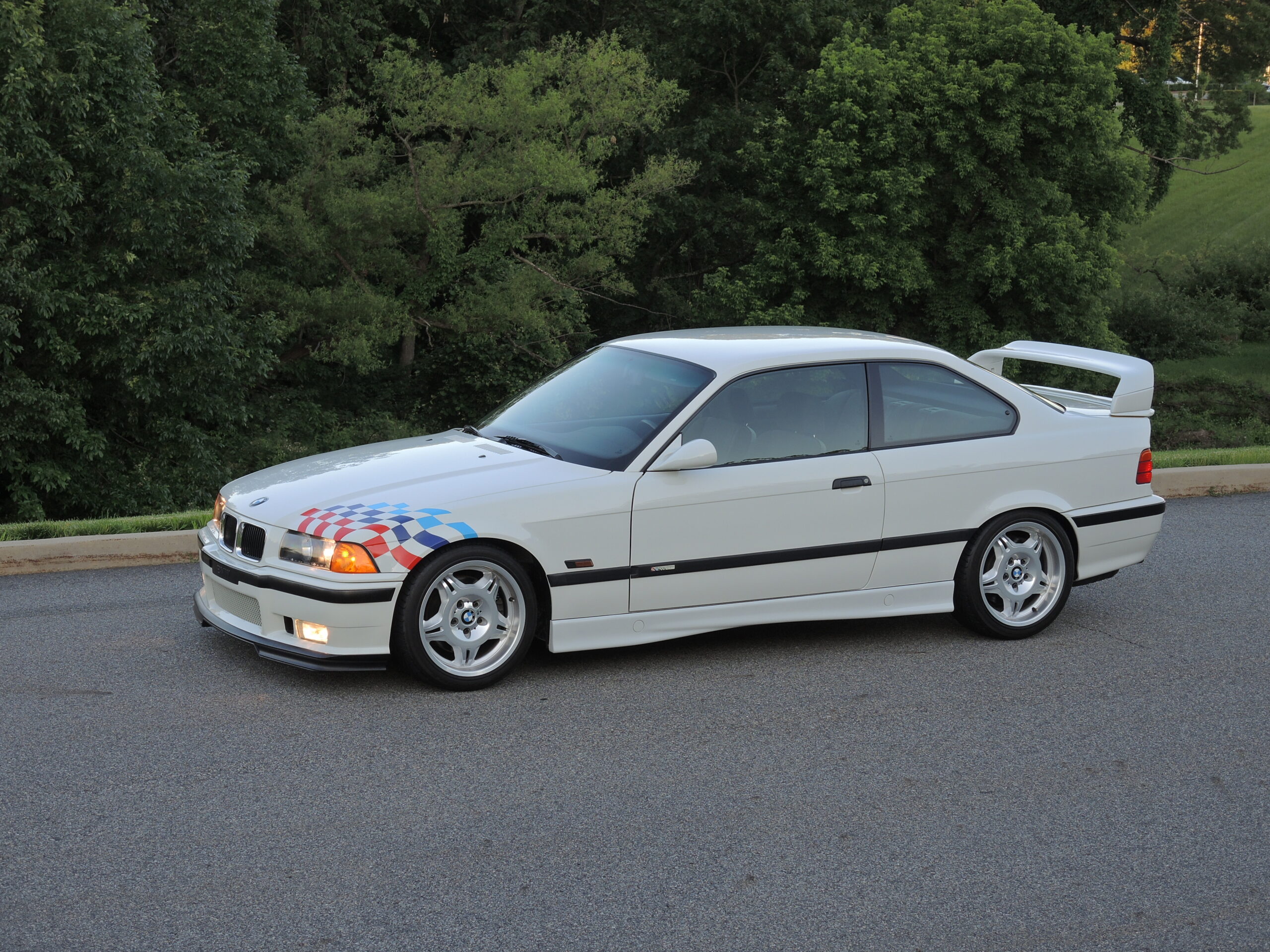
The car in question came into being in 1995, shortly after BMW NA convinced BMW M to create a U.S.-only version of the E36 M3 coupe that could be priced at $35,800—about $16,000 less than the model commanded in Europe. Within a year of its release, the U.S.-spec E36 M3 coupe sold so well that the U.S. became the largest market for M cars worldwide. That gave BMW NA the clout to commission a U.S-only M3 sedan from 1996, an M3 convertible from 1998, and an optional automatic transmission in all three body styles.
It also prompted BMW of North America to create a customer-racing version of the E36 M3 that could be campaigned in IMSA in the “showroom stock” class with few modifications. “The M3 has all the right bones, so let’s produce a limited-volume lightweight version that people can race in the IMSA Firehawk series right off the showroom floor,” said BMW NA’s then-Motorsport and M Brand Manager Erik Wensberg. “We went to Munich and asked if they could build 100 cars with no radio, no air conditioning, aluminum doors instead of steel, a shorter final drive, etc. They said no problem.” With less standard equipment, the M3 Lightweight undercut the weight of a standard M3 coupe by some 225 pounds. Its price, however, was significantly higher at $49,000, with the excess profits used to fund BMW NA’s racing program.
Production of the M3 Lightweight was set for the fall of 1994, which would give racers plenty of time to prep their cars before the start of the 1995 IMSA season in January. “BMW Motorsport called me in November [1994] and said we have a little hiccup, and we’re going to produce your cars next October [1995],” Wensberg said. To salvage at least some of the Lightweight’s competition potential, he persuaded BMW Motorsport to build ten pre-production examples in January and February of 1995, followed by one more in April. A further 115 production Lightweights would be built between August and October of that year. “By then, the season was over, and the car was a complete bomb,” Wensberg said. “The head of sales, Peter Moore, said, ‘Erik, the Lightweight’s a friggin’ wipeout. I’ve gotta put money in every trunk just to get rid of them. Don’t talk to me about special models anymore.’”
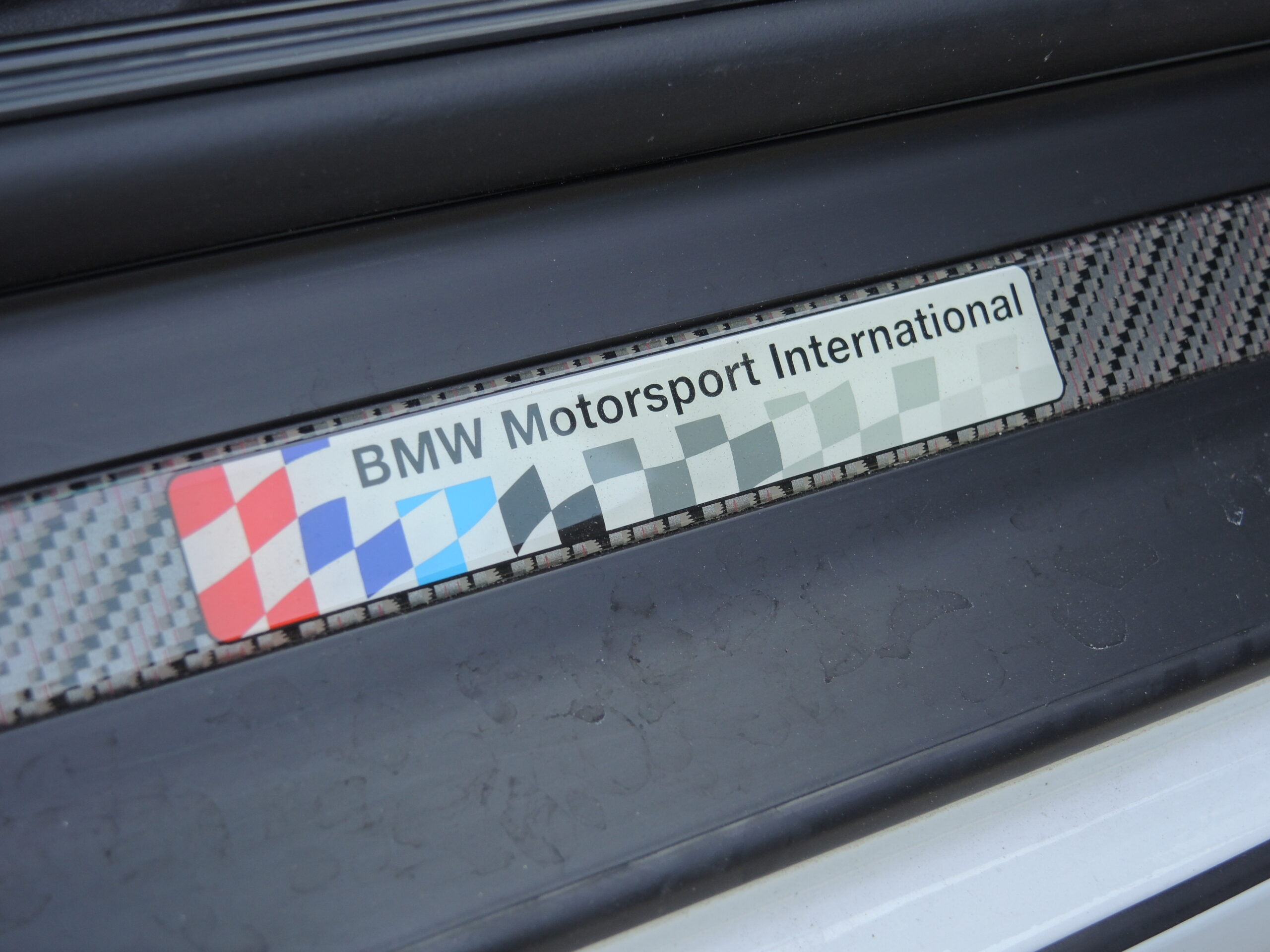
Along with “money in the trunk,” i.e. price incentives, the Lightweight’s trunk contained several parts that could be installed by owners for track use: a taller rear wing, a Motorsport oil pan, and a dual-pickup oil pump that would prevent cavitation under hard cornering. Unfortunately, none of these parts were DoT certified for road use in the U.S., and the taller rear wing blocked the third brake light. “If customers put these ‘race parts’ on the car, the warranty would be void, and customers didn’t really like that,” said Rich Brekus, then BMW’s Head of Product Planning and Strategy.
Combined with the production delays, those issues turned the M3 Lightweight into something of a disaster within BMW NA, and they curtailed the company’s enthusiasm for special editions—at least until the Lightweight came to be seen a cult classic after it was popularized by Fast & Furious star Paul Walker.
A few years after the Lightweight had bombed so spectacularly, BMW NA’s product planners began to contemplate new ways to bring higher-performance cars to U.S. enthusiasts—not as discrete models, but as reasonably priced option packages. “We started by offering Sport Packages on just about everything, including the 1999 E38 740i,” Brekus said. “The fight to get Sport on the E38 was incredible. [BMW NA president] Vic Doolan agreed with me, but Munich thought we were crazy. We ended up getting a 40 percent take rate on the 740i Sport, and that made us pretty confident. When BMW M decided not to offer an E46 M3 sedan, we said, ‘Okay, we have to do something.’”
That “something” was the 2003 E46 330i ZHP, in which the suffix stood for Z High Performance. For just $3,900 on top of the 330i’s $35,495 base price, the ZHP option equipped the car with a number of exclusive features: 18-inch M Double Spoke wheels; Silver or Black Cube interior trim; Alcantara upholstery on the seats, shift boot, e-brake handle, and steering wheel; M-Technic aerodynamics; a shorter illuminated shifter and the option of Imola Red paint previously exclusive to the M3.
More interestingly, ZHP equipped the 3.0-liter M54 six-cylinder engine with higher-lift camshafts, revised intake and exhaust systems, and a 300-rpm higher redline. The end result was 235 horsepower and 222 pound-feet where the standard M54 made 225 horsepower and 214 pound-feet. ZHP cars also got a lightweight flywheel, a six-speed transmission (exclusive to the ZHP among non-M E46s), and a shorter final drive ratio, all of which reduced zero-to-60 mph acceleration from 6.4 to 5.9 seconds. ZHP cars also got a faster 13.7:1 steering rack ratio and near-perfect suspension—revised springs and dampers, firmer bushings, and stiffer anti-roll bars—developed by M chassis guru Bernd Limmer. “All that stuff was released through BMW individual,” Brekus said. “We could put together a proposal, take those parts that had already been released, put them together in a package and bring them to the U.S. Stuff that was $20,000 in Europe was $4,000 over here.”
U.S. enthusiasts recognized a good deal, and a great car. So many checked the box for the ZHP option that BMW NA extended it to the 330Ci coupe and convertible, giving a broader range of 3 Series enthusiasts access to this truly transforming suite of upgrades. “The 330i ZHP was so nicely balanced and so nice to drive,” Brekus said, “and the passion people had for that car was incredible.”
Cars like the 740i Sport and the 330i ZHP proved popular, but they didn’t quite make up for the absence of the E46 M3 CSL, a truly exotic lightweight conceived by Dr. Burkhard Göschel. With composite materials used for the car’s bumpers, roof, and seat backs, the CSL wasn’t street-legal in the U.S., and its $96,000 price tag would have made it a tough sell in any case. Nonetheless, Brekus and Larry Koch, then BMW NA’s M Brand Manager, were determined to bring as many of the CSL’s features to the U.S.-spec M3 as they could, and to offer them at a reasonable price.
In 2005, they created the E46 M3 ZCP, in which the suffix stood for Z Competition Package. Commanding $4,000 on top of the M3’s base price, the ZCP option started with the CSL’s lightweight 19-inch Double Spoke wheels and track-suitable Michelin Pilot Sport tires, backed by larger-than-standard brakes with cross-drilled iron rotors attached to aluminum hats by steel pins that allowed them to “float.” The ZCP also got a steering rack with a faster ratio (14.5:1 rather than 15.4:1), and a steering wheel wrapped in grippy Alcantara. Like the 330i ZHP, the M3 ZCP was available in an exclusive color: Interlagos Blue. The M3 ZCP heralded a new age of electronic adjustability with M Track Mode, a more liberal setting for Dynamic Stability Control, and it premiered the “enhanced” suspension calibration that became standard on all M3s in 2005. Similarly, the Competition Package itself was such a hit that BMW began offering it worldwide on subsequent M cars. Five years after the debut of the M3 ZCP, BMW of North America created a special version of the 335i coupe that revived the beloved “is” suffix used to denote the sport version of 3 and 5 Series cars in the 1980s and ’90s. Regardless of the model in question, “is” designated the presence of sport seats, a sport steering wheel and shift knob, stiffer suspension, front and rear spoilers, and racing-style wheels.
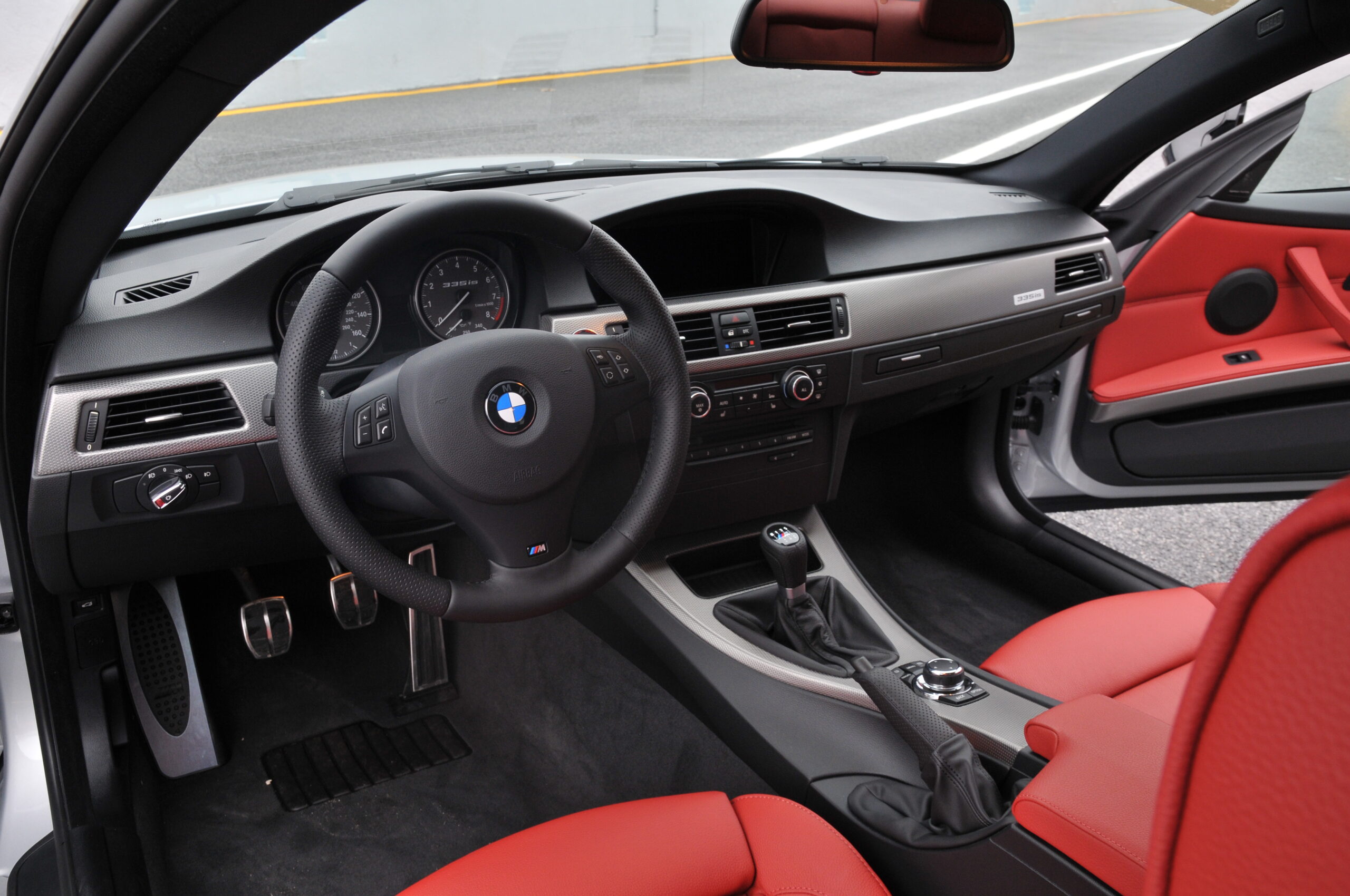
Introduced for the 2011 model year, the E92 335is coupe was equipped with the contemporary equivalent of all those parts. Unlike the earlier “is” models, it featured a significant power upgrade, too, thanks to the clever use of an engine at the tail end of its production cycle. While the standard 335i was updated for 2011 with the new single-turbocharged N55 six-cylinder engine, the 335is stuck with the older but twin-turbocharged N54, here with an exclusive new exhaust system and revised settings for the Digital Motor Electronics and turbocharger. Those modifications yielded 320 horsepower and 332 pound-feet, a discernible difference over the N55’s 300 horsepower and 300 pound-feet even before the overboost function upped torque output to 370 pound-feet. To handle the extra power, the 335is was equipped with extra-stiff engine mounts, an additional radiator and a more powerful cooling fan, an oil cooler, and larger air inlets in the front bumper. It also got a more robust clutch ahead of the six-speed manual transmission, which track-oriented enthusiasts could swap for the seven-speed Dual Clutch Transmission (DKG 436) borrowed from the E9X M3. With DCT, the 335is could scoot from zero to 60 mph in just 5.0 seconds—a full 0.5 second faster than a standard 335i with an automatic.
From 2011 to 2012, BMW of North America sold some 4,500 examples of the 335is, and many more of the Z4 sDrive35is and 1 Series M Coupe that also used the high-output N54 engine.
Special editions had long been used to boost sales as a model aged, and that was particularly true of the M cars that normally sell in their highest volumes when first launched. That doesn’t bode well for cars that launch during a financial crisis, as the E9X M3 did in 2008. To compensate for slow initial sales, BMW offered an unprecedented number of E9X M3 special editions to maintain customer interest. Most of these were created for a single market, like the M3 Tiger Edition offered only in China for 2010 or the three Pure Editions sold in Australia and New Zealand from 2010 to 2013.
In the U.S. market in 2010, 30 lucky customers were able to purchase a Frozen Grey M3, which combined the Z Competition Package with M-DCT, matte paint, and a two-tone interior. As cool as that was, it paled in comparison to what BMW NA’s M Brand Manager Matt Russell had in store for 2013, the last year of E92 M3 production. Russell worked with legendary racer/instructor Skip Barber, then the owner of Connecticut’s Lime Rock Park raceway that has long been considered BMW NA’s home track. Together, Russell and Barber specified an M3 coupe chock full of exotic parts, and with a track-oriented focus worthy of Lime Rock Park itself. The 2013 E92 M3 Lime Rock Park edition was equipped with a BMW M Performance exhaust made of Inconel and titanium, just like that of the McLaren F1. The exhaust didn’t liberate any power beyond the S65 V8’s 414 horsepower and 295 pound-feet, but it was 40% lighter than stock and sounded fantastic. BMW M Performance also contributed the LRP’s carbon fiber front splitters, rear lip spoiler, and the Alcantara-wrapped steering wheel with a blue index stripe. All of those parts—and the rear-side window sticker with a map of the Lime Rock track —were installed at U.S. ports rather than in Munich. “The Aftersales department moved heaven and earth to hand-finish the LRP cars, and I was terribly proud of that collaboration,” said Russell.
In addition to those LRP-specific features, the car was equipped with the M3’s Competition Package: 10mm lower ride height, modified software for Electronic Damper Control’s Sport mode and DSC, a sharper steering rack, larger brake rotors, and 19-inch cross-spoke wheels with wider tracks. As a U.S. model, the car was available with a seven-speed M-DCT or the six-speed manual gearbox, that proved more popular in the Lime Rock than in E9X M3s overall. To ensure that all of those features worked in harmony, Barber tested the car himself at Lime Rock Park, joined by BMW factory driver Bill Auberlen for a full day on track in 2012. The LRP needed a special color to go with its high-performance equipment, and BMW M in Munich suggested Valencia Orange metallic. A “proof of concept” prototype was painted Valencia Orange, but that color had been offered as an exclusive option on the 1 Series M Coupe, as BMW NA’s legal department pointed out. Russell was forced to find another color, and he chose Fire Orange in consultation with several colleagues and BMW NA’s Product Committee. Offered first on the track-oriented M3 GTS offered in Europe, Fire Orange made a bold statement about the LRP’s high-performance character, and it provided a dramatic contrast to the car’s carbon fiber roof, Anthracite/Black interior, and the optional Jet Black wheels that adorned some 38 LRP cars.
BMW built just 200 of these cars for the U.S. market in September and October 2012, each with a plaque identifying it as “ONE of 200 M3 Lime Rock Park Editions.” At a base retail price of $70,350, the car commanded only a modest $7,500 premium compared to a standard Competition Package M3. Today, a well-kept, unmodified Lime Rock Park edition sells for nearly twice its original MSRP, while a low-mileage E36 M3 Lightweight sells for five times its price in 1995. These special BMWs might have been a tough sell when new, but they have longstanding enthusiast appeal as well as long-term value.
Over the last few decades, BMW of North America has steadily expanded the number of enthusiast-oriented, special-edition cars in its lineup, though the cost of federal certification prevents low-volume, coach built models like the 3.0 CSL and Skytop from being sold in the U.S. Nonetheless, BMW NA brought the track-ready M4 GTS to the U.S. in 2016, and in 2025 offers high-performance CS versions of the M2, M3, M4, and M5 as well as the manual-transmission Z4 Roadster known as the Handschalter. These cars will never appeal to the majority of BMW customers, but neither are they meant to. They’re special cars, aimed at the most dedicated BMW enthusiasts of today…and tomorrow.
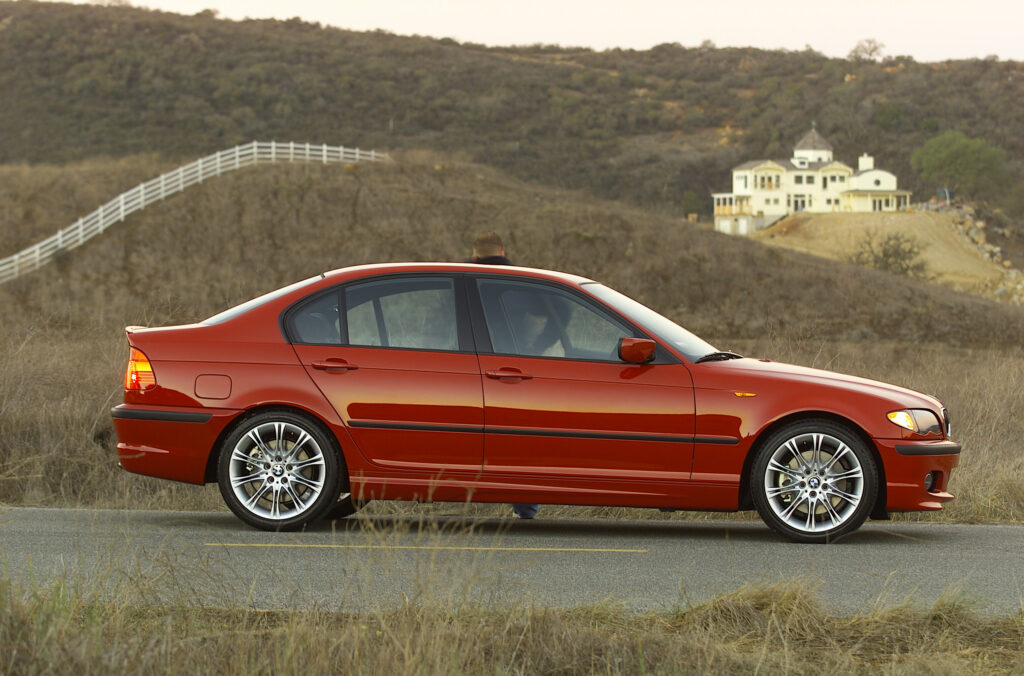
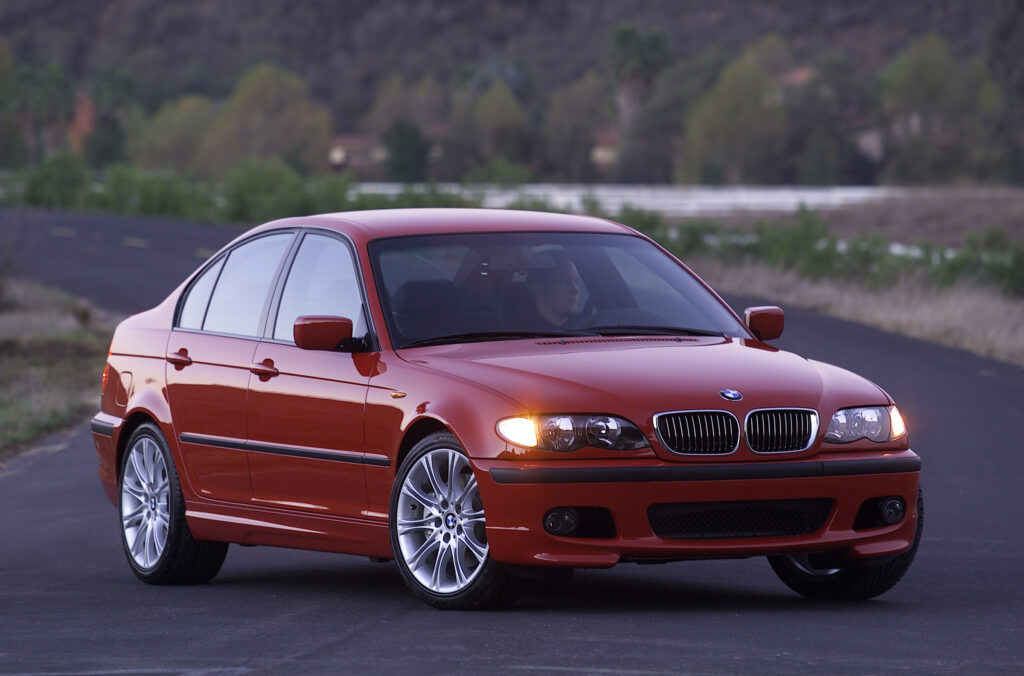
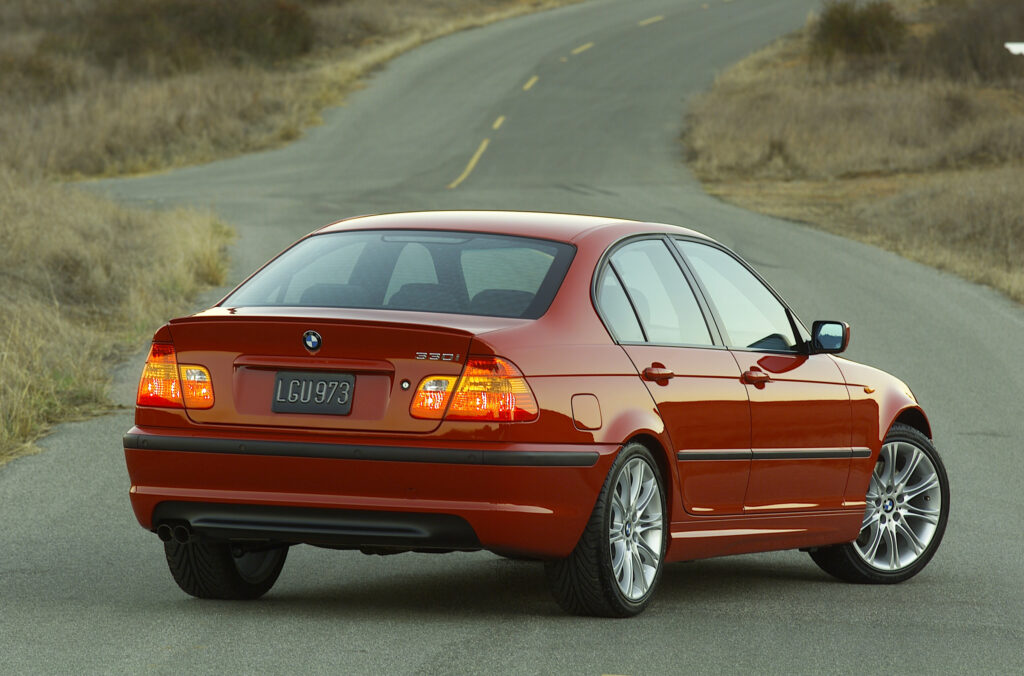
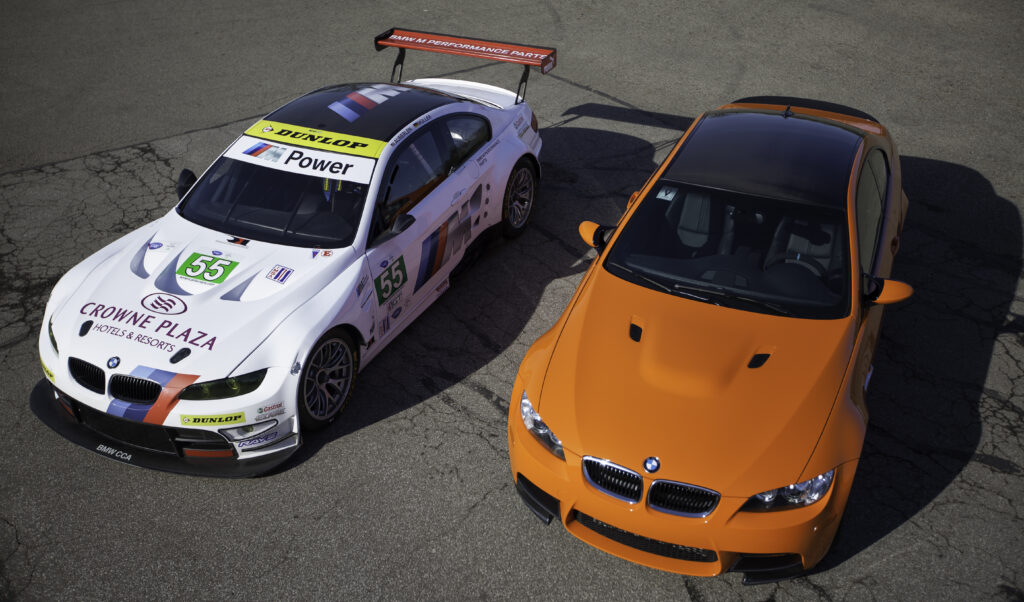
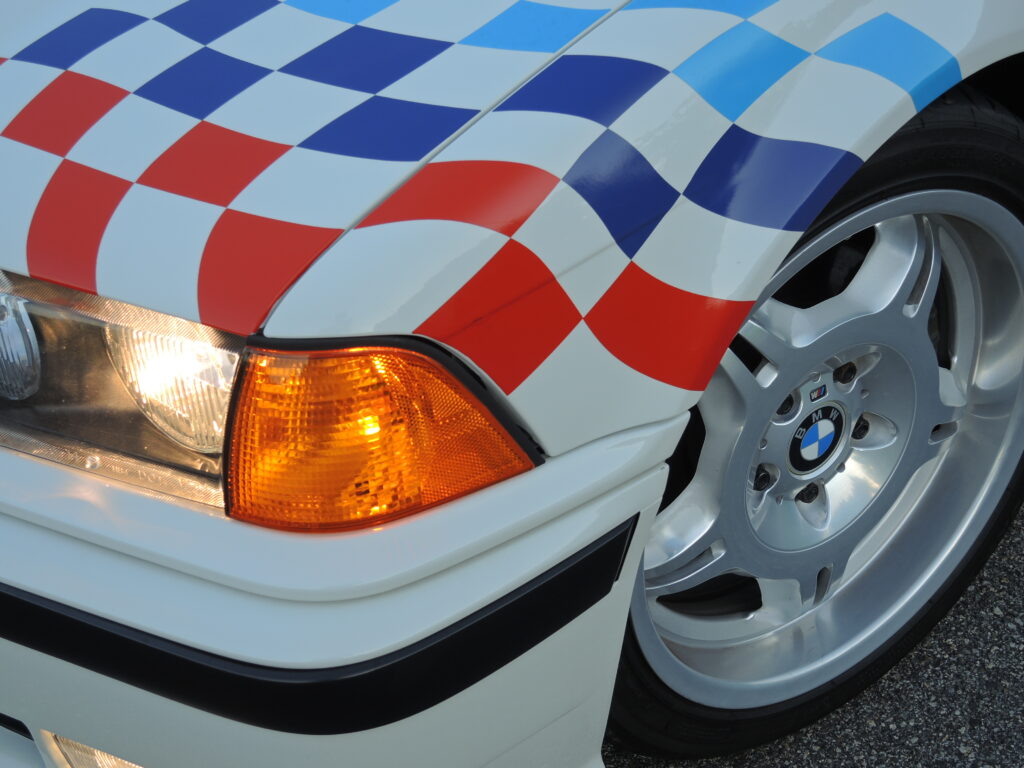
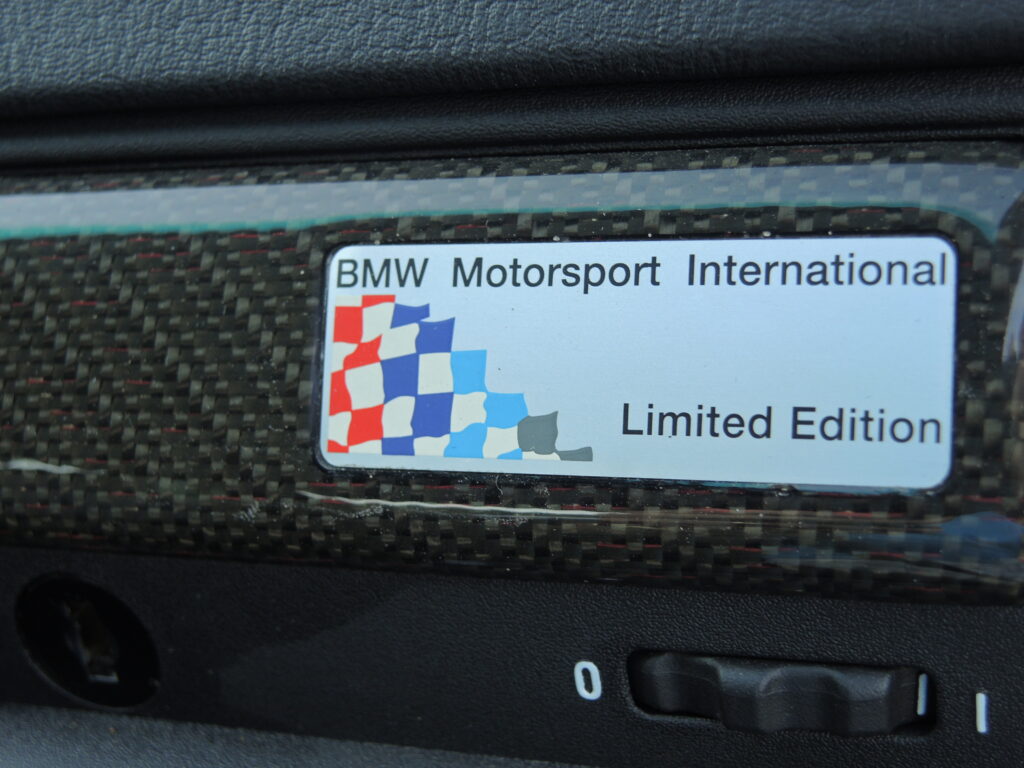
The post BMW NA 50th Anniversary: Cars For U.S. Performance Enthusiasts appeared first on BimmerLife.
]]>The post BMW NA 50th: BMW Group Revives Rolls-Royce appeared first on BimmerLife.
]]>Like nearly all automotive nameplates, Rolls-Royce was founded by an inventive individual. Henry Royce built his first automobile in Manchester, England in 1904, and two years later he was joined by a partner, Charles Rolls. Royce’s firm became Rolls-Royce Ltd., which began manufacturing airplane engines as well as automobiles in 1914, when Great Britain entered World War I. In 1931, Rolls-Royce added to its portfolio by buying the smaller Bentley automotive company, then on the verge of bankruptcy during the Great Depression. Rolls-Royce’s airplane engine business helped the company flourish during World War II, and to acquire coachbuilders Park Ward and Mulliner shortly after the war ended. Its prosperity wouldn’t survive the prolonged austerity of the postwar period, however, and financial troubles saw Rolls-Royce taken over by the British government in 1971. In 1980, the government sold Rolls-Royce to Vickers PLC, a defense and industrial concern that was otherwise uninvolved with the automobile business. As that suggests, Vickers lacked the expertise or the resources needed to modernize the cars sold under the Rolls-Royce or Bentley nameplates, both of which it acquired in the same transaction.
As Tony Lewin reported in The Complete Book of BMW, BMW offered to buy 20 percent of Rolls and Bentley in the early 1990s, but Vickers wanted to sell the entire automotive operation. BMW remained interested, however, and began sharing technology, components, and testing facilities with Vickers. That collaboration resulted in the 5 Series-based 1994 Bentley Java concept and two 1998 automobiles: the BMW V12-powered Rolls-Royce Silver Seraph and the BMW V8-powered Bentley Arnage. Despite those ties, BMW almost lost out to Volkswagen when Vickers sold both Rolls and Bentley to the Wolfsburg manufacturer in 1998. Fortunately for BMW, Volkswagen failed to notice that the Rolls-Royce brand name hadn’t been included in the €430 million sale. The brand name, and the famous “RR” logo, belonged not to Vickers but to a separate entity: Rolls-Royce PLC, a maker of aircraft engines and a partner with BMW in the aerospace industry.
For £40 million, BMW licensed the rights to the Rolls-Royce name and logo. Now the company could create its own all-new Rolls-Royce automobile, a factory in which to build it, and a sales and distribution organization to bring it to market.
To head its nascent Rolls-Royce organization, BMW tapped Karl-Heinz Kalbfell, then Head of Worldwide Product Planning and Strategy. Kalbfell was an Anglophile, and he wanted to create a 21st-century Rolls-Royce that would reflect the brand’s English heritage. It was essential that such a car would be manufactured in England, so Kalbfell contacted the Duke of Richmond about setting up a new manufacturing facility on his 12,000-acre Goodwood estate, home of the Goodwood Festival of Speed and the Goodwood Revival. The duke agreed, and a factory was soon under construction on his land just outside Chichester.
Since BMW couldn’t use the Rolls-Royce name until January 1, 2003, Kalbfell and his small team worked out of a secret office in the City of London, augmented by engineers in Munich and Gaydon, home of the Rover Group. (In early 2002, the highly-regarded Kalbfell left BMW to run Alfa Romeo and Maserati, replaced by Tony Gott, who’d been CEO of Rolls and Bentley during the Vickers era.)
BMW hadn’t acquired any of Rolls-Royce’s pre-existing intellectual property such as engineering or design documents, leaving the team free to create a truly new automobile. They gave the car an all-aluminum space frame, mated to a 6.75-liter BMW based V12 engine with Rolls-specific tuning that favored torque over high horsepower. In production form, the engine would deliver 453 horsepower at 531 pound-feet, with nearly 400 pound feet available from 1,000 rpm.
Rolls had never bodied its own cars prior to World War II, but its vehicles had an unmistakable visual identity throughout the company’s history. Much of that was conveyed by the upright “pantheon” grille and Spirit of Ecstasy hood ornament, but neither of those features had conveyed to BMW. That left designer Ian Cameron to draft a new but still recognizable face for the car, which he did by interpreting the grille with squarer, less upright proportions and revising the Spirit of Ecstasy. Ingeniously, Cameron designed the Spirit of Ecstasy to be more aerodynamic and somewhat smaller, and to quickly retract in the event of a pedestrian collision. It can also retract into the hood should someone attempt to steal or vandalize it.
Rolls-Royce had always been characterized by its stately proportions, with a long wheelbase, long bonnet, and a roof height double that of the very tall wheels and tires. The new Rolls-Royce needed to retain those proportions, and it needed to be about twenty percent larger than the average car, with “a sense of presence and balance,” said Robert Austin. “It also needed an interior that was warm, comfortable, and conducive to conversation, with only the finest materials used on any surface you may see or touch.” Austin had become Rolls-Royce’s North American Communications Director in September 2002, recruited by President James Selwa. Though he’d recently retired from a forty-year career at Volvo, he was intrigued by the prospect of representing this venerable marque and came on board with enthusiasm as Rolls-Royce was building its import and distribution organizations in markets like North America. “We were busy signing up new dealerships, most of which had previously been Rolls-Royce dealerships,” Austin said. Rolls-Royce had sold just a handful of cars in the US each year throughout the 1990s, but the marque needed to attract a sizable number of potential customers who’d be ready to buy once the new car was revealed. As with the car’s design and engineering, all of that took place under strict secrecy.
“We set up three ‘closed rooms’ across the US. One was outside Miami, another in Culver City, California, and the third in a warehouse in Lyndhurst, New Jersey,” Austin said. “Each was located inside an industrial building with no signage, just a number on the door. In order to attend, a dealer had to propose your name and accompany you to the viewing. Upon arrival, you’d be served coffee in a nice reception area, and then you’d be taken into a room where you’d see the story of Rolls-Royce. Finally, the lights would go out and we would reveal the new Phantom, long before anyone had even seen a spy photo of the car. It had a truly James Bond-like quality, and people loved it.”
On January 6, 2003, the world got to see what the privileged few had previewed. At the Detroit Auto Show, BMW unveiled the Phantom, the first Rolls-Royce created under its ownership. “Most of the people at the show were kind of awe-struck,” Austin said. “It was more than they expected, physically overwhelming. But everyone had to admit that the new Rolls-Royce was beautifully built and exquisitely finished.”
The same Detroit Auto Show had also seen the debut of Mercedes’ high-end Maybach limousine and Volkswagen’s sportier Bentley Continental GT, but the Phantom stood out even against such illustrious competition. Although it made a strong impression, journalists gave mixed reviews of the $324,000 car. That was hardly surprising, Austin said, as a 5,577-pound limousine wasn’t the sort of car automotive journalists tend to favor. “It’s not why they took the job, and they don’t meet the demographics of people who buy cars like this. But if you owned a $12 million house [in 2003 dollars], if you were the head of a company, or were in the entertainment business, or if you simply wanted to buy ‘the best car in the world,’ you were a prospect.”
Each Phantom was—and remains—custom-built to its owner’s taste, with a broad assortment of exterior colors, leathers, and woods augmented by bespoke options that allowed customers to match any color they liked, or to add custom touches like a coat of arms in mother-of-pearl, monograms, etc. All of those options made the Phantom a favorite among high earners in sports and entertainment, as well as those in less visible fields. “You know why so many people in the music business love Rolls-Royce cars?” Austin said. “Because it’s virtually silent inside, and it’s got a killer audio system.” In resurrecting Rolls-Royce, BMW had tapped into a burgeoning market for ultra-luxury goods among the überultra-wealthy and their emulators. In 2003, its first year on the market, the Phantom was delivered to 481 customers worldwide, about half of whom were in the US.
Along the way, Rolls-Royce’s business has changed, too, according to Gerry Spahn, Head of Communications for Rolls-Royce Motor Cars Americas. “The cars are more personalized than ever, and some are even coachbuilt,” Spahn said, noting the spectacular Rolls-Royce Boat Tail Coachbuild commission shown at Villa d’Este in 2021. “As a result, pricing has risen from less than $300,000 per car to more than $500,000 over the past decade.” Indeed, bespoke Rolls-Royce vehicles can command a retail price in the millions of dollars. Many such cars are configured at the Rolls-Royce’s new Atelier in New York City, where prospective clients can pick out their cars’ finishes and features in an appropriately high-end environment. In addition to that fixed location, Rolls-Royce sets up a mobile Atelier at Pebble Beach and other concours events where its customers are likely to gather. Those customers are younger than ever, Spahn said, younger even than those shopping for MINI or BMW vehicles. “Rolls-Royce is the youngest brand in the BMW Group, with an average customer age of 43. That’s down from around 60 fifteen years ago.” They’re increasingly North American, too. Last year, about half of all Rolls-Royce cars were sold on this continent, making it the largest market for the brand worldwide. Like its MINI counterpart, Rolls-Royce has become an essential component of the BMW Group’s strategy for success, bookending the core BMW brand with high-end, individual automobiles. “Our mission was to restore Rolls-Royce to its historic position at the very pinnacle of the automotive pyramid,” Austin said, “and I believe we succeeded.”
The post BMW NA 50th: BMW Group Revives Rolls-Royce appeared first on BimmerLife.
]]>The post BMW NA 50th Anniversary: Formula-BMW USA appeared first on BimmerLife.
]]>In 2001, BMW Motorsport moved to do exactly that. Taking over the ADAC series altogether, BMW would provide not just engines but complete cars. At the same time, BMW created a unique organizational structure designed to help young drivers—age 15 years or older, with no prior international racing experience other than karting—build professional careers through its education and coaching program located at two Formula BMW Racing Centers in Valencia, Spain, and Bahrain. The new Formula BMW series began running in 2002, with races in Germany, the Netherlands, and Belgium. Its first champion, Nico Rosberg, won the title as a rookie; he’d make it to Formula One in 2006, and he became F1 world champion ten years later. In 2003, F-BMW added a series in Asia, and Ho-Pin Tung was crowned champion; he’d become a test driver for BMW Williams and BMW Sauber F1.
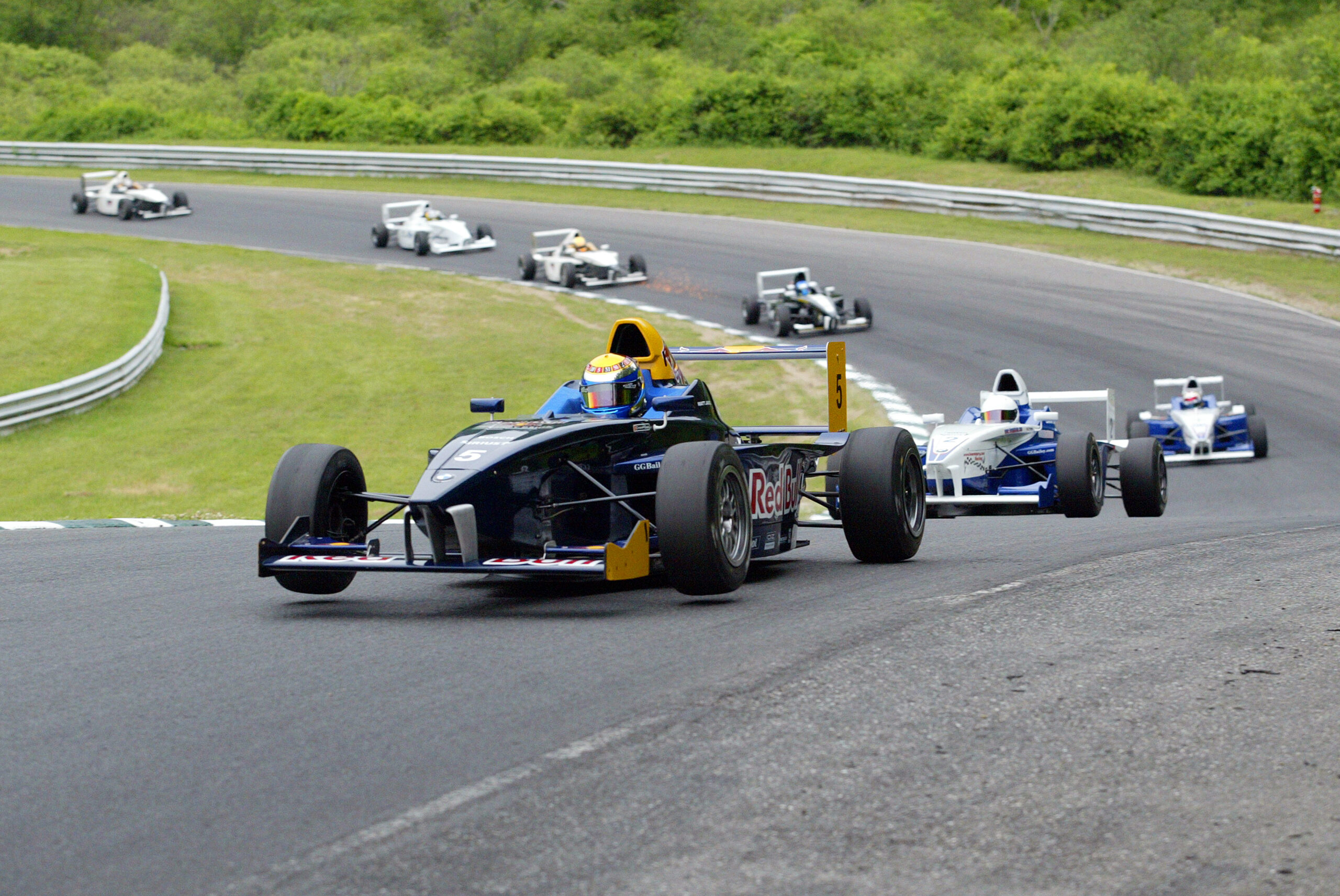
Shortly after the 2003 season got underway, BMW Motorsport Director Dr. Mario Theissen decided that the series should expand to the UK and North America for 2004. BMW of North America VP of Marketing Jim McDowell agreed, and preparations began for the debut of Formula BMW USA the following year.
McDowell tapped Alex Schmuck to organize the series, a formidable responsibility for a young marketing manager. “It was a big lift, but Schmuck had a passion for motorsports, and incredible amounts of experience in karting,” said Tom Salkowsky, then BMW NA’s team leader for Experiential Marketing.
Schmuck announced the series at the Long Beach Grand Prix on April 13, 2003, hoping to entice ChampCar teams to fund a junior program in Formula BMW USA for the following season. “We had a very short lead time, and we didn’t have a sanctioning body or a schedule when we went out to sell cars,” Schmuck said. “I said, ‘Listen, we’re racing in F1, we’re dedicated to motorsports, and we want to do this in the US,’ but it was a tough sell.”
Schmuck’s task was made challenging by Formula BMW’s high cost of entry compared to other junior series. The price of a car was set at $64,000, plus $20,000 for spare parts and $20,000 per entry for the season. With travel and other expenses, a full season of racing could cost up to $200,000—a hefty sum for a driver age 15 to 23.
The cars themselves were certainly worth the money, being far more sophisticated than the steel tube-framed cars most youngsters would drive after moving up from karting. Penned by Michael Scully at BMW Designworks/USA in California, the F-BMW race cars were manufactured by Mygale in France. With a safe and strong carbon-Kevlar composite tubs, the BMW Motorsport-developed Formula Rescue Seat, and accommodation for a HANS device, each F-BMW exceeded FIA safety requirements for the class.
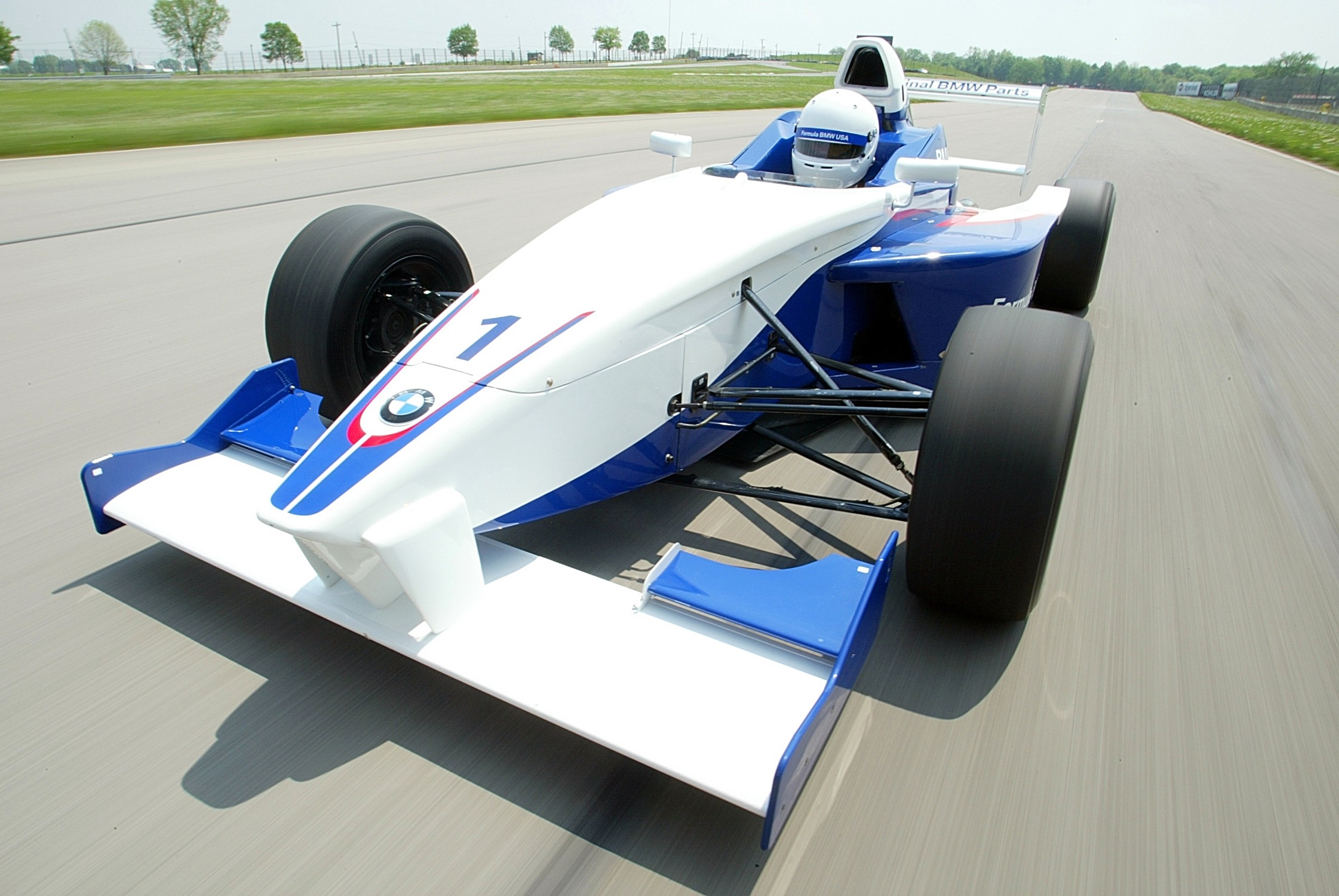
Power for the 1,003-pound race car was supplied by a 1,171cc K 1200 RS four-cylinder BMW motorcycle engine, mounted behind the driver and delivering 140 horsepower and 86 pound-feet through a single-plate clutch and a Hewland six-speed sequential gearbox. The double-wishbone suspension had adjustable dampers at all four corners; brake bias and aerodynamic downforce were also adjustable, with assistance from Pi Systems’ onboard data recording.
Schmuck and his Formula BMW USA Team worked the phones, reaching out to teams in the US and Canada. Among the first to say yes were Indy 500 winner Bobby Rahal, who created the one-car Vitesse team for his son Graham, and Tom Milner, whose Prototype Technology Group ran BMW’s M3 program in the American Le Mans Series. Milner agreed to field a team of four cars, one of which would be driven by his son, Tommy Junior.
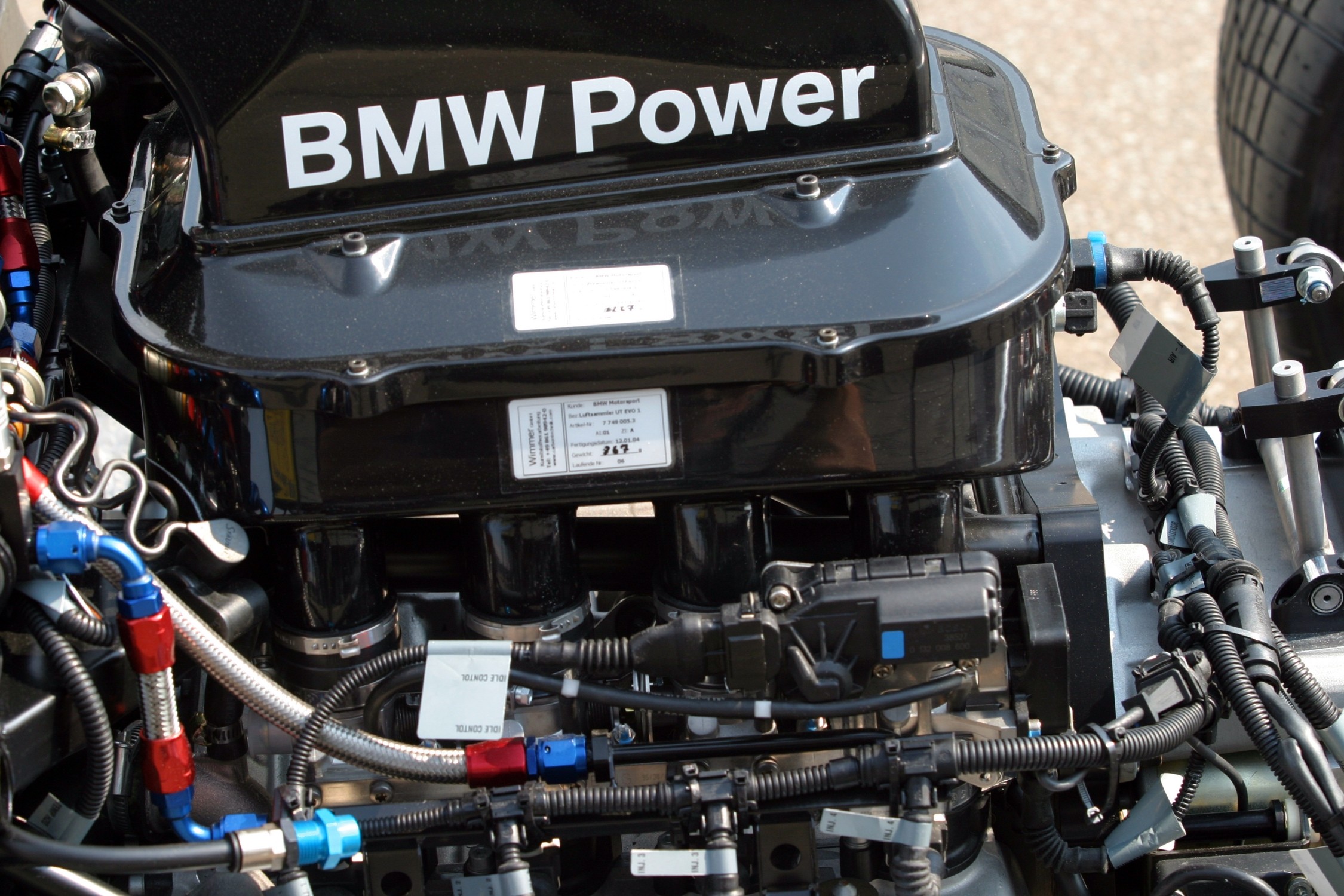
“That really showed the North American market that if people like Rahal and Milner are going to participate, this is a series that will come to fruition,” Schmuck said. Indeed it did. While enlisting teams to participate, Schmuck negotiated a sanctioning deal with Championship Auto Racing Teams (CART), then North America’s premier open-wheel racing series. In 14 races over seven weekends in 2004, Formula BMW would race in support of three CART races, the F1 Grands Prix of Canada and the US, and two American Le Mans Series races.
“That was by design,” Schmuck said. “CART gave us a fantastic deal, which allowed us to get in front of three audiences. BMW was competing with the M3 in ALMS, and we had access to Formula One races in the US and Canada. That made it much more appealing for teams to participate.”
As the start of the season drew closer, Schmuck still hadn’t secured enough cars to complete the grid. On McDowell’s suggestion, he called BMW dealers and racing team owners Roger Penske and Rick Hendrick, both of whom declined to participate but agreed to buy a car that BMW could provide to a promising young driver. That would be especially helpful for drivers of limited resources, as would winning one of the six $40,000 scholarships awarded by BMW Motorsport following the pre-season licensing school in Valencia. In its first year, Formula BMW USA provided scholarships to Trevor Daley, Billy Johnson, Graham Rahal, James Hinchcliffe, Tommy Milner, and Jonathan Summerton, none of whom were older than 17.
When the season started at Lime Rock on May 31, 2004, Schmuck and his Formula BMW USA team had persuaded seven teams to enter 16 cars, and an eighth joined later in the season with two more cars. Both races were won by Andreas Wirth, a 20-year-old German who’d finished ninth in F-BMW Europe in 2002 and tenth in 2003. Wirth would win two more races and the first F-BMW USA title, beating Rookie Cup winner Hinchcliffe and Summerton to the $20,000 prize.
More teams joined for the second season, and as many as two dozen cars comprised the grids for support races at the Canadian and US Grands Prix. France’s Richard Philippe took the 2005 title, followed by Canadians Robert Wickens in 2006 and Daniel Morad in 2007, American Alexander Rossi in 2008, and Colombian Gabby Chaves in 2009. From 2005 to 2009, those winners and their closest competitors would face off against their counterparts from the other F-BMW series at the Formula BMW World Final, the winner awarded a test in one of BMW’s Formula One cars.
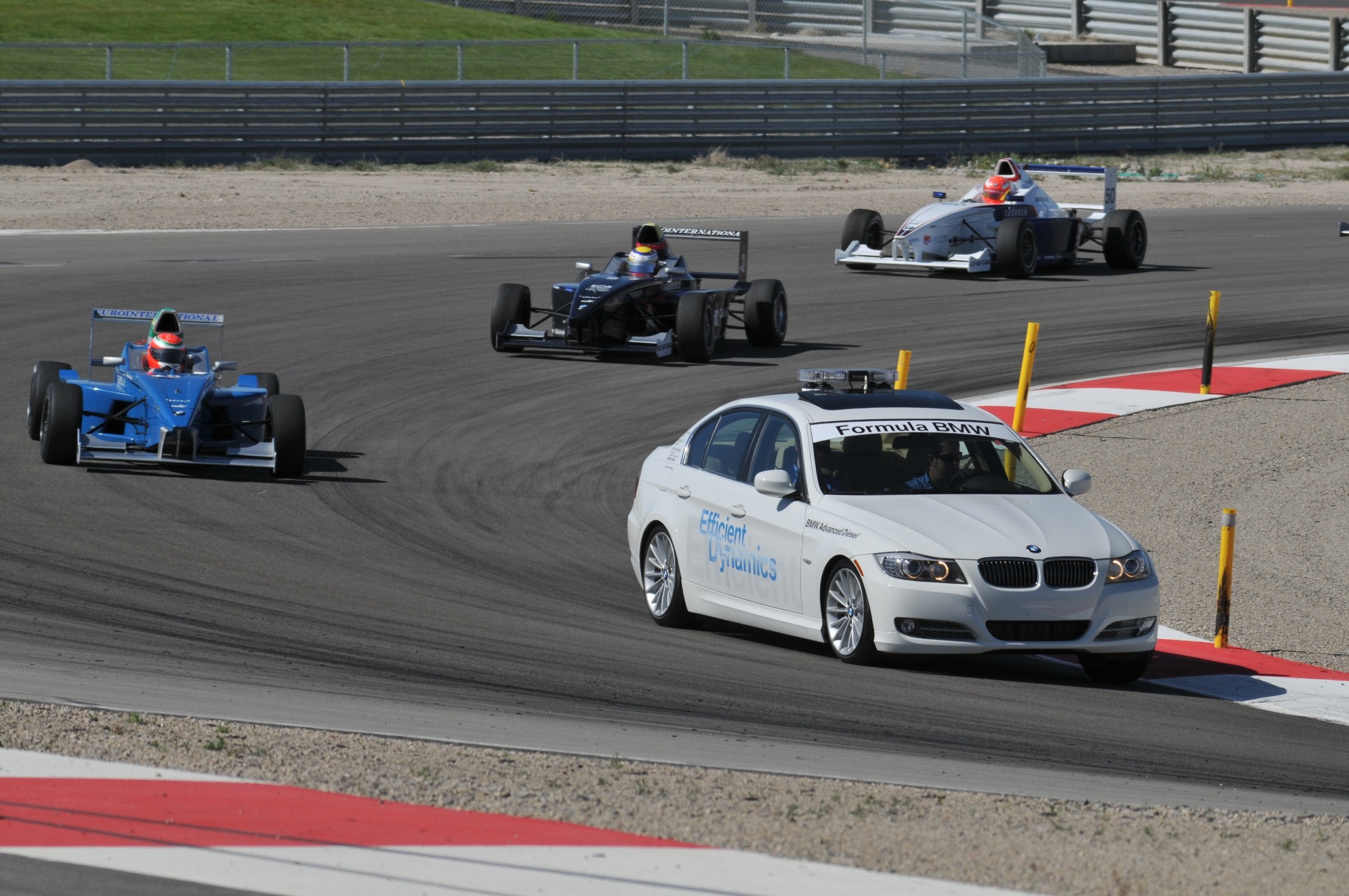
In its final two seasons, Formula BMW USA was renamed Formula BMW Americas following the addition of a race weekend in Mexico. Only eleven drivers competed in all twelve races of 2009, none of which ran in support of F1. The global financial crisis that had begun in 2008 was still affecting new-car sales, and the entire industry was tightening its belt. At the end of 2009, BMW Motorsport withdrew from Formula One, pulling the plug on Formula BMW, as well.
The series may have ended in 2009, but its legacy continues to be felt throughout motorsport. Formula BMW was far more than simply a step up from karting, and it offered far more than just track time and competition.
“Formula BMW offered young drivers an education, which other series didn’t,” Schmuck said. “We offered them a coach for physical fitness—Jim Leo, who does a lot of work with IndyCar drivers—and advice about nutrition. We gave them PR training with Bill Cobb, doing on-camera interviews and asking them to prepare a presentation on approaching sponsors. We also gave them access to our factory drivers, to hear how they’d progressed through their careers, and access to Mario Theissen, so they could hear from an F1 boss what’s important to him as a team manager, and what he looks for in a driver. That’s access that no other race series had, and no other race series had a direct path into an F1 test session.”
Beyond access, Formula BMW USA provided competitors with structure. “In typical BMW fashion, we had thought out the details from the layout of the paddock to the protocol from when the drivers and teams arrived at the track to when they left the circuit,” Salkowsky said.
The professional-level paddock included a hospitality tent that hosted media events, and where drivers and their families could socialize, eat, and entertain sponsors. “It really set a new benchmark in terms of what a junior race series could provide, and it provided a real sense of community,” Schmuck said.
The series honed young drivers’ communication skills, not only with sponsors but with engineers. Thanks to the adjustability of the F-BMW car’s suspension, gearbox, and aerodynamics, Schmuck said, “The driver had to work with the team to set the car up every weekend, to get the highest performance for the track, the weather, etc.
That in itself tended to separate those who’d been fast in non-adjustable karts from those with the technical and analytical skills needed in professional car racing. As a result, those who did well in Formula BMW often went on to long careers as professional drivers.
“For me, the greatest thing was being able to see how we were able to indirectly affect or make possible careers in motorsports through this program,” Schmuck said. “James Hinchcliffe, Graham Rahal, Billy Johnson… Tommy Milner might not have become a professional driver without this program, but he had the talent, worked hard, and became a successful sports car driver, winning the 24 Hours of Daytona and the 24 Hours of Le Mans twice. Robert Wickens won the series in his second year, and became a global Red Bull driver and went on to drive in DTM and in the IndyCar Series. Alexander Rossi went on to win the Indy 500 after starting in Formula BMW USA.”
Other F-BMW USA graduates include Esteban Gutiérrez, who raced in F1 with Haas, and IndyCar driver Simona de Silvestro. Worldwide, F-BMW alumni include F1 world champions Sebastian Vettel and the aforementioned Nico Rosberg, plus current and former F1 drivers Ralf Schumacher, Sebastian Buemi, Timo Glock, Nico Hulkenberg, Sergio Pérez, Daniil Kvyat, Marcus Ericsson, Daniel Ricciardo, Carlos Sainz Jr., and many more who’ve competed successfully in other professional series.
Formula BMW USA had a positive effect on BMW of North America, too. It cemented BMW’s place in North American motorsport, and it communicated BMW’s brand values to motorsport enthusiasts.
“I think it made a connection, created a vertical structure in which the base is BMW,” said Salkowsky, “We’re a brand for drivers, we have these wonderful street cars, which extend to racing with the M3 and elevate to the pinnacle of motorsport in F1. And Formula BMW gave us the ability to communicate that not only do we do this at the highest level, but at the entry level. Who but BMW could do this?”
The post BMW NA 50th Anniversary: Formula-BMW USA appeared first on BimmerLife.
]]>The post BMW NA 50th: MINI Arrives In The U.S. appeared first on BimmerLife.
]]>Neither of those results could have been predicted when BMW acquired MINI in 1994, as part of its purchase of UK consortium, the Rover Group. Mini—originally in lower case—was one of a slew of British brands included in the deal along with Land Rover, Triumph, MG, Riley, and Wolseley. The sale also included outdated industrial plants, substandard product quality, and labor unrest—problems so intractable that BMW would sell off most of the Rover Group’s assets just six years later.
Though Mini was plagued by some of the same problems faced by the Rover Group overall, it was retained as an essential component of the multi-brand strategy in which the core BMW brand was bracketed by Mini and Rolls-Royce, purchased separately. Rolls would allow BMW to target customers for whom even a 7 or 8 Series wasn’t exclusive enough, while Mini would allow the company to build small cars with the front-wheel drive that was anathema to BMW in that era.
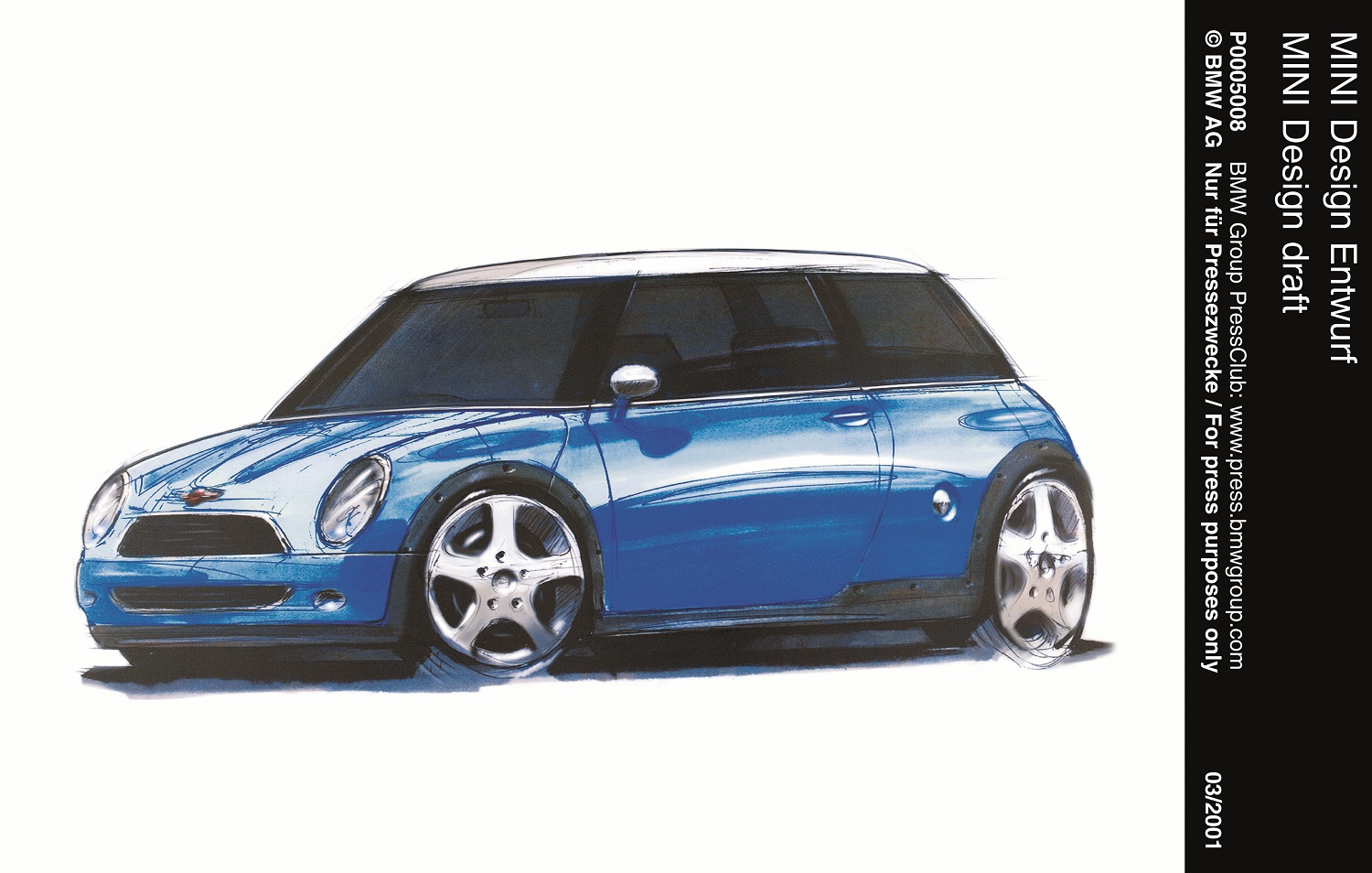
To distinguish the modern MINI from its antecedent, BMW rendered the name in all-caps. BMW then built what amounted to an all-new plant inside the existing exterior walls of the circa 1912 Morris Motors plant in Cowley, near Oxford, England. Equally important, BMW designed an all-new MINI to replace the classic Mini, which had been introduced in 1959 and updated only incrementally in the decades that followed.
The classic Mini was a ’60s style icon, endowed by Sir Alec Issigonis—coincidentally, the great-uncle of BMW’s then-chairman Bernd Pischetsrieder—with a cheerful demeanor that made it a favorite of musicians, actors, and anyone else aspiring to hip style in Swinging London. The car was a sporting legend, too, having won the Monte Carlo Rally in 1964, ’65, and ’67. (It should have won in 1966, as well, but was disqualified for the color of its headlamps.)
That victory inspired Adrian van Hooydonk—then a young designer at BMW Designworks/USA—to sketch a car he dubbed the Anniversary Concept Vehicle (ACV) 30 in 1997. The sketch impressed BMW design chief Chris Bangle, who approved the creation of a running prototype. With distinctive fender creases and stunning red paint with white stripes, the ACV30 was described by Bimmer magazine’s Jay Jones as “pure adrenaline in a small package.”
Van Hooydonk’s concept didn’t make it into production, and neither did an economy-focused concept from the Rover Group. Instead, BMW opted for a design by Frank Stephenson based on a theoretical evolution of the Mini over three decades.
Under the skin, the MINI got modern mechanicals designed via a rather complicated collaboration between Rover engineers and those at BMW. The car got BMW’s signature MacPherson strut front and multilink rear axles, along with state-of-the-art electronics—including Cornering Brake Control, Dynamic Stability Control, and Electronic Brake Distribution—shared with the latest BMWs. For motive power, the MINI Cooper used a transverse-mounted four-cylinder engine built in Brazil, at a plant owned jointly by BMW and Chrysler.
The new MINI made its first huge splash in Paris, and it didn’t disappoint those who drove it at the international press launch. Writing for Bimmer magazine’s October 2001 issue, Ian Kuah said the new MINI “redefines handling and ride in small cars, bringing unprecedented mechanical refinement to the supermini class. It’s also chic, well-built, good value for money, and downright desirable.”
At the time, the MINI hadn’t been announced for the U.S. Behind the scenes, however, a small group of employees at BMW of North America had spent the previous six years setting the stage for its arrival.
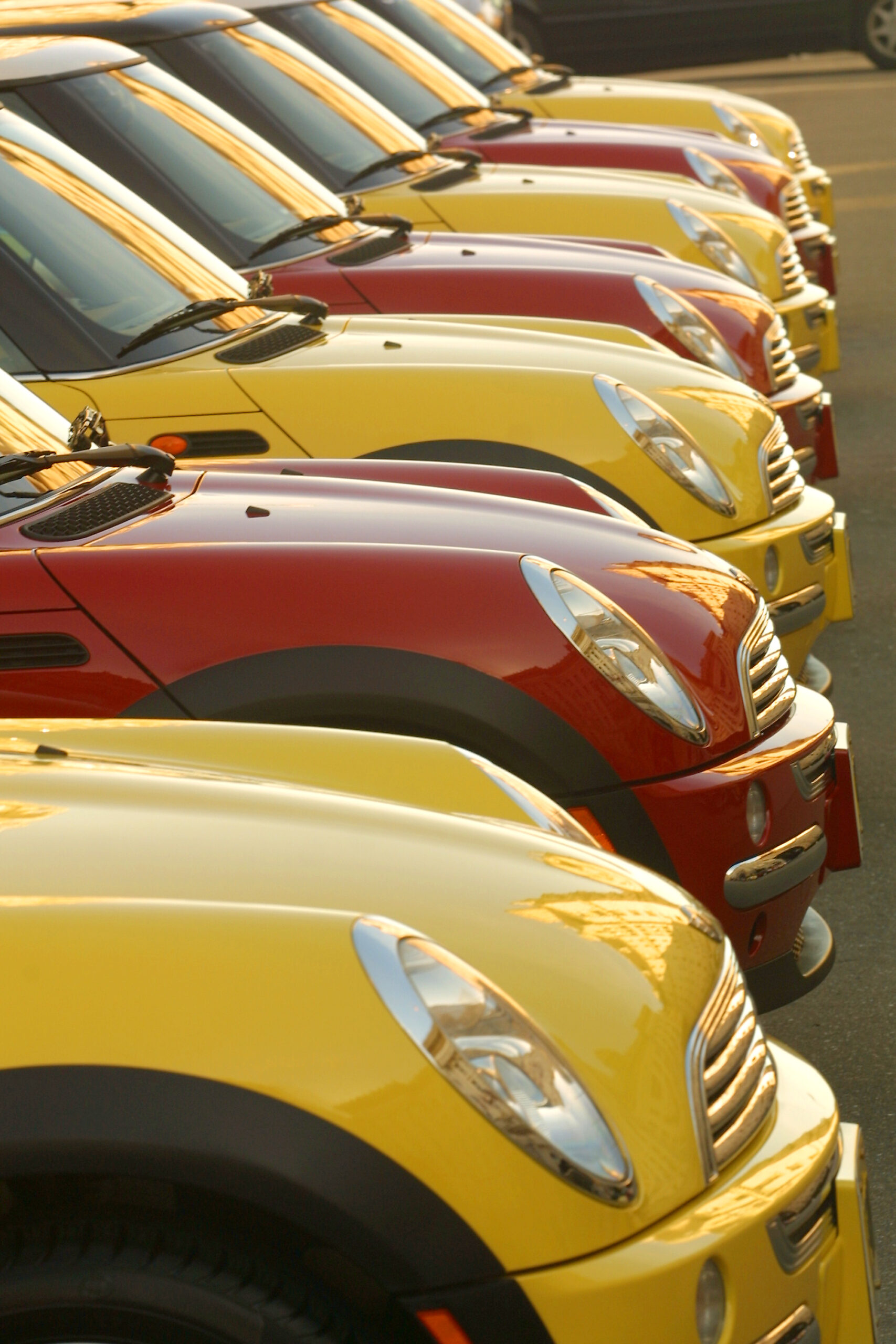
When the MINI was first mooted, BMW of North America was led by President Victor Doolan, a native of Great Britain. Doolan had always liked the original Mini, and he knew that U.S. sales volumes would be crucial to the MINI’s success worldwide. “The problem was the cost of the vehicle, which made it too expensive to be a viable project in the U.S.,” Doolan said.
To overcome that obstacle, BMW NA optimized the wholesale-retail relationship, allowing MINI dealers to share back-end services and administration with their BMW franchises while selling MINI from dedicated showrooms. To further enhance profitability, the BMW NA’s product planners—namely Rich Brekus and Bert Holland—pursued a premium strategy in which the base MINI offered in the U.S. would not be the 89-horsepower MINI One but the 113-horsepower MINI Cooper. Above that, the 168-horsepower MINI Cooper S and 197-horsepower MINI John Cooper Works would complete the lineup.
That strategy was approved by BMW NA’s then-CEO Helmut Panke, but it came into doubt in February 1996, when Panke left Woodcliff Lake for Munich and a seat on the BMW AG Board of Management. Panke’s replacement as BMW NA CEO, Dr. Heinrich Heitmann, insisted that MINI would never work in the U.S.
Nonetheless, Heitmann supported the investigations then underway, while other key players within BMW of North America remained committed to MINI. That group included Stefan Krause, then CEO of BMW Financial Services. Krause assigned Rich Steinberg—one of the prime architects of BMW NA’s captive leasing program and a longtime enthusiast of British cars—to research the financial aspects of bringing MINI to the US.
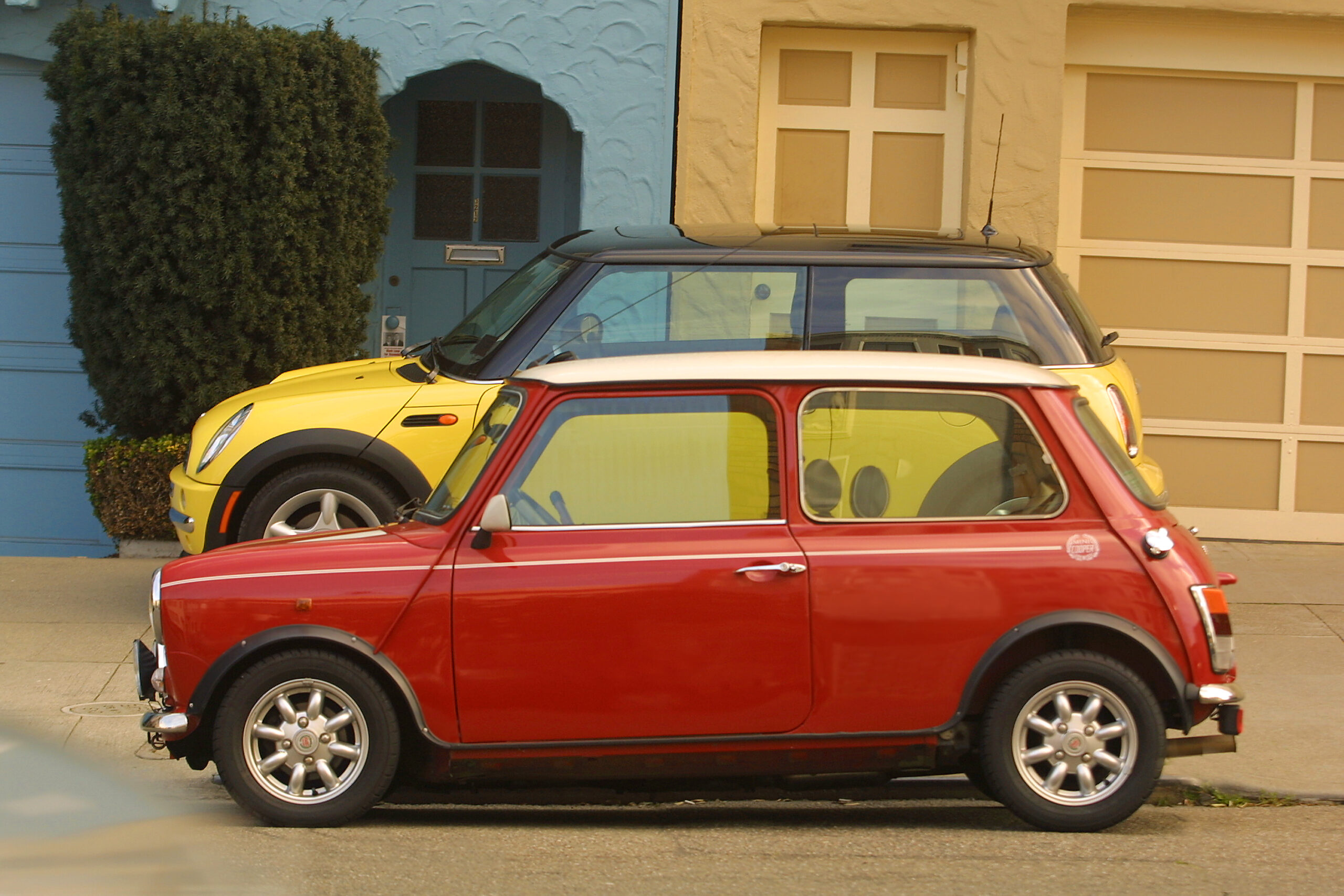
As the policy differences between Panke and Heitmann demonstrated, changes in company leadership can lead to abrupt shifts in strategy, particularly when they occur on the board level in Munich. That’s exactly what happened in February 1999, when fallout from the disastrous Rover acquisition saw Pischetsrieder ousted from the chairmanship. When the supervisory board chose to name Joachim Milberg chairman rather than R&D chief Dr. Wolfgang Reitzle—the second time Reitzle had been passed over for the chairmanship—Reitzle left BMW for Ford. Two months later, BMW NA experienced a similar upheaval: Doolan resigned as President to join Reitzle at Ford, while CEO Heitmann left Woodcliff Lake for Munich and a seat on the BMW board.
On May 1, 1999, Tom Purves arrived at BMW NA as a replacement for both Doolan and Heitmann, taking the newly consolidated position of Chairman and CEO of BMW (US) Holding Corp. A native of Scotland, Purves had been in charge of sales at Rover while the new MINI was under development, and he was eager to bring MINI to the U.S.
In December 1999, MINI USA became a corporate division of BMW NA, with Steinberg tapped as its first employee. Alongside Steinberg, Andrew Cutler would handle communications for the new brand. “In both the pre- and post-launch stages, we relied heavily on PR, with media activations that helped get buzz around the brand even though we didn’t have a big marketing budget,” Cutler said.
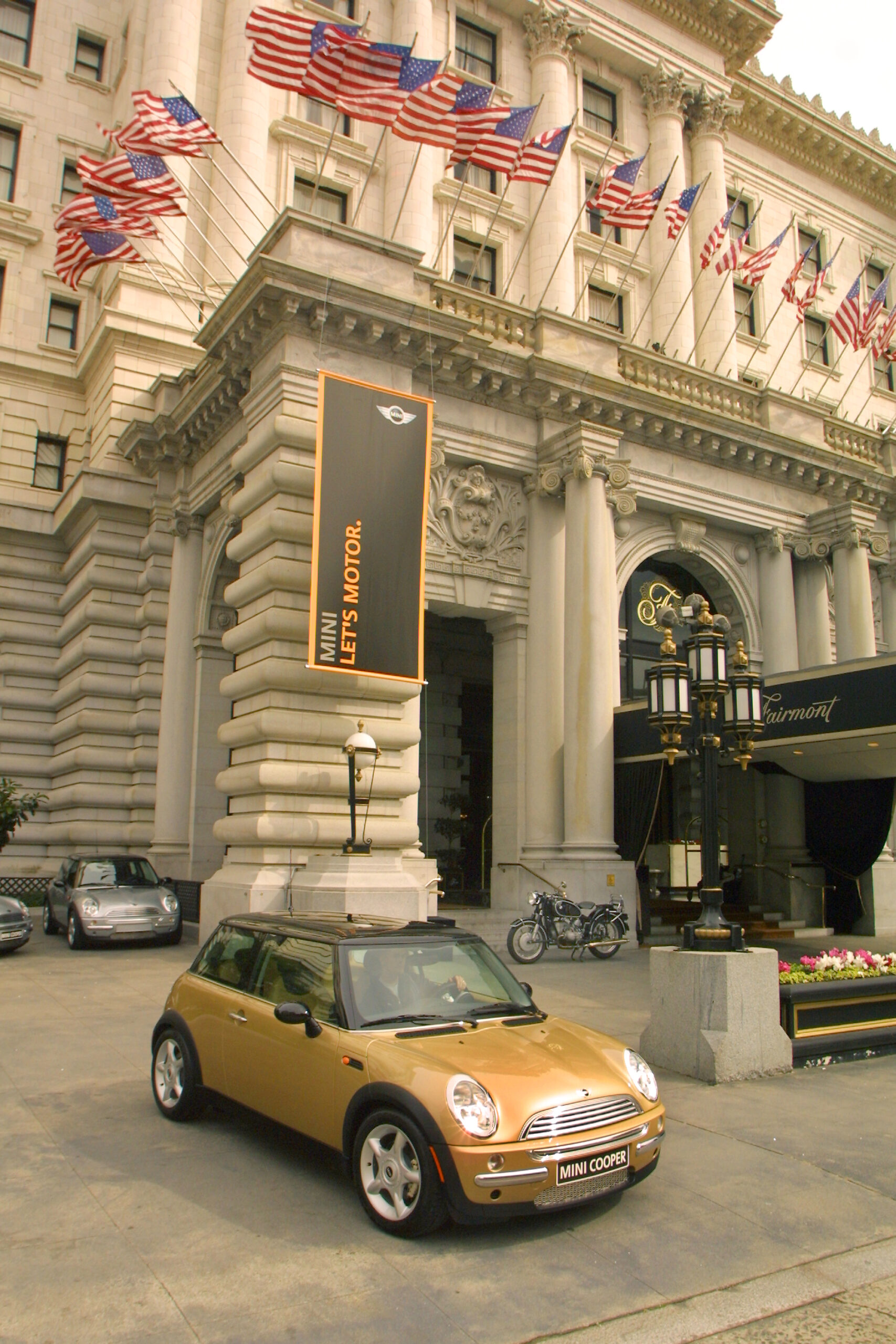
MINI now had official status within BMW NA, but bringing a premium hatchback to the U.S. remained a risky proposition. Full-size SUVs were ascendant, and the unmet sales expectations for the 318ti hatchback were still fresh in BMW NA’s institutional memory.
Even so, BMW NA needed MINI to succeed: The car would return better fuel economy with lower emissions than the larger BMW-badged models, reducing BMW NA’s Corporate Average Fleet Economy (CAFE) rating and helping the company avoid fines like the record $28 million it paid in 2001.
“On a worldwide basis, we have to be involved with building more cars with smaller engines in order to comply with legislation,” Purves said. “We also know that we have to keep in touch with younger customers, who one day will be 7 Series customers. The MINI does all of those things for us.”
Since those younger customers tended to live in cities, Steinberg’s team focused on urban areas when soliciting some 70 MINI dealers from BMW’s 350 or so dealerships nationwide. “Our colleagues from overseas put together a traveling roadshow, which included two classic Minis and a PowerPoint presentation,” Steinberg said. “We went to all four regions and told the BMW dealers what the franchise was about, what the car would look like, the kind of investment we were looking for, with a stand-alone selling environment and corporate ID. We invited proposals, which we evaluated to make sure that the MINI brand values would be properly represented.”
As MINI USA was putting together its dealer network, the division got a new leader when Purves appointed Jack Pitney to the position in January 2001. Pitney was certain the MINI could succeed in this market, and he’d developed his own launch plan for the brand while serving as BMW NA’s Head of Corporate Communications.
“Jack had been a PR guy, and he was really good at it,” Steinberg said. “He managed media communications better than I could, and he also managed dealer relations and internal relations, which were definitely needed. He was the right guy at the right time.”
Shortly thereafter, MINI USA completed the long search for an ad agency, naming the Miami-based firm Crispin Porter & Bogusky its agency of record on February 13, 2001.
“Crispin had been unknown to me, and unknown to most of America, for that matter,” Steinberg said. “Crispin completely blew our doors off. They pitched us with the ‘Let’s Motor’ tagline, and The Book of Motoring, which basically explained what the brand represented. It was so easy for us to move forward with them, even though they’d never had a car account before.”
CP&B had plenty of work to do prior to the car’s on-sale date in March 2002. BMW NA’s preliminary market research had shown that only two percent of potential U.S. customers had even heard of the old Mini, much less BMW’s new MINI.
On a modest $25 million budget, CP&B worked with Kerri Martin, MINI USA’s Senior Director of Marketing, to introduce MINI to the American public. CP&B’s ad campaign avoided television in favor of print, emphasizing removable “tear-away” magazine inserts that could be shared among potential customers. The agency placed billboards in urban areas, with slogans like “The SUV Backlash Starts Now” reinforced by a MINI mounted on the roof of an SUV and driven on city streets to emphasize the vehicles’ contrasting dimensions.
CP&B’s print ads—placed in general-interest magazines like The New Yorker, Rolling Stone, and The Atlantic more frequently than in automotive magazines—emphasized an entirely different set of virtues than BMW’s usual power and performance. “LET’S SIP, NOT GUZZLE,” read one ad. “Let’s leave the off-road vehicles off road. Let’s stop pretending we live in the jungle. Let’s stop intimidating each other. Let’s not use the size of our vehicle to compensate for other shortcomings. Let’s reclaim our garage space. Let’s be nimble. Let’s be quick. Let’s be honest. LET’S MOTOR. ”
”
The campaign was wildly successful. “By the time the MINI made its debut in March 2002, more than 50,000 people had logged onto its website, miniusa.com, to express interest in buying one. By the end of the year, brand recognition in the United States had risen to 53 percent,” reported The New York Times. “Sales of the MINI reached 30,000 in the first year, about 10,000 more than the company had anticipated, defying conventional wisdom that consumers would not pay a premium price for a tiny car.”
MINI’s actual sales total was 24,590 in 2002, followed by 36,010 in 2003, MINI’s first full year on the U.S. market. Both figures could have been higher: With the Oxford plant still ramping up, many customers had to wait months for their cars to be delivered. (The vast majority were—and remain—ordered to the individual customer’s taste where color, upholstery, wheels, and other accessories were concerned.) Rather than bemoan the delays, MINI created a sense of excitement around them.
“We started a campaign called ‘Make Waiting Fun,’ in which customers who ordered a MINI could track its journey from the production line, to the boat, to the port, and to the dealership,” Steinberg said. “A lot of companies do it now, but we pioneered it.”
Twenty-five people broke the world record for the most people who can fit into a 10x4x4 mini automobile – the vehicle that served as the inspiration for the mini skirt – at BMW Group’s 40th anniversary celebration in Manhattan on Wednesday, August 25, 1999. The previous world record was set in 1967 at the Montreal World’s Fair when 24 peOple were stuffed into a 1967 Austin Mini Super Deluxe. (Chris Ramirez/WirePix)
Once they got their cars, MINI owners joined an enthusiastic community of like-minded individuals, one that recalled that of BMW 2002 owners in the late 1960s. This, too, was part of the award-winning marketing plan created by CP&B and Martin.
“The Book of Motoring had rules like, ‘MINI customers need to wave to other MINI drivers.’ It created this community that we’re so fortunate to have, in which MINI is not just transportation but part of their lives,” said Patrick McKenna, who became MINI’s Head of Product Planning and Consumer Events in 2008.
CP&B’s ads encouraged MINI owners to explore the country’s vast open spaces. “LET’S SEND GREETINGS FROM MILE MARKER 73. Let’s lose radio reception. Let’s make it on fumes. Let’s hold it until the rest stop. Let’s beat our postcards home. LET’S MOTOR.”
MINI owners took that message to heart: In 2006, some 4,000 MINI drivers joined the first-ever MINI Takes the States, a 17-day cross-country journey from New York to San Francisco. The event evolved out of a challenge faced by Jim McDowell shortly after he took over as head of MINI USA in 2005, following a job swap in which Pitney became Vice-President of Marketing for BMW NA.
“Munich had committed us to sell 200 identical MINI John Cooper Works GPs,” McDowell said. “What is a brand based on individualization going to do with 200 identical cars, and at a higher price? Maybe we could get each dealer to take one car. Okay, that’s 70. What will we do with the other 130? We could have an American Tourist delivery program, maybe at Laguna Seca. But what about people on the East Coast? Maybe we could do the same thing at Lime Rock. That’s where MINI Takes the States came from.”
As McDowell and Pitney were swapping jobs, Crispin Porter & Bogusky resigned the MINI account to pursue Volkswagen. For McDowell, CP&B’s departure presented an opportunity. “We wanted to be able to move into new directions,” McDowell said. “We weren’t going to be able to advertise on billboards forever.”
After a brief search, the contract was awarded to Sausalito, California agency Butler, Shine, Stern and Partners. The firm redesigned MINI’s brand image and expanded MINI’s experiential marketing with “Motortober” events in dealerships over Halloween. For the third Motortober, rock band KISS helped raise money for disaster relief through the sale of co-branded MINI-KISS merchandise.
In 2009, BMW chose MINI for its first foray into electric mobility. The car’s size was similar to that of the forthcoming i3 city car, and MINI drivers were eager to help BMW develop a battery-electric powertrain. “The MINI e was exhilarating in terms of performance,” McDowell said, “but it was absolutely miserable on cold days. If you used the heat, you had a very short range. You had to pick between heating and getting home!”
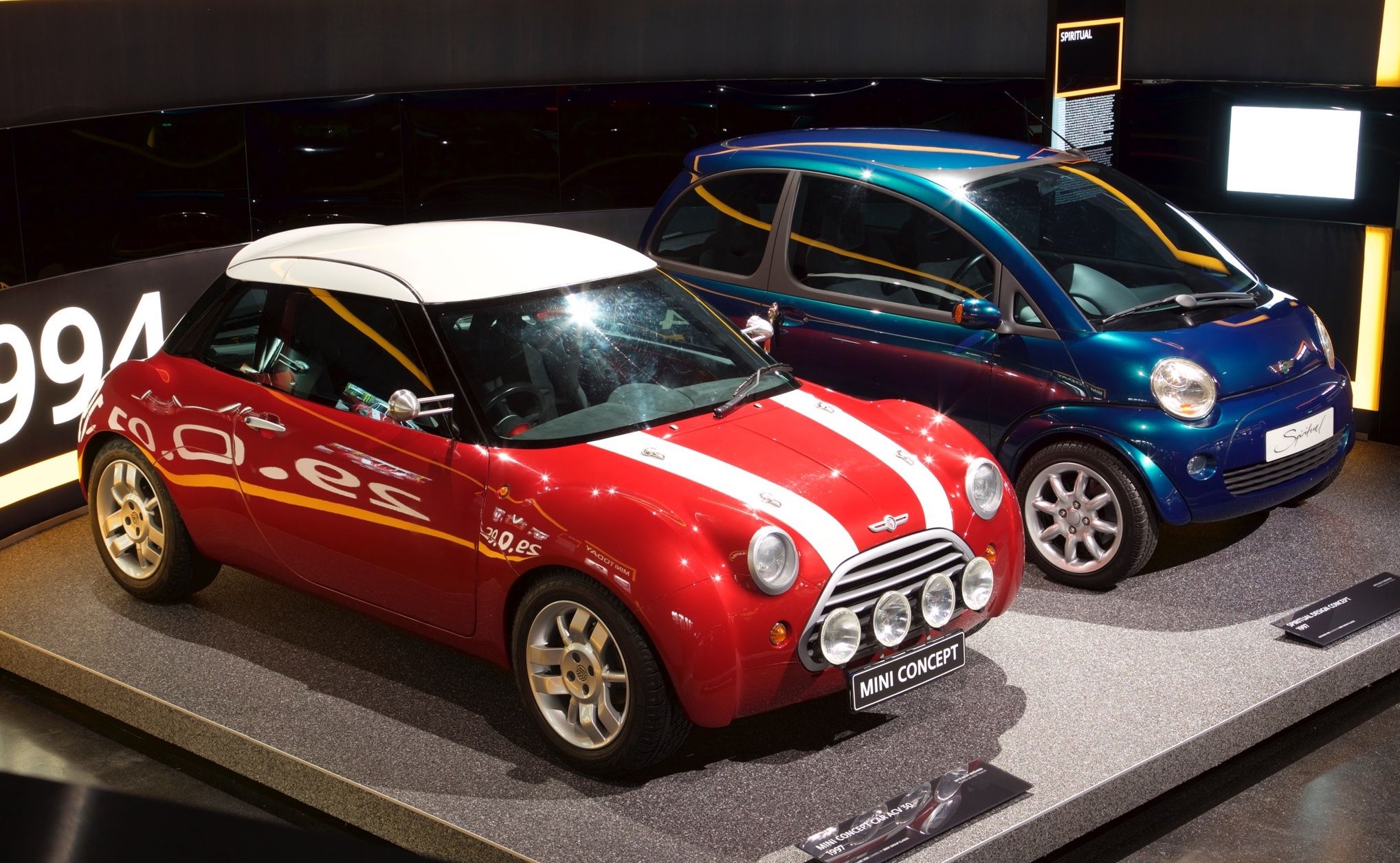
McDowell retired at the end of 2013, the year MINI sales hit a record 66,502 cars. He was succeeded in turn by David Duncan (who’d set up the original MINI dealer network with Steinberg), Thomas Felbmair, and now Michael Peyton, who’s run the division since 2019. Over the ensuing decade, MINI sales have ebbed and flowed with gas prices and customer preferences.
The model lineup has expanded and contracted over the ensuing years, as have the dimensions of each MINI. The portfolio has been rebalanced under Peyton’s direction, with 11 models variants in four body configurations – a two-door, four-door, convertible, and compact SUV—available with internal-combustion or battery-electric powertrains.
MINI USA remains a small but enthusiastic team within BMW NA, giving each member opportunities for creativity and flexibility. “We had six people running an entire marketing department for the whole U.S.,” said Tom Salkowsky, who joined MINI as Head of Marketing Communications in 2010. “Everybody’s doing two or three jobs, and we’re going to get it done. I think back to an infamous Jack Pitney quote, ‘There’s nothing we can’t solve with a few beers and a couple of pizzas in the conference room.’ That exuberance permeated the company.”
It still does. More than 20 years after its introduction to the U.S., MINI remains “a small, fun-to-drive car with a big heart” as Peyton describes it. MINI USA continues to host customer-focused events like MINI Takes the States, and to collaborate with hip, design-based organizations like Pantone, for which it wrapped a MINI Cooper Convertible in 2025’s Color of the Year, Mocha Mousse.
Most importantly, MINI continues to inspire enthusiasts to motor: taking road trips, enjoying the scenery, and coming together as a community of like-minded individuals.
The post BMW NA 50th: MINI Arrives In The U.S. appeared first on BimmerLife.
]]>