
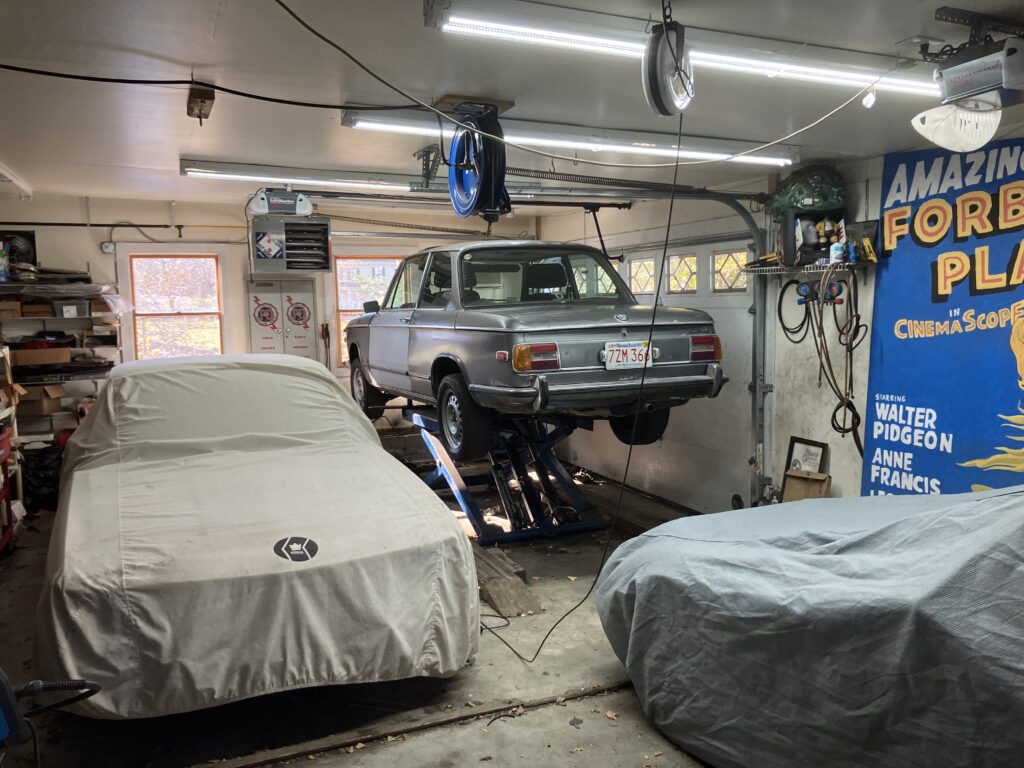
Last week, I talked about bringing Bertha (the ’75 2002 I bought in Austin in 1984, brought back to Boston, drove off from my wedding in, heavily modified, sold to a friend in 1988, bought back 26 years later, revived, drove to The Vintage in 2019, then didn’t use much) back from storage in Monson. The brake fluid reservoir was low (and I remembered that it had been very low, like down to the clutch port, last summer), but I refilled it, stomped on the brakes, and didn’t see any fluid on the ground or any change in the level. After stopping at a Walmart to replace the tiny 2002tii Group 26R battery, the car started and ran and drove fine, other than an odd detent in the steering on hard left turns, and a few rumbles on both turning and letting off the gas. I figured that, best case, this was a loose exhaust, and worst case, the differential was on the way out. So, on getting it home, my first task was to have a look at the undercarriage to look for brake fluid leaks and to examine the exhaust. So up on the mid-rise lift Bertha went.
I examined all the brake and clutch hydraulics and found no signs of leakage. This means I need to do a more detailed pass, including examining the clutch master cylinder (which is a pain, since on a 2002 the clutch slave is down inside the pedal bucket, and since a square taillight 2002 has a one-piece carpet that covers it), looking for leakage inside the brake booster, and pulling off the rear wheels to look at the wheel cylinders. I’ll do all that, but hoping to score a quick win, I instead examined the exhaust to find the source of the rumble. Fortunately, it was just a loose exhaust—the rear rubber muffler hanger was badly deteriorated, and the front one was missing. With it secured, a quick test-drive was blissfully quiet.
Next, I wanted to know the cause of the lack of heat. I mean, really, all it can be is the heater valve not opening. As I said last week, part of the reason for bringing the car home was to have a knock-around vintage car at the house that I wasn’t afraid to drive during the winter if the roads were clear. The heat slider control moved fine, and reaching into the cowl to lay a hand on the heater control valve, I could move its lever, so it took me a moment to figure out what the problem was: The Bowden cable connecting the two is broken next to the valve. I can probably kluge this by tying the two sections together with a barrel connector, but in the short term, I simply moved the valve’s lever into the on position. We’ll see if there’s now so much heat inside the cabin that I roast.

Hmmmn.
That brings us to related issue #1. While driving the car home from Monson, I found that the heater box fan didn’t work. Not that I needed it, because a) there was no heat, and b) the influx of cold air through the footwell and defroster flaps was barely slowed by the sliders being slid to their off positions. And then I remembered: When I began resurrecting the car in 2018, I was aware of all of these things, and had purchased a Bosch heater fan motor and planned to remove the heater box, re-line the flaps with new foam to get them to close, install the new fan motor, and deal with the broken Bowen cable to the heater valve, but as the clock ticked down to driving the car to The Vintage in 2019, I instead put my efforts into rebuilding the car’s original dealer-installed Behr air conditioning. This meant that I pulled out the a/c evaporator assembly to flush it and replace the expansion valve. In an air-conditioned 2002, pulling the evap assembly is a necessary step to getting the heater box out, so if both of them need work, you address them together, but due to time constraints and the fact that, driving to North Carolina in May, I wanted air conditioning, not heat, I simply reinstalled the evaporator box in front of the knowingly-compromised heater box. I can’t say that I regret the choice, but now it’s six years later, and pulling apart a working a/c system to get at the heater box is a tough sell.
Which brings us to related issue #2: Is it a working a/c system? My recollection was that the a/c system had stopped working at some point after the 2019 drive to The Vinage. I hooked up a manifold gauge set to see if there was any refrigerant pressure at all in it. Surprisingly there was, though the resting pressure was low. This means I have a choice. I can do the, ahem, Just Needs a Recharge thing (if you don’t know, the title of my air conditioning book is a joke, because a/c systems almost never “just need a recharge”; they almost always have a leak that needs to be fixed). Or I can find the leak now, and then pull the evap box out to get at the heater box. Or I can do those things in the reverse order. It would give me a good winter project, but for the moment, I’m going to kick that can down the road as well.
So instead of doing necessary work to find the brake fluid leak or delving into a heater box removal, I focused on something utterly trivial—the steering wheel. This car has had a Momo Jackie Stewart wheel in it which was in harmony with all the other go-fast drivers school parts I’d installed, but both the small 13.75-inch diameter and the chunky 1.38-inch grip thickness are no longer to my liking.
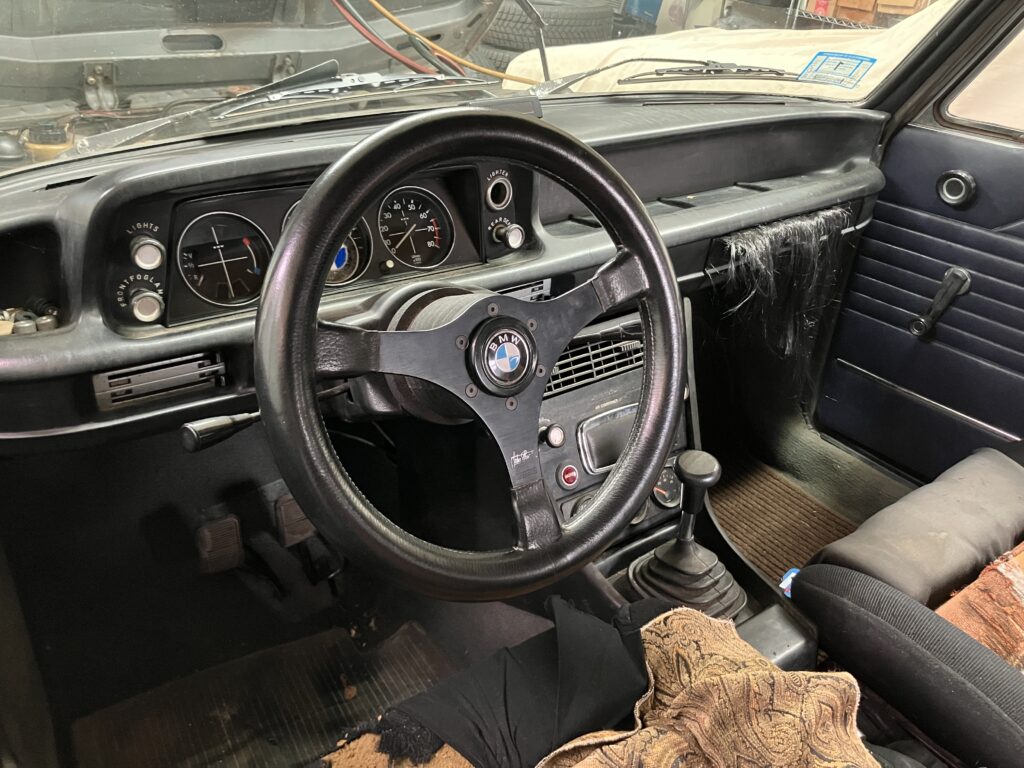
Am I a bad person if I don’t like this anymore?
I began looking at the clearly-counterfeit Momo wheels that are readily available for short money on both Amazon and eBay, and found one on Amazon for $54 that looked the same as the Momo I installed a few years ago into my E9 for similar reasons. It was advertised as 14.1 inches in diameter, with a dish of 1.5 inches, and a standard bolt pattern that I assumed would fit the Momo hub. The grip thickness wasn’t listed, but it looked thinner than the wheel in Bertha. I had concerns about the non-zero dish, as the Momo is dead flat and it and the hub seem to stick out quite a bit from the column, but I bought it anyway. You can see the comparison below.
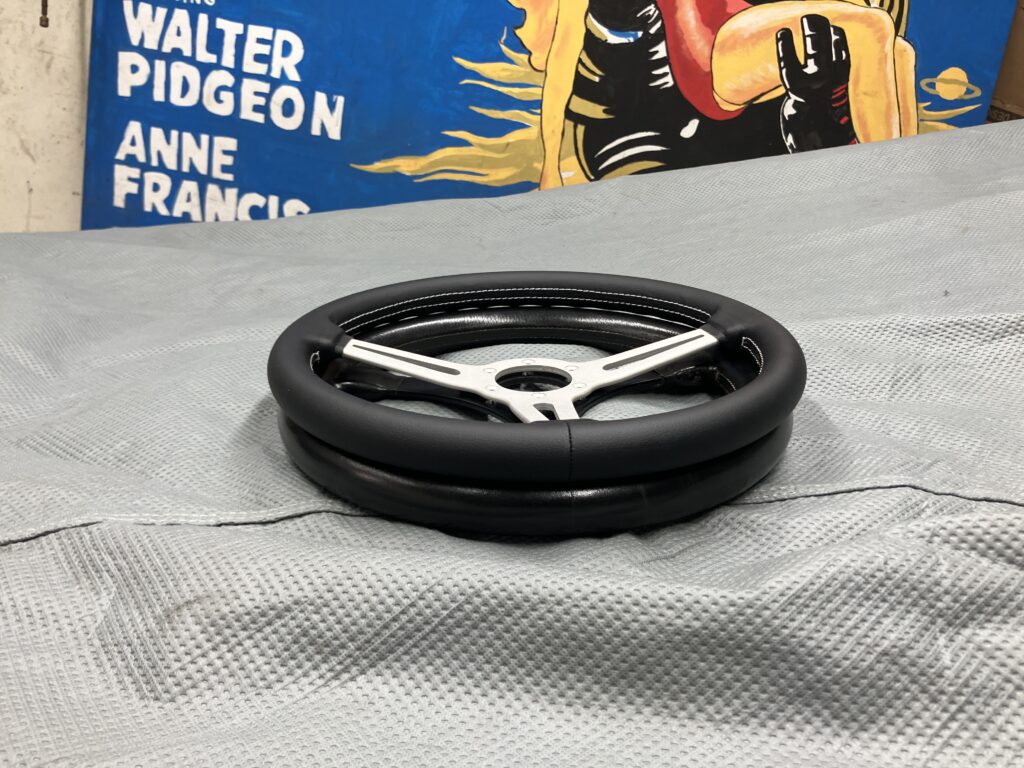
Slightly bigger…
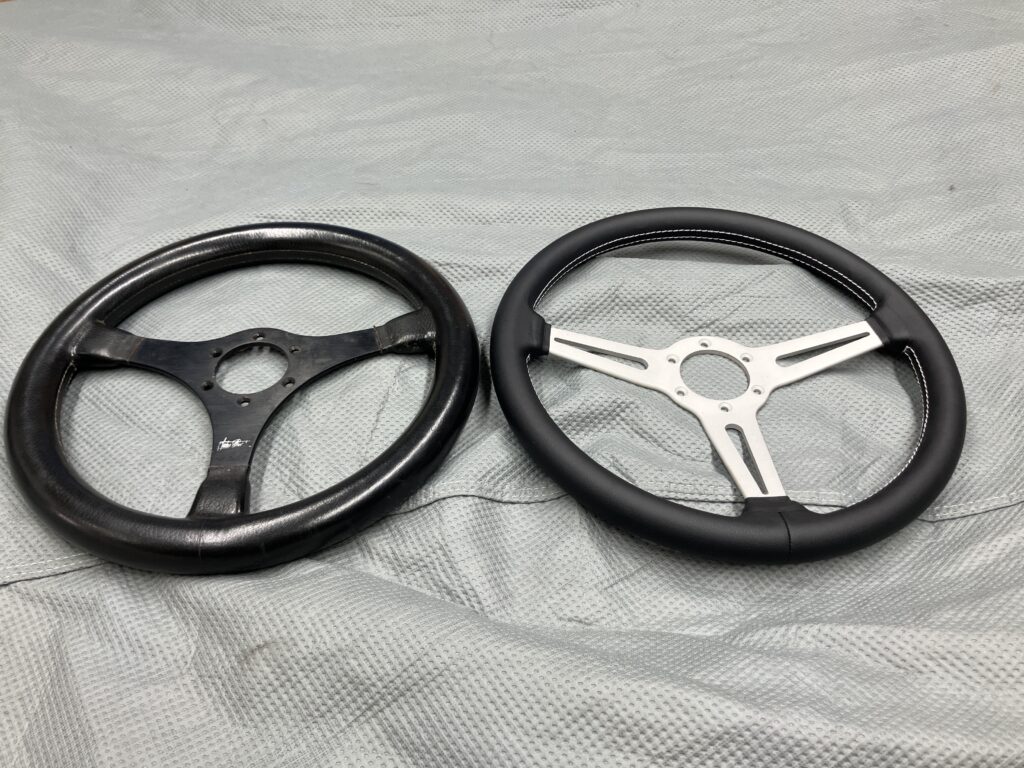
…slightly thinner…
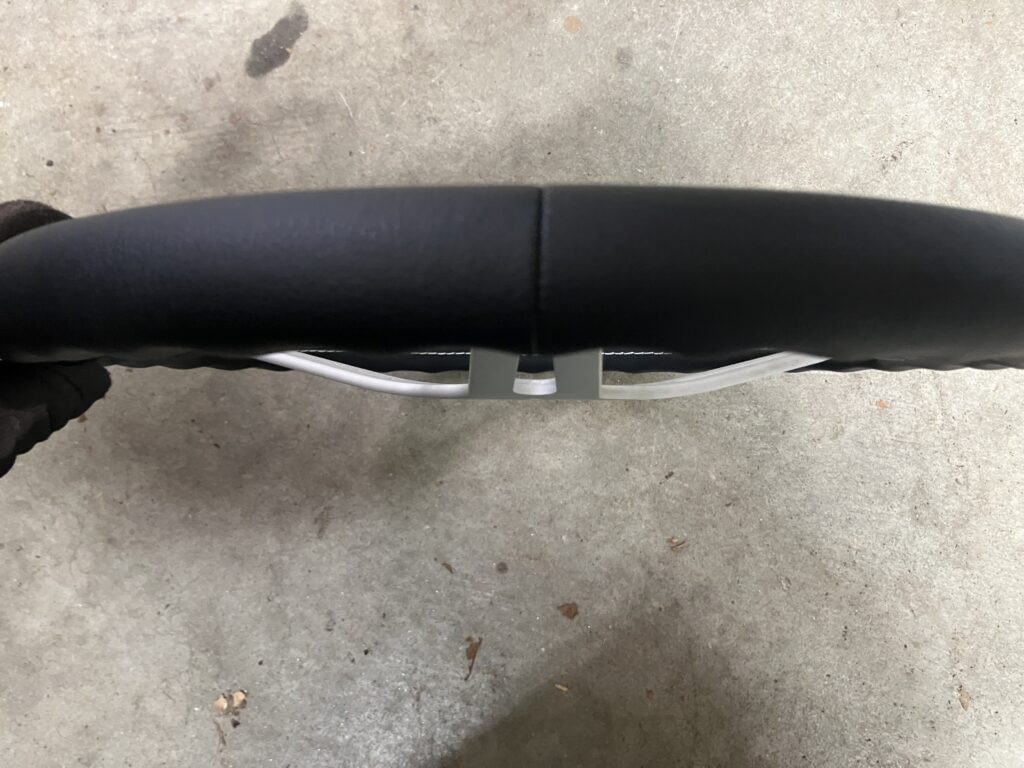
…but, unfortunately, slightly dished.
Fortunately, the tiny 3mm recessed Allen-head bolts holding the old wheel to the hub gave up without even a hint of a fight, the new wheel bolted right on, and the hole for the horn button was exactly the same size (unlike a recent incident installing what I thought was the correct original steering wheel in my Lotus Elan +2). You wouldn’t think something slightly larger and slightly thinner would make such a big difference, but I far prefer it over the Momo.
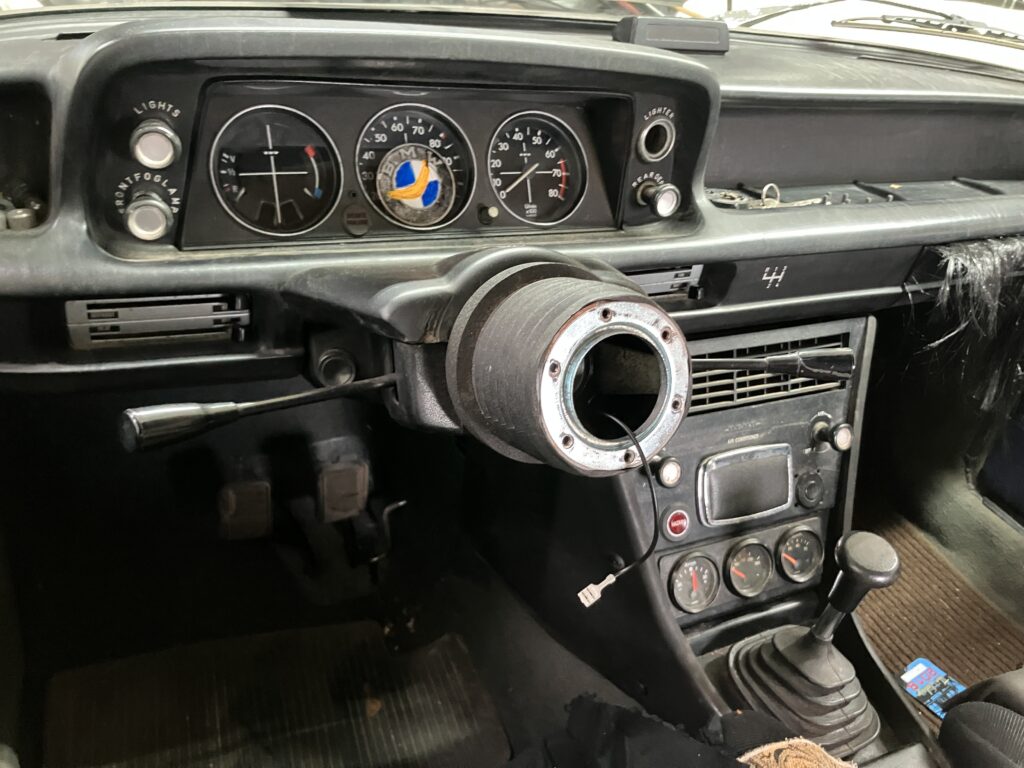
This may have been the only time I’ve ever swapped a steering wheel onto an existing aftermarket hub.
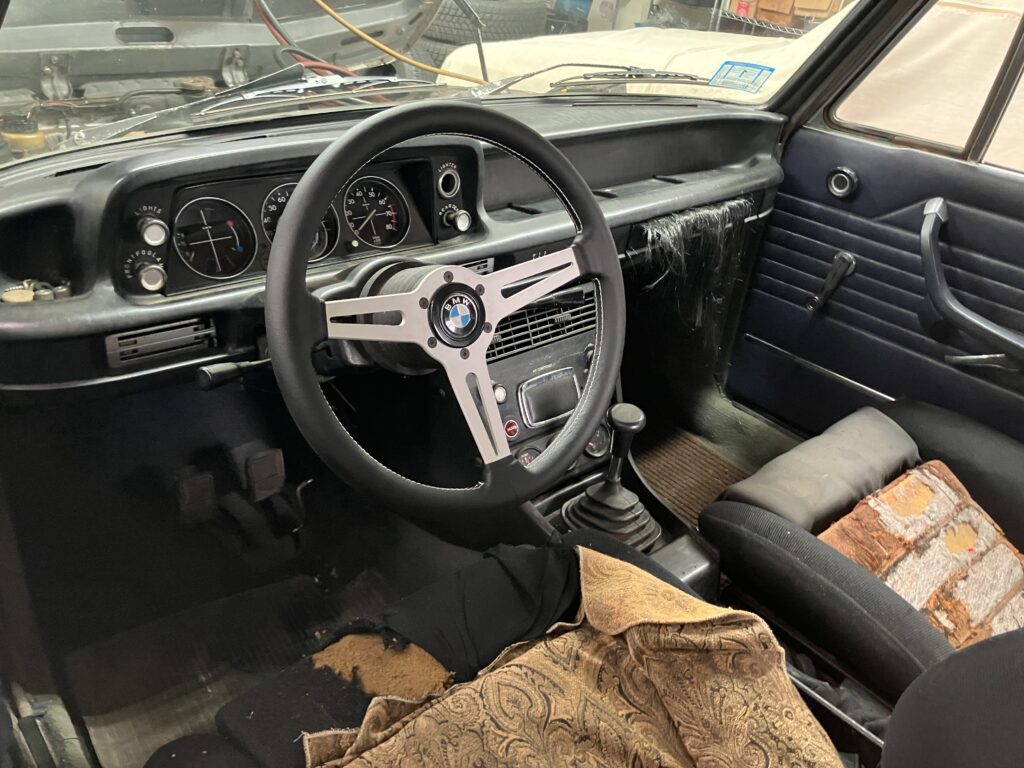
Ta-da!
Because of the new wheel’s 1.5-inch dish, it does stick out a little further than the flat Momo, but I discovered that, when I’d installed the Momo and its hub back when Reagan was telling Gorbachev to tear down that wall, the hub rubbed against the steering column padding until I installed a 0.4-inch spacer behind it, and it’s still there. The spacer doesn’t need to be that thick. I’ll see if a trip to the hardware store can net me a thinner spacer.
So, yes, I still have the important issue of the loss of brake fluid to resolve. But at least I can smile at the dashboard whenever I look in the window.
—Rob Siegel
____________________________________
Rob’s newest book, The Best of The Hack Mechanic, is available here on Amazon, as are his seven other books. Signed copies can be ordered directly from Rob here.