The post Safety Third | The Great E30 M3 Parts Fiasco appeared first on BimmerLife.
]]>In 2022, a good friend of mine decided to sell the crown jewel of his E30 M3 collection, a freshly painted 1988 Zinnoberot M3 shell, along with his lifetime horde of parts. The shell was a roller with a Ground Control suspension, a short-ratio differential, and stock wheels—and two trailer loads of parts came with it, including several S14 engines that could be built to everything from stock 2.3 to a 2.7-liter DTM-style motor.
Several Getrag 265 transmissions were also present, including an ultra-rare dogleg gearbox. All in all, there were nearly enough new-old-stock (NOS) parts to finish the car inside and out, including several carbon-fiber air boxes, a dashboard, seats and covers, an M Tech II steering wheel, early-style taillights, a fuel tank, and so on. Most were still sealed in original BMW boxes with white-and-blue parts labels plastered on the side. I get a little giddy when I see NOS BMW parts, especially E30 M3 parts.
Then there were all the used parts, small fasteners, and brackets. The latter can often be maddeningly difficult to find, such as S14 alternator bushings and air-conditioner compressor brackets.
I thought that the numbers were good; the $80,000 trade-in credit I gave toward a hot-rod air-cooled Porsche 911 I was selling made sense, at least on paper, even considering the money and time it would take to assemble and finish the M3. When I was done, it should easily be worth north of $85,000, depending on how I finished it, and the remaining parts could sell for nearly as much. What BMW-phile wouldn’t jump at the opportunity to build what could fundamentally be a new-old-stock E30 M3? Even my cynical voice of reason couldn’t find fault with the plan. I could sell off the parts I wouldn’t use to fund the build, and if I needed out of this venture, I could sell it all and get my money back. I’d done well buying E30 parts lots in the past; it could only be better with unobtanium E30 M3 parts, right?
Well, the real world had other things in mind.
First were the sheer logistics of inventorying and storing two 24-foot trailer loads of parts; the inventory alone took up an entire 50-by-25-foot hangar and countless hours to lay out, photograph, and catalog everything. Then there was the project itself, which needed to be worked into the shop schedule after I decided which S14 engine to assemble and use.
Anyone who’s done it knows that the last 10 percent of a project can require 90 percent of the work, the finishing touches required to make it 100 percent complete. Fear of selling off something I might need put most of the parts in purgatory until I finished building the car, which wasn’t happening fast.
The timing wasn’t great, either. I made this deal in January 2022, a month before Russia invaded Ukraine. Shortly after that, cracks started to fracture the enthusiast-car boom as consumer confidence waned and capital became more expensive. The E30 M3 market had also shifted, moving from an old-school enthusiast-driven demographic to a spectator model mirroring the Porsche air-cooled boom; the good old days of the S14.net and R3Vlimited forum communities had given way to the Internet-dating models of Bring a Trailer and other online marketplaces.
I got scared and posted the car and parts as a lot, just trying to get my money back. The only inquiries I received were lowball offers, or those that were predatory in nature.
In hindsight, I should have posted it as a no-reserve auction on Bring a Trailer and hoped for the best, but the thought of running that auction gave me tremors. It would have likely required taking a week off work to keep up with the questions and comments. Instead, I did the worst possible thing you can do in business: nothing. I pulled the listing, put the parts in storage, and sat on them while the market went down and my capital cost went up. I clung to the notion that I could finish the M3, sell the other parts, and still break even—but as the service business suffered, the M3 became less and less of a priority. When it came time to close the shop and give up the space, I sold everything for 50¢ on the dollar to a good friend, eating several years of holding costs. It turned out to be the single greatest loss I ever took.
On a positive note, at least those parts went to a good friend instead of a speculator, and the M3 will ultimately get finished. When it’s done, it will bring countless smiles, and keep another example alive of what is arguably the most important model in BMW M GmbH history.
Meanwhile, I’ll continue to move forward, licking my wounds and learning from the lessons of the past. If nothing else, it’s just another of hundreds of stories and experiences I have yet to tell.
The post Safety Third | The Great E30 M3 Parts Fiasco appeared first on BimmerLife.
]]>The post Safety Third | Which Car Will Be the Last One I Sell? appeared first on BimmerLife.
]]>Of course, my business was less about the hustle and more about sharing the experience—maybe a little too much, or perhaps I’d still be in business.
The E38 740i M Sport is one of the top three cars I’ve ever had. Along with the E39 M5 generation, I would describe it as a pinnacle BMW. Before it, every BMW was getting better, and after it—if you like that old-school BMW DNA—every BMW only got worse. The E38 occurred at the shift of BMW’s transition from a smaller, driver-focused marque in the 1990s to an industry-leading luxury brand in the 2000s. While the E39 M5 was a manual-transmission fire-breathing monster, the most driver-centric E38 7 Series, the 740i “short sport,” was a little more refined; it had a softer suspension, an automatic gearbox, and an open differential—but the styling was so sleek it made the E39 M5 look bulbous by comparison. My 55,000-mile Anthracite 740i closed the gap with the E39 M5 considerably thanks to KW V1 coil-overs, a Vortec supercharger, and a quad-tipped M5-style exhaust.
Early this summer, it did what BMWs tend to do: it broke. I had loaned it to my friends at FCP Euro to take to the Pikes Peak International Hill Climb to display during the weekend’s festivities. FCP Euro has always been generous to me, both in the car business and sponsoring episodes of Life’s Too Short for Boring Cars. What better way to repay them than to give them a proper vehicle for the hillclimb weekend? No friends of mine will spend the weekend in a sterile appliance of a rental car when I have one of the world’s best BMWs at my disposal!
Of course, no good deed goes unpunished. When I started the 740i that morning to pick up the FCP Euro boys, the supercharger sounded slightly more marble-ish than I had remembered. It wasn’t the bag-of-marbles sound some other Vortec owners had described on the Interwebs, and they do have a tendency to make a little noise, so I chalked it up to normal operation. However, over the weekend, the ominous noises worsened, eventually putting it into limp-home mode, so I swapped it for my F31 wagon. The supercharger bearings had failed—but fortunately, we caught it before it self-destructed and damaged the engine. It’s been a few months to get a replacement unit, but I should have that installed and the 740i sold by the time this goes to print. Phew!
Will that happen before I find a home for the E36 M3 Lightweight?
The M3 LTW arrived at my doorstep two years ago, and it was one of those cars I just couldn’t turn away. One of 126 M3 Lightweights made, it originally featured aluminum doors, no sunroof, a stiffer suspension, shorter final drive, and the adjustable front splitter from the Euro M3 GT. The rear wing was conspicuously elevated, and the interior lacked such luxurious appointments as a radio and air conditioning. What you did get was an M-cloth interior garnished with red-weave carbon-fiber trim and BMW Motorsport International badging. For an original MSRP of $47,000, you could have your M3 Lightweight in any color you wanted, as long as it was Alpine White with a Motorsport flag decal. In the current market, a sorted M3 Lightweight will sell for north of six figures, and significantly more with low miles or provenance, such as Paul Walker’s example.
This Lightweight was on the opposite end of that spectrum. It had been hacked into a race car very early in its life. Stripped of its now collectable interior and fully caged, there is virtually no collectability left to it. Dozens of people have lusted after restoring it into a stock example, but I’ve turned them all away—it’s simply too far gone. The engine is noticeably tuned, and I’m not sure if its numbers are matching. I added triple-adjustable Motion Control coil-overs and StopTech ST40 brakes, which render the stock forged Style 42 wheels all but useless; in their place are forged Apex Arc-8 wheels.
However, my Lightweight is one of the fastest, most pure BMW M cars I’ve ever driven. Unlike its collectible siblings, my Lightweight is paradoxically the purest expression of—and also completely unencumbered by—its legacy. On our local track, which favors horsepower, it’ll hunt down more powerful cars with even my paltry talent. And the best part about doing it is that you’re doing it in a real Lightweight!
It pains me to see it go, but with all I have left to show from the business being an enormous financial crater, there is no way I can responsibly keep it. The problem is that I’m too stubborn to let it go for a steal, and you could build a similar-spec E36 M3 track car for half of what I’d want for it. So it is, in essence, a car with no home: It’s too far gone to sit in a car collection, and too raw (and potentially illegal) to drive on the street.
In the race for the last car sold, it’s probably going to do what M3s tend to do: win.
The post Safety Third | Which Car Will Be the Last One I Sell? appeared first on BimmerLife.
]]>The post Facebook Marketplace Saves a Civic appeared first on BimmerLife.
]]>As I write this in the last week of July, it’s been about a year since I started closing the shop, and I’d like to have zero inventory in the dealership by the time this goes to print. After that I can essentially idle the business, reduce my burn to near zero, and decide whether I want to pause my license—the State of Colorado gives you a year—or just kill it once and for all. I’m leaning toward the latter.
As I started to wind down the business last year, it was time to sell off the cars that I didn’t want to—or couldn’t—sell through the usual channels. The 1995 Frost White Honda Civic Si hatchback with only 29,000 original miles was both. The fifth-generation (EG or EH, in Honda-speak) Civic Si was in museum-quality condition thanks to its incredibly low miles and an extensive dry-ice undercarriage restoration I’d had done by a local shop that usually specialized in Ferraris. When I called about their services, the service advisor laughed, “You want to what—to a Honda Civic!?” When it was there, he said it got more attention than any other car in the showroom; it was one of only 451 1995 Frost White Honda Civic Si’s built for the final year of EG production. When the dry-ice blasters were finished, it was arguably the nicest Honda Civic Si in the world—but now it was also the most expensive.


If I had a choice, I would have kept it forever, but with the costs of closing the business looming, I had to sell it. At first, I was optimistic; there has been no hotter segment of the enthusiast market than rad-era Japanese cars. (Let’s use the classic BMW market to illustrate the point. For the last two decades, E30 M3 values have steadily increased; average sales on Bring a Trailer over the past few months hover in the mid-$80,000 range, with rare examples easily doubling that. However, the E30 M3 was an expensive car to begin with. Compare this with a similarly iconic Honda, such as the late-1990s sixth-generation Civic Si, and some clean examples have sold for north of $40,000. That’s for a car with an MSRP in the mid-teens, a decade’s worth of inflation after the E30 M3 was released with an MSRP of $35,000. Then there was the recent 2001 Acura Integra Type R, which sold for a staggering figure of $204,400.)
By this logic, my 29,000-mile EG Honda Civic Si should have been an easy sale. I listed it on my website for $28,926, which was the original MSRP of $13,920 adjusted for 2024 inflation. It was also a little less than a dollar a mile! Unfortunately, I wouldn’t come close to breaking even at that price—it takes a special kind of idiot to spend original E30 M3 money on a 1995 Honda Civic Si—but I didn’t buy the Civic Si to make money, I bought it because it was a time capsule that transported me back to my youth.
Like the E30 M3, the Civic Si had a certain magic about it—a wonderful simplicity that is lost on modern cars. It made me smile every time I drove it; rowing through the gears to redline was an occasion, even if it took a while to reach full speed. Unlike the E30 M3, it was not rare in its day, but now examples like this were impossible to find.
Nobody saved a Honda Civic—well, almost nobody.
Generally, the fastest way to sell a rare and obscure car is through an online auction, such as Bring a Trailer. This is a volatile market that generally favors the buyer, but it is a good way to get fresh eyes on a car that has been stagnant. Bring a Trailer could be a perfect fit for my Civic Si; maybe I’d hit a home run. The problem was that recent examples, albeit none had mileage as low as mine, were closing in the mid-teens. I was going to lose money on the Civic Si, but I couldn’t stomach a loss at that price.


From the buyer’s perspective, $28,000 for a Honda Civic Si was a huge sum; this money would buy you a sorted S2000 or a superior sixth-generation Civic Si, not to mention a BMW E36 or E46 M3 if you wanted a real sport sedan.
Needless to say, the phone didn’t ring.
As the weeks of silence turned into months, I posted the car on Facebook Marketplace in desperation—and suddenly everything changed. Messages streamed in by the hundreds. With the lack of accountability of anonymous online communication, I braced for toxic messages, but to my surprise, they were overwhelmingly positive; after months of minimal interest from my website, I had hundreds of inquiries. I still had to weed through the riff-raff, but soon I found the perfect buyer.
Actually, thanks to the algorithm, he found me. Someone shared my post in an enthusiast Facebook group, and he met the three requirements necessary to buy a rare and obscure car like the Civic Si: the passion to appreciate it, the financial means to afford it, and the willingness to spend that money. In a matter of days, the Civic Si was off to its new home, and the buyer couldn’t have been happier with it.
I was sad to see the Civic Si go, but I was glad it went to the right home—although I never would have thought that it would be through Facebook Marketplace.
The post Facebook Marketplace Saves a Civic appeared first on BimmerLife.
]]>The post Summer in a Day in a BMW Wagon appeared first on BimmerLife.
]]>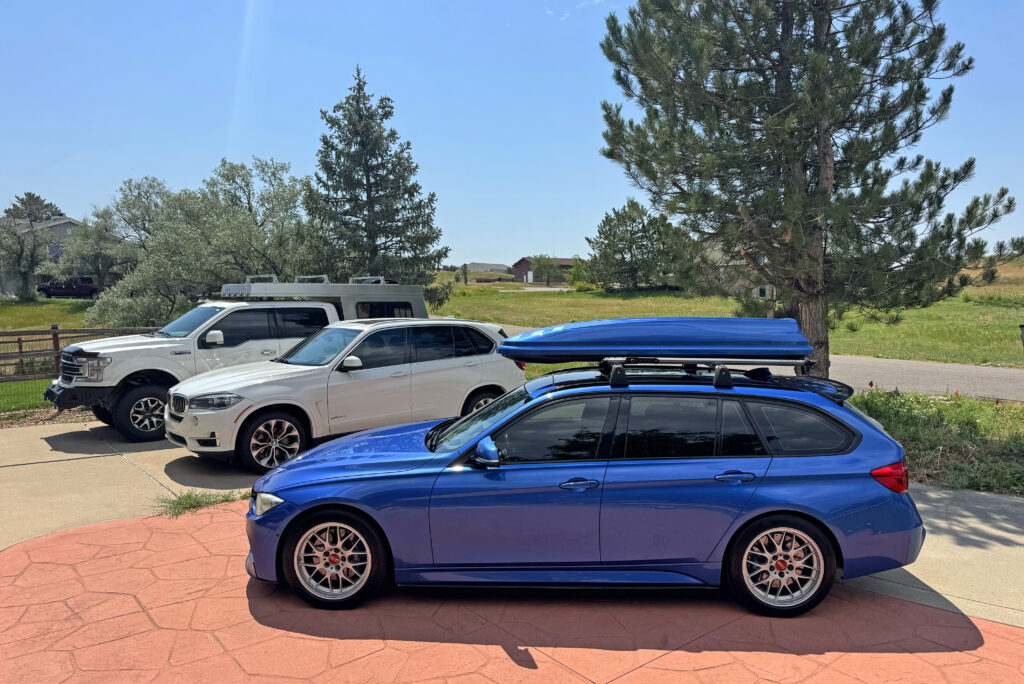
There was only one vehicle choice for our summer-in-a-day mission.
Those hills were the Front Range of the Colorado Rocky Mountains, and on the other side was Shadow Mountain Reservoir and Grand Lake. The latter is one of the most picturesque lakes in Colorado. Our plan was to rent a pontoon boat, head out to the islands in the lake, have a swim with the dogs, and dock at the quaint mountain town of Grand Lake for dinner. On the way home, we’d do a sunset loop through Rocky Mountain National Park and it’s famous Trail Ridge Road (one of the highest paved roads in the country). The Ford truck or my wife’s X5 would seem the appropriate vehicle to haul two people, two dogs, our gear, and my 1.7-meter remote control float plane to the lake, but there was only one choice—my F31 328d M Sport wagon.
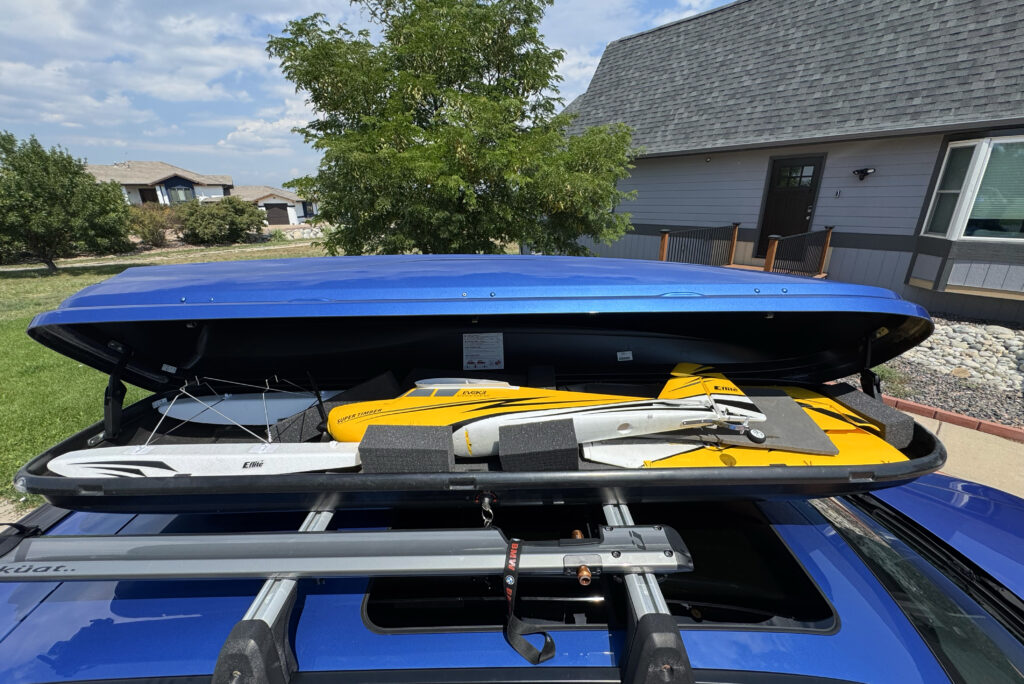
The M Sport wagon had more than enough room for our gear, two dogs, and a large remote-controlled airplane.
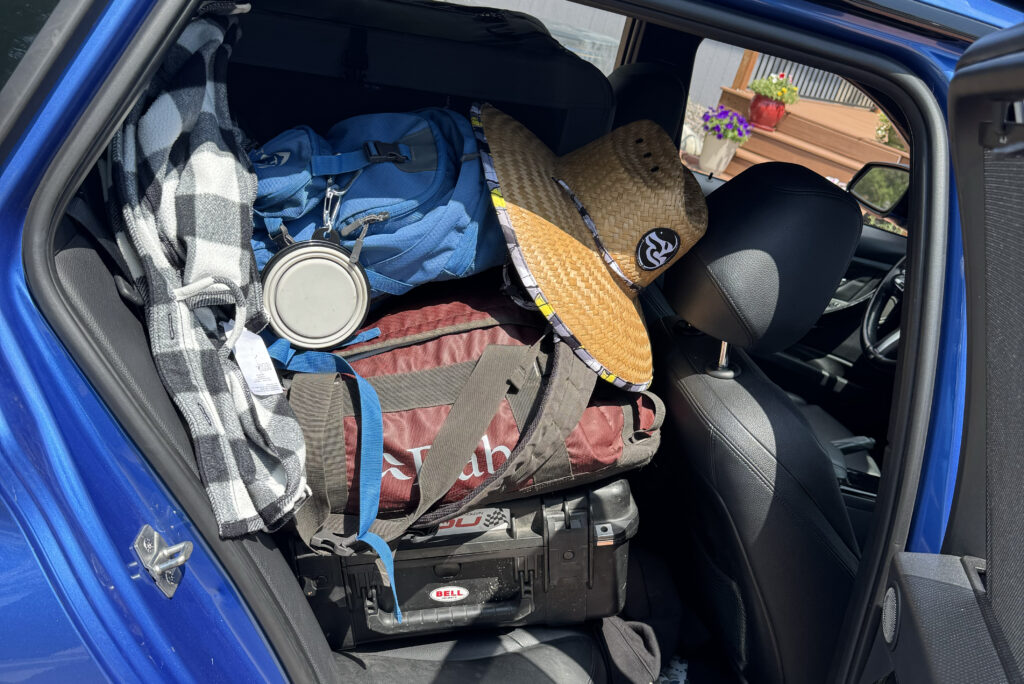
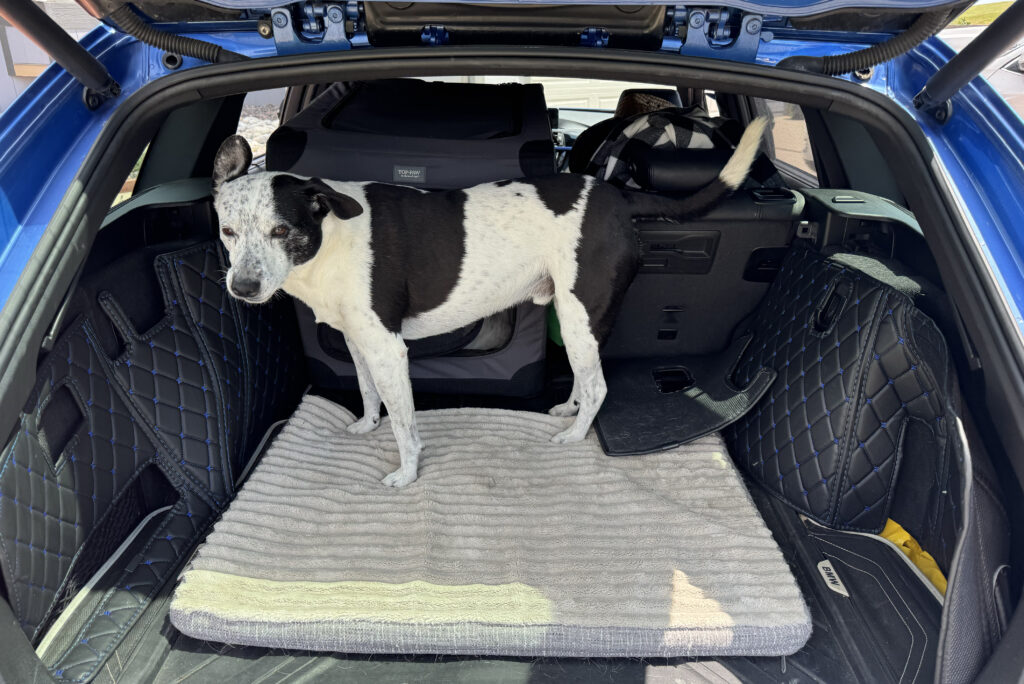

Donning flip flops and board shorts, we loaded up the dogs and the plane and hit the road. I purchased the Estoril Blue 2014 M Sport wagon as my single-car solution in November of last year, and it has truly been a jack-of-all-trades. Since then, I’ve put about 10,000 miles on it, and it has suited my mission perfectly. Although I was reticent about the F3X styling when the sixth-generation 3 Series was released, a decade later, the M Sport variant of the wagon has aged into one of the best-looking BMWs ever. There isn’t a time I drive it that I don’t get a compliment. In mixed city and highway driving, with no regard for fuel economy, I’ve averaged about 32 mpg. And while it is noticeably slower than my previous E90 335d, it easily outmaneuvers the sedan. In fact, I have yet to meet a corner out in the real world that I’ve needed to brake aggressively for. While it isn’t slow either, the momentum style driving that the F31 requires to close the gap between more powerful cars harkens back to the days and smiles spent behind the wheels of my old E30s.
Our early Friday afternoon drive would be a tour of some of Denver’s most congested Interstates. The longer route through Rocky Mountain National Park was showing a 30-minute shorter drive time; however, an advanced timed entry slot was required between 9:00 a.m. and 2:00 p.m., and we did not have one. I reset the mpg computer before we left to see how efficient the 2.0-liter N47 diesel engine would be in road trip mode. We made good time through town, averaging north of 40 mpg, until we hit a dead stop in construction on I-70 on Floyd Hill. The backside of the hill is one of the steepest grades on I-70 through the Colorado Rockies, and it is a frequent cause of accidents and sun glare closures in the winter. The plan to fix it is a nearly billion-dollar project that would elevate the roadways, similar to those in Glenwood Springs Canyon. The slow crawl through construction took over an hour, and dropped our fuel economy down into the high 20s mpg. Selecting Eco Pro mode helped, but my hopes of averaging 40 mpg on the trip were dashed. Sitting at a dead stop, boxed in on all sides, is an exercise in patience, but even with sport seats, the M Sport wagon was comfortable and accommodating.
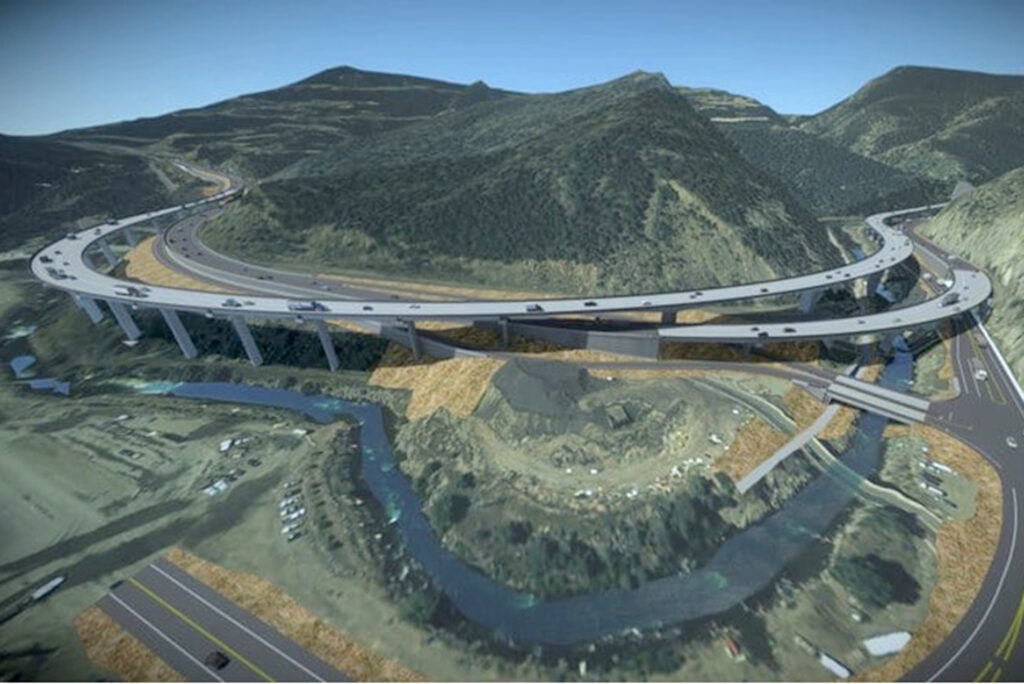
The proposed elevated portions of I-70 on the backside of Floyd Hill. Photo courtesy of CoDot.gov
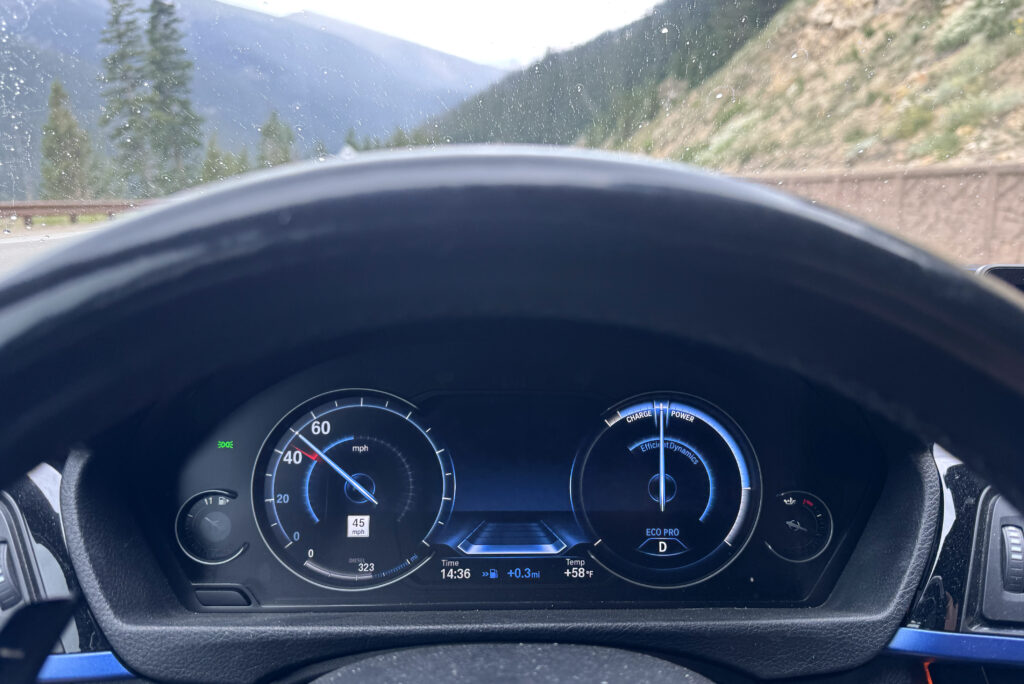
Eco Pro helped preserve our fuel economy while stuck in traffic. I stayed in Eco Pro for the remainder of the drive to see how much improvement I could get.
Mercifully, the traffic eventually broke, and we turned off I-70 with a collective sigh of relief. Highway 40 over Berthoud Pass was a welcome reward where I could finally exploit the M Sport wagon’s handling. I used a few short bursts of Sport mode to get a run on the occasional crossover trundling up the pass, but stayed in Eco Pro for the rest of the time, which allowed the fuel economy to creep back into the mid-30s as I coasted down the backside of the pass. We pulled into the gravel shoreline parking lot of the marina a mere 30 minutes behind schedule.
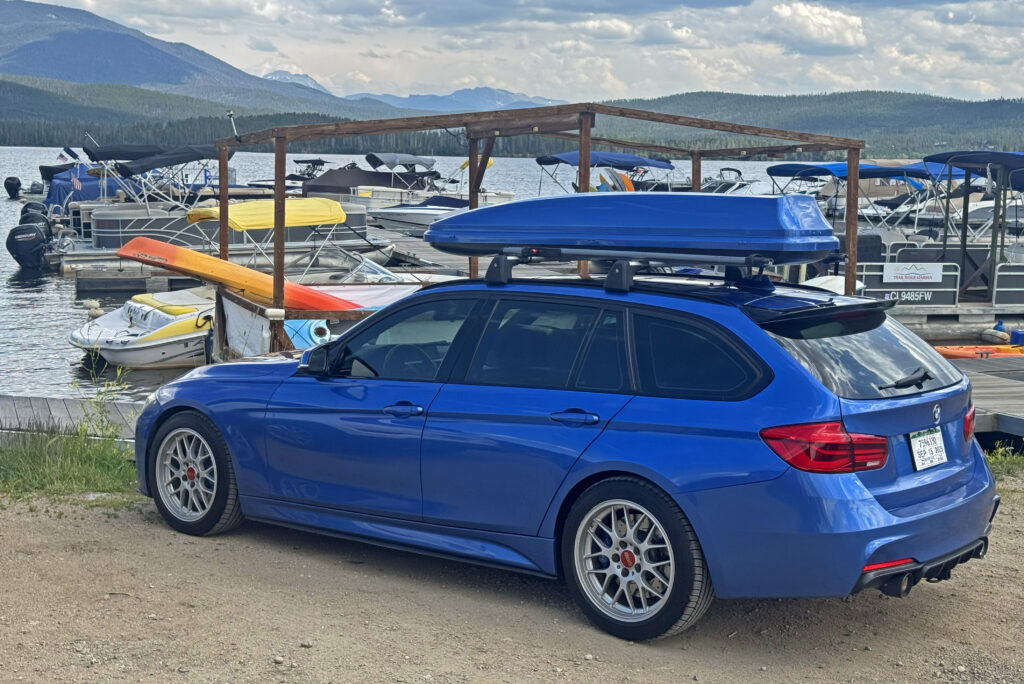
Finally, out of the heat, clear of traffic, and at the lake!

The skies were ominous, making the water feel even colder.
The cool, clear waters of Shadow Mountain Reservoir were a splendid relief from the summer heat. We crossed the lake and throttled down, drifting into the shoreline of one of the islands on the southern flank of the reservoir. The silence was piercing and a stark contrast to the rumble of bumper-to-bumper traffic just a short time earlier. The solace of the moment was only disturbed by a nesting osprey sounding off to let us know who the king of the island was. The dogs let themselves in for a dip, while our entry to the frigid cold waters was much less graceful. I tried to remember how miserably hot it was down in the flatlands was as my muscles spasmed uncontrollably in shock. Soon, my pulse slowed down, and the heat of the summer and the frustrations of the morning were gone. The peace of the moment was bliss, perhaps even made better by having suffered a little to get there.

Loki dog goes insane any time the RCs are flying!


A stick is a must to keep things afloat.
Rejuvenated and refreshed, we fired up the boat and puttered towards the canal that connects Grand Lake to Shadow Mountain Reservoir. Out in open water, I stopped to burn a few batteries with the RC float plane, which drove Loki dog insane. Fortunately, we were far enough away from the islands not to shatter the peace. Grand Lake is Colorado’s largest and deepest natural lake, formed by retreating glaciers eons ago. The town on its north shore that bears the same name is less than a mile from Rocky Mountain National Park and close to the headwaters of the Colorado River. Historically, water on this side of the Continental Divide would flow through the Colorado River to the Gulf of California, but Grand Lake drains East of the Divide through a 13-mile tunnel that is part of the 1930s-era Colorado-Big Thompson Project (known as the CB-T). Legend holds that before the CB-T, the waters of Grand Lake were as clear and blue as the Bahamas—or perhaps an Estoril Blue M Sport wagon—but they are now more Black Sapphire Metallic in BMW speak.
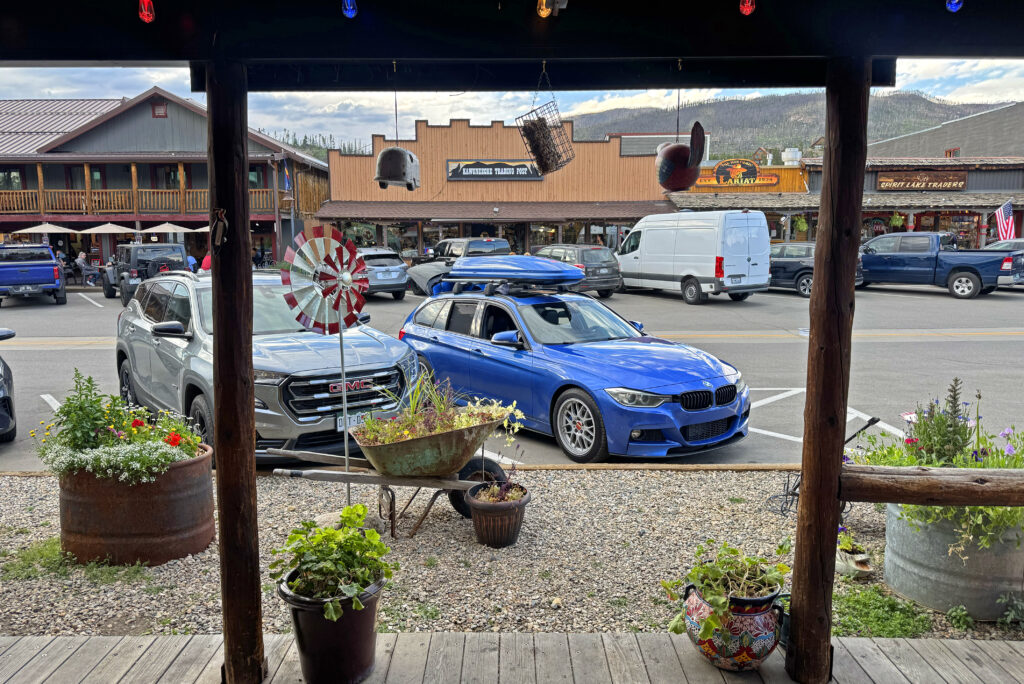
We stopped for ice cream in the town of Grand Lake before heading into Rocky Mountain National Park.
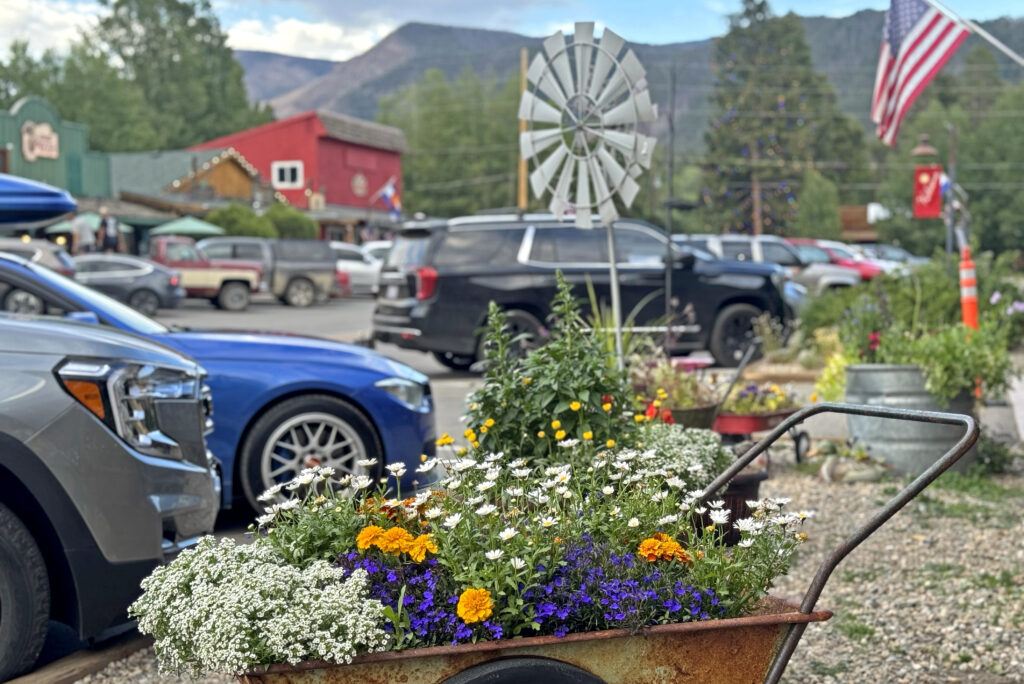
The western gateway to the park is a small slice of Americana.
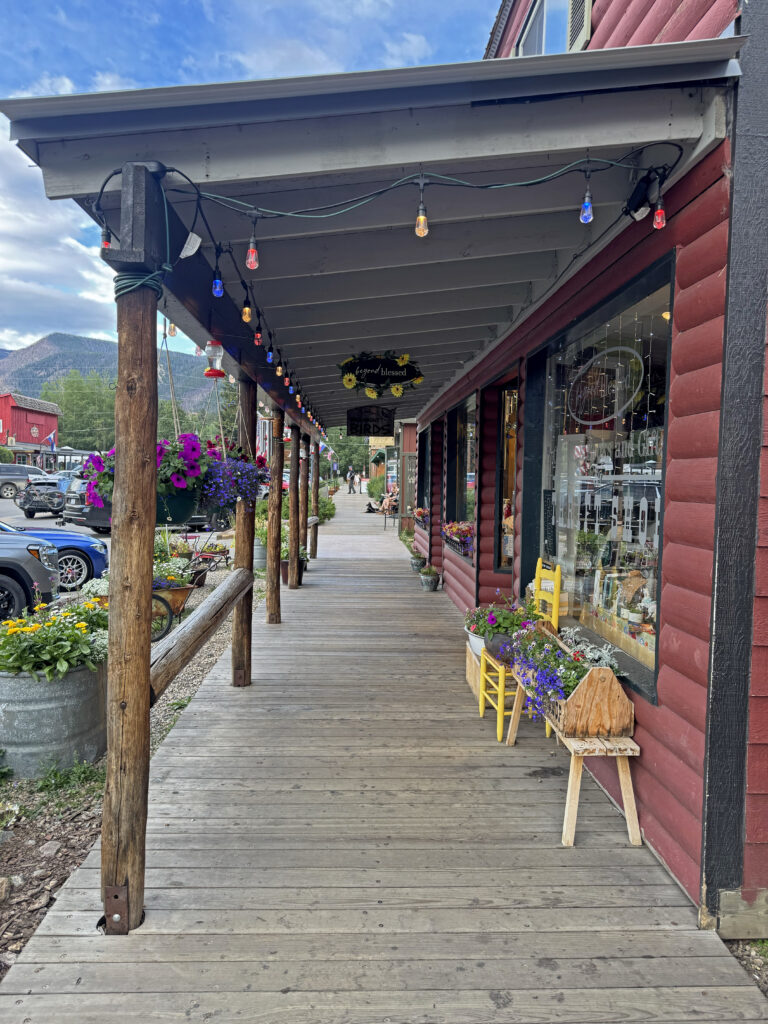
It would be a 3-hour drive home, but the only traffic jams from this point on would be from wildlife grazing on the shoulder. Before we headed into the park, we made one last stop in Grand Lake for ice cream. With the sun retreating below the horizon, traffic in the park was blissfully sparse. We chased the sunset as we climbed up Trail Ridge Road, passing through alpine meadows, coniferous forests, and aspen groves, and eventually reaching the high tundra above the tree line. Along the way, we saw elk herds on Milner Pass and a moose wading in Poudre Lake.
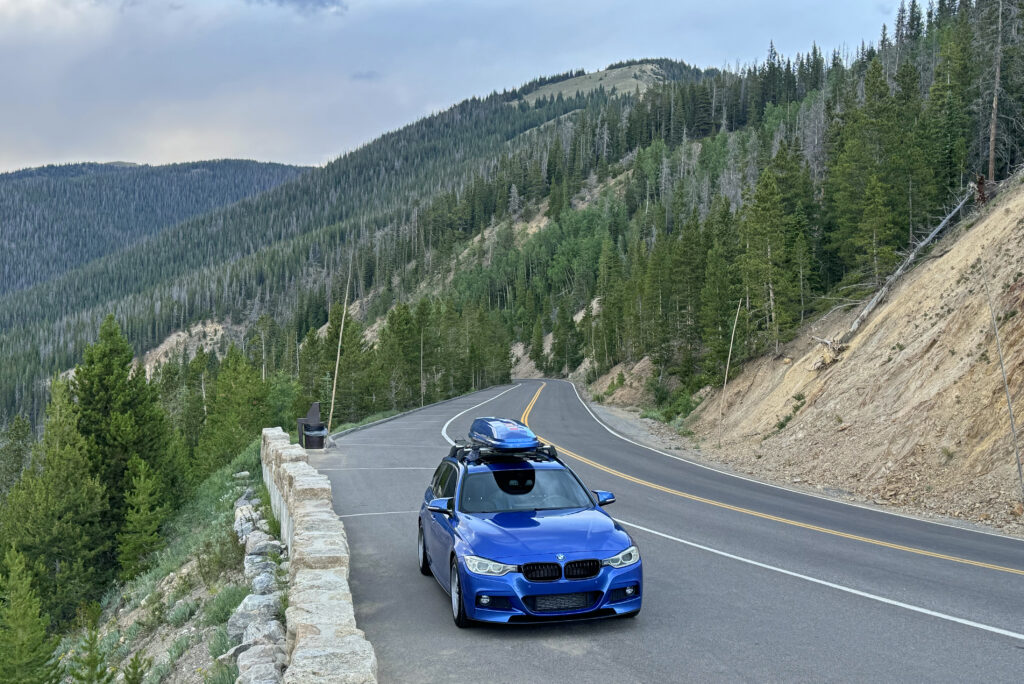
With the sun slipping below the horizon, we had Rocky Mountain National Park all to ourselves!
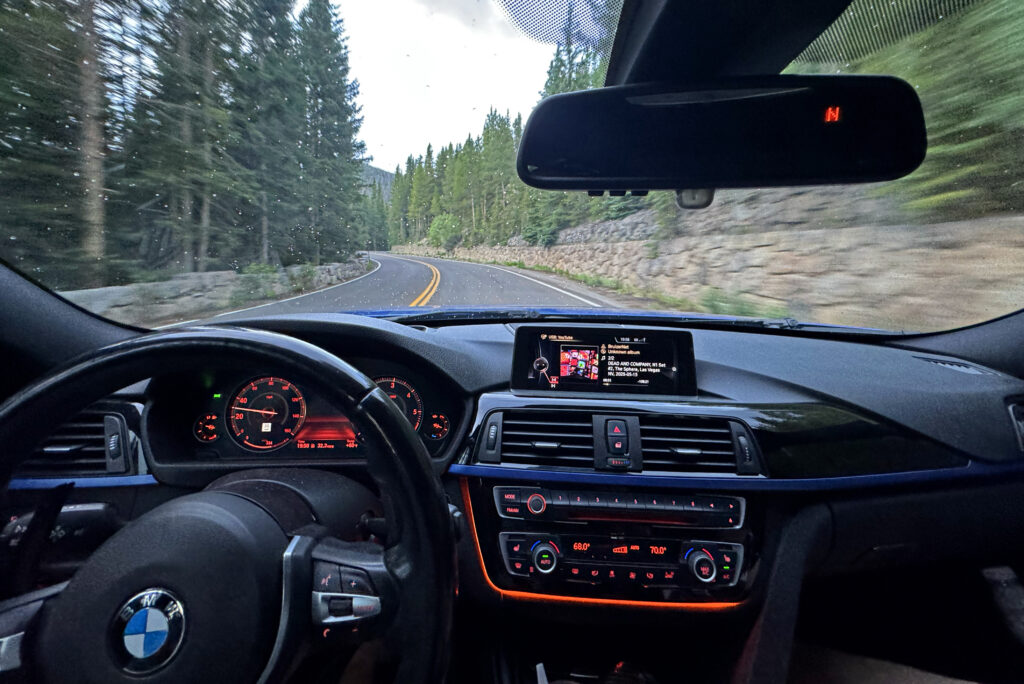
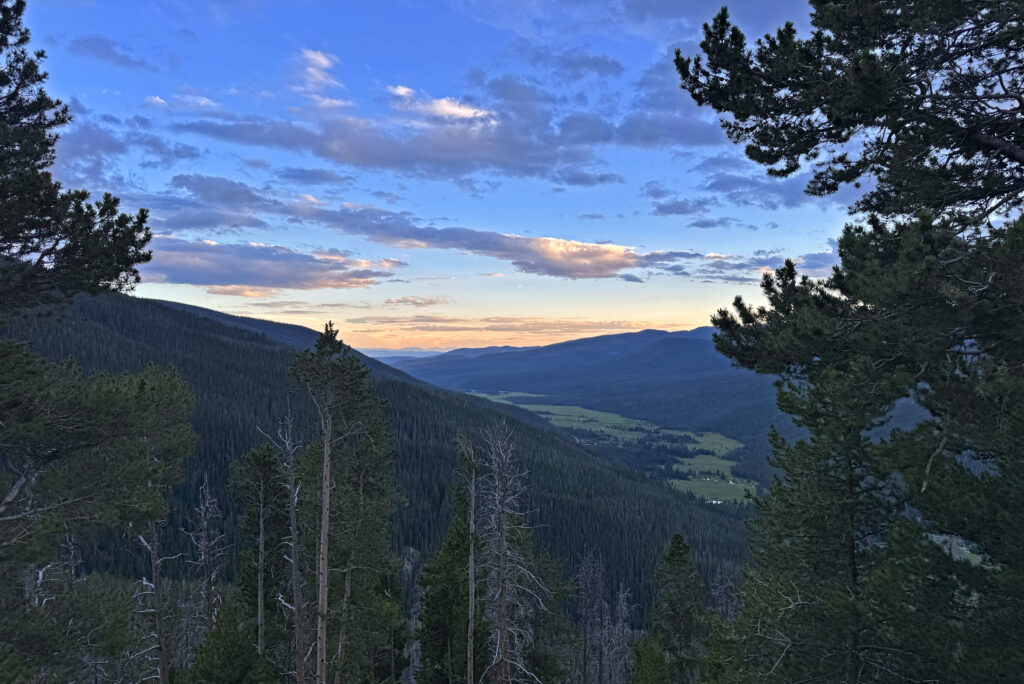

Well, almost all to ourselves…
The stretch above tree line is not for the vertically phobic, as a mere white stripe is all that separates the edge of the pavement from thousands of feet of abyss. With no traffic and clear of wildlife, it was moments like this that one must savor. The road draped its way across the rolling tundra, and the M Sport wagon was keen to oblige as we gently drifted from apex to apex in comfortable silence. Of course, a little restraint was in order to be respectful of the park and prevent the dogs from soiling the interior. It was, yet again, an example of the M Sport wagon being the perfect single-car solution.
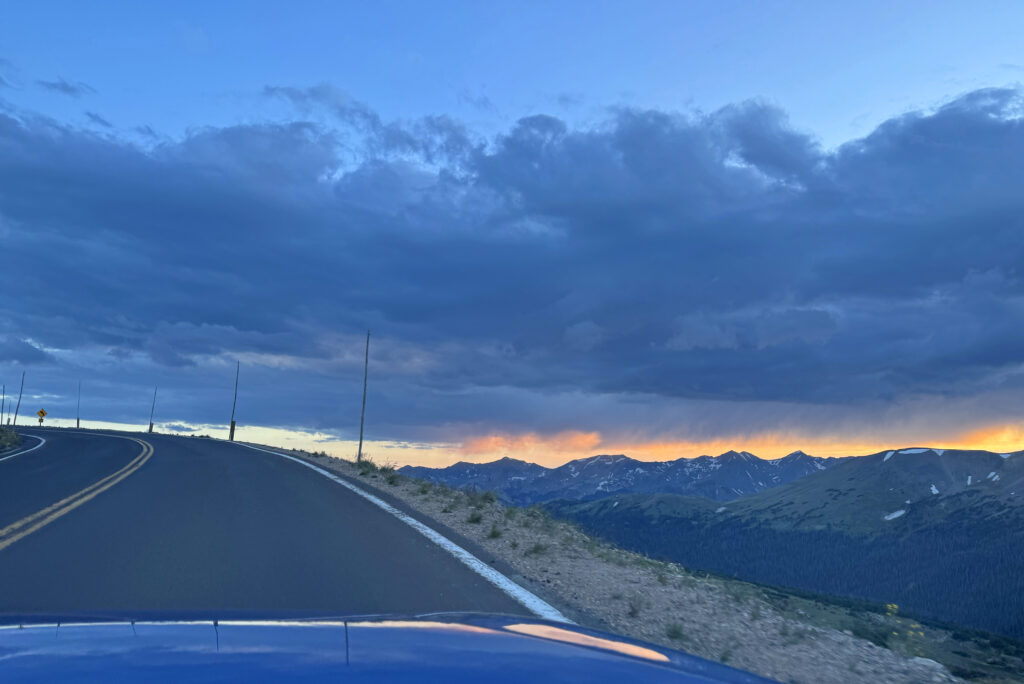
Trail Ridge Road lived up to its name.
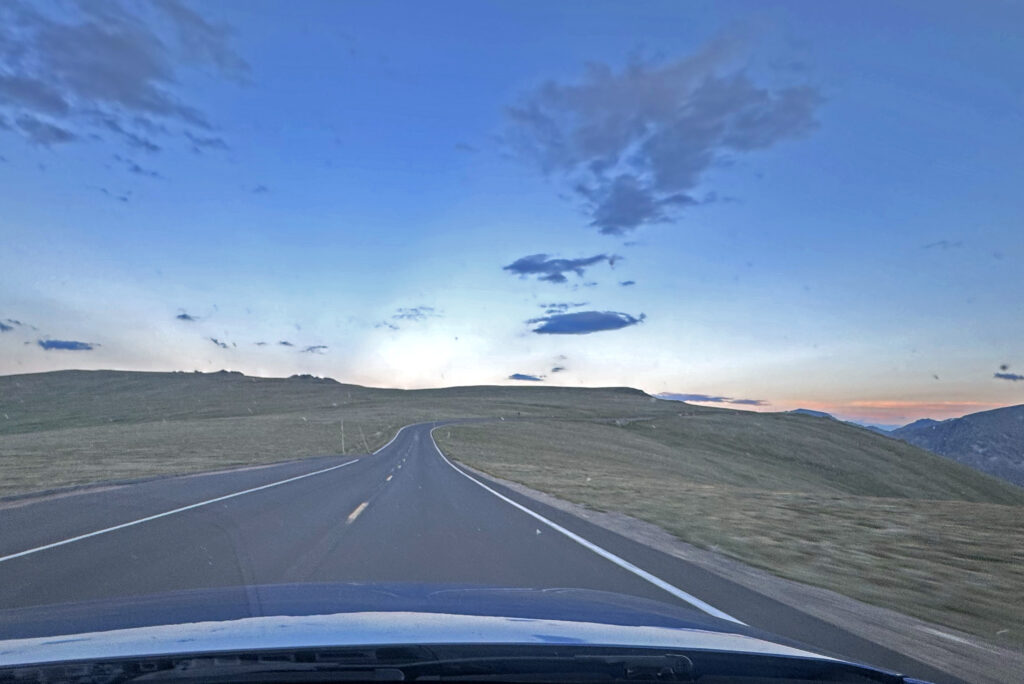
For the long descent down the eastern faces of the mountains, I put it in back in Eco Pro and watched the mpg slowly climb. I was hoping for an average of 40 mpg, which, on paper, shouldn’t have been a problem, but the long stretch in traffic ruined that. As we rolled back into the flatlands in the town of Lyons, the computer was showing 38.1 mpg for the trip, up from a low of 29.2 mpg in the worst of the traffic. That dropped to 37.3 mpg by the time we pulled into the driveway. That’s still an impressive figure given a fully loaded wagon, large roof box, and my bouts of spirited driving.
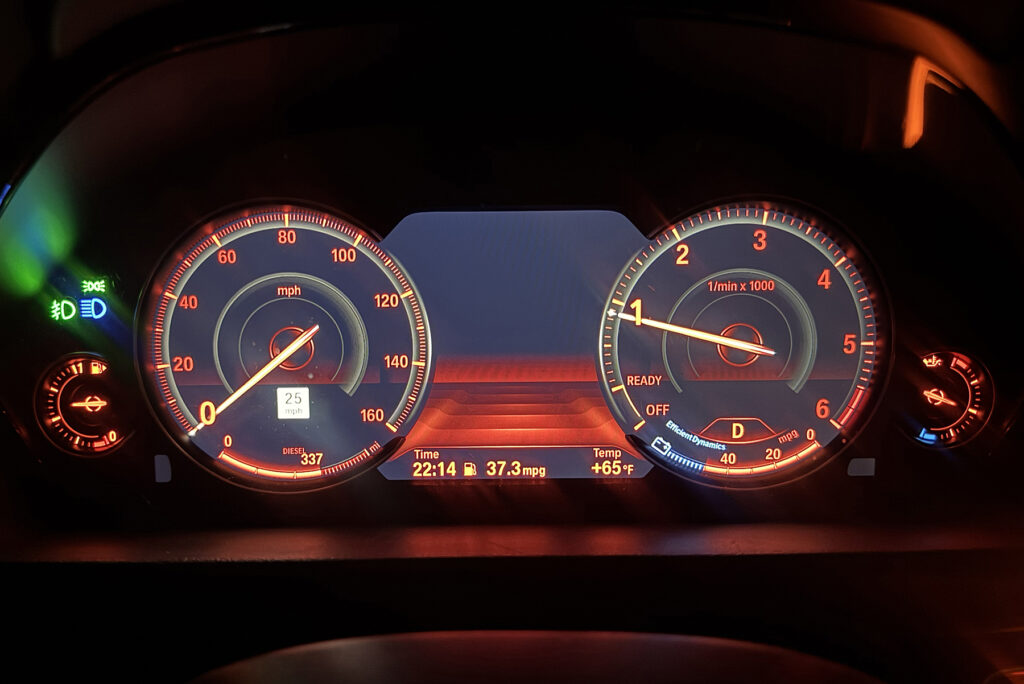
At the end of the drive, I was able to claw the mpg closer to my goal of 40 mpg for the trip.
What’s more impressive is that I was able to scratch my enthusiast itch without compromising the comfort of my wife or the dogs. Make no mistake, the 2.0-liter diesel wagon is nothing close to an M car, and I’ve done the same trip with virtually the same payload (sans the RC airplane) in an E90 M3 sedan. But there is something magical about the diesel. On paper, it only makes 175 horsepower (that’s only five horsepower more than my M20-powered E30s made), but out of those two liters, it squeezes 258 lb-ft of torque—that’s only 37 lb-ft less than my old E90 M3 sedan. I would still rate the overall feel and momentum driving required closer to the E30 than an E90 M3, and the F31 is more vague and less visceral than both of them. However, those are compromises I’m willing to live with to have an all-wheel-drive diesel BMW wagon that looks the business. In these times of personal financial austerity, I don’t think I could have found a better single car for the mission.—Alex McCulloch
The post Summer in a Day in a BMW Wagon appeared first on BimmerLife.
]]>The post Marketplace Sedans: E36 M3 or E46 ZHP? appeared first on BimmerLife.
]]>As I close this chapter of my life, I look forward to just being an enthusiast again. And as an enthusiast, I’m already obsessing over the next car! Depending on what the Lightweight sells for, I’ll probably have a budget in the high teens for a fun BMW that I can also use for a light track duty and BMW CCA instruction. That will likely be a less-than-perfect E36 M3, but the Facebook Marketplace algorithm (incessantly listening in the background) reminded me of another suitable alternative—an E46 330i ZHP.
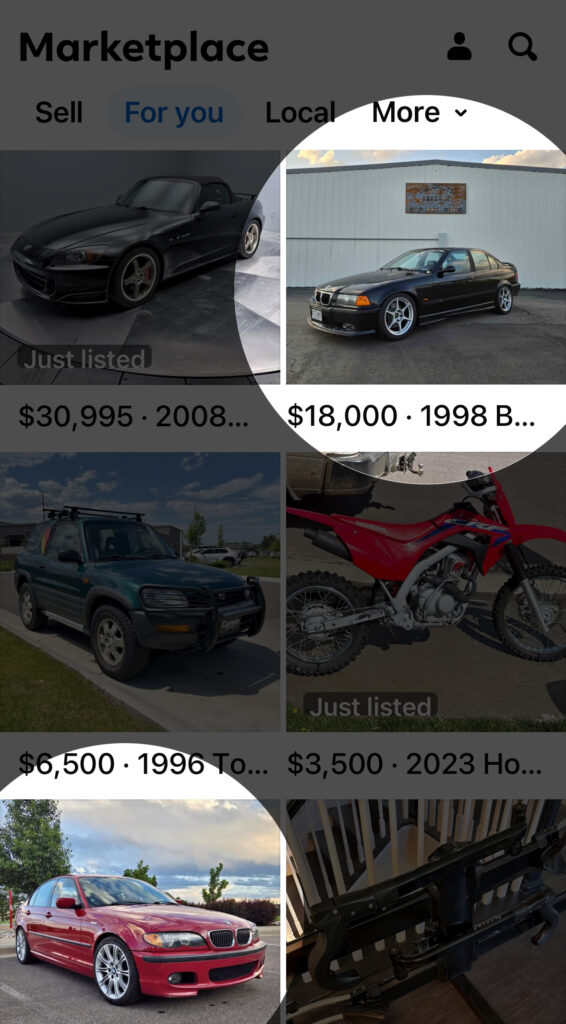
Both of these cars appeared in my Marketplace feed at the same price.
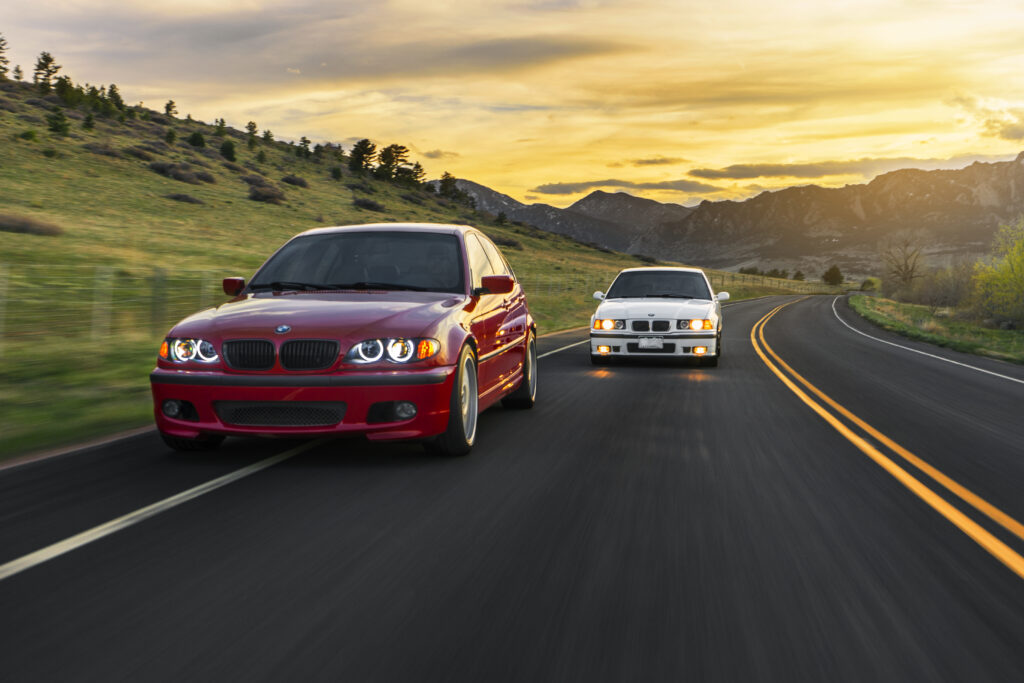
A decade ago, I wrote a comparison of two nearly virtual examples. Photo: Stefan Rodriguez courtesy of Roundel Magazine.
A decade ago, I wrote a comparison of an E36 M3 sedan and an E46 330i ZHP sedan. Despite being a generation apart, both BMWs are very similar in terms of performance and price, yet they are quite different in character. This morning, I was presented with two very compelling options that would fit my new mission perfectly, each with an asking price of $18,000. Both examples were the highest-spec available in a sedan for each generation of the 3 Series. The E36 M3 sedan (known as the M3/4/5 when equipped with three pedals) was only offered for the 1997 and 1998 model years to fill the gap between the outgoing E34 and incoming E39 M5s. The E46 M3 was never offered in a four-door, leaving the Performance Package (ZHP) 330i sedan as the next best alternative.
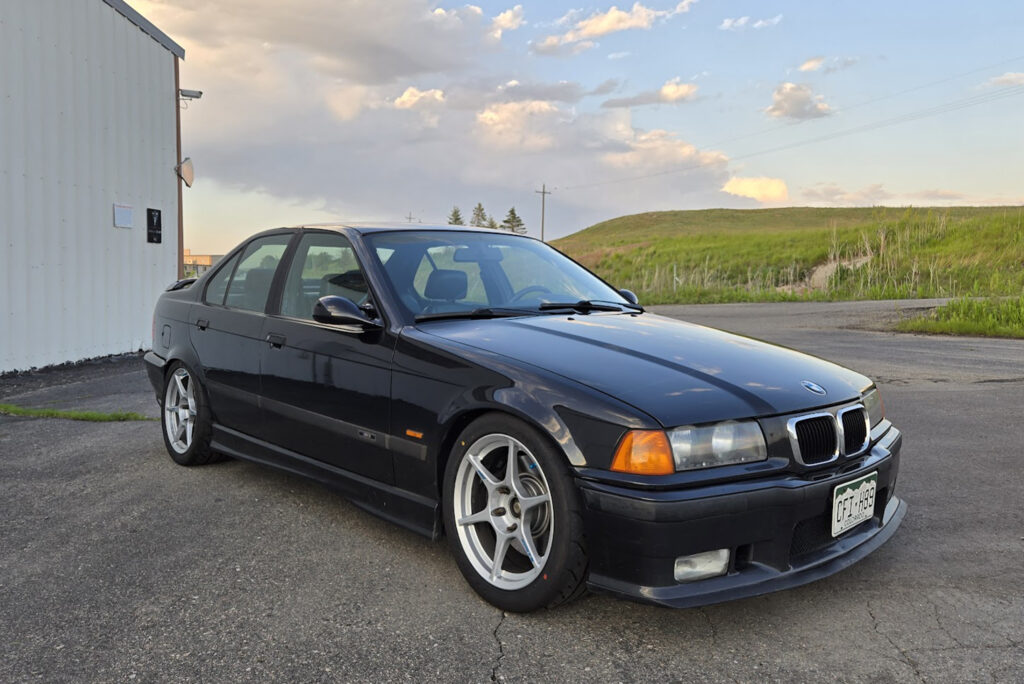
The 1998 E36 M3 Sedan is a known quantity within the BMW CCA Rocky Mountain Chapter.
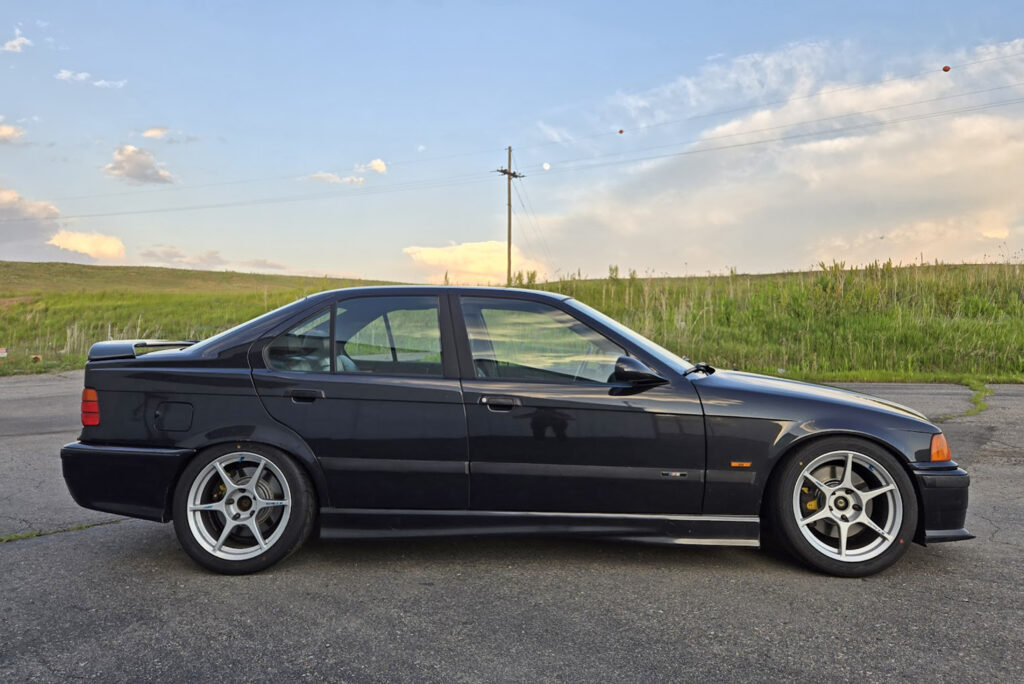
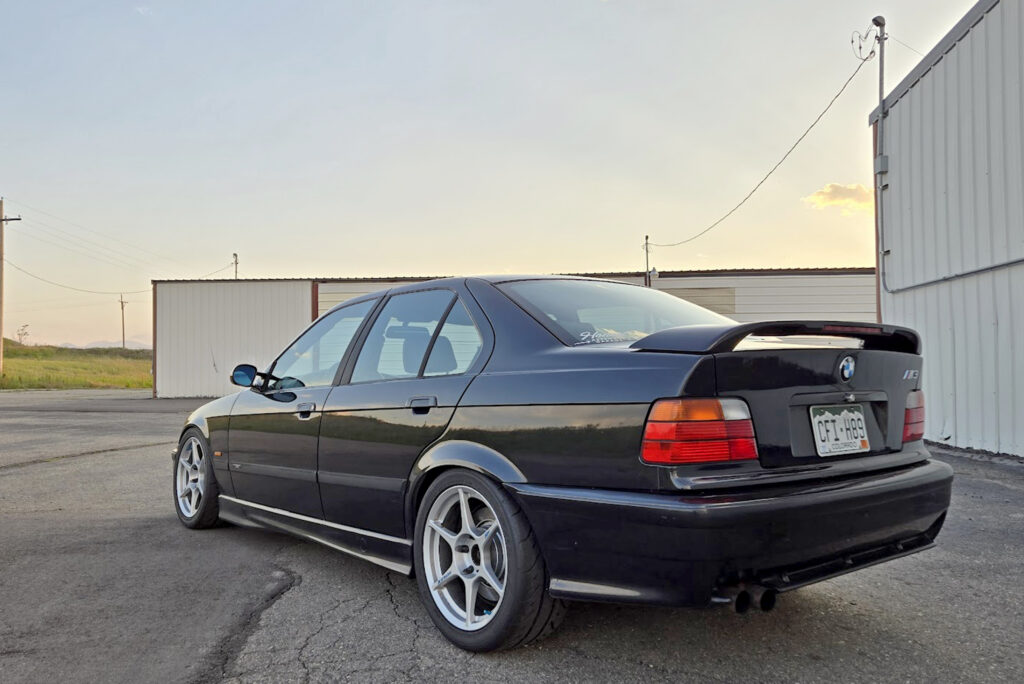
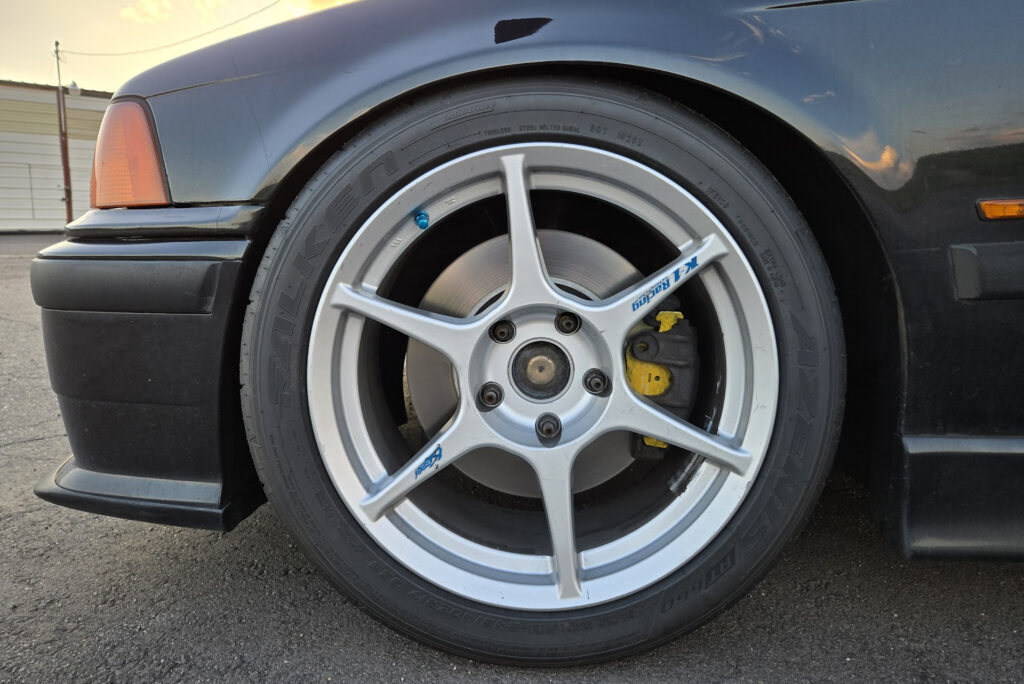
The 1998 M3 sedan belongs to a fellow BMW CCA instructor and was previously owned by a member of the Rocky Mountain Chapter. Finished in Cosmos Black over black leather, it wears its 177,000 miles proudly and is an example that with old-school maintenance, these cars can last forever! It was built as a proper streetable track car with the right cooling system upgrades, an oil pan baffle, a safety-wired oil pump nut, Ground Control springs, Motion Control dampers, a Z3 steering rack, and Kosei K1 wheels.
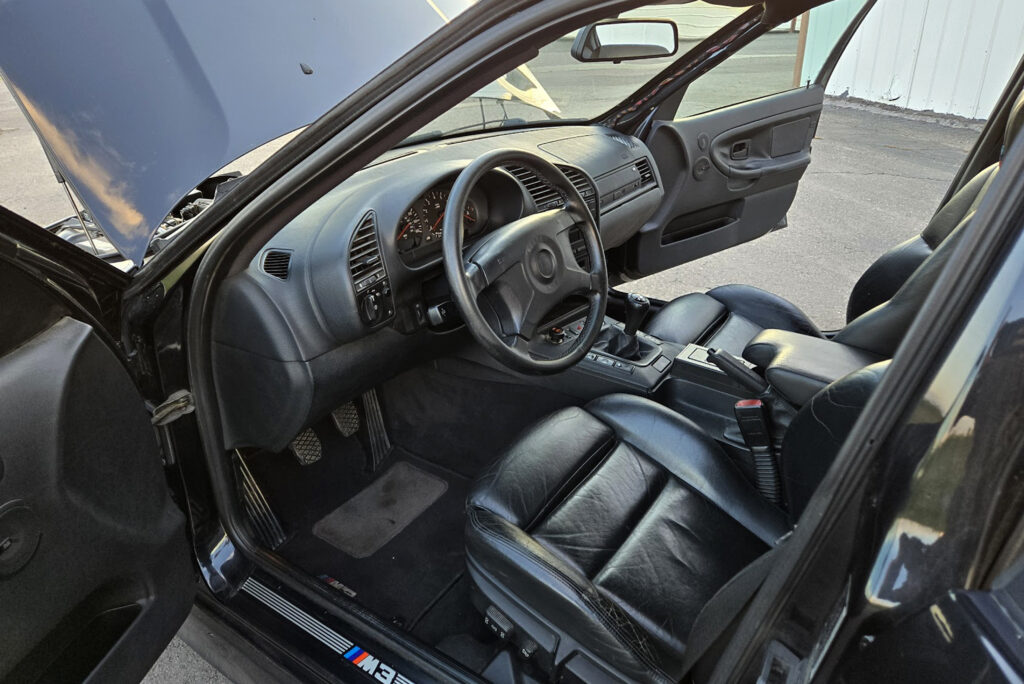
I love the button-centric interior of the E36.
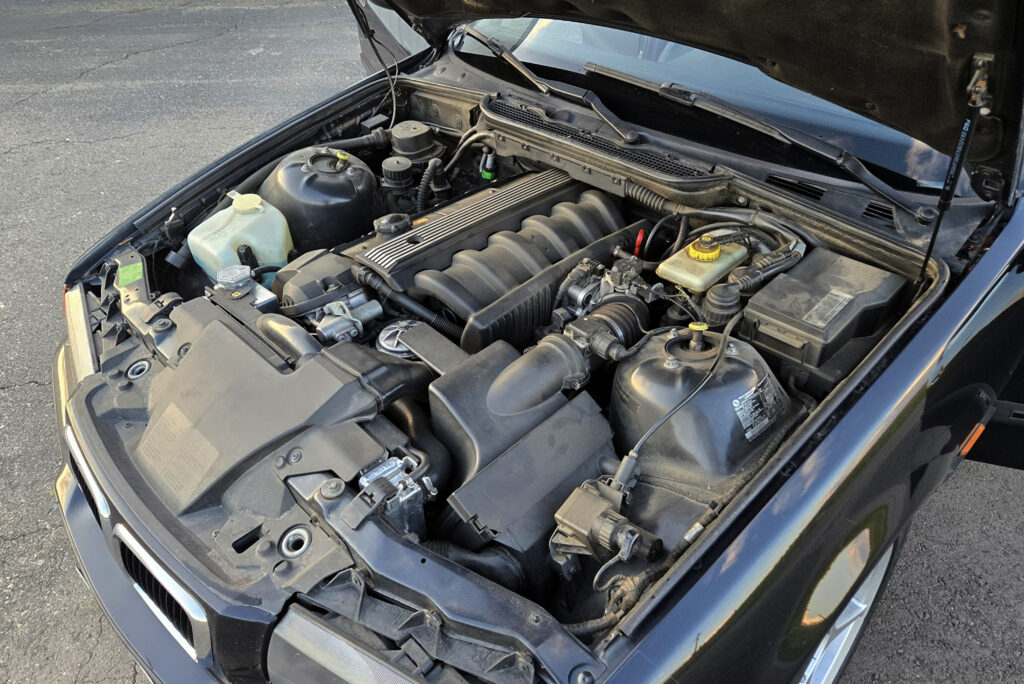
This M3 has a list of proper track modifications.
As an E36 nerd, I also appreciate the 1998 model-year-only rear headrests and HiFi sound button. The latter begs the question: why wouldn’t you always have the sound system in HiFi? This car has been a class winner in the BMW club autocross and would be a formidable opponent to a poorly driven Corvette in my hands at our local track. Yet, it’s tame enough for Sunday drives, imperfect enough for guilt-free enjoyment, and nothing pulls at my heartstrings like an E36 M3 sedan. My only complaint is the color—black is a hard color to own in Colorado.
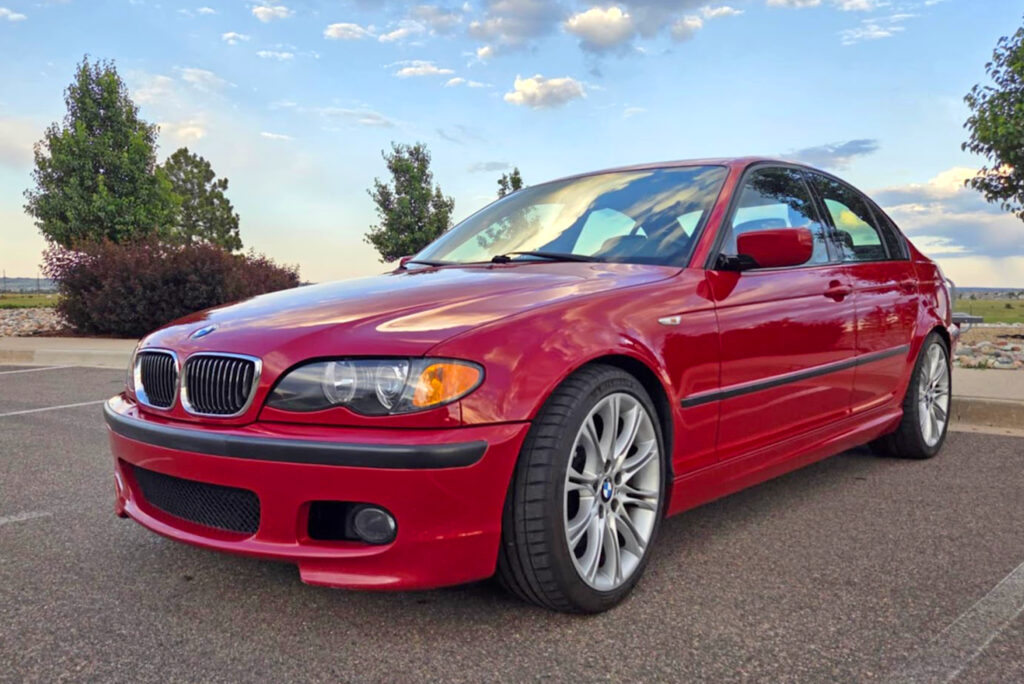
An Imola Red sedan is the best ZHP!
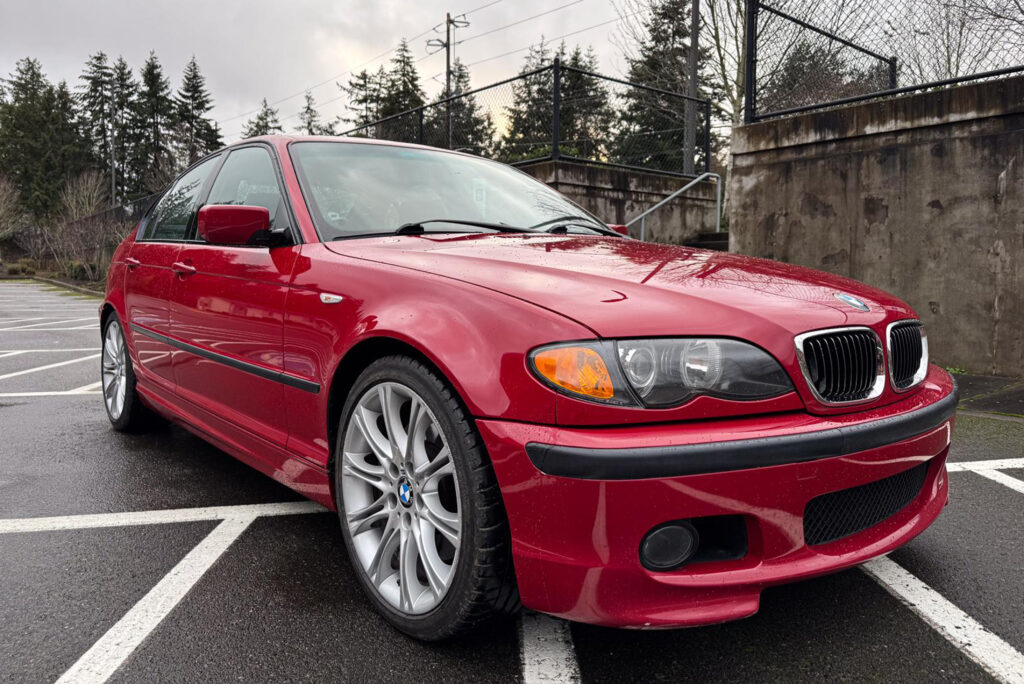
The classic lines of an E46 ZHP look good from every angle.
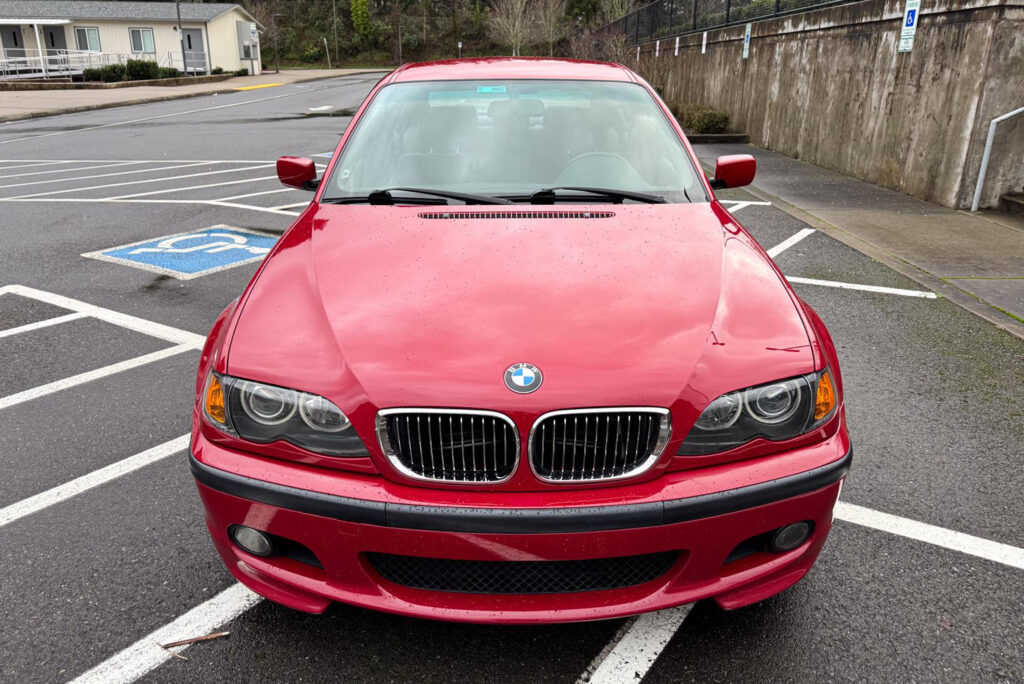
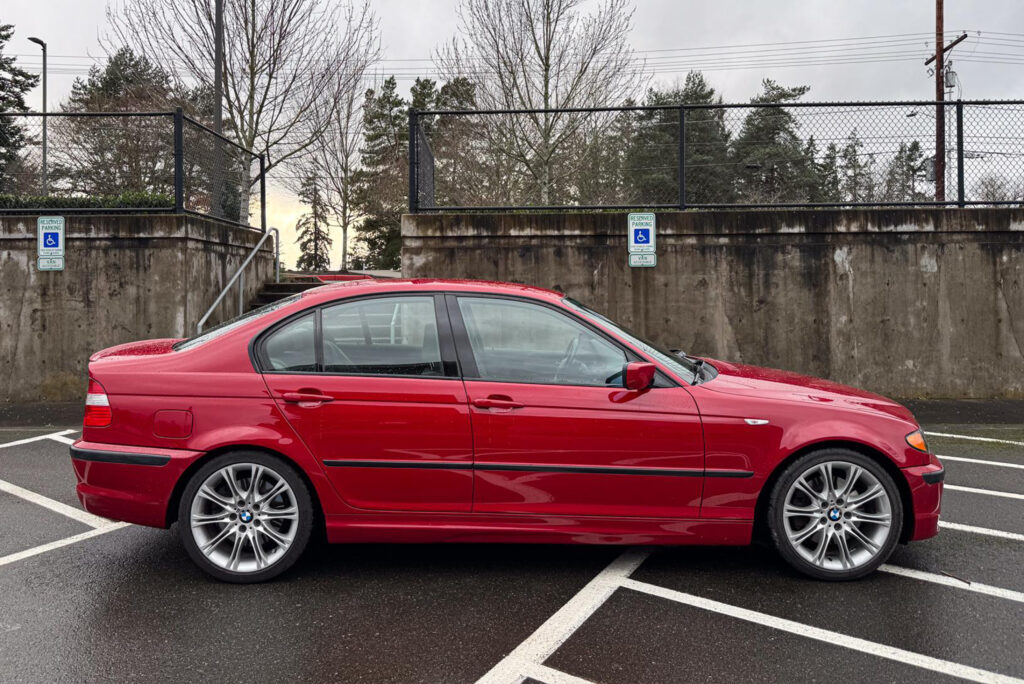
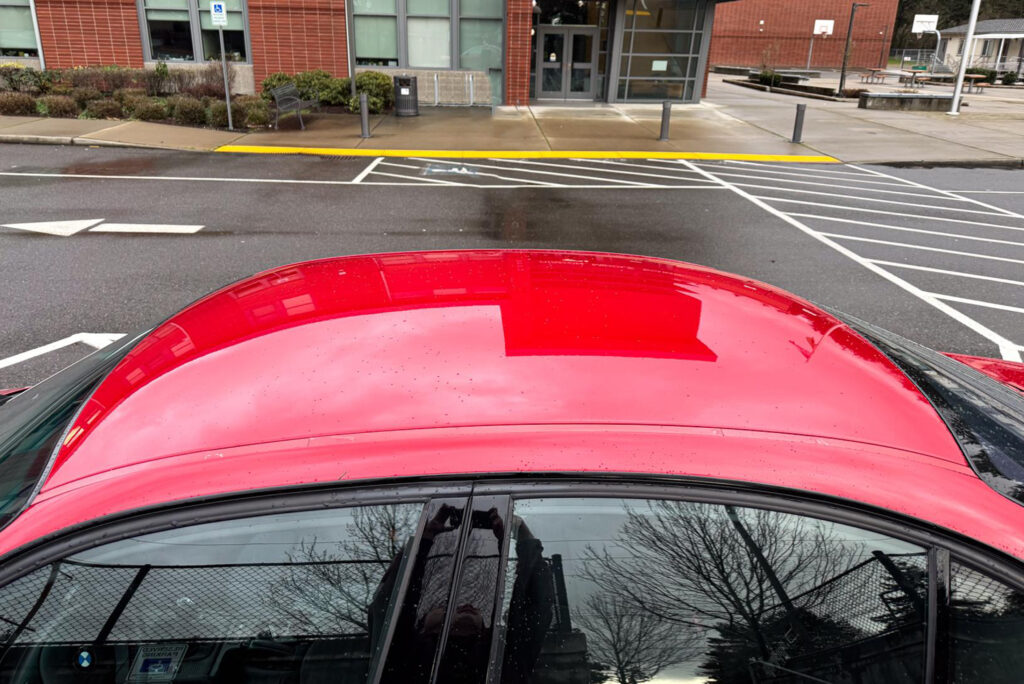
The lack of a sunroof makes this ZHP even rarer.
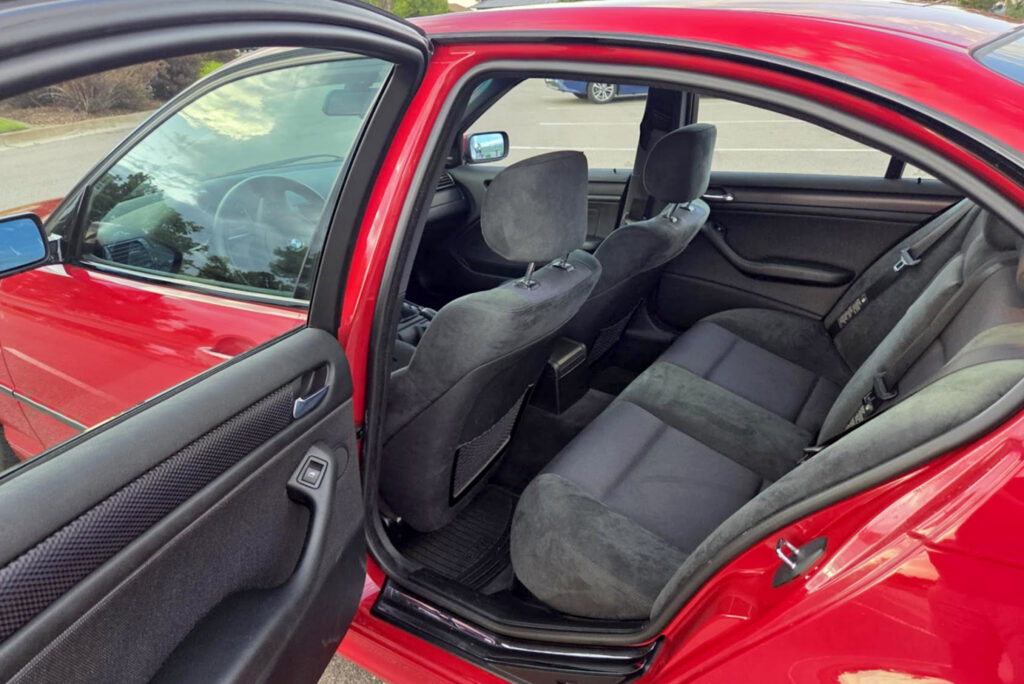
The 2003 330i ZHP sedan is finished in Imola red over Alcantara cloth—my favorite ZHP color combination. I’ve sold several of this exact car over the years, and wanted to keep each one of them. With just over 100K miles, this is a ZHP that I would be very proud of, but it could also be used and enjoyed without guilt. Another notable option is something that isn’t optioned—a sunroof—making this already rare ZHP stand out!
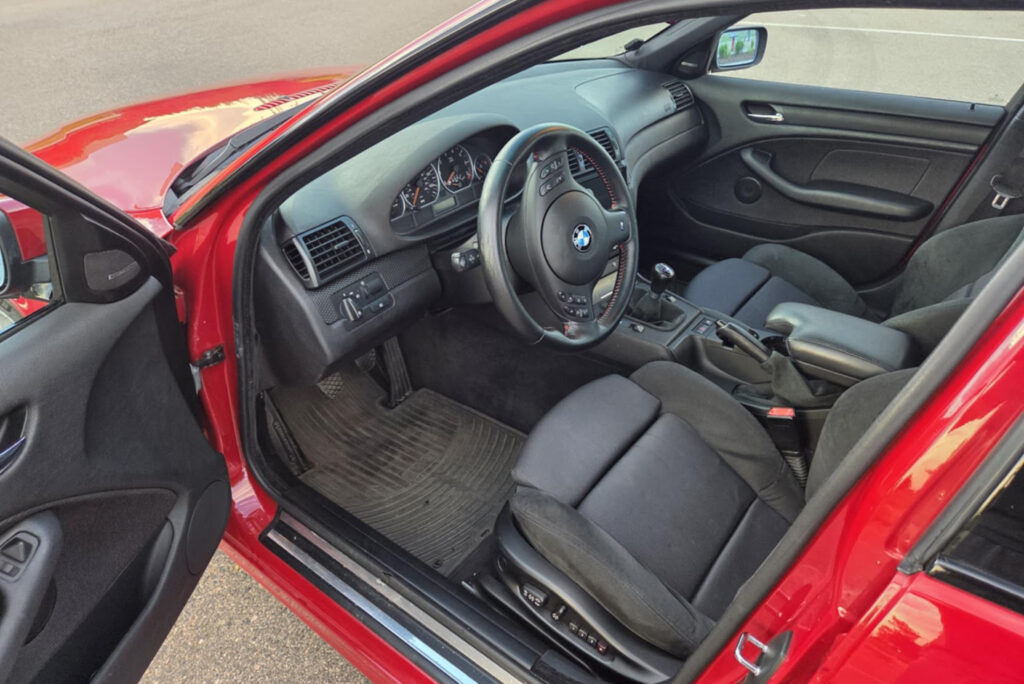
Alcantara cloth complements Imola Red perfectly.
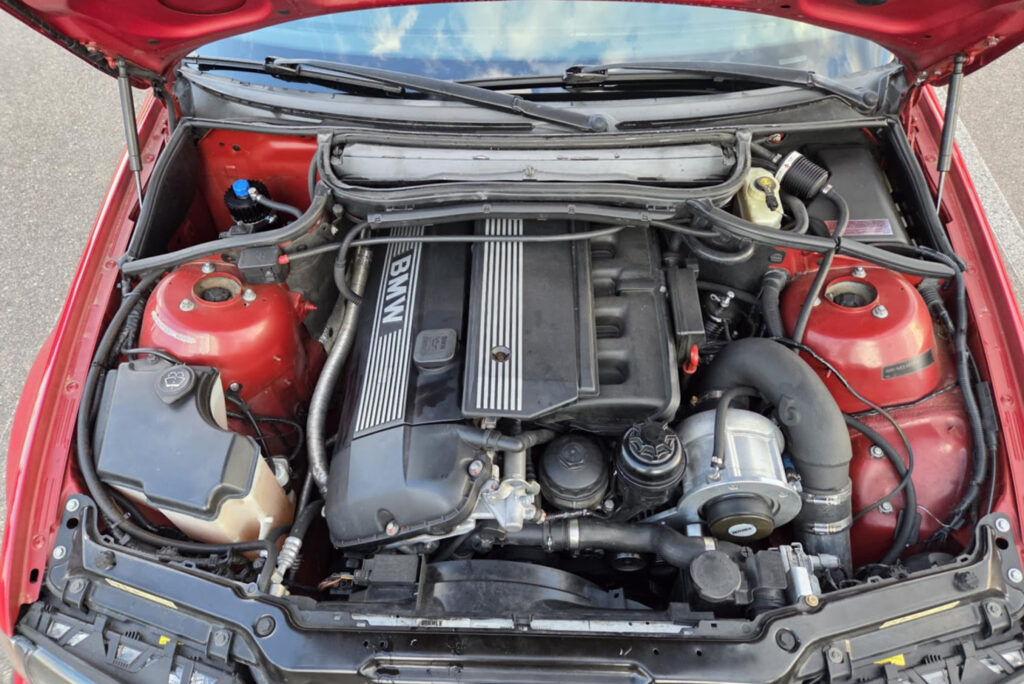
An Active Autowerks supercharger doesn’t hurt either!
But, what really sets this ZHP apart and closes the gap with the E36 M3 is an Active Autowerks supercharger and matching headers. The seller notes a few areas of clear coat peeling (which is typical of Imola cars in Colorado), thorough maintenance documentation, and an upgraded Eonon Apple CarPlay stereo. The supercharger likely achieves performance comparable to an S54 engine at our altitudes, but with an 8psi low-boost valve, it remains safe for engine longevity. When it comes to an E46 ZHP, it really doesn’t get better than this!
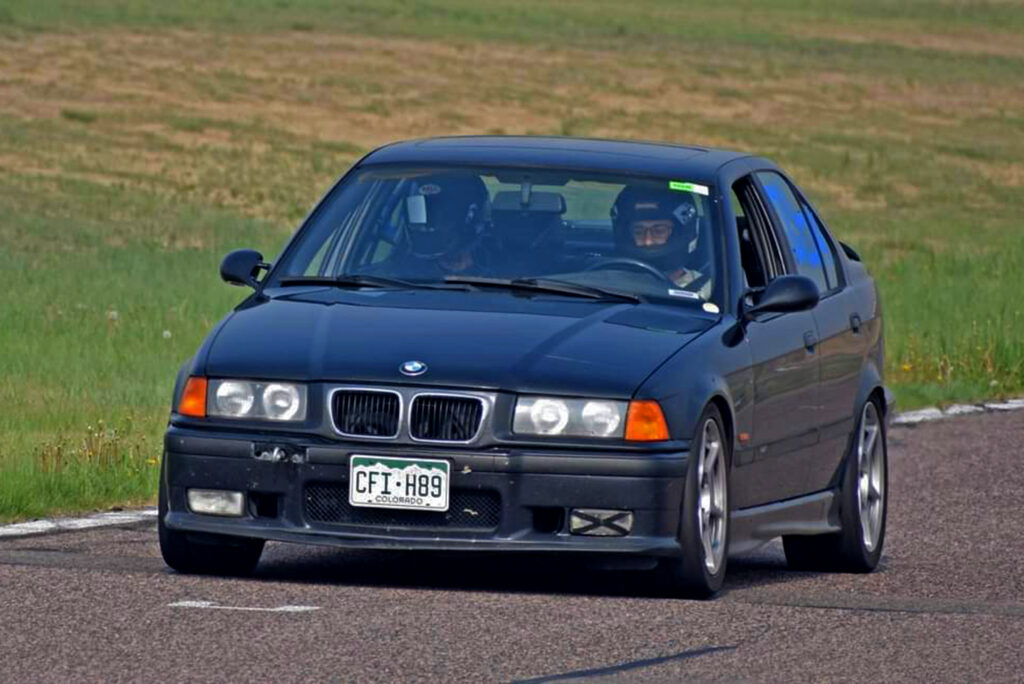
The E36 M3 would be the weapon of choice for track duty.
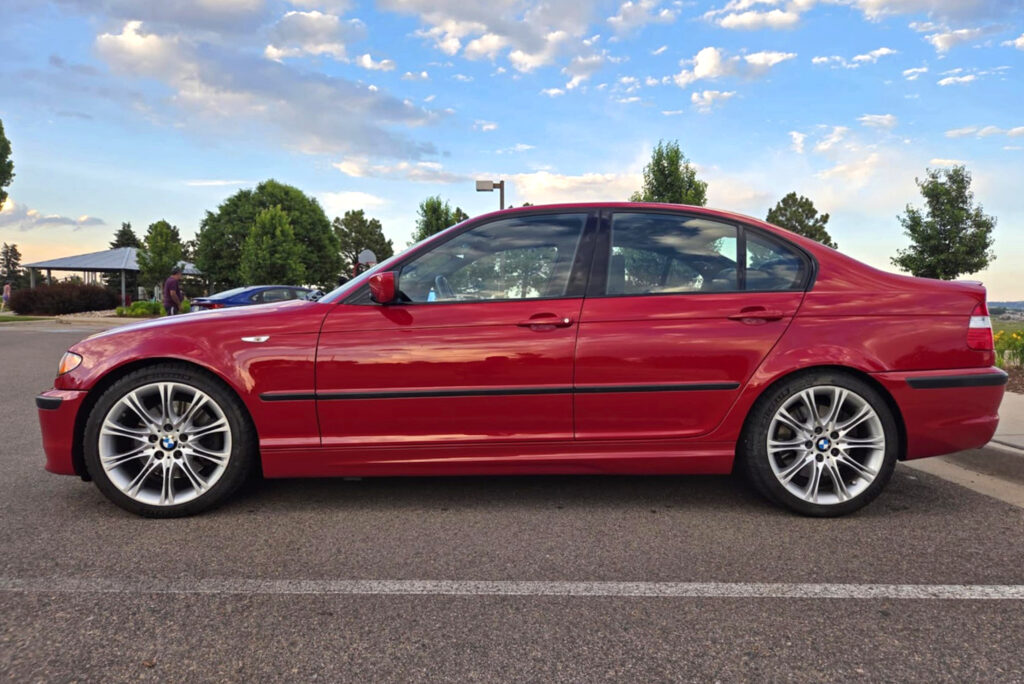
The 330i ZHP would be the perfect car for the rest of the time.
On paper, both sedans are within a dozen horsepower, with the E46 330i’s Performance Package bumping the M54B30 engine to 235 horsepower versus the E36 M3’s S52B32 at 245 horsepower. Having driven this M3, it pulls very strongly, but the supercharged ZHP likely bests it by a fair margin. In my previous comparison, I noted that the M3 feels more nimble and athletic, while the ZHP is more refined and composed at the cost of being larger and heavier. Despite the ZHP’s forced induction, this M3 would likely outpace it on our local track, but that would require a lot of not braking in the turns to get enough of a run to hold it off on the long straightaway. For the track and autocross, I’d have the M3, but for the remaining 90% of the time, I’d prefer the ZHP. Arguably, the ZHP is more special, more comfortable, with a modern Apple CarPlay interface, and is the best color combination. That said, either car will deliver ample smiles, and I’m sure both will be long gone by the time I get the Lightweight sold. If you want to beat me to the punch, you can find them here:
—Alex McCulloch
The post Marketplace Sedans: E36 M3 or E46 ZHP? appeared first on BimmerLife.
]]>The post Appreciating a Plain Old E46 appeared first on BimmerLife.
]]>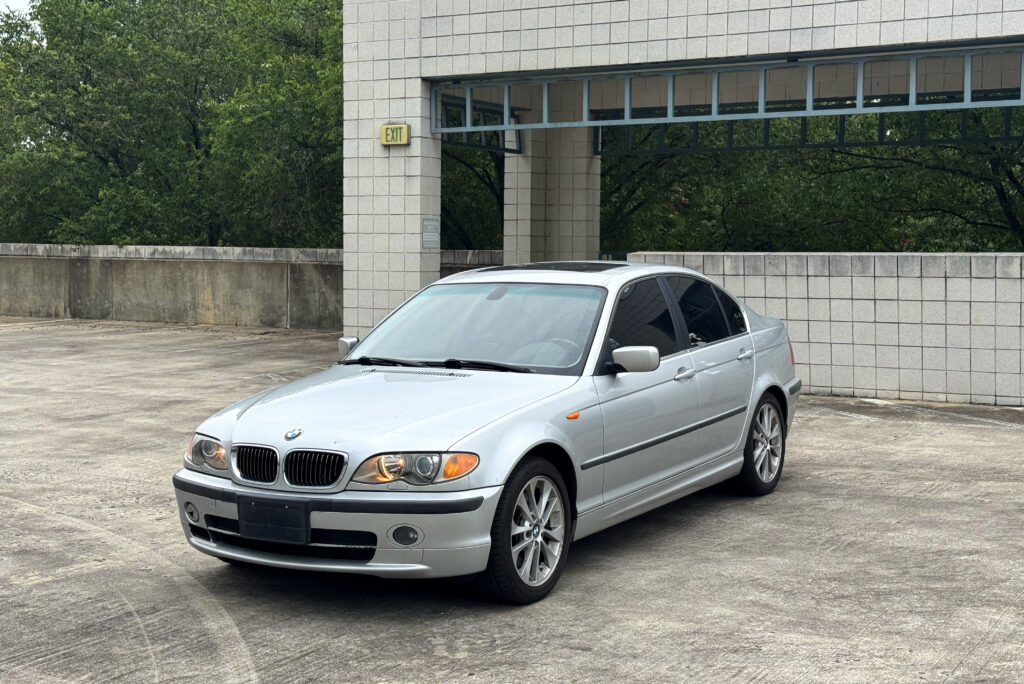
The TiAg 2003 BMW 330Xi automatic isn’t that special.
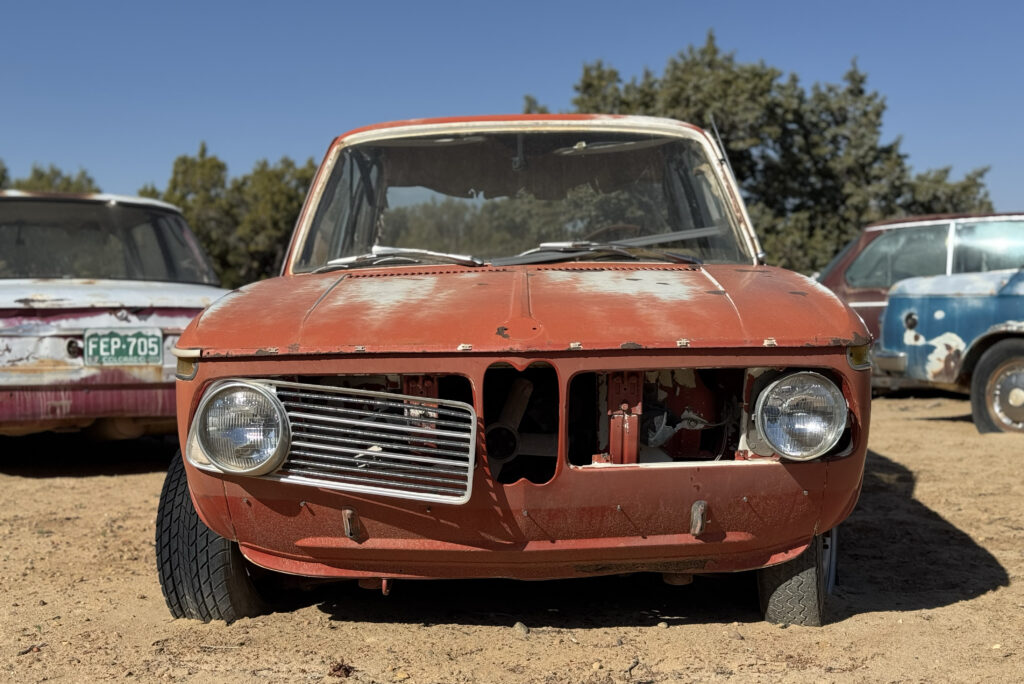
Or it is?
Few cars center in the Venn diagram of analog experience, complexity, maintenance, and price better than the E46. It was the last generation 3 Series to be devoid of iDrive, turbos, electric power steering, and a host of other technological advancements that improved the 3 Series, but also sacrificed the purity of the driving experience in the process. The E46 market diverged some time ago, with M3s, ZHPs, Sport Wagons, and low-mileage cars appreciating, while the majority of the general population succumbed to age, wear, and neglect.
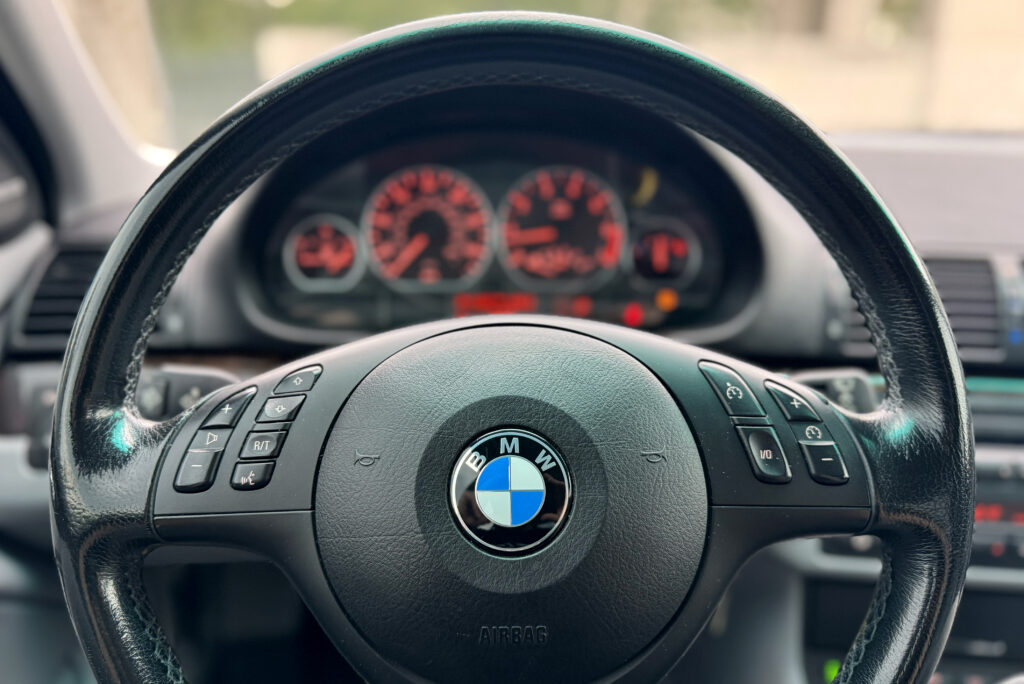
What makes the E46 special lies in its subtlety.
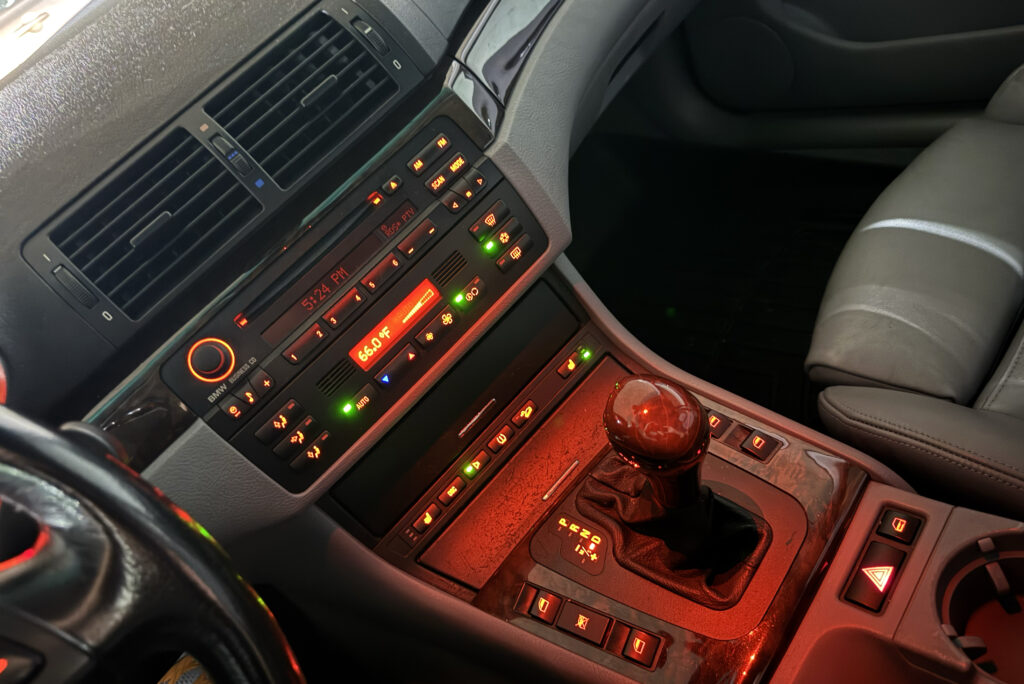
I love the little red light that illuminates the center console.
This 330Xi proudly wears its 241,122 miles.
It came to my mechanic friend from the original owner, who was alarmed by a transmission light that appeared on the dashboard. She had always properly maintained it, but fearing the dreaded automatic transmission failure, she offered it to him for a few hundred dollars. He cleared the fault, and it has yet to come back. In that time, he kept up on routine maintenance, fixing oil leaks from the valve cover, oil stand gasket, and oil pan gasket. It also needed front CV axles, brakes, tires, and typical crankcase ventilation bits. The body and paint were in exceptional condition for the mileage. Eventually, he came to work for me and traded it in on a manual E90 328Xi M Sport we had. For the next two years, we used it as the shop loaner, where it racked up another 10,000 miles, requiring only basic maintenance. It did suffer a tire retread to the left fog light and lower valance, but other than that, it still shows its age remarkably well. Mechanically, it has slight vibration in the differential at speed, the tire pressure light is permanently illuminated, and recently, the brake master cylinder has developed a faint whistle. I’ll fix the latter at some point.
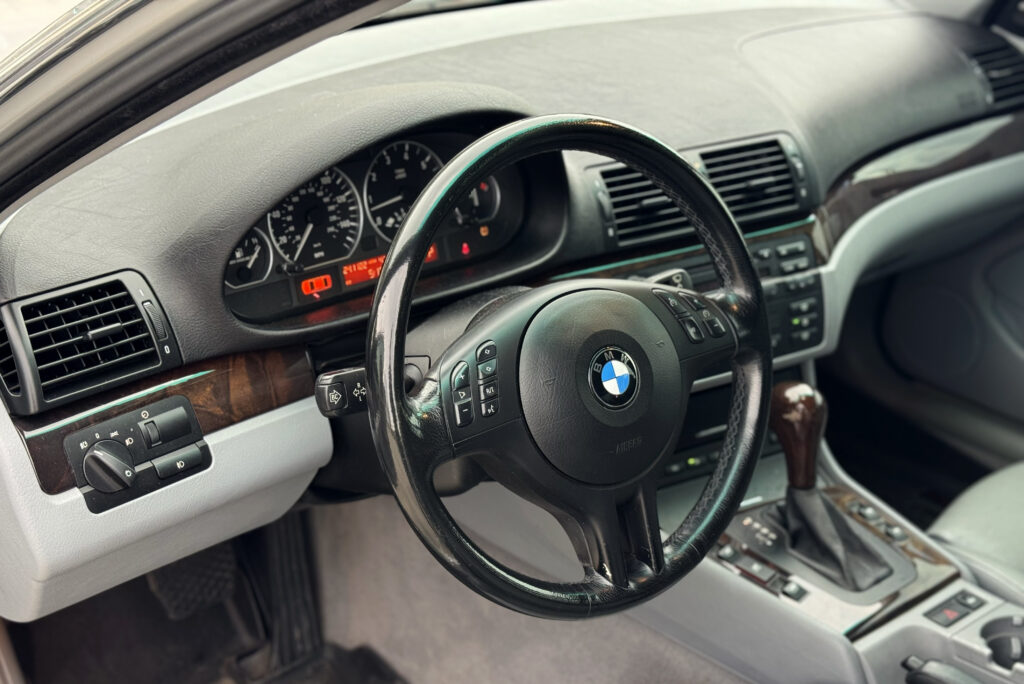
For its age and mileage, it is in exceptional condition.
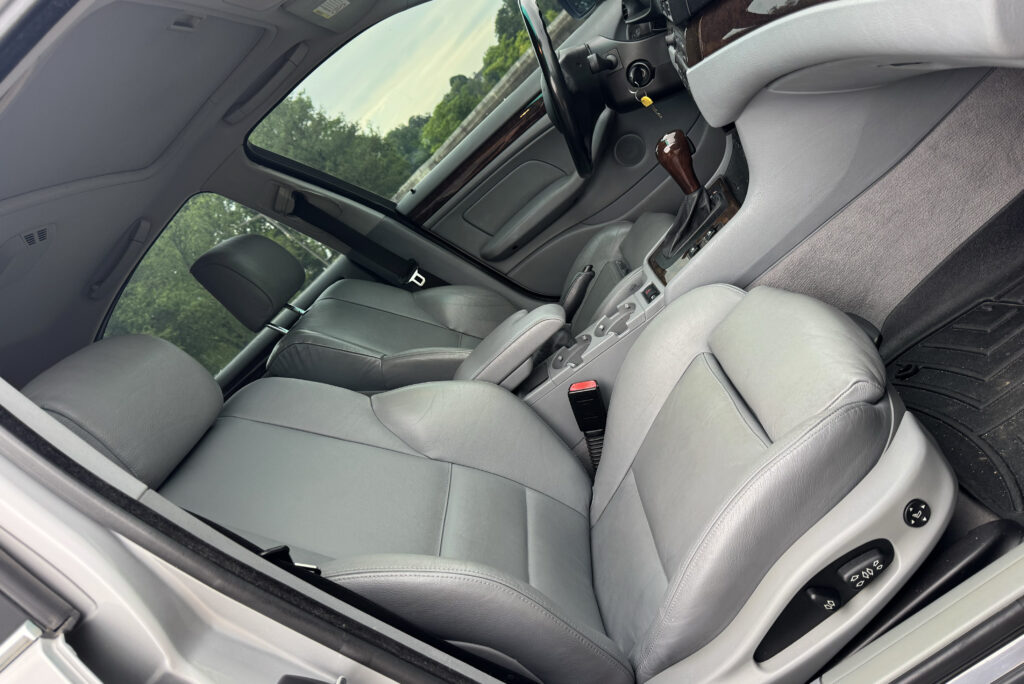
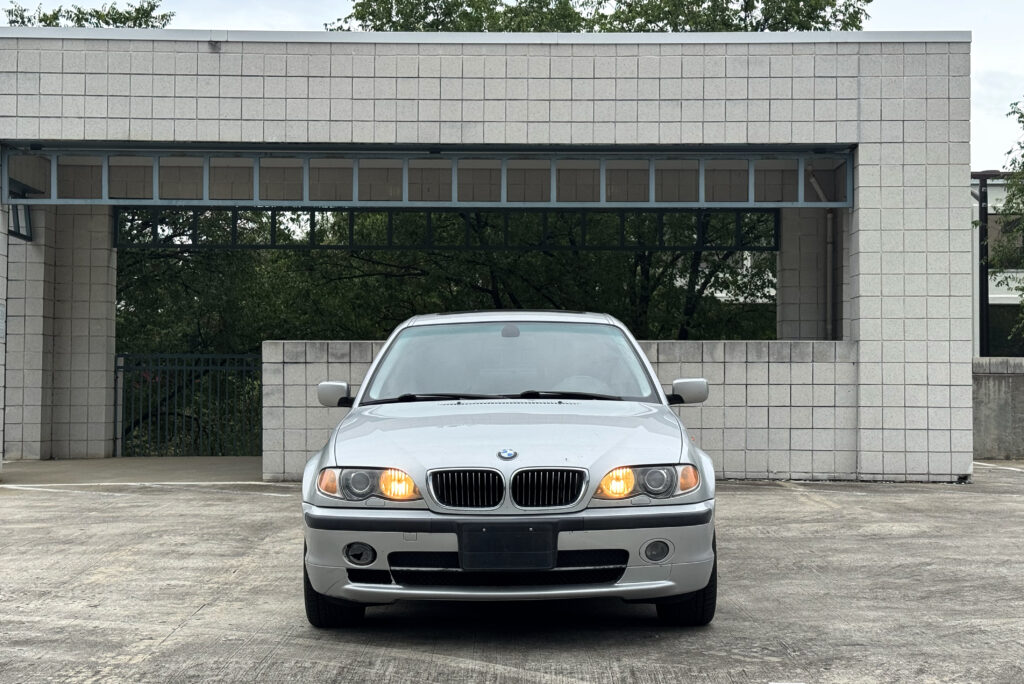
The only exterior blemish is a cracked foglight from a retread tire.
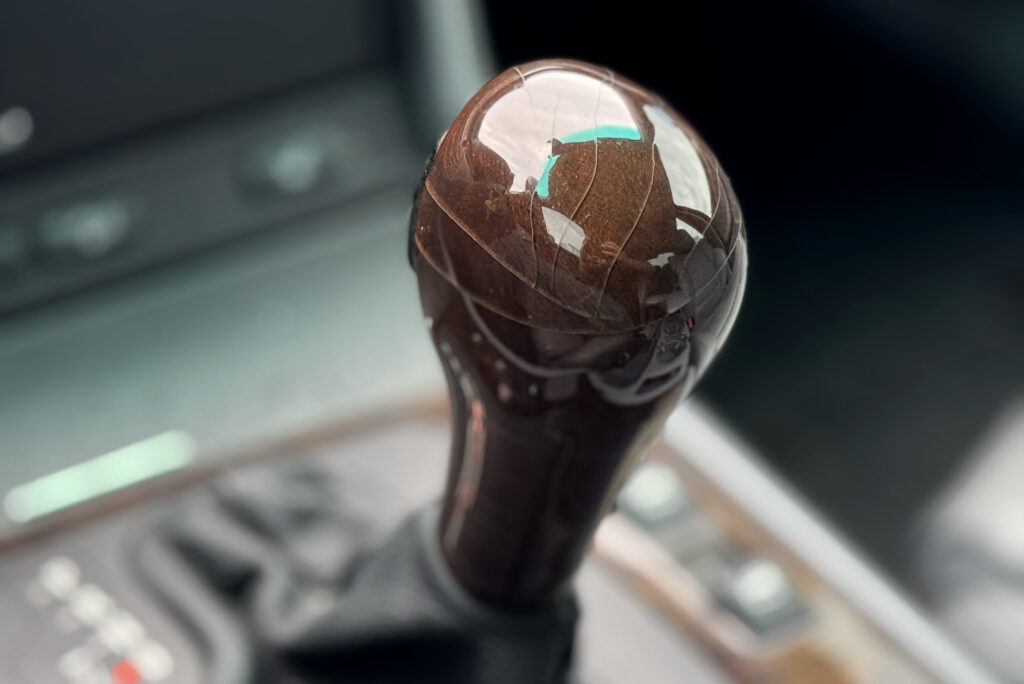
Inside, cracked wood trim and scuffed center console storage covers are typical E46 maladies.
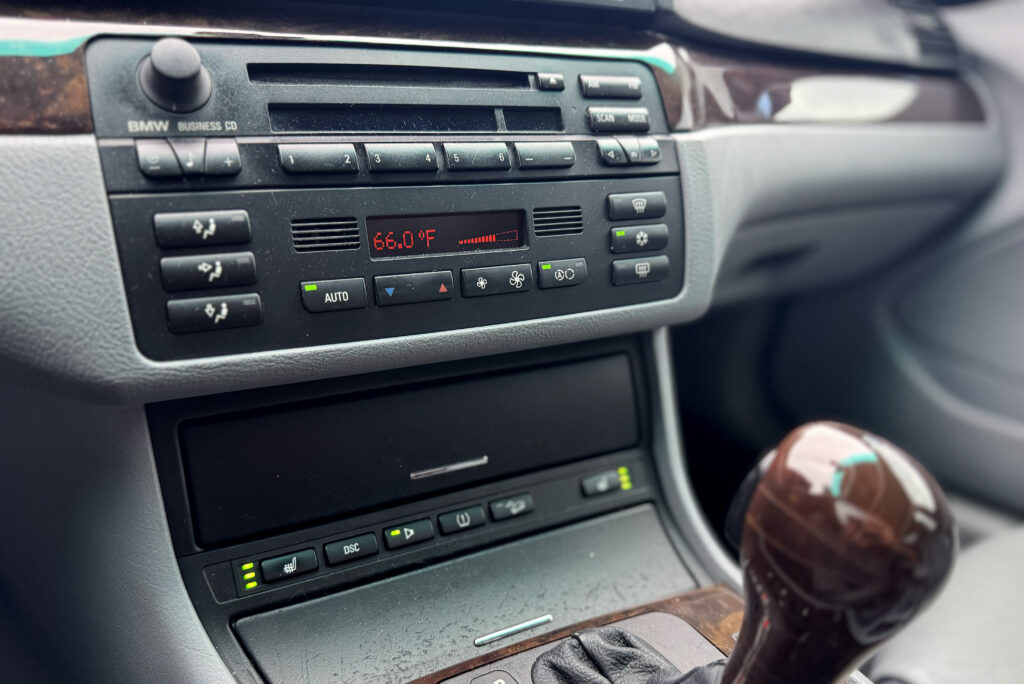
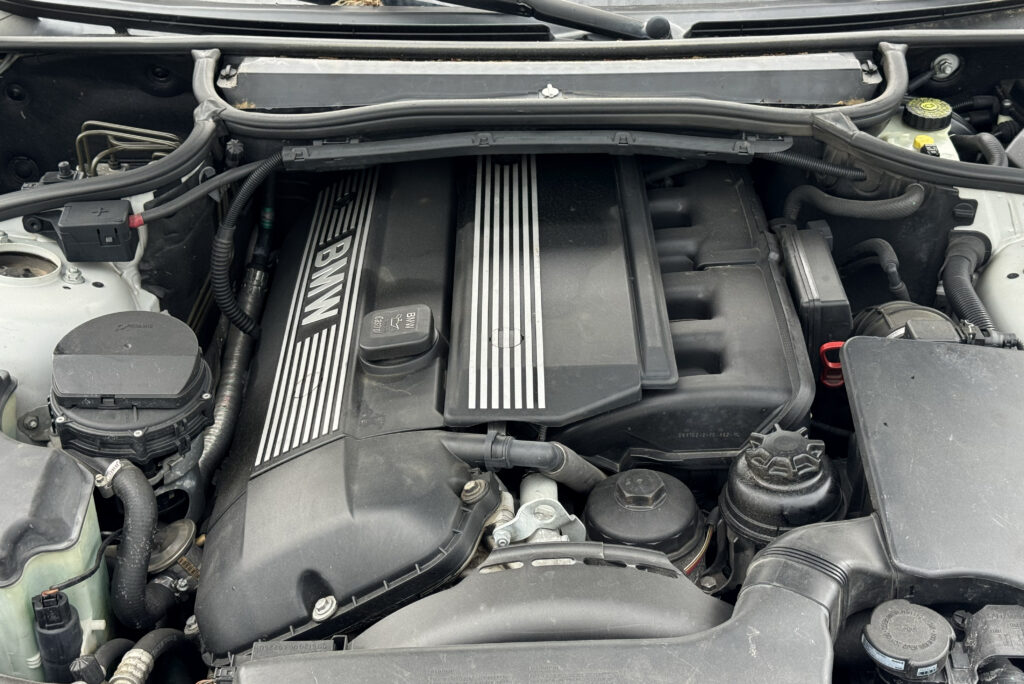
Somehow, it doesn’t burn a drop of oil.
When I closed the shop, I shipped it to Maryland so I’d have a vehicle there for monthly visits to my aging mother’s care facility. Over the past year, it has sat for weeks at a time with no parasitic draw, it doesn’t burn a drop of oil, and it’s already saved me thousands on rental car fees. But there is something beyond practicality to this E46. It’s wonderfully cathartic to be able to take care of my mother, but there is an emotional toll of watching someone you love succumb to their age. The E46 has served its mission incredibly well—lunchtime visits to the local diner are her favorite—but it also brings a smile to my face every time I drive it. For me, it offers a wonderful reprieve to offset the burden of the visits—a taste of an era of greatness for BMW that was so good, it didn’t need to be in a car that was flash, fast, or fancy. Sometimes the best things truly do hide in plain sight.—Alex McCulloch
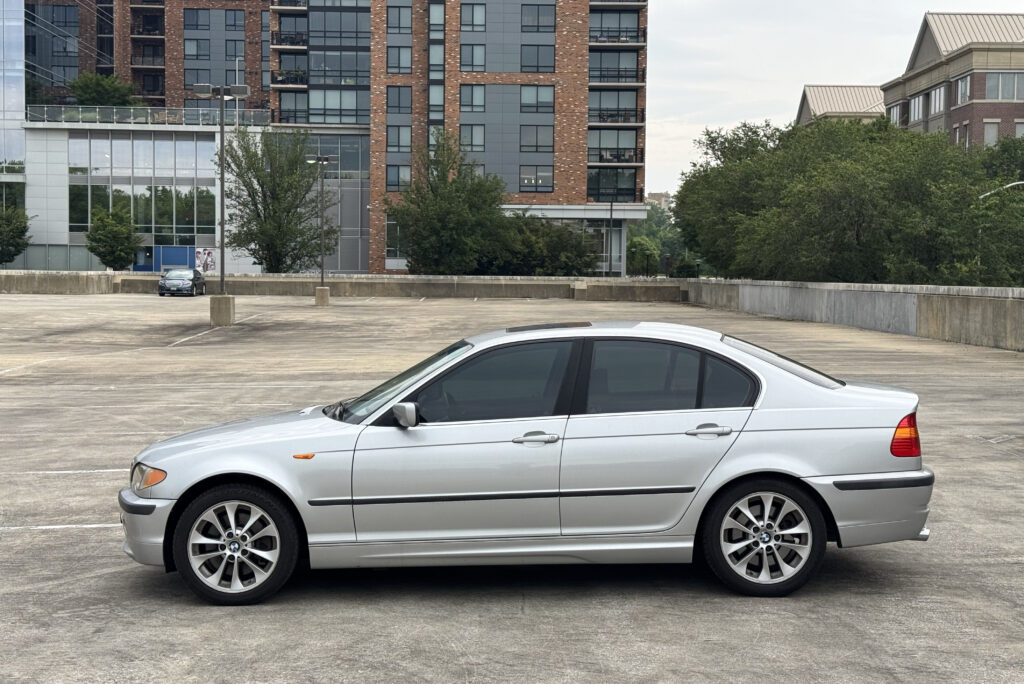
The best thing about this E46 is that even when times are hard, it makes me smile!
The post Appreciating a Plain Old E46 appeared first on BimmerLife.
]]>The post A Spiritual Journey in a BMW E30 appeared first on BimmerLife.
]]>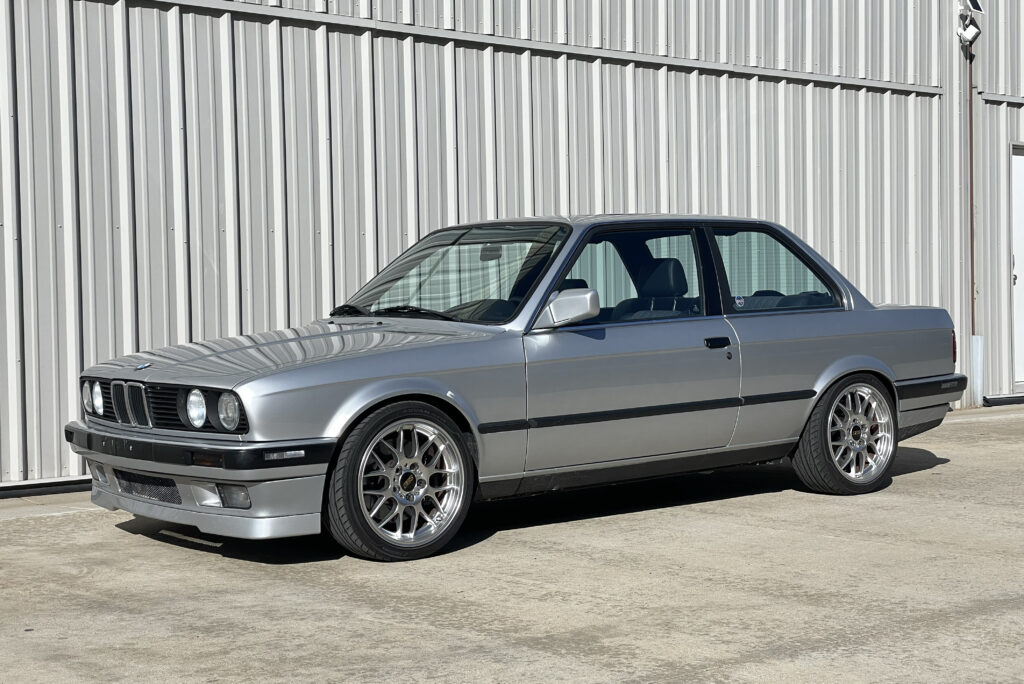
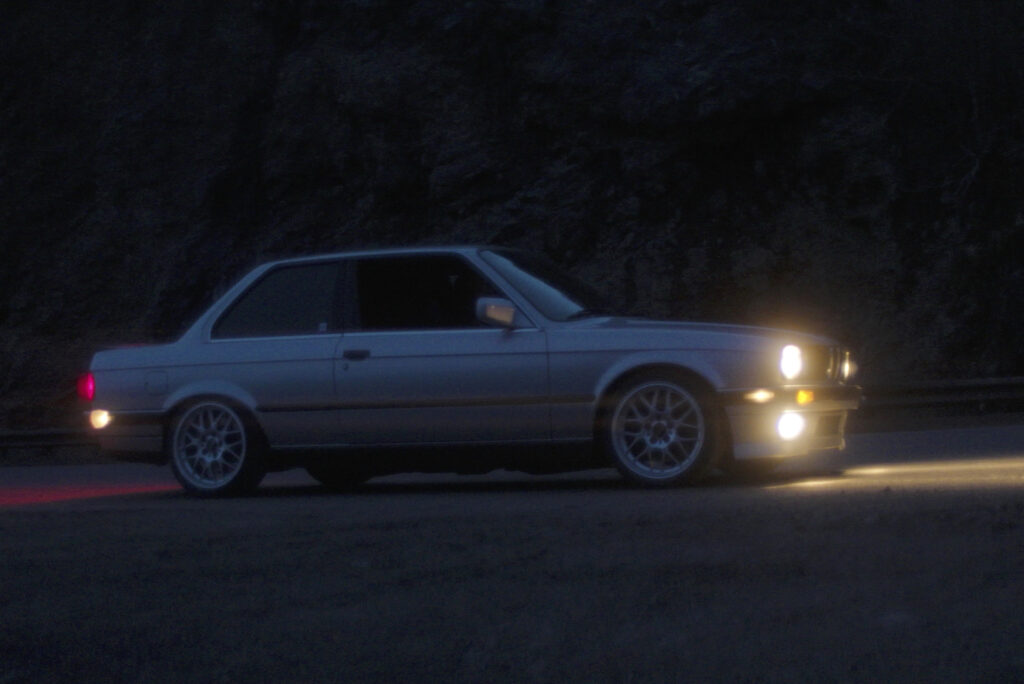
A very special E30!
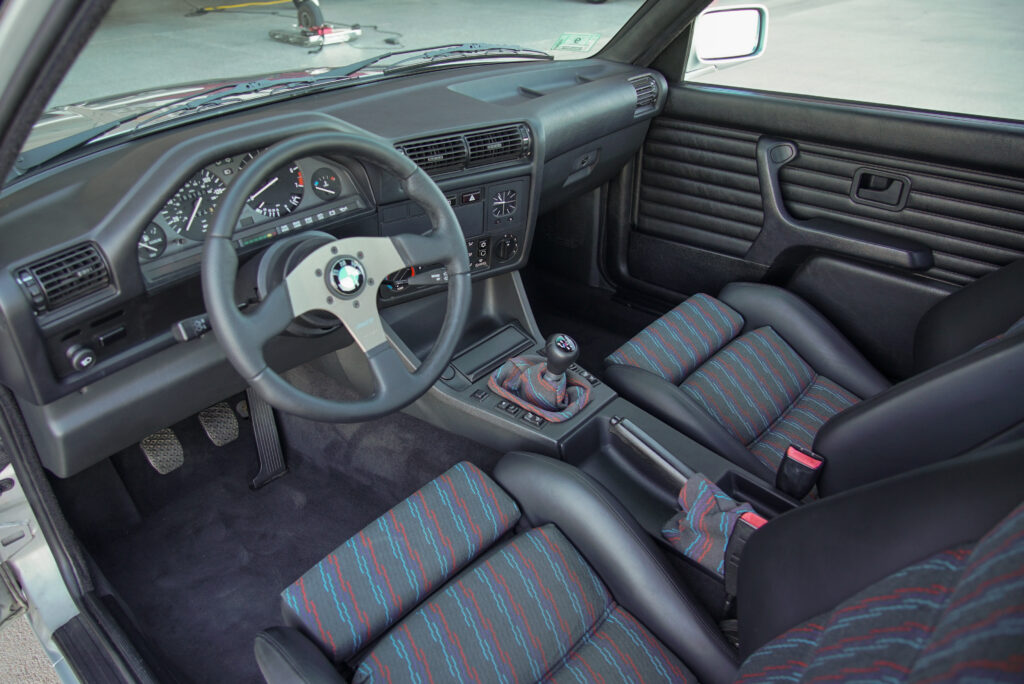
The 1990 325i started as a California car that found its way to Massachusetts and was completely restored and built into a one man’s vision of what the perfect E30 was. Highlights of that vision included an S52 engine swap, Ground Control coilovers, 5-lug conversion, repaint in the original Sterling Silver, and an M cloth sport interior. When the car showed up at my shop two years ago, I fixed a few things, added different wheels, and sold it on to a fellow E30 fanatic. When it came back this time, it sold to the first person who happened to catch a glance at it in the corner of my little showroom. You know a car is truly special when it has that kind of pull.
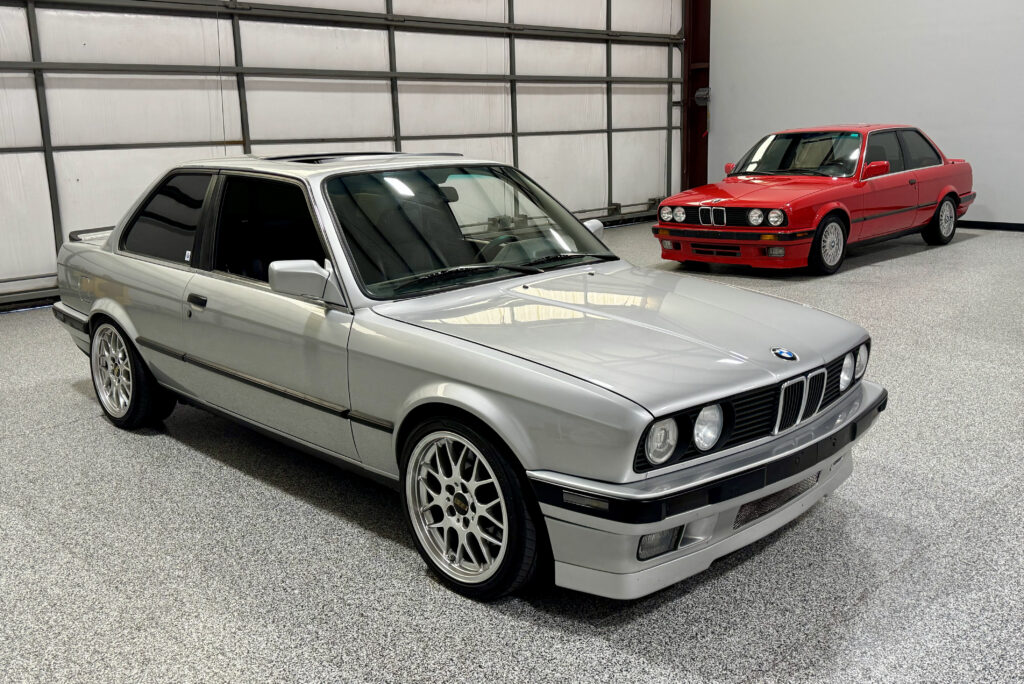
The E30 sold almost immediately.
I sold it on the spot, but with one condition: I got to take it for a road trip I was planning for an episode of Life’s Too Short for Boring Cars. My motive went beyond simple entertainment; it was to reconnect with my roots, shed the pain of closing the business, and go back to the one BMW that helped start it all for me—the E30 generation 3 Series. I got my first E30 in the early 2000s, and have owned and sold dozens over the years. Each one had a story: a combination of its history, owners, and care. Sometimes, they would just show up like rescue dogs at the hangar, and we would figure out the best thing to do with them. But, to a car, each one made me smile—that is the magic of the E30.
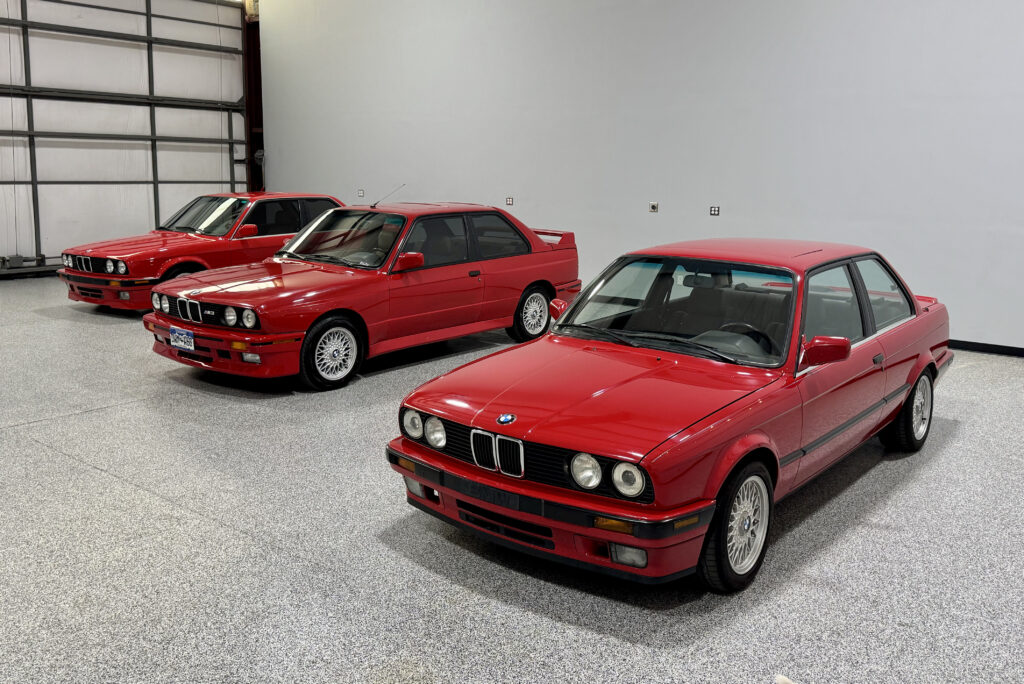
Every E30 has a story to tell.
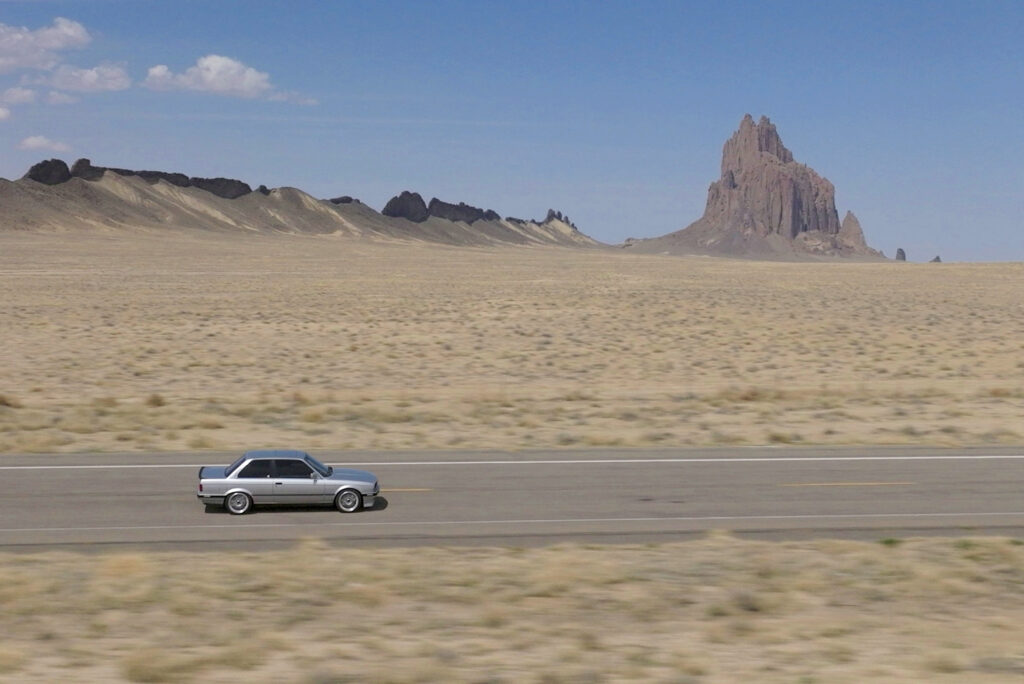
To paint the history of BMW’s second-generation 3 Series, I brought a few other E30s to the hangar. From that backdrop, I introduced the Silver E30, and we loaded up and headed off into the night. Our destination was a junkyard in the Land of Enchantment—New Mexico, which actually wasn’t a junkyard at all, but a friend’s backyard. Nonetheless, the quiver of bleached pastel-colored 2002s nestled in the sand with Ship Rock looming in the background made it feel like an enchanted junkyard. What better place to go on a soul-searching trip.
The goal of our journey was an enchanted graveyard in The Land of Enchanted.

But first, some spirituality at the Crestone Ziggurat was in order.
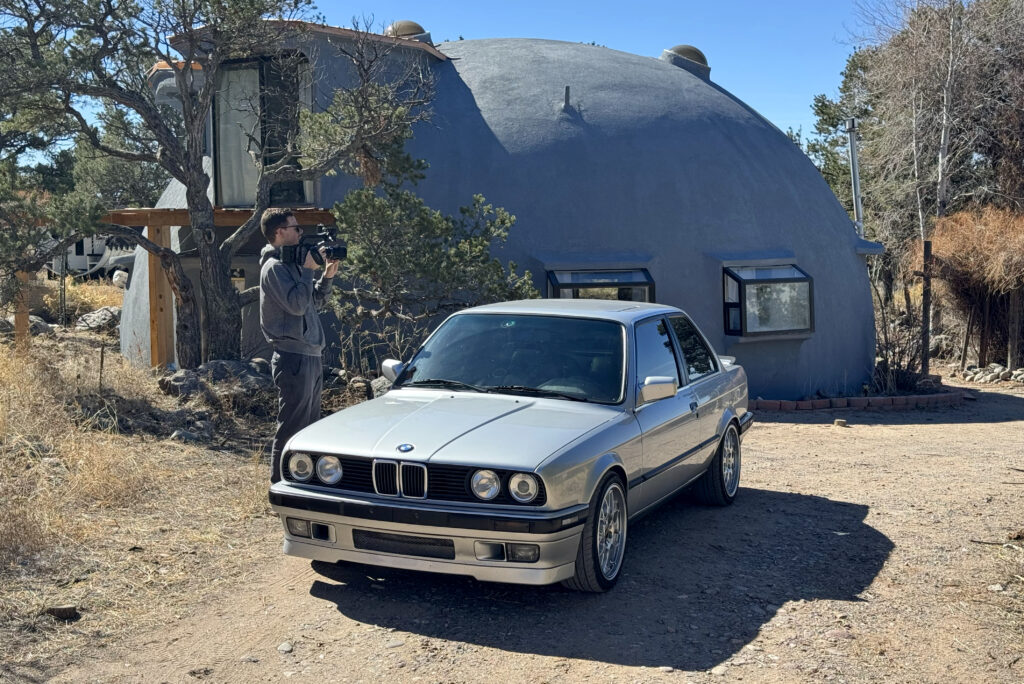
Jeremy filming at the Dome House in Crestone.
Our first stop was the spiritual hub of Crestone, Colorado, where we stayed in an appropriate abode, a dome house. In the morning, we took a walk up the Crestone Ziggurat to reflect on where I went wrong fighting the town while trying to keep the business open. From there, we pushed south through the San Luis Valley and crossed over into New Mexico, where the high peaks of Cumbres Pass had yet to relinquish the winter’s crusty blanket of snow. The silver E30 ripped up that pass with vigor, while the sound of the mildly muffled S52 ricocheted off the rock walls.
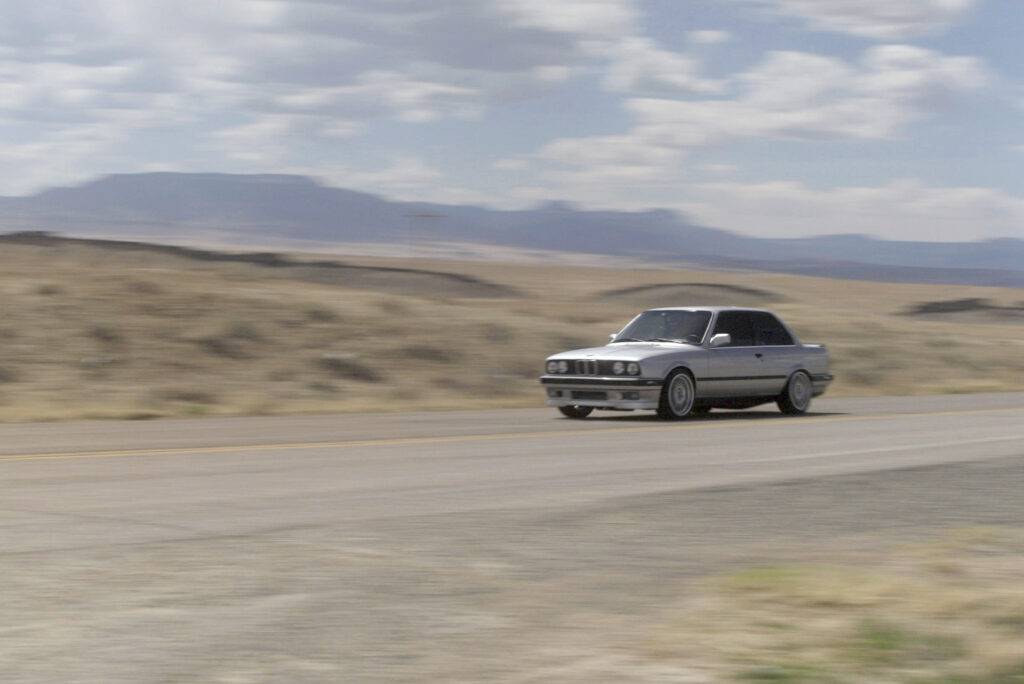
Stretching the E30’s legs in the wide-open San Luis Valley.
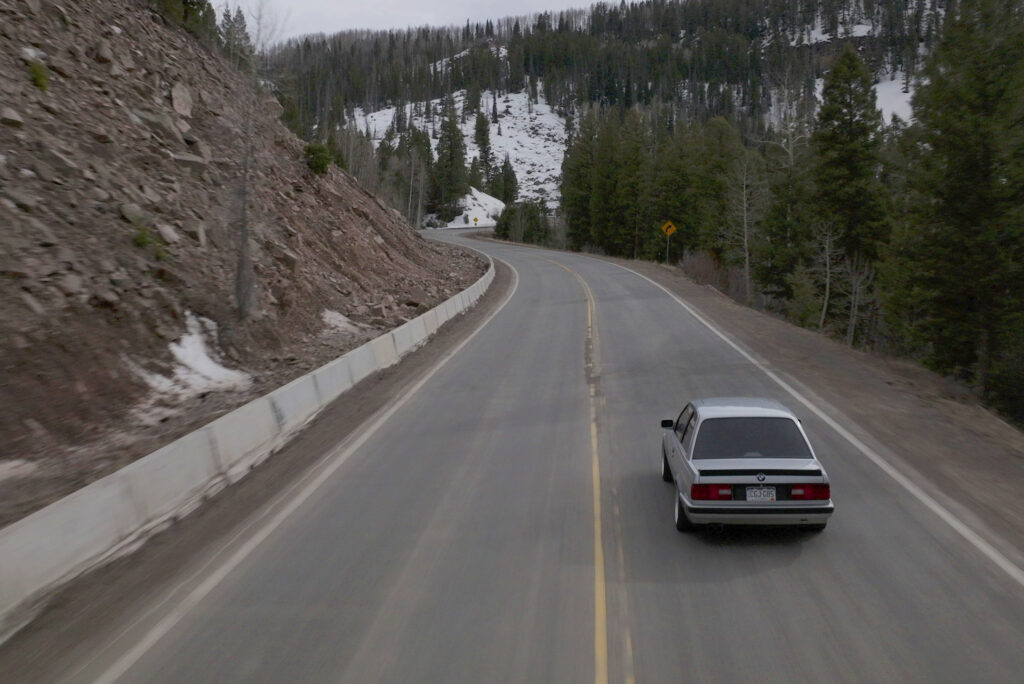
The roads were dry, but there was still snow on the meadows of Cumbres Pass.
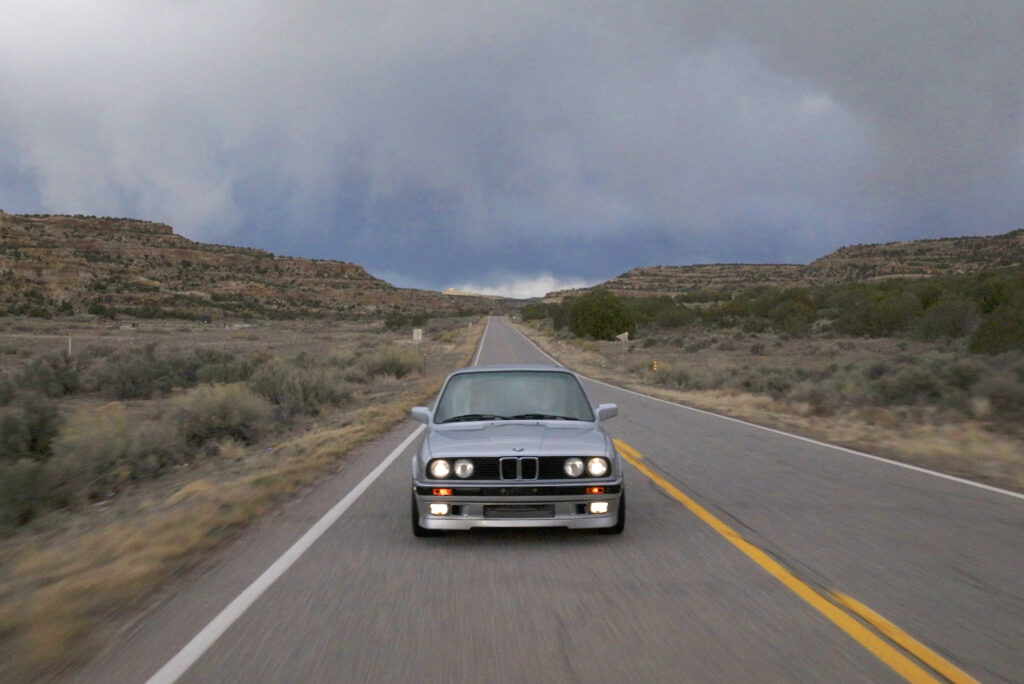
Descending into New Mexico under angry skies.
It was impossible not to smile as I relished how wonderful it was, how blissful and pure an E30 can be, but there was also a hint of sadness. The last time I drove this pass was in the other BMW that defined many chapters of my enthusiasm, the M Coupe. I lost that car as a cost of closing the service business, and driving over this desolate part of the Southwest offered solitude and healing. As fun as it was, the M Coupe was just a tool for an experience, and living in the moment with this E30 was an experience to be grateful for. I downshifted into 3rd, leaned my foot into the gas pedal, and used that throttle to balance my turn in the magical way that only an E30 does. There is a reason they are called God’s Chariot!
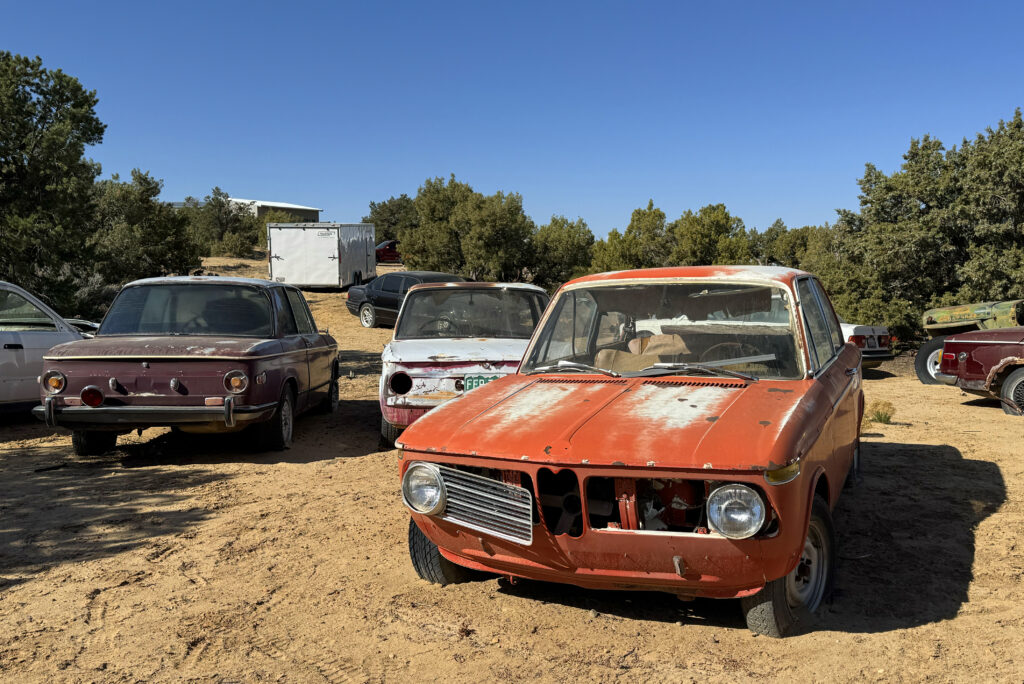
We made it to the enchanted junkyard!
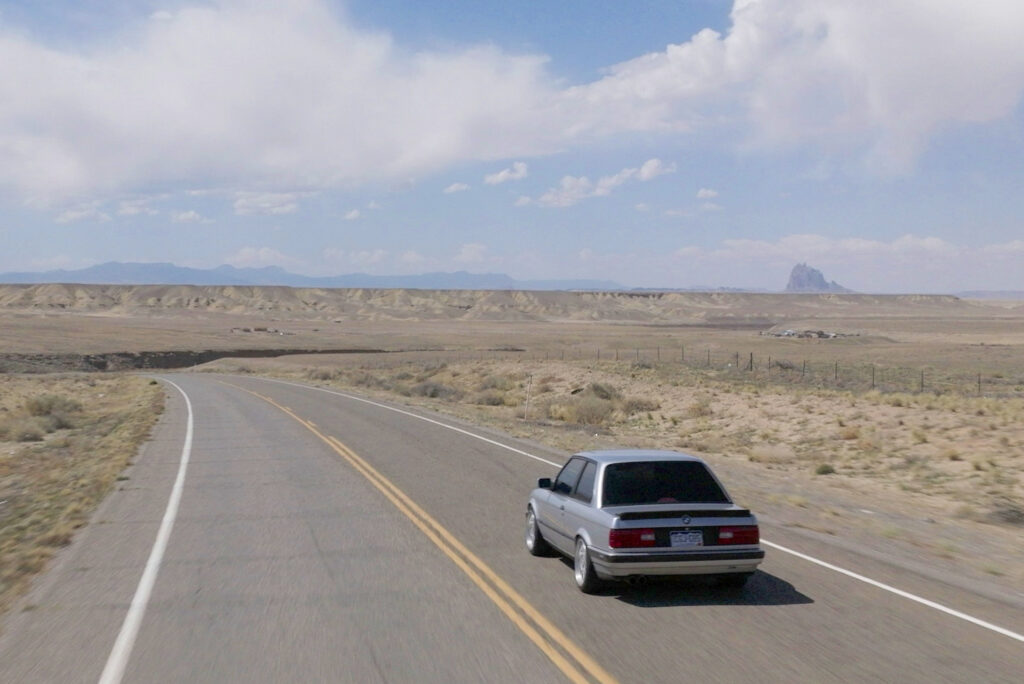
Ship Rock was an amazing sight to behold.
As the sun set, we descended the pass and spent the night in Farmington. In the morning, we found the enchanted junkyard and what we had come for. You’ll have to wait for the episode to air to find out what it was. My spiritual journey ended at Ship Rock and the Four Corners Monument. As I pulled off into the desert and the E30 ticked itself cool under the towering monolith of Ship Rock, I couldn’t help but think that life is a collection of moments. My moments with this E30 were fantastic, and a wonderful way to remember the love I’ve always had for these cars, the experiences that they offer, and the successes and failures of my wanting to share them.—Alex McCulloch
The post A Spiritual Journey in a BMW E30 appeared first on BimmerLife.
]]>The post The E34 525iX Touring Finds a New Home appeared first on BimmerLife.
]]>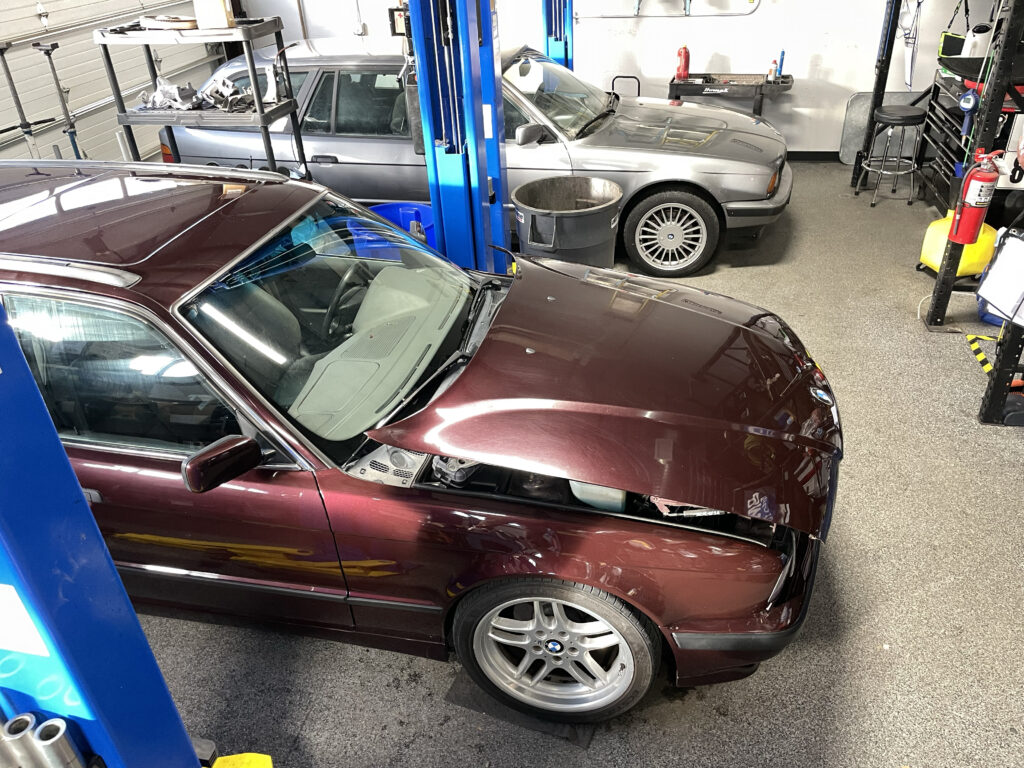
The 525iX Touring taking up residence on the far lift next to another Euro E34 wagon.
The 1992 Granite silver over Anthracite cloth 525iX Touring was in the running for one of the most extended stays, most money spent, and least money earned. It first showed up in May of 2021. A friend had imported the all-wheel-drive Swiss-Market Touring from the Netherlands and sent it to me for some rust repairs and to potentially sell. After several trips between Kansas and Colorado due to reluctance to let it go, it finally landed at the hangar for me to sell. Then, I went down the rabbit hole of making it better, an exercise of lost toil and treasure that I would never get back. If I’m honest, I was also probably a little reluctant to let it go as well.
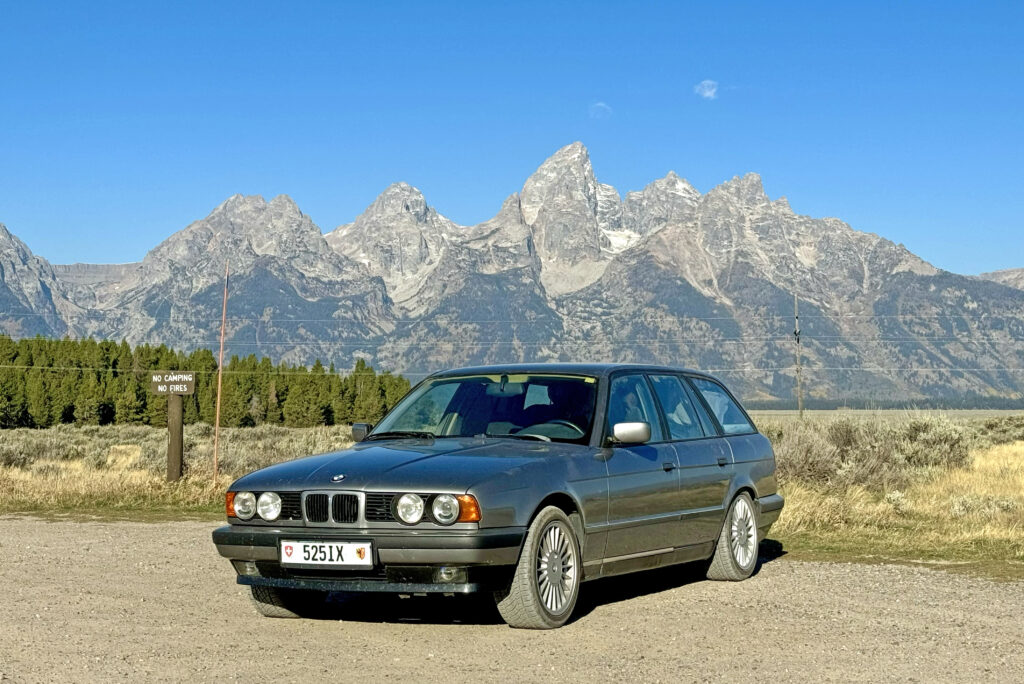
The 525iX Touring out in the wild hunting the Fenn Treasure in Teton and Yellowstone National Parks.
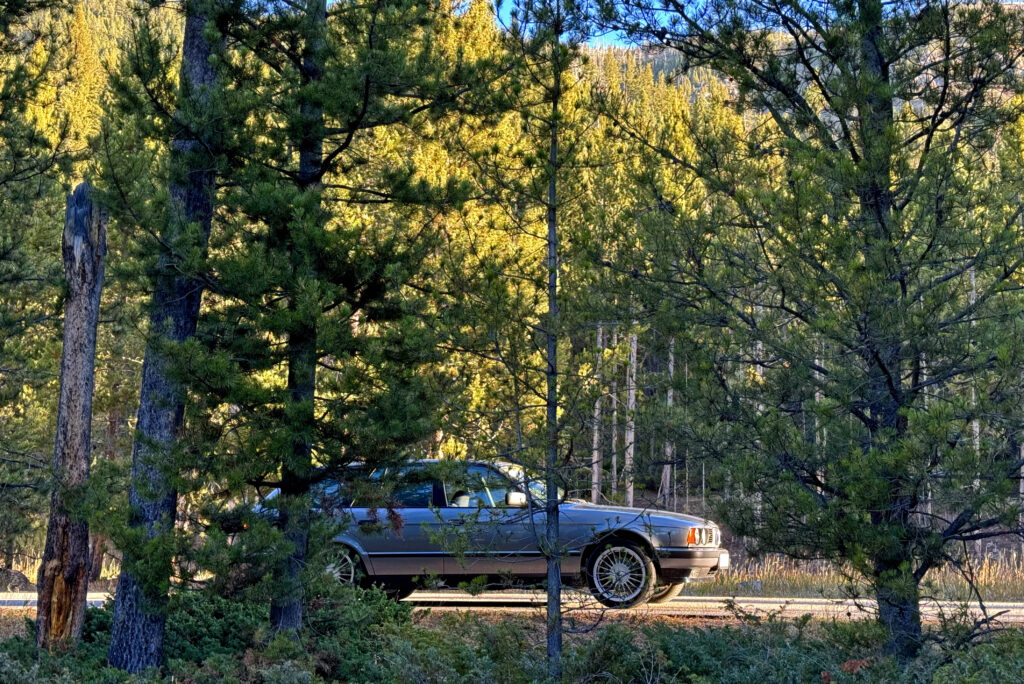

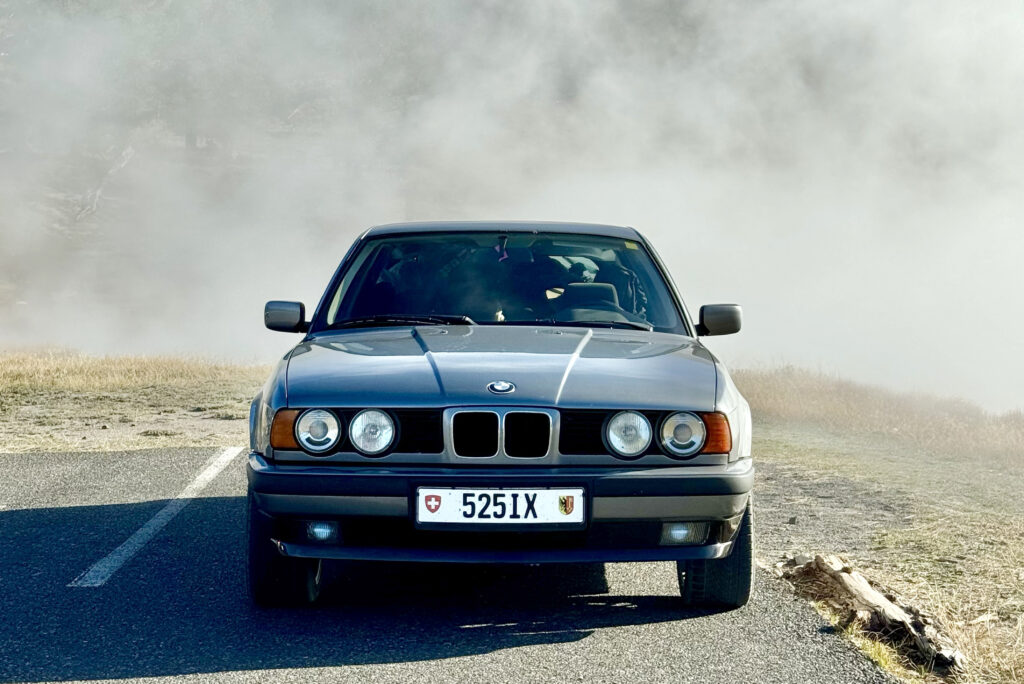
The trade-off was that I got to spend a few years enjoying it between bouts of disassembly and could feature it on an episode of Life’s Too Short for Boring Cars. For that episode, Jeremy and I took it on a 2,200-mile adventure retracing the steps of the Fenn Treasure. It was the most epic road trip and the longest episode we had filmed to date. You can see the behind-the-scenes story of that trip in my related BimmerLife article last year.
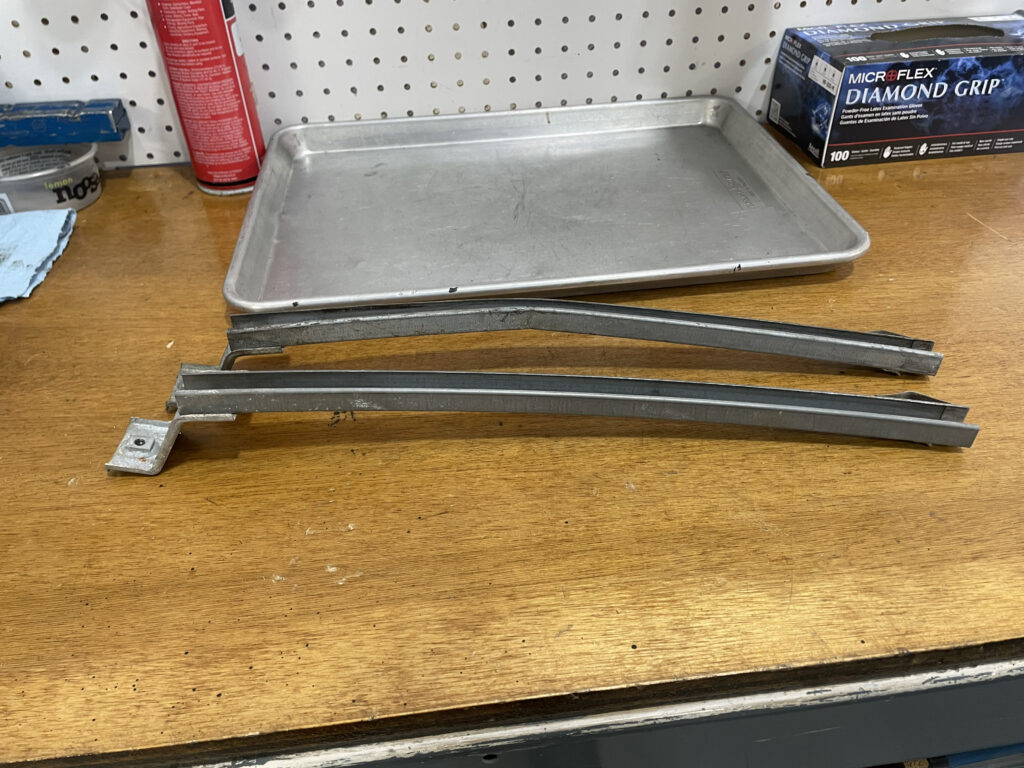
Fast forward to this month, and the film has been released—and with it, I put the 525iX Touring up for a no-reserve auction on Cars and Bids. Before it was ready, we had to fix a few more things that we broke on the trip. Notably, the driver’s side window regulator had died a slow death, which made the lack of air conditioning and the inoperative rear windows even worse. The window regulator had likely failed due to the door striker bending the forward guide rail. Fortunately, someone had already been in there once and drilled out the rivets, so replacing the regulator was easy. The guide rail, not so much…
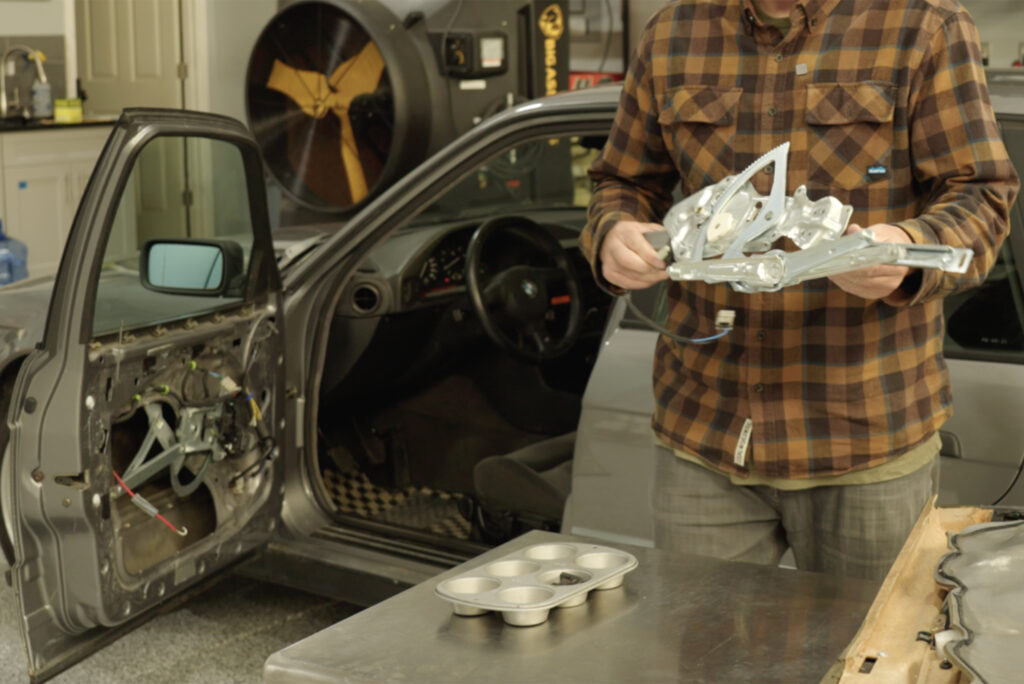
Replacing the driver’s window regulator and the bent guide rail compared to the correct one.
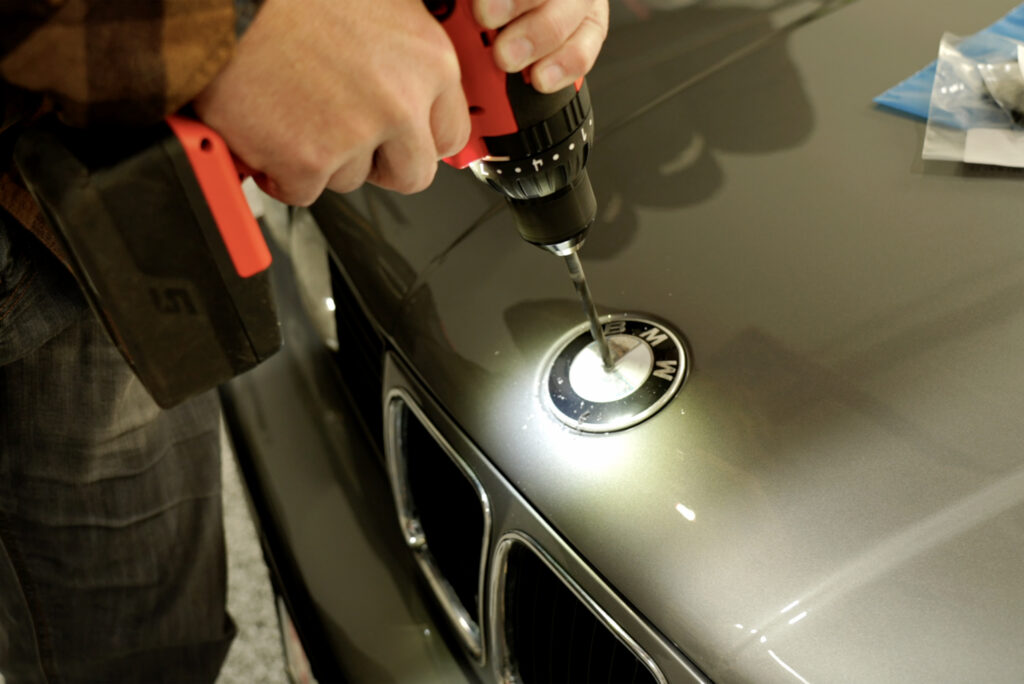
I like to replace a Roundel by carefully drilling a hole in the old one, prying it out, and replacing the grommets if necessary.
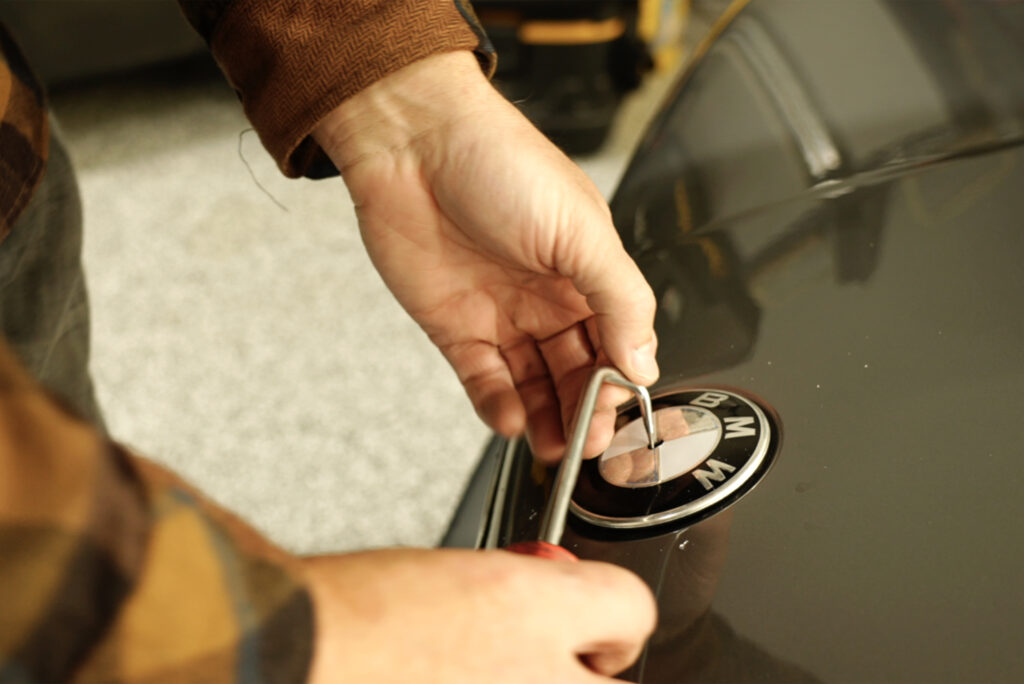
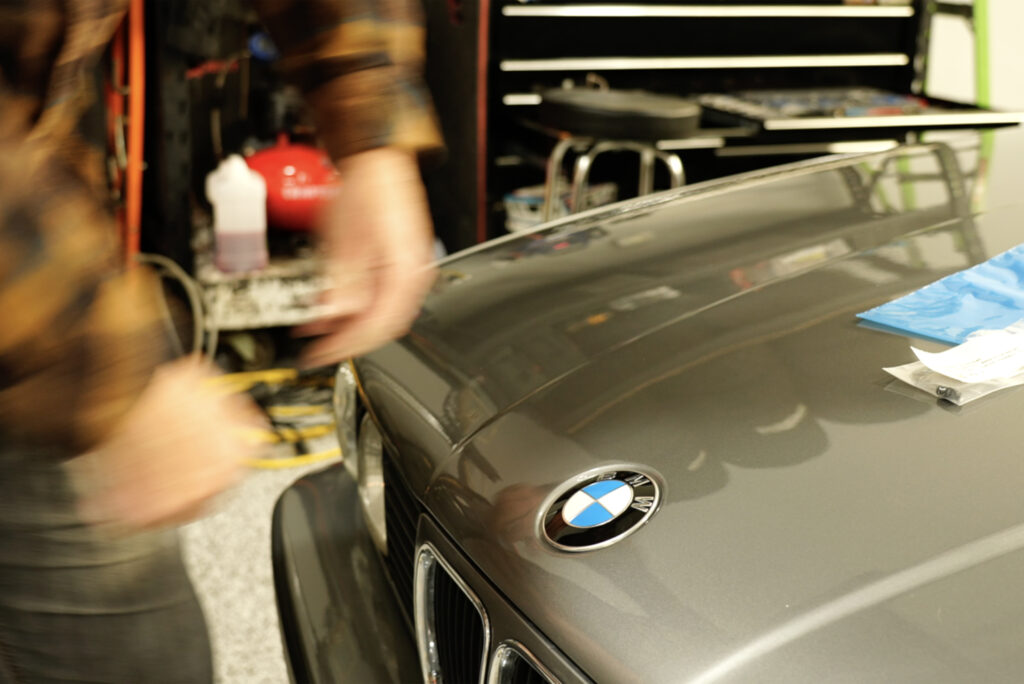
Once I finished the window regulator, I replaced the Roundel, and it would be ready for auction, right? Not so fast; it refused to leave without doing one more “BMW thing.” I noticed a faint smell of coolant on a lap around the airport and found a tiny crack in the radiator. A quick visit to FCP Euro’s website and some expedited shipping, and I had a new radiator in before the auction ended.
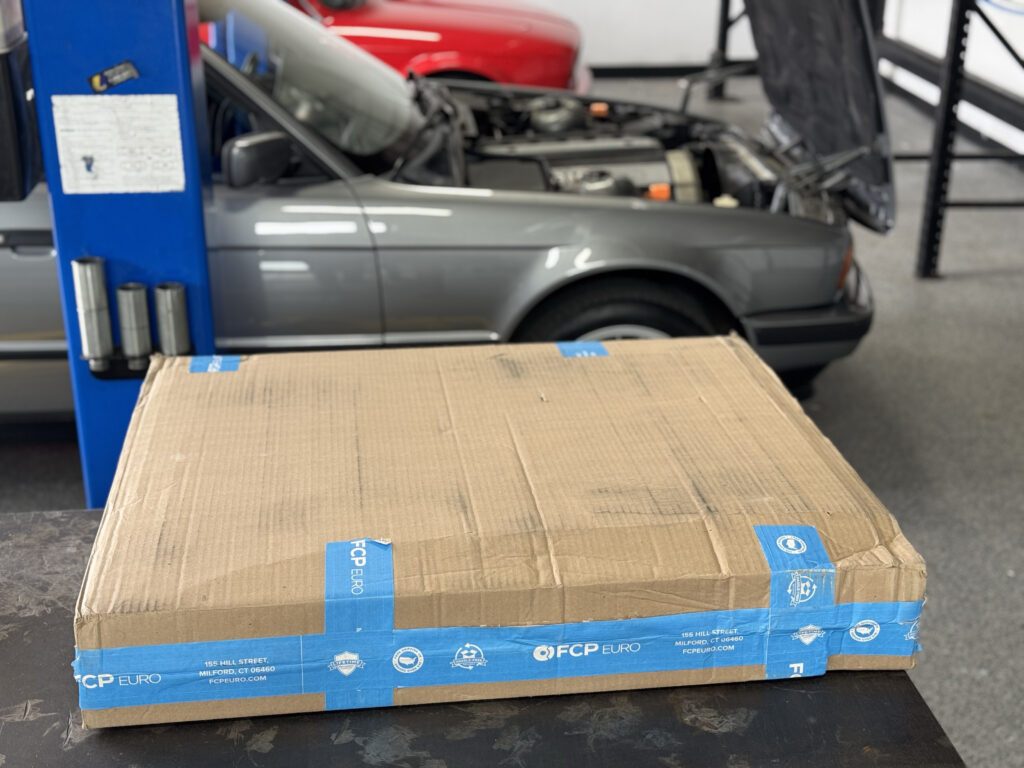
A last-minute radiator from FCP Euro saved the day!
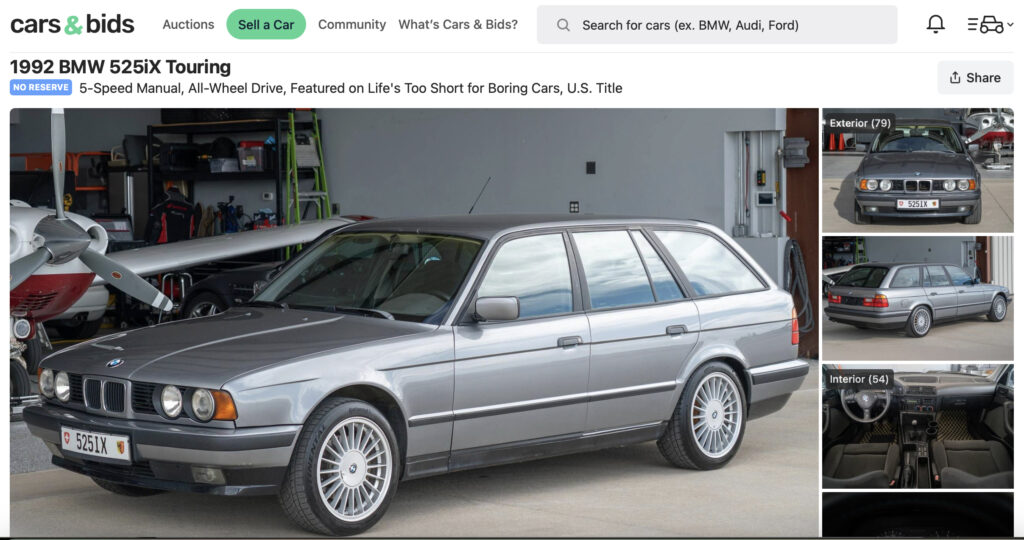
With the radiator done, the 525iX Touring found its new home on Cars and Bids.
The auction went well, with lots of praise for the wagon, and the owner sounds like a perfect fit. His family is growing out of their E30 325iX coupe. What better car to do that in than an E34 all-wheel-drive wagon? I’ll be sad to see it go, but life is nothing but a collection of moments in time, and my time with this wagon has come to an end.–Alex McCulloch
The post The E34 525iX Touring Finds a New Home appeared first on BimmerLife.
]]>The post A Ford Raptor and Hyundai Ute lead to the BMW G60 5 Series appeared first on BimmerLife.
]]>First, let’s talk trucks. For the initial trip, I flew the Cessna 185 Skywagon out to bring the tools and equipment necessary to move my mom, as well as my mountain bike, to blow off the inevitable stress such an endeavor would cause. I’d also need a van or a truck to haul stuff in, preferably something engaging enough to hold my attention for the week. The best I could do from a traditional rental car agency was a Chevy Equinox. While the latest version of the mid-size SUV doesn’t ooze mediocrity as much as previous Equinoxes did, the thought of spending a week in one gave me tremors (I should note that had I done more planning for the week of Thanksgiving, I could have got something more interesting—or similar).

This led to a search on Turo, which revealed a 2023 Ford Raptor for the same price as the Equinox. Already familiar with the Ford platform from our 2022 F350 shop truck, the choice between a week of mid-size SUV mediocrity versus a week of Race Red Baja-inspired sports truck was obvious. Before this, I had never understood the Raptor. It’s less good at being a truck, with reduced payload and towing thanks to its off-road Fox suspension, but it is more expensive than a regular F150 and only comes in a short bed. But after a short drive, I was hooked! The Raptor was more nimble and less cumbersome than my Super Duty while handling better and having faster acceleration. In sport mode, the active exhaust note was intoxicating, and the adjustable suspension made comical work of Columbia, Maryland’s obtrusive “traffic calming” speed humps. The latter became more of an invitation to set the suspension to off-road mode and just send it! And, while Raptors are as common as roadside sunflowers in Colorado, they are seemingly rare in suburban Columbia. When I wasn’t terrorizing my childhood haunts by trying to catch air off traffic-calming humps, people would come out of the weeds to admire what is truly a sports truck. One guy abandoned his whole family in the Costco parking lot to chat it up with another so-called “truck guy.” I left him disappointed, but I appreciated his enthusiasm nonetheless.
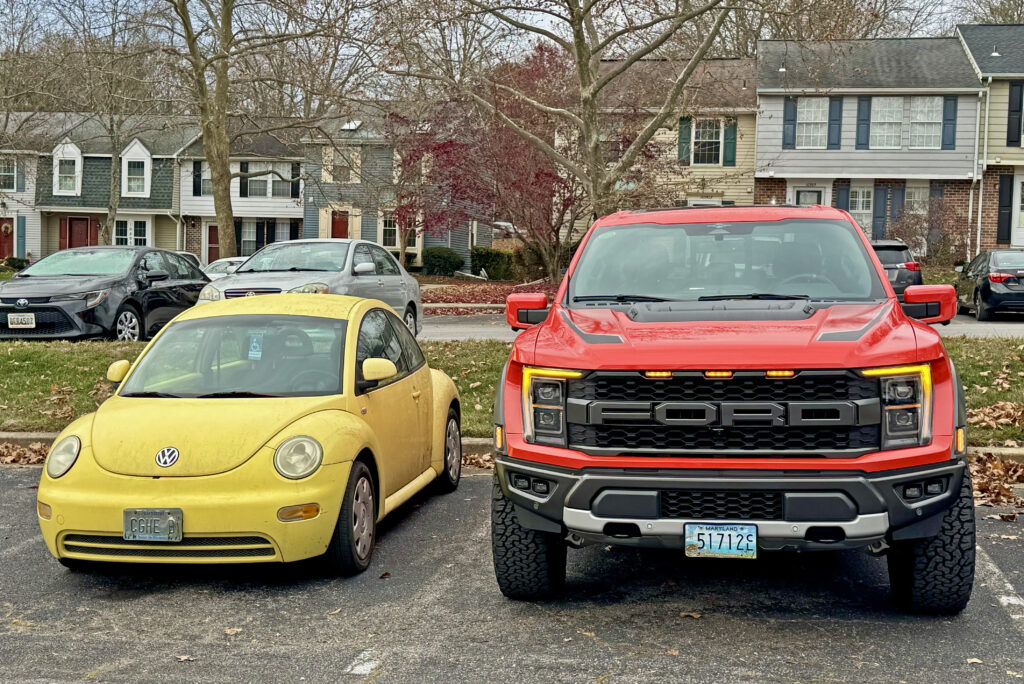
The Raptor just didn’t fit in in Columbia, Maryland.
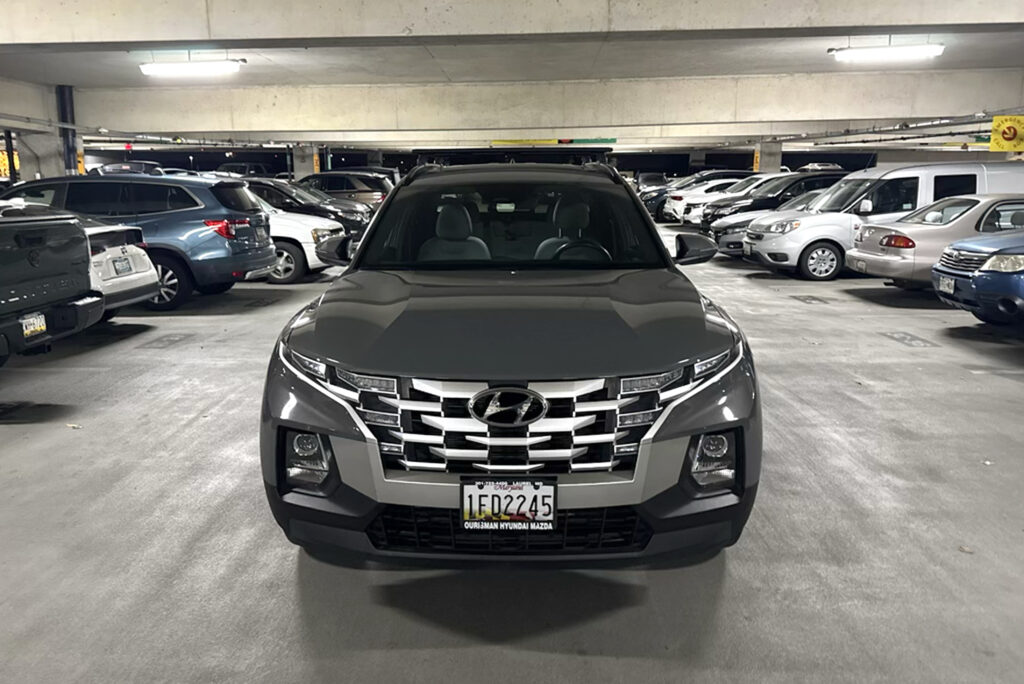
I had high hopes for the Hyundai Santa Cruz…
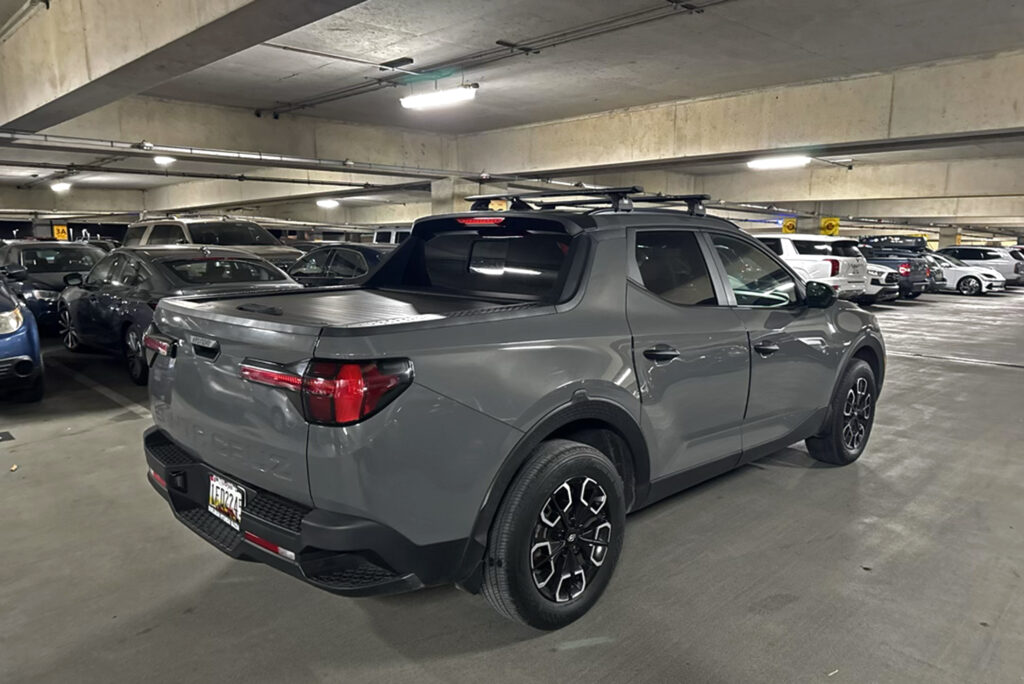
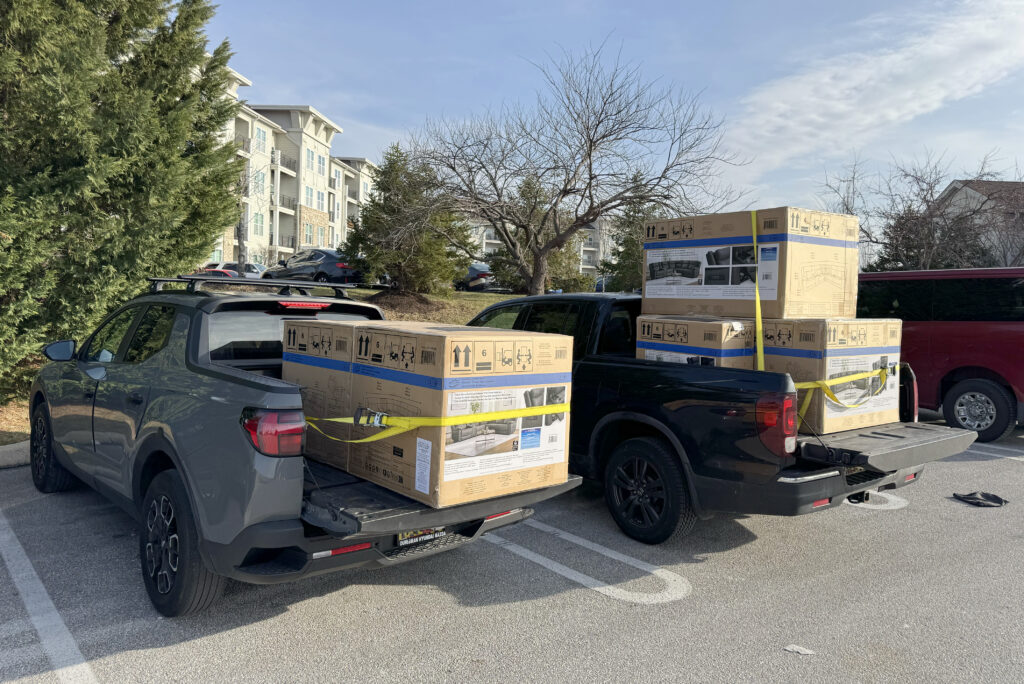
…but, a used Honda Ridgeline is better.
I still needed to haul stuff for the next trip, so I stuck with the Turo recipe and rented a vehicle that had piqued my curiosity for some time, the Hyundai Santa Cruz. I appreciated the styling of what could best be described as the closest thing to a ute to grace our shores since the El Camino. I had hoped the fit and finish would mirror the surprisingly good Palisade SUV. Unfortunately, I was sorely disappointed. The mid-level Santa Cruz I had chosen was filled with cheap plastics, frustrating infotainment, and an utterly soulless driving experience. The small rear cargo bed was further hampered by a built-in tonneau cover, requiring two vehicles to move a sectional couch we picked up (I would have piled the boxes three high in the Raptor). The Santa Cruz was vastly inferior to my friend’s decade-old Honda Ridgeline (its closest competitor). Maybe the top-shelf turbo version is better, but I wouldn’t roll the dice on the next rental to find out.
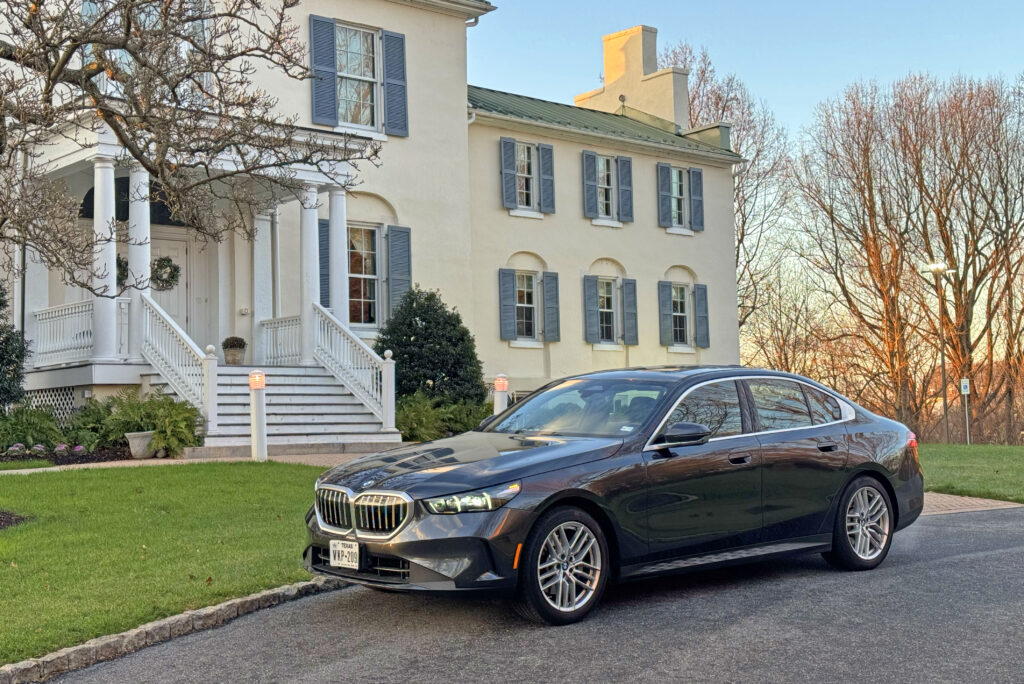
A 2024 BMW 530i came to my rental car rescue.
When I couldn’t extend this rental, I opted for a traditional rental car to save time on my early morning airline flight home. It was this circuitous route—a sports truck and a Korean ute—that led me to the 2024 BMW 530i, but once I opened the door, I knew I was home. I picked up the 5 Series from SIXT Rent a Car in a very seamless transaction. I took the opportunity to hang my from my cold dead hands E39 5 Series hat on the wall and try to have an open mind for BMW’s newest 5’er.
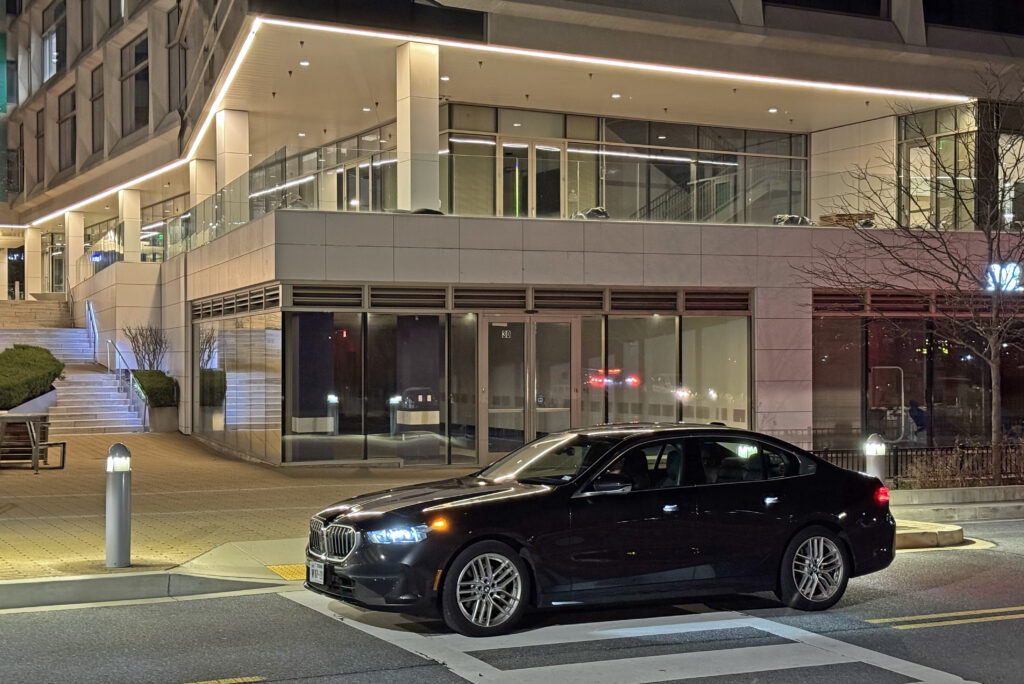
The executive-spec 530i in its natural habitat.
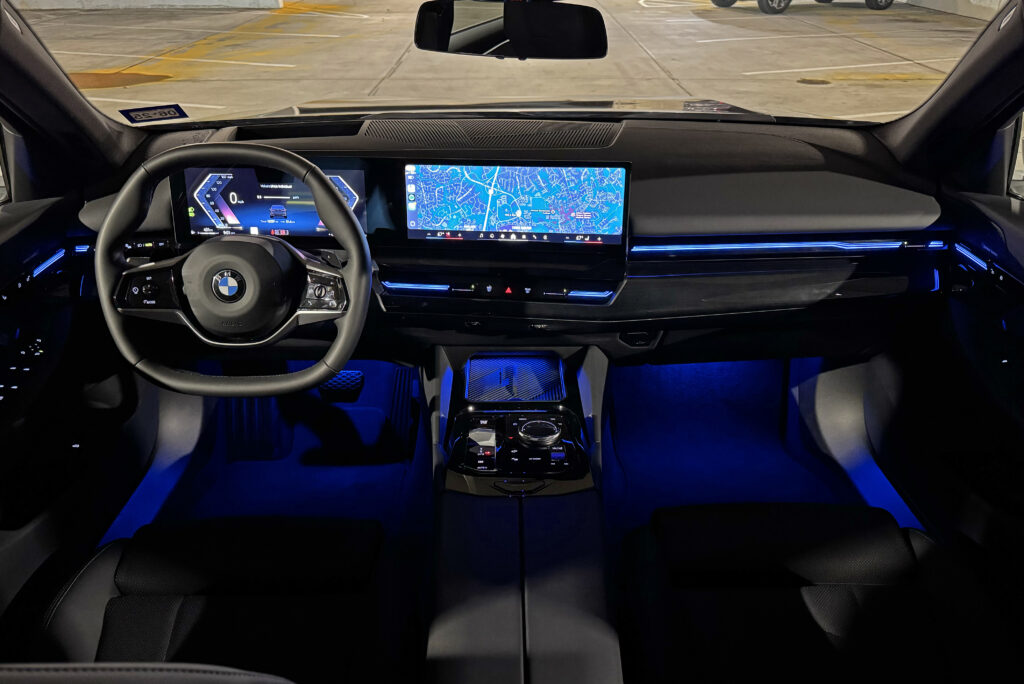
The interior featured a digital instrument cluster, a massive infotainment screen, and configurable mood lighting.
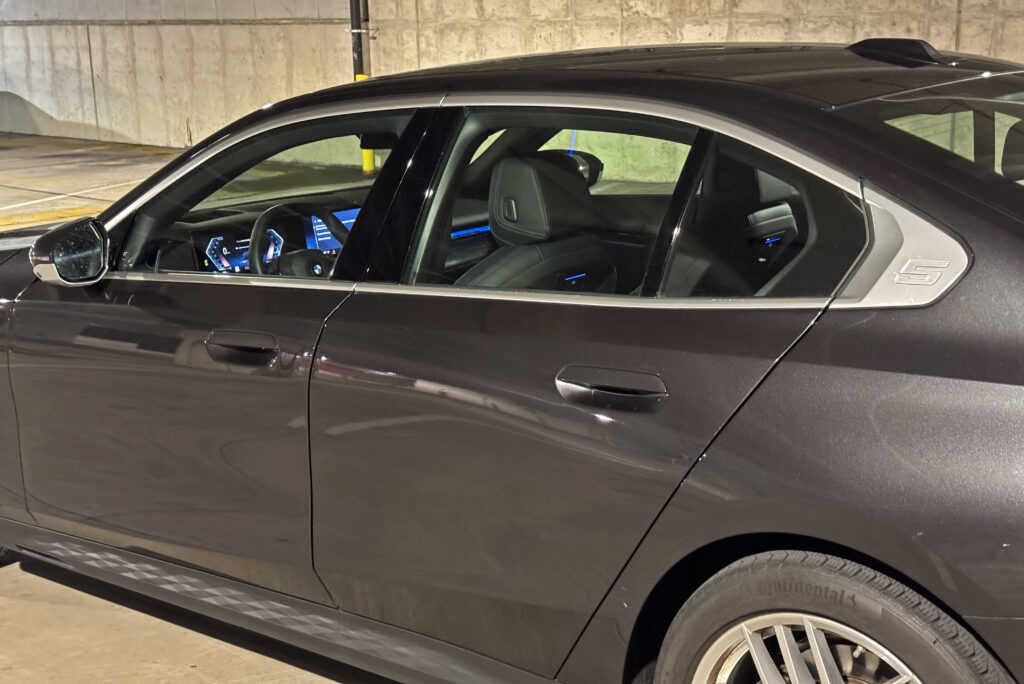
Can you find the 5?
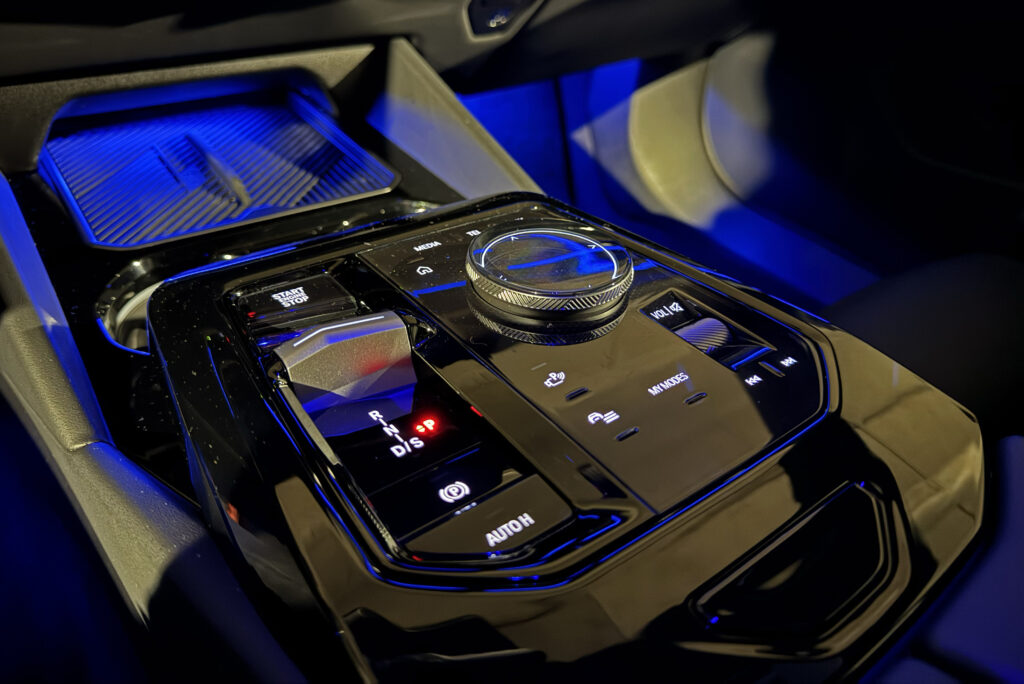
The crystal iDrive controller has made it down to the 530i.
The G60 5 Series was released eighteen months ago for the 2024 model year as the eighth-generation 5 Series. The 530i I rented was an entry-level model configured in typical company car specs. The only option was the Convenience Package, which included a remote engine start feature and a heated steering wheel. I appreciated both on a cold Maryland morning. Despite its sparse option list, the standard kit was quite impressive. Items of note were contoured faux leather Veganza seats, no less than 27 inches of digital displays, a crystal iDrive controller that has trickled down-market from the 5’er’s higher-numbered siblings, and the coolest interior trick—vents that are literally hidden in the illuminated black oak trim. It took me half a day’s drive to solve the mystery of what the rubber roller directional controls were on the dashboard and even knowing they were there, I still struggled to find the vents.
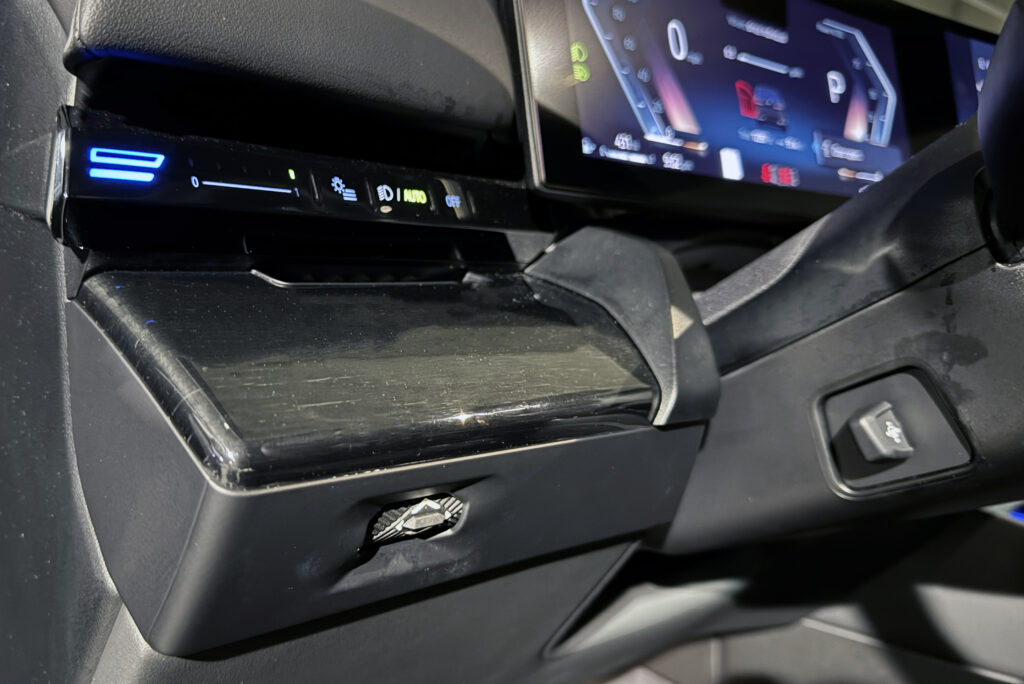
The vents are hidden, even in the light.
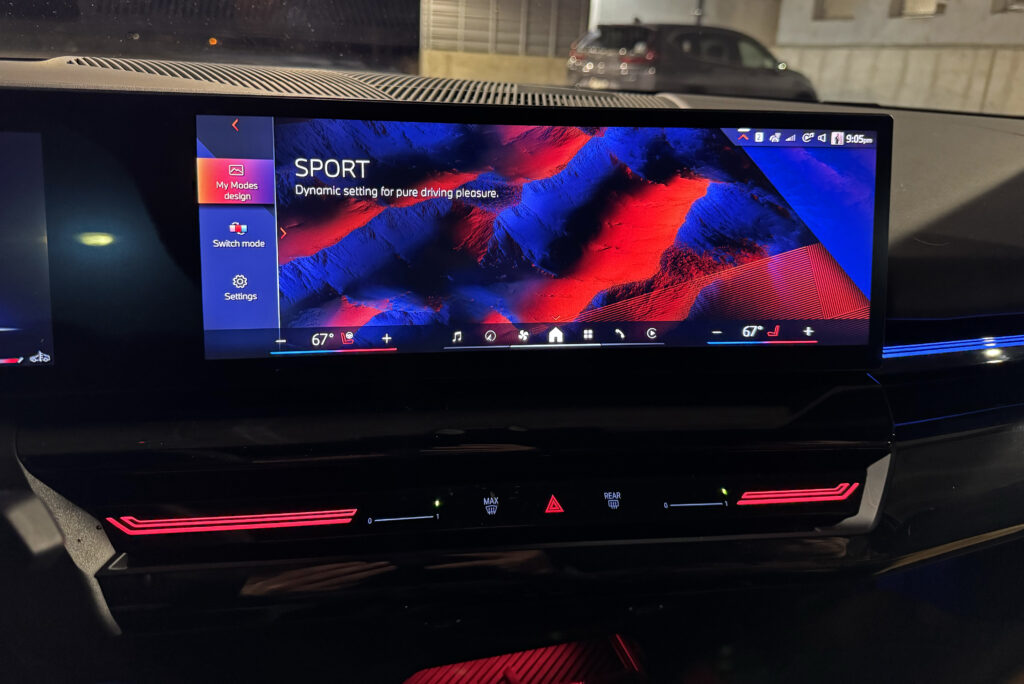
The B48 engine is a proven platform with some hidden mild-hybrid magic behind the scenes. Sport mode livens things up nicely.
Power for the 530i comes from the proven 2.0-liter turbo-charged B48 4-cylinder engine and superb ZF 8-speed gearbox. Despite a portly 4,000-pound curb weight, the B48 delivered E36 M3 acceleration in the 530i, with an additional 10-second Sport Boost Mode available by holding the left paddle shifter down. This is more than enough to satisfy the mission of the 530i, which is more business casual than its performance-oriented G60 counterparts. Where the 530i outpaced those was a fuel economy that easily surpassed 30 mpg in mixed city/highway conditions, with even me behind the wheel. I was mystified at how this was possible until I discovered the 48-volt mild hybrid system working behind the scenes. It actively activates the start/stop function and captures regenerative braking energy. The fact that I was clueless about its existence is a testament to how good the system is.
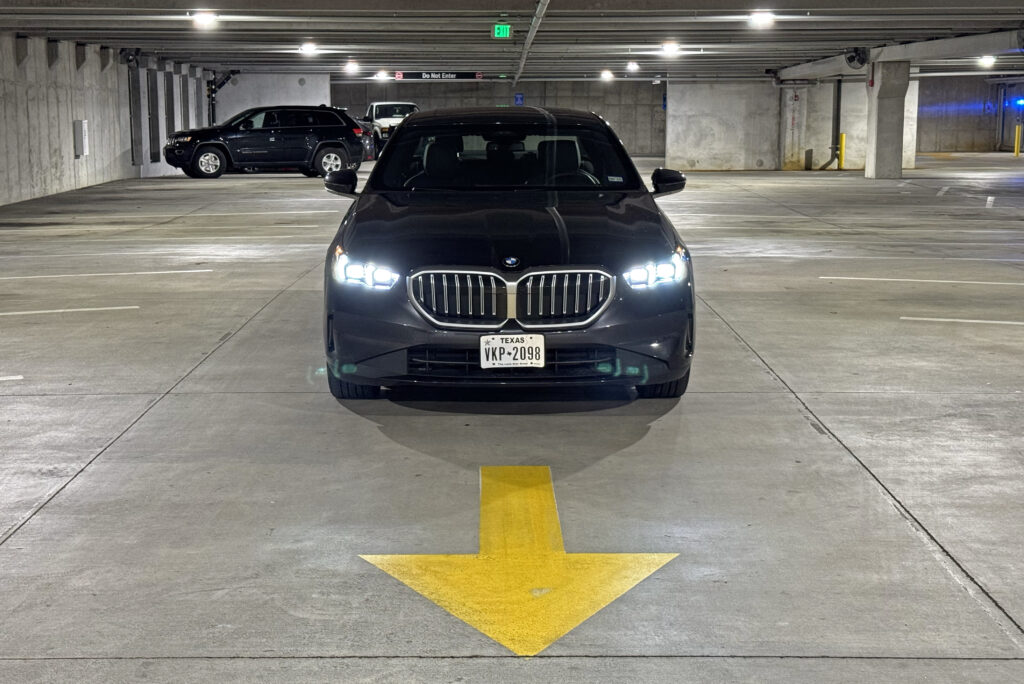
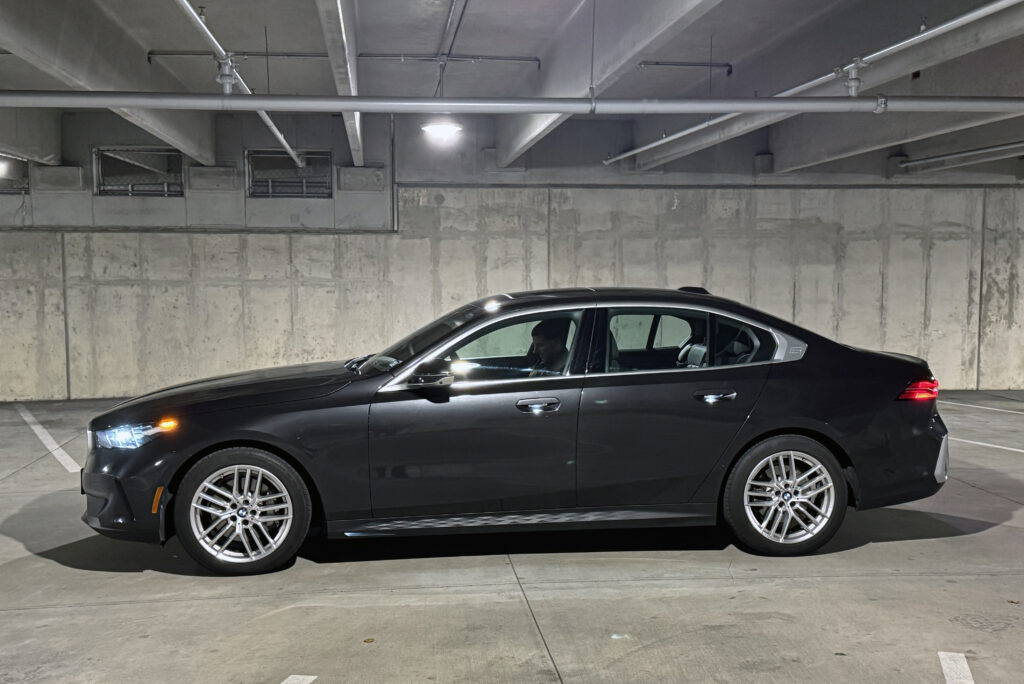
As pleased as I was to spend my last days of the trip in a BMW, there were certain transgressions I just couldn’t overlook. The exterior styling leaves much to be desired, granted the optional M Sport package could have filled in the blanks on the bottom of the blunt-nosed front end nicely. The Hofmeister kink is prominently adorned with the number 5, and another is stamped inside the doors on the B-pillar. The only purpose I could see for these was to add specific branding to the 5 Series lineup, but such trivialities are unnecessary. Conversely, the lower-side skirt sported a subtle speed flag pattern that was more visible in optimal lighting, which was a nice design touch. I could take or leave the triple-spoke style 933 wheels, but they were up-market compared to the available wheels on previous entry-level 5 Series generations.
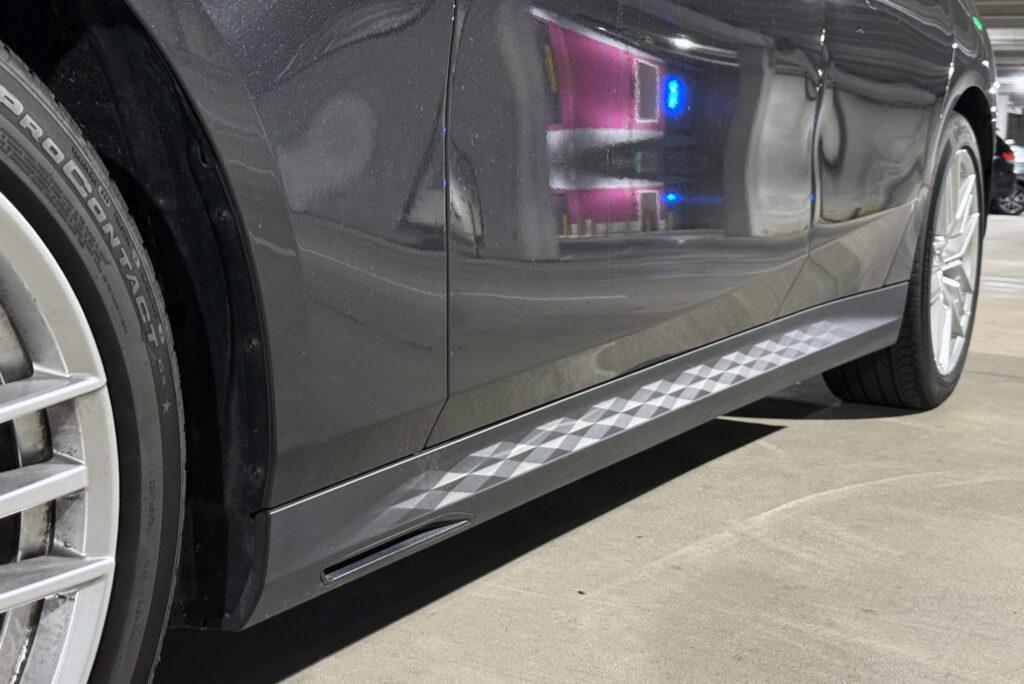
The racing flag decal on the lower sill was a nice subtle touch.
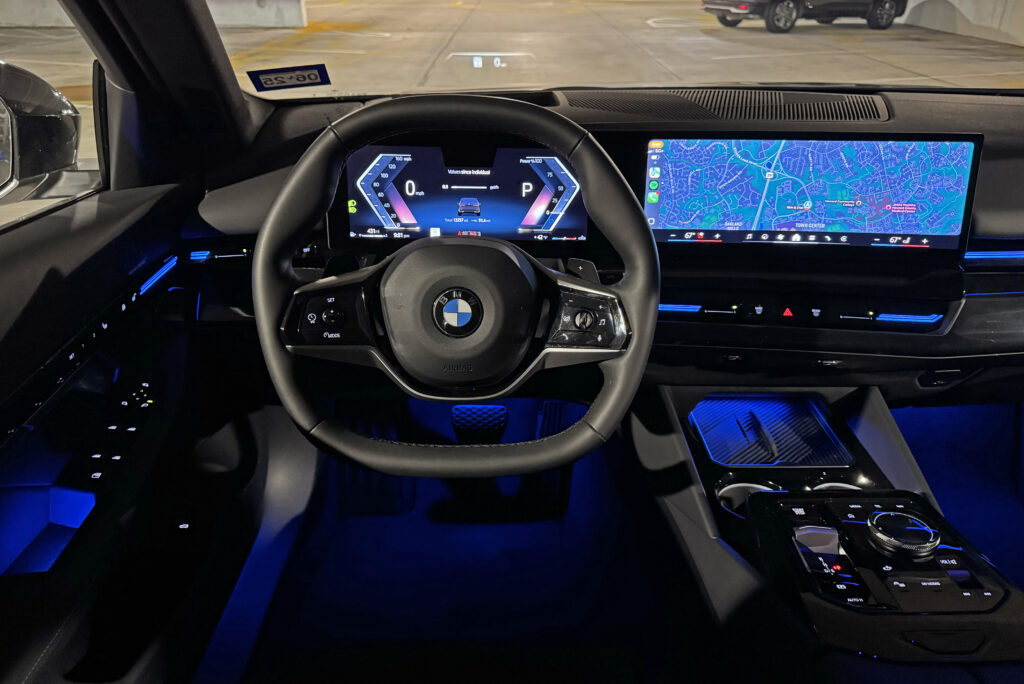
The square steering wheel in the non-M Sport 530i left me with only one question: why?
Inside, the steering wheel was flattened on the top and the bottom into a rectangular shape. This served absolutely no purpose and was more annoying than functional. The optional M Sport package would remedy this back to a circle, but why is that even necessary? Behind it, the digital instrument cluster and curved 15-inch screen were the centerpiece of the interior, the latter providing ample screen room for the app-centric iDrive, Apple/Android connectivity, and selectable mood and ambiance lighting. While the pilot in me always appreciates a button over a touchscreen, the climate control hot buttons at the bottom of the screen were augmented with dedicated heated seats and steering wheel buttons—a necessity to avoid digging through distracting menus to access an essential function.
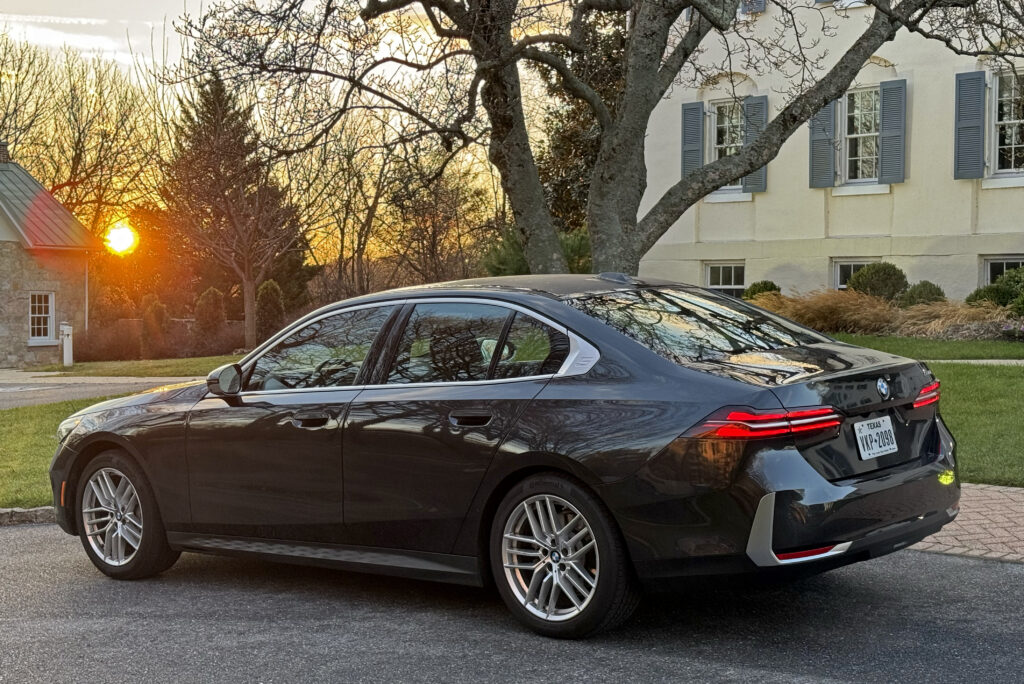
The G60 530i has a specific mission, which it accomplished successfully.
To properly understand this G60 530i, I had to consider its mission, which will likely be to satisfy the needs of an executive company car (or nicely optioned rental). With a price point of $60K, in today’s money, it’s cheap for a brand new 5 Series, but add the much-needed M Sport Package ($3,000) and a few other options, and the price balloons quickly. Alternatively, two-thirds of that MSRP will get you a good used F80 M3 sedan in the current market—but few corporate car accounts would tolerate such dubious behavior on the company dime. That said, be it a corporate car or a rental, the 530i was comfortable, refined, and delivered 30 miles per gallon while offering the BMW driving experience for the same money as a Chevy Malibu from the adjacent rental counter. I was happy to call it home for a few days, and I will happily rent one again!—Alex McCulloch
The post A Ford Raptor and Hyundai Ute lead to the BMW G60 5 Series appeared first on BimmerLife.
]]>The post A Diesel F31 M Sport Wagon for the Single-Car Solution appeared first on BimmerLife.
]]>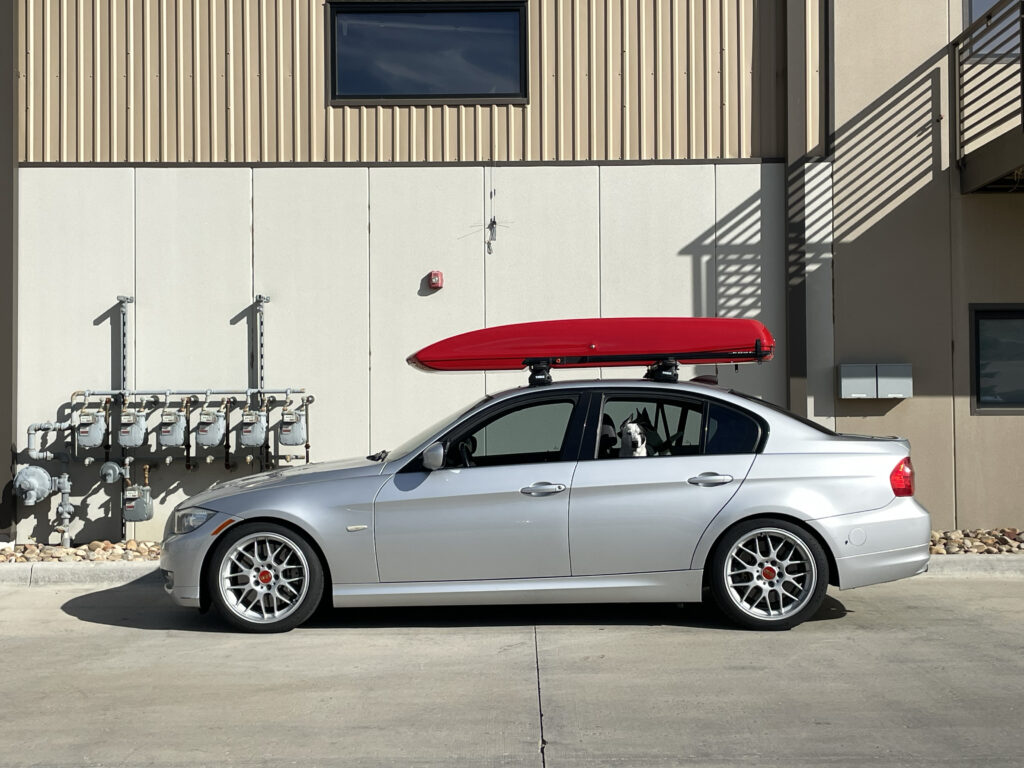
After several years, I had the 2011 335d outfitted to my liking.
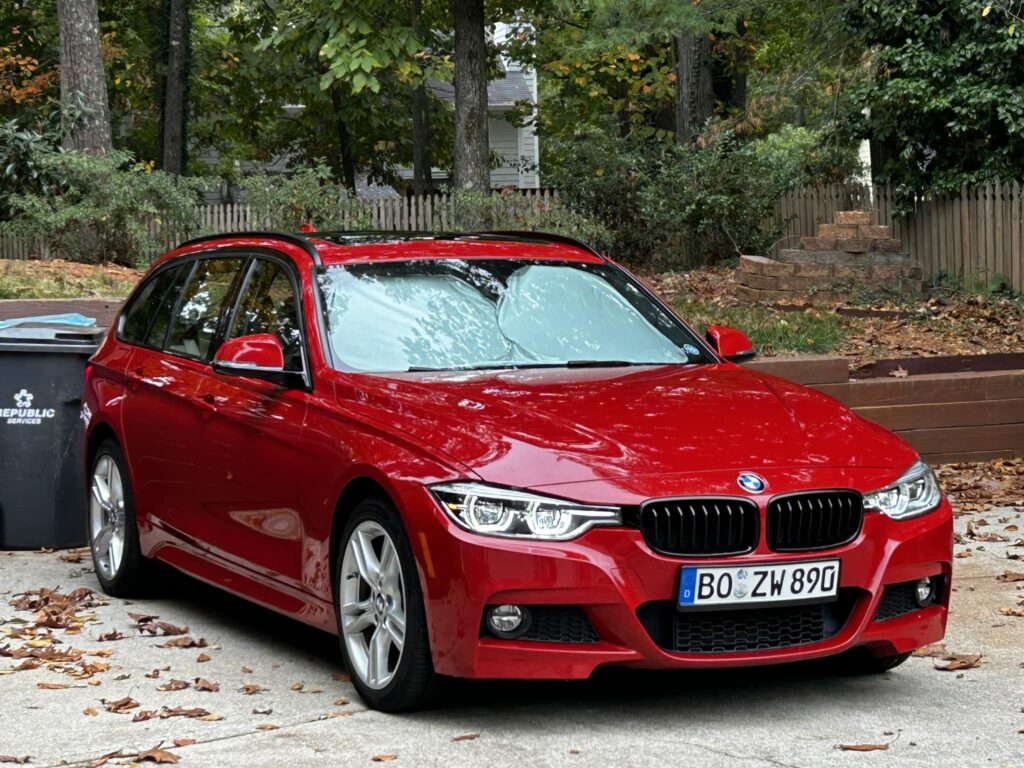
The F31 wagon looks fantastic in Melbourne Red in M Sport trim. Photo and car credit: Al Mancuso.
To make it worth giving up the E90, the new car must be a wagon, retain the diesel qualities that make the 335d so good, and be interesting enough to hold my attention. That would mean the only BMW diesel wagon we’ve ever got in the U.S., an F31 328d. The four-cylinder N47 engine would be a downgrade from the tuned M57 in my E90, but the wagon’s utility would compensate for it. My original criteria were a post-life-cycle-update 328d (2016-2018 model years) with the M Sport package. I wanted a color other than black or silver and a heated steering wheel (maybe I’m getting soft, but once you’ve had a heated steering wheel, it’s hard to go back). My budget was as close to $25K as possible, which was a tall ask. I got really close on a 2017 Melbourne Red 328d M Sport that popped at a Nissan dealer in Arizona for $28K, but the timing was poor, and I’d have to retrofit the heated steering wheel.
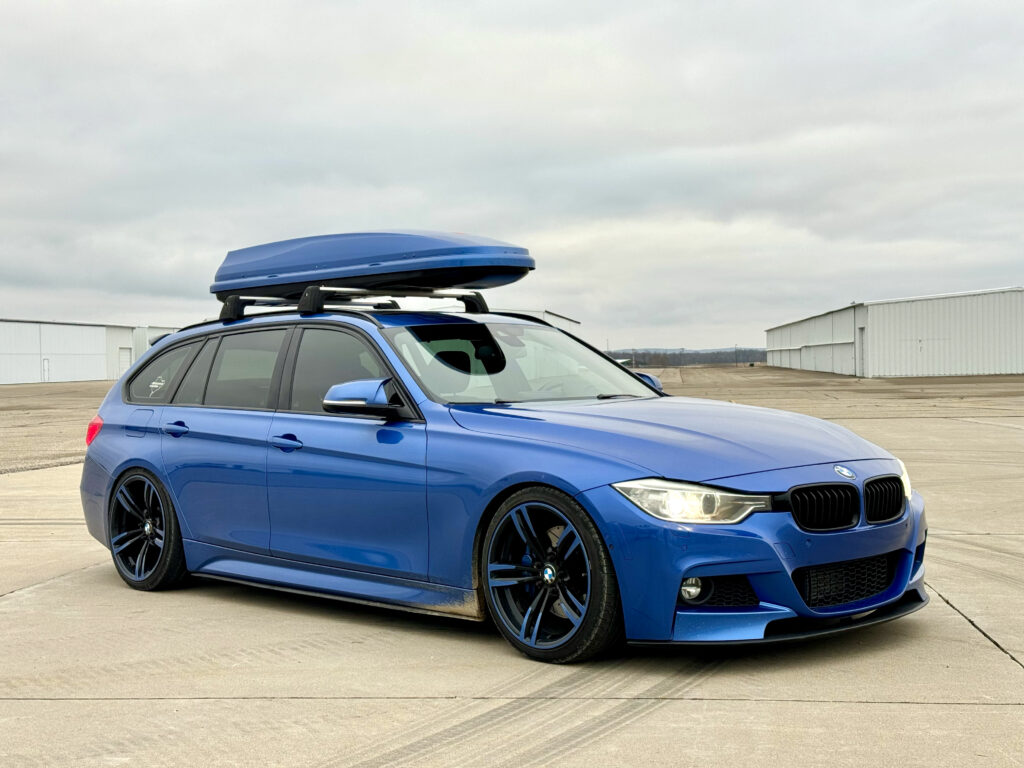
I knew I had to move fast when this Estoril Blue 328d M Sport wagon popped up.
Then, a few weeks later, an Estoril Blue 2014 328d M Sport was posted on a Facebook group. I saw it six minutes after the owner listed it and called immediately. Other than being a pre-life-cycle (pre-LCI) model year, it had everything I wanted, plus a ton of extras. Those included upgraded blue M Sport brakes, H&R lowering springs, a front splitter, a rear hatch spoiler, and a rear diffuser with dual exhaust tips. Inside was a digital Euro instrument cluster, upgraded Bang & Olufsen sound retrofit, folding rear headrests, and larger paddle shifters. Two sets of wheels were included: color-matched blue and black style 437M wheels from the F8X M3/4 and generic Y-spoke 20-inch wheels with blue accents. On the roof were factory cross bars with a BMW roof box that was also colored to match—that synched the deal for me!
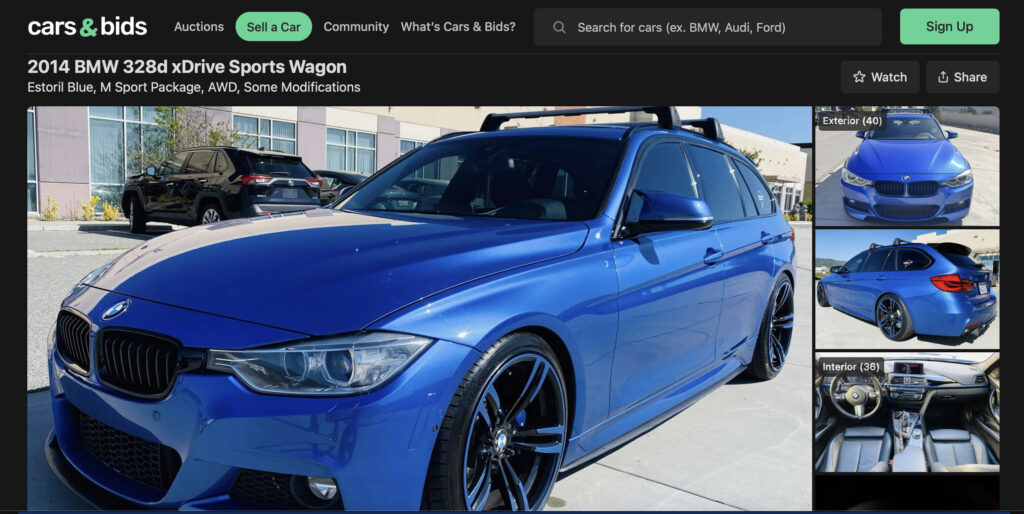
The wagon when it was sold on Cars & Bids.
With just over 100K miles, the asking price was $24.5K. The Melbourne Red wagon—with half the mileage for just a few grand more—was a better buy, but clearly, someone had spent a lot of time and money to make the Estoril Blue wagon unique. That also made it interesting enough to satisfy my single-car mission. The current owner had purchased it on Cars & Bids and hadn’t changed a thing in her few years of ownership. Previously, it was also featured on BMW Blog in 2020. Now I really wanted it. I sent her a deposit and just needed to find a way to get to Western Minnesota to see it in person.


We were able to find some nice actual instrument conditions on the way out.
Since I’ve downsized Glen Shelly and closed the service business, I’ve backfilled that time with some casual flight instruction. I happened to have a buddy who was working on adding an instrument rating to his pilot’s license, and the owner of the Piper Saratoga I share my hangar with had just put a fancy glass-screen panel in. All I needed was another friend to drive the wagon back if it checked out. That wasn’t a hard ask, so a few days later, we took off and headed east. The flight out was great, delivering the actual instrument conditions for the latter half. The glass panel made instrument flying laughably easier than the steam gauges I learned on (said in the most curmudgeonly voice possible). When we landed, the wagon was as described, so we closed the deal, and my friend headed out on a road trip home while we took off into the sunset. For the next 24 hours, I savored the anticipation of my new single-car solution.

We enjoyed a nice sunset on the flight home, but the car ran into trouble.
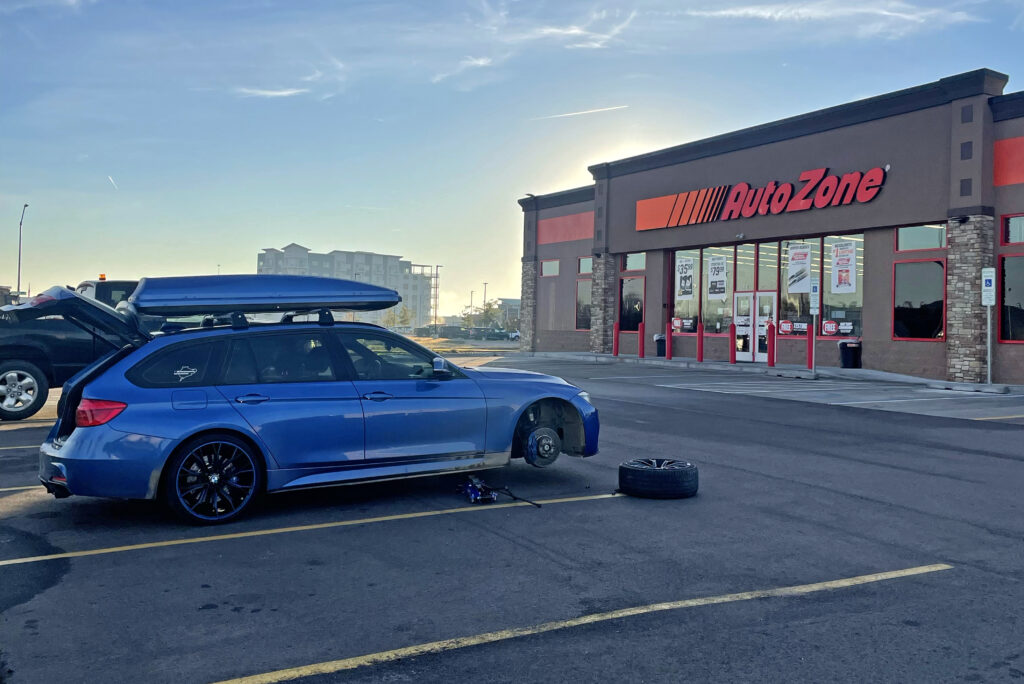
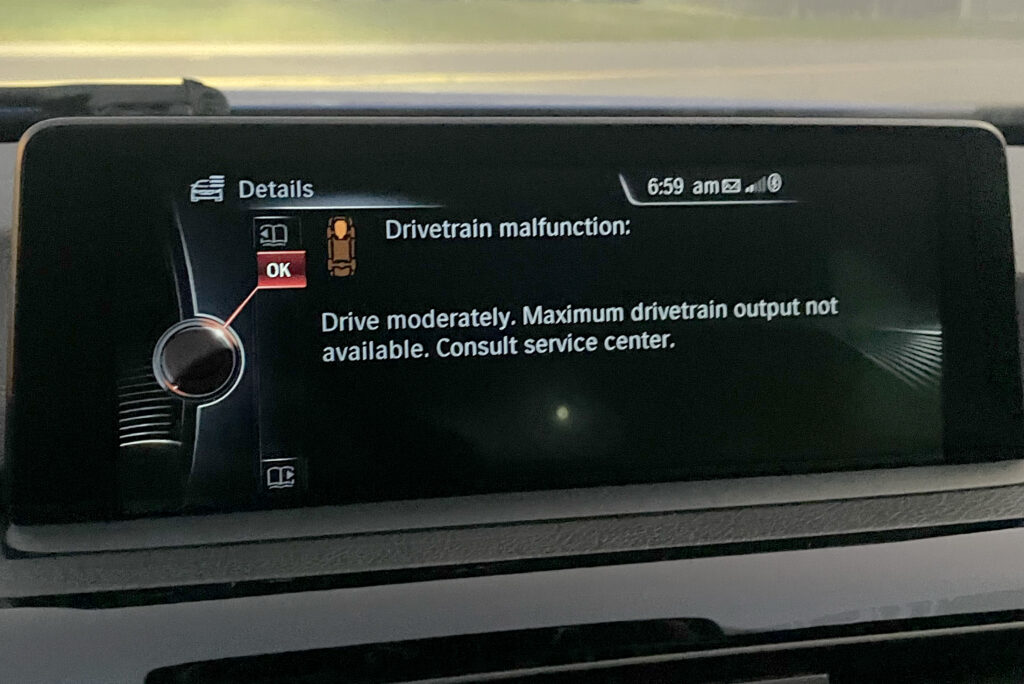
The tires were corded by Omaha, Nebraska, and the EGR valve also failed.
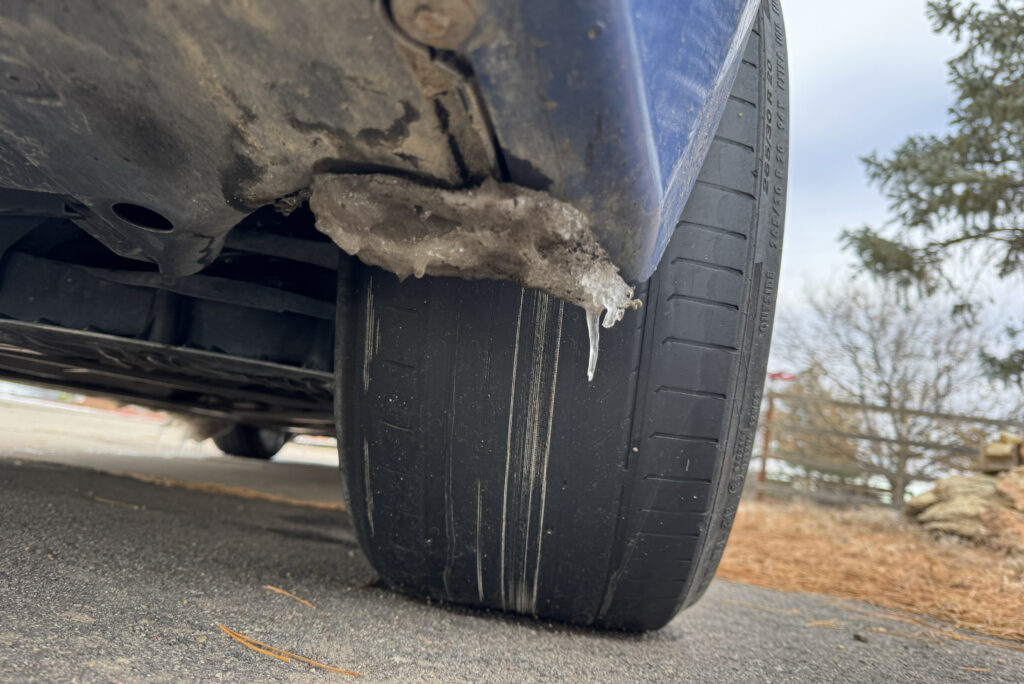
The second set of wheels got it home, but they were corded by then as well.
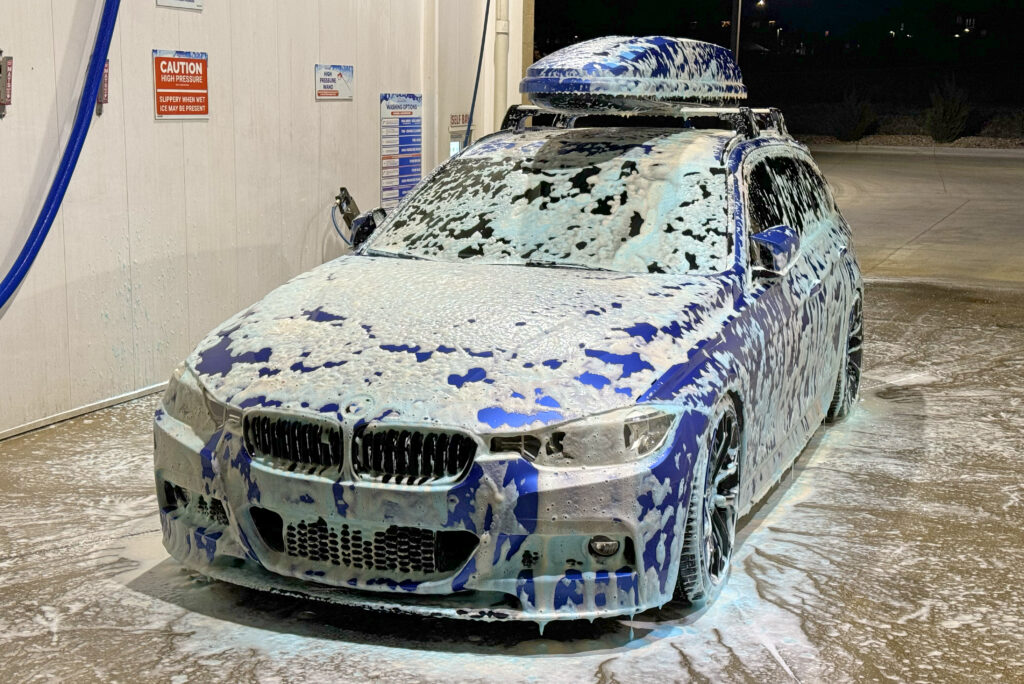
The first order of business was an initial cleaning.
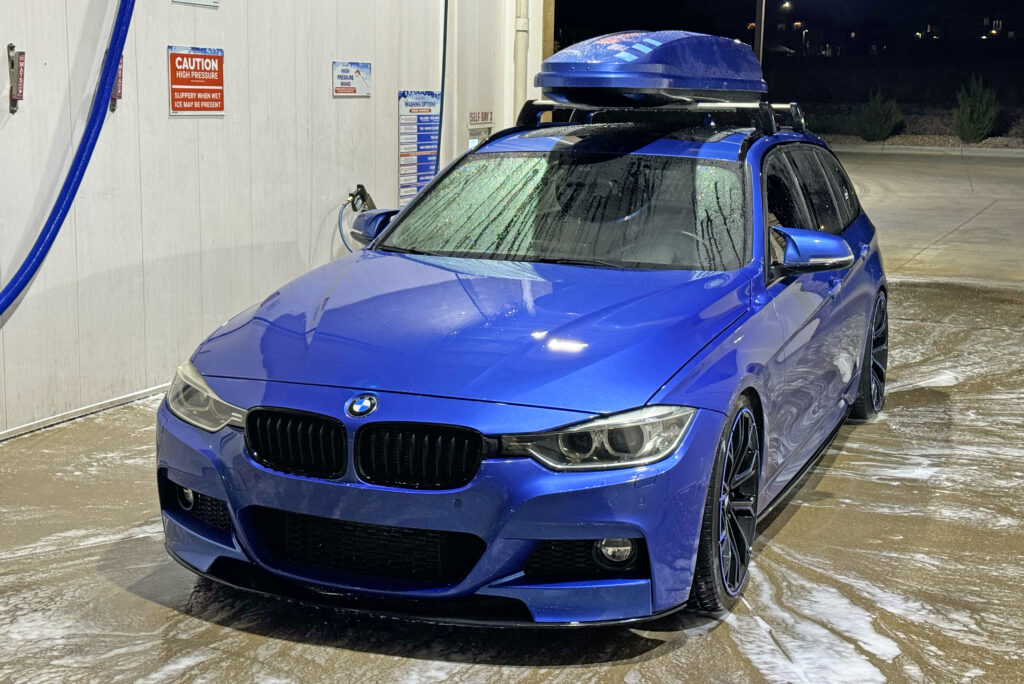
By Omaha, Nebraska, the rear tires were too corded to drive on, and a check engine light appeared for a failed EGR valve. No surprises here, as I had planned on needing to do some recon. Fortunately, he had the extra set of wheels and tires, and the EGR wouldn’t strand him. He swapped wheels in a cold AutoZone parking lot and pressed on to Colorado. The second set of wheels’ tires were corded by the time he got here, but at least they got the wagon home! I liked the slammed look of the H&R lowering springs, but they rode too rough for asphalt trails that we call roads in Colorado. I swapped those out with the original springs, replaced the EGR valve, and swapped in the correct battery. The Euro cluster wouldn’t let me re-enable the EDC, but for now, that’s a trade-off I’m happy to keep. Then, I needed to replace the tires, which meant finding a set of wheels.
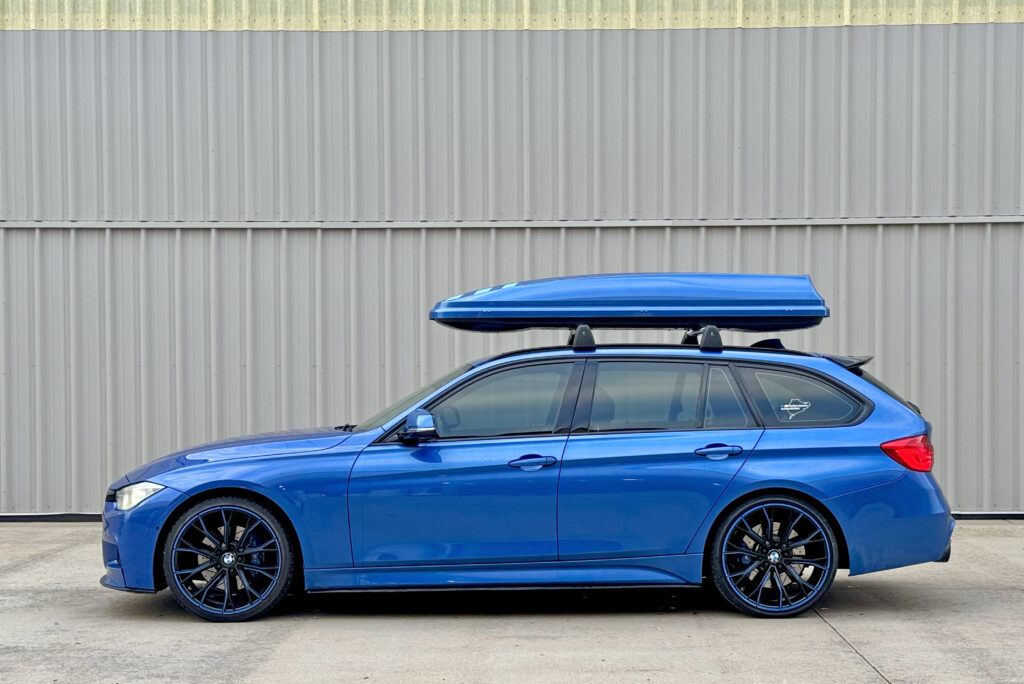
Some may hate me for returning it to the stock ride height, but that’s the best option for Colorado roads.
The look of the generic Y-spoke 20-inch wheels grew on me, but they rode terribly, and the rear tire was absurdly stretched to keep the diameter the same as the front (a requirement for the xDrive). The 437M wheels are a popular upgrade for the F31, with a similar pattern as the OEM 400M M Sport wheels, but I prefer a square setup for more neutral cornering. I had a set of 19-inch BBS CH wheels with fat snow tires sitting on the shelf, but they looked like tractor tires when I test-fitted them to my wife’s F31. I could fix that with narrower-profile tires, but the offset was too high for the stock ride height. That left me with the E90’s summer BBS wheels. They fit perfectly at 18 x 8.5 inches, but the 235/40 tires were too small for the F31 (it looks like a skateboard with the stock ride height). I ordered a set of 235/45 Michelin Pilot Sport A/S4 tires, which will give me an inch more sidewall and work for the time being.
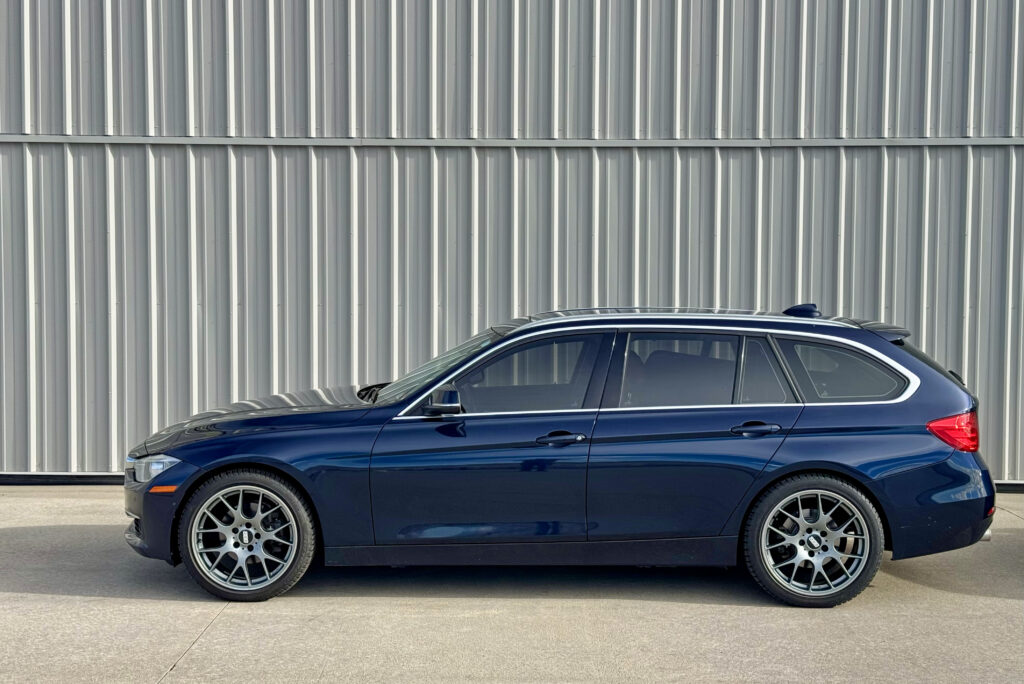
The 19-inch BBS wheels were just a little too fat, while the E90’s BBS wheels were too small with the current tires.
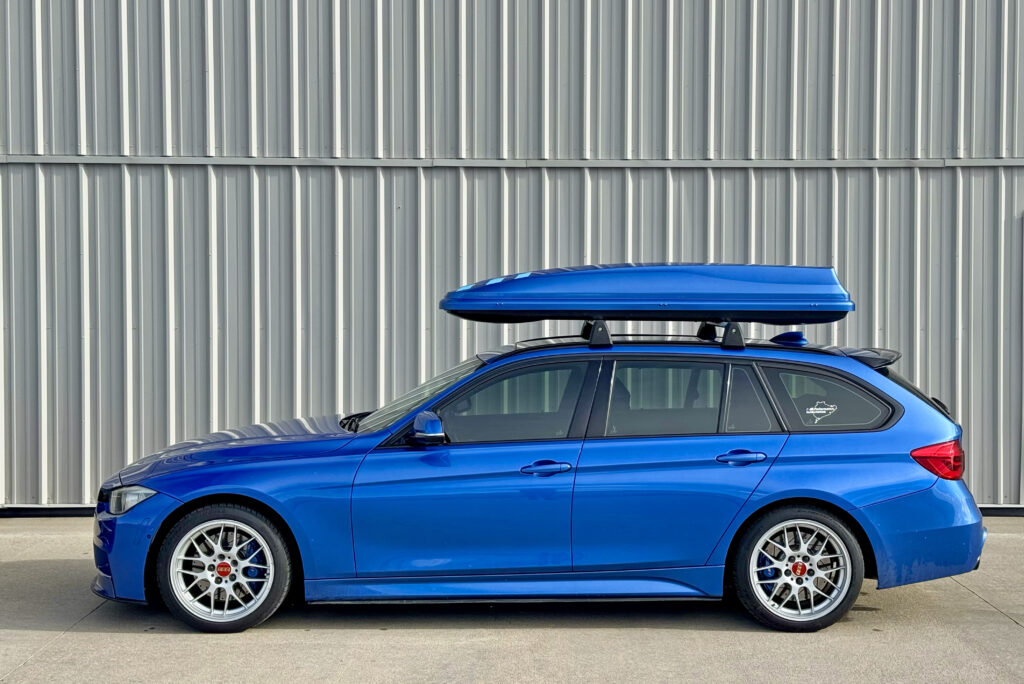
As I settle in with the car, I may lower it on coilovers to split the difference between the factory ride height and the slammed look of the H&R springs. The next thing on the list is a proper detail, paint correction, and protective film. Inside, I ordered a custom-fitted dog protector for the hatch, and I’d like to update the iDrive to an NBT Evo unit so I can enable Apple CarPlay (but not if it means losing the Bang & Olufsen).
Outside of the shop truck, the F31 is the newest car I’ve ever personally owned. In the few weeks I’ve owned it, it seems like the perfect fit for my single-car solution. The F31 community is vibrant and filled with wagon-loving enthusiasts. It’s not as fast or as crisp as the E90, but I still look forward to driving it, and I can’t help but steal a glance over my shoulder as I walk away—both essential criteria for any enthusiast BMW owner. —Alex McCulloch
The post A Diesel F31 M Sport Wagon for the Single-Car Solution appeared first on BimmerLife.
]]>