The post Tech Talk | Preventing Destruction, To Lower or Not, and Sunroof Problems appeared first on BimmerLife.
]]>N55 DISASTER PREVENTION
I own a 2018 M2 (F87) and love it. I keep my cars for ten years or more and am a big believer not only in regular “old school” maintenance but preemptively replacing parts that have higher failure rates.
I replaced the plastic charge pipe early on several years ago, and I am considering replacing the plastic “Mickey Mouse” flange (thermostat to cylinder-head hose) and adding a crank-seal guard. What are your thoughts regarding these? Can you recommend any other replacements that may help prevent costly repairs in the future
Mort Kahlenberg
Atlanta, Georgia
As one N55 M2 owner to another, I have found that these two failure items usually occur only when neglected. The Mickey Mouse ear flange does get soft over time due to its material; if you do ever remove it and it shows signs of being brittle, then it is very wise to replace it. I think by the time you are at the 75,000-mile mark, it should be considered for preventive replacement. However, I have seen them go for much more mileage (100,000-plus). Once they are removed, we discover the true integrity of the part.
Same with the serpentine belt: If there are signs of cracking or fraying on the edge of the belt, replace it. I will say that BMW belt life has improved considerably in the last fifteen years, but they can still fail by or before the 100,000-mile mark. Also, a failing idler pulley could cause the belt to fail and get sucked into the front crank seal, so I think the guard is a good idea for peace of mind. Maintaining the engine with a known good serpentine belt and healthy pulleys can prevent belt failure.
As for other replacements, I recommend a new water pump by 100,000 miles. I do not trust an electric water pump as far as a I can throw it, so I replaced the one in my wife’s M2 at around 65,000. But other than that, the N55 is solid and requires relatively low maintenance.
LOWERING A FIVER—OR NOT
I have a 2001 530i five-speed with sport package. I love this car and how it rides, but I would like to lower it, especially in the front—just a little bit to close the fender gap. The rear ride height is fine. Do you have a suggestion?
Also, my driver’s-door window regulator is making cracking or popping noises, and I am afraid it is about to go. Can you recommend an available replacement that is a high-quality part? I have been told that most of them will not last a month.
Rob Walshe
Morrisville, North Carolina
When it comes to lowering the car, you must do it in conjunction with both axles—you should not just lower the front a little, because that will induce more rake into the chassis geometry, and can make the car feel unstable. Also, the only way you are going to lower the car is to use an aftermarket spring kit, which comes as a set, front and rear. If you only want to lower it a little bit, then I would recommend an aftermarket OE replacement spring or one that will only lower it no more than half an inch. Most aftermarket “sport suspension” springs will lower the car over an inch in the front and half an inch in the rear. Also, changing the springs will change how the car rides; it may not be noticeable to some, but if you are pleased with the way the car drives and rides now, please understand that changing the springs and lowering the chassis will affect it.
As for the window regulator, there is no upgrade that I am aware of. If you buy it from BMW, then it comes with a two-year unlimited-mileage parts warranty whether they installed it or not. Hope this helps.
X3 SUNROOF WOES
On my 2018 X3 (G01), my sunroof “pops” when it is opened after it has not been opened for several days. When this occurs, the interior headliner associated with the sunroof often bunches up instead of retracting the several inches as it should. The popping is loud and smacks of a significant mechanical interference. It has been doing this for several months, and so far, nothing has broken, but I am worried. I did apply Gummipflege to the gaskets between the moveable glass panel and the larger glass panel that retracts farther back; I thought this might resolve the problem, and it did not re-occur for several days, but eventually the popping came back.
Dave Lenderking
Wilmington, New Jersey
Sunroof popping noises are never good—however, it is tough to determine what exactly is causing the popping without entirely removing the sunroof cassette. My concern is that at some point it is going to pop and stop moving, and you will not be able to close it, so please beware of this risk.
You will most likely need to take it to someone who is familiar enough with the sunroof cassette to diagnose the issue. While it may be possible to remove the retractable glass part, you still might not be able to see the defect with it still installed in the car. Assuming that you do get the cassette out of the car, it may be determined that the failed part is not serviceable, meaning that there is no separate replacement part, and you will have to replace the entire cassette, glass excluded. I just had this experience with an F13 6 Series, and the repair was $3,500 at the dealership—with discount. I recommend that you prepare for the worst-case scenario.
The post Tech Talk | Preventing Destruction, To Lower or Not, and Sunroof Problems appeared first on BimmerLife.
]]>The post Proper Preparation Makes Maintenance Enjoyable appeared first on BimmerLife.
]]>Homework
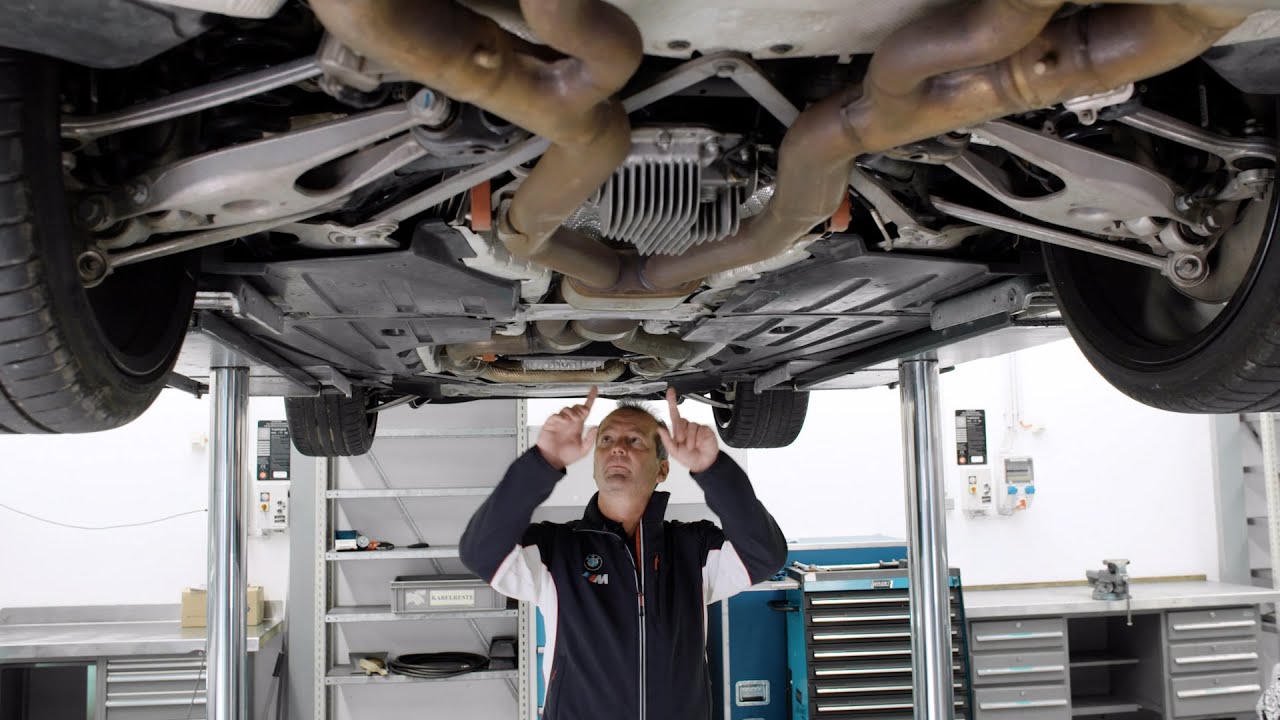
If you are going to do something you have not done, do your homework. Google, YouTube, forums, are all good resources to follow in order to see how the job goes at the expense of someone else’s attempt. There are various versions of the same job so you might have to watch a few videos to see which one is best but a five-minute Google search might help inform you of the necessary steps you will need to follow.
Organization
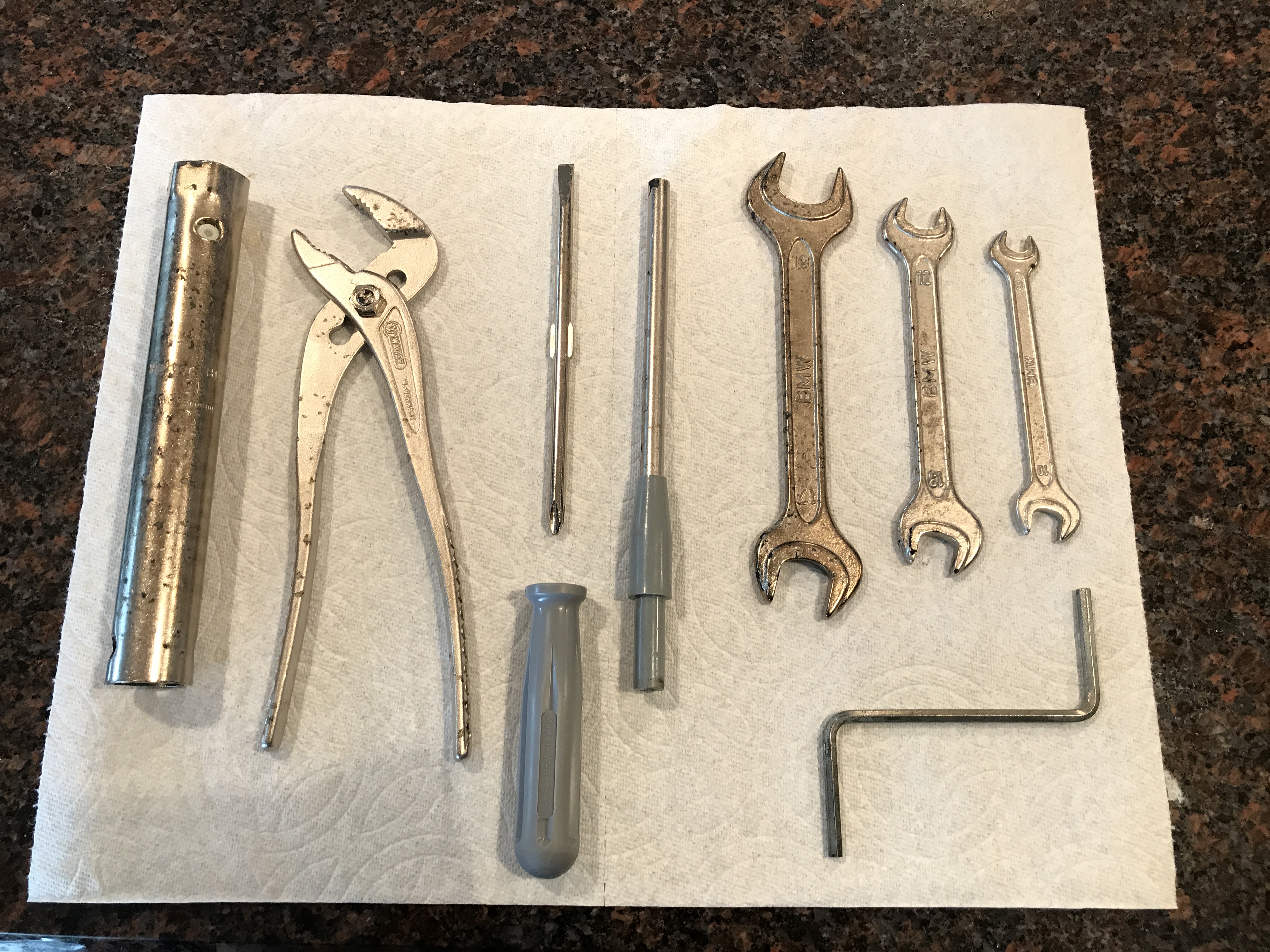
It helps to have tools organized and readily handy. If possible, lay out the tools you think you will need beforehand and keep them on a tray or cart next to you so you are not constantly searching for what tool you need. Give yourself extra space to maneuver around the car and anything that is taken apart, set aside out of the way. If possible, bring the tool box or cart as close to you as possible to prevent multiple interruptions of going back and forth to the toolbox.
Cleanliness
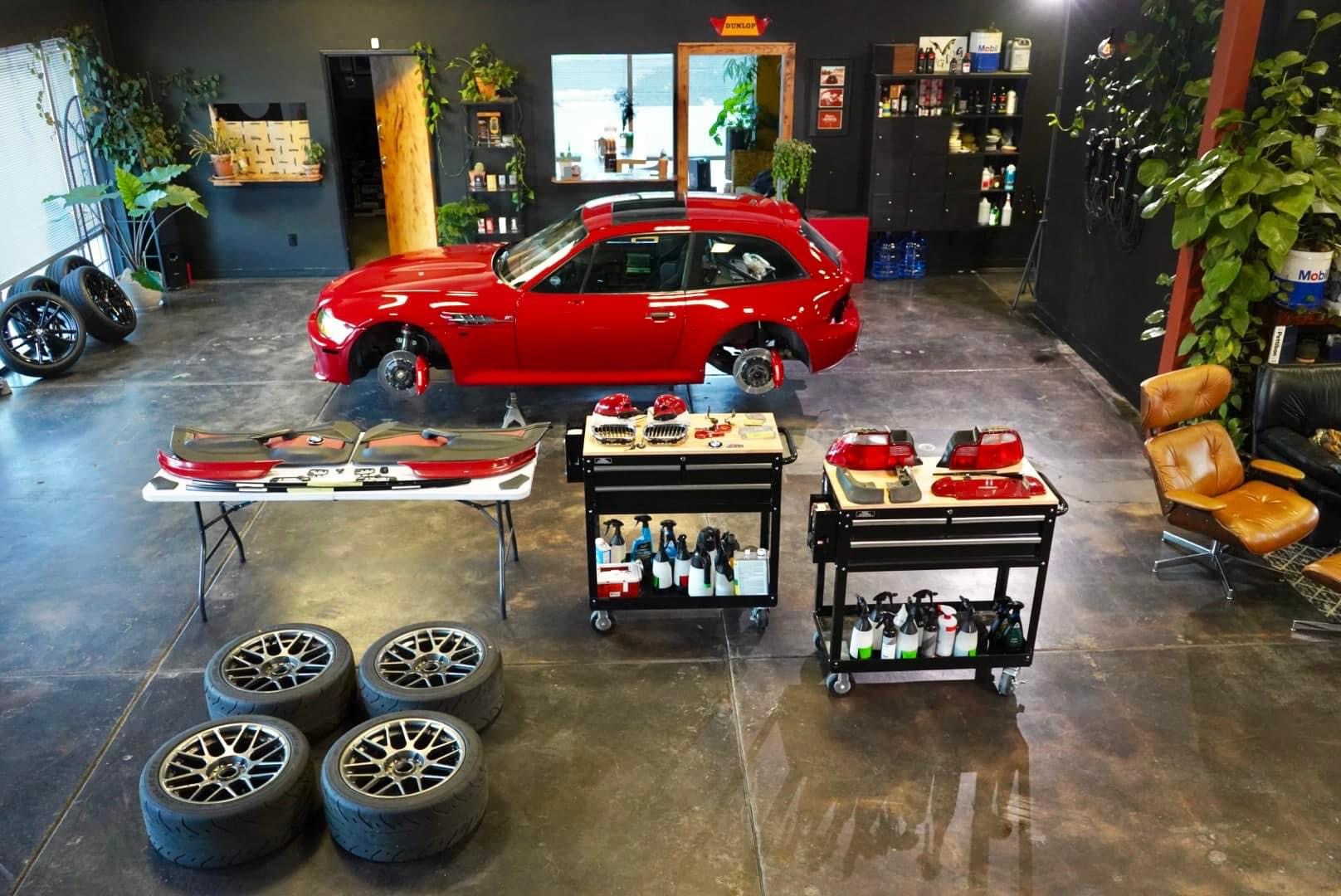
This part coincides with organization but I can assure you that if you know you are about to do a messy job; have the ability to contain spills as cleaning it up quickly will pay off immensely. This will prevent accidental slips and lengthy cleanup times. Wipe up little oil drops, use a small vacuum to pick up dirt and debris. You can never be too clean when working on a car.
Proper Lighting
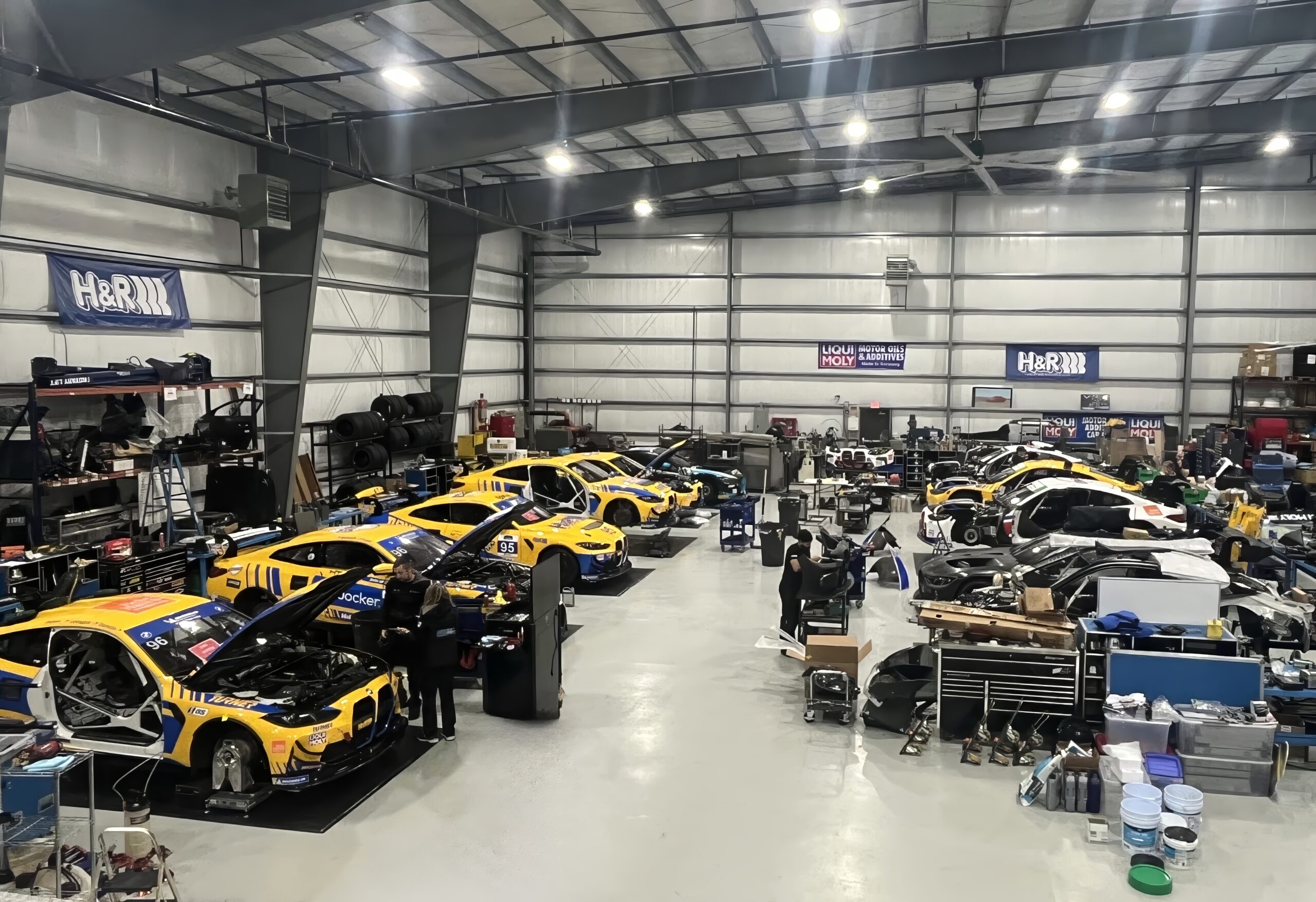
Having the ability to see what you are doing is one of the most overlooked parts of DIY work. Invest in a proper LED flashlight or overhead light bar that illuminates the entire area you are about to work in. This will help identify tough to see parts and will allow more visibility incase you drop a tool or to see a tough to find connector.
Time Management
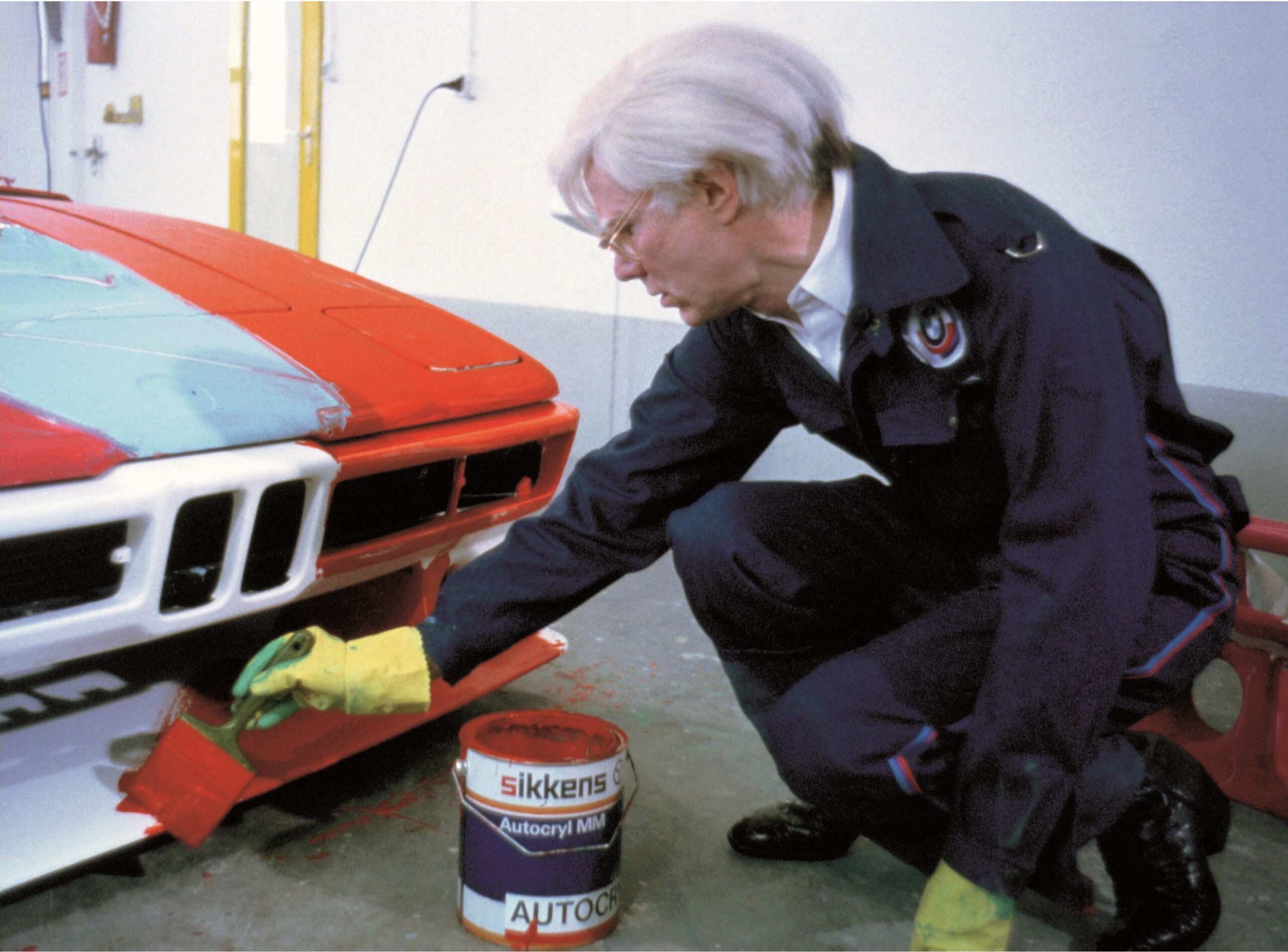
Andy Warhol took his time, you can too.
No matter how big or small the job is, do not put yourself against a time constraint. Buffer for extra time needed because unexpected things will pop up. Every job on a car is one stripped bolt away from an all-nighter. I have experienced this more than once in my career, and unless you have the proper tools or knowledge about how to handle something unexpected, intend on the job taking longer than originally planned.
Safety
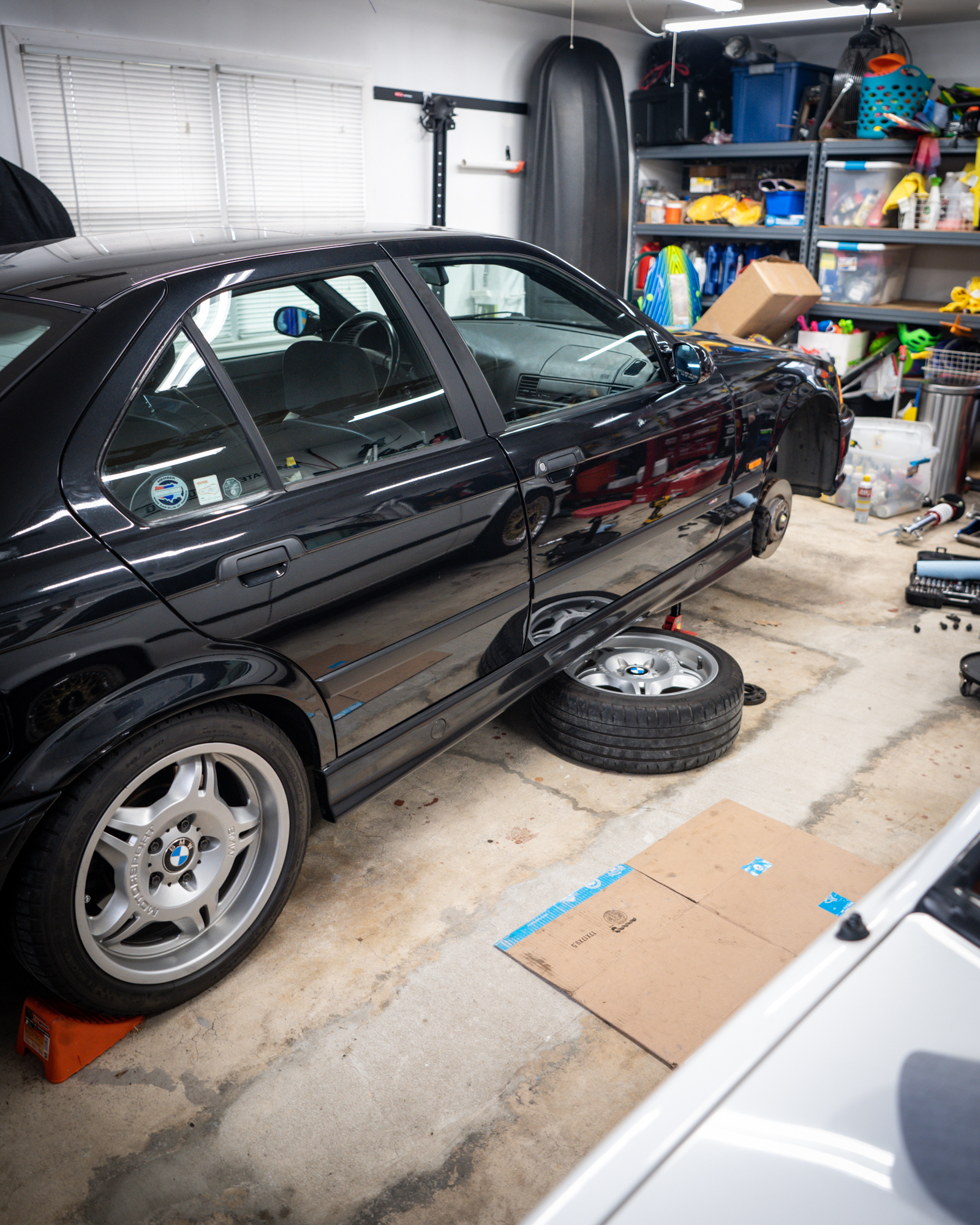
Do not risk it, do not cut corners. Invest and practice is proper safety equipment and practices. Use jack stands to support the car. Wear safety glasses no matter what you are doing. Use latex or nitrile gloves to prevent small cuts and to keep chemicals and oils off your hands.
The post Proper Preparation Makes Maintenance Enjoyable appeared first on BimmerLife.
]]>The post Tech Talk | VANOS Conundrum, Parking Brake Issues, and an Alarming Discovery appeared first on BimmerLife.
]]>MAYBE IT’S VANOS SPLINES
I’m a long-time BMW CCA member (#103837) and have owned too many BMWs to count: 2002s, my bought-new E30, E28s, and several E46s (kids’ and wife’s cars).
I bought our E39 (’99 528i) new. It’s a sport package, five-speed car with just shy of 185,000 miles on it. I have always maintained the car myself with one exception: the original A/C compressor failed. I used a long-time friend’s shop (also a long-time BMW CCA member) to fix the A/C system. Unfortunately, he retired and closed the shop. Our E39 has been and still is a great car.
I am getting stumped with a SES code: P1522, “A camshaft position actuator bank 2.” I have an ES Code Buddy Pro scan tool. I understand that the cam-position sensors are known to fail, and therefore I replaced both the intake and exhaust-side position sensors; I replaced them one at a time starting with the exhaust because of the “bank 2” reference. I reset it and not too many miles later, the SES light reappeared: same code. Referencing the “A” in the code, I decided that maybe it was the intake sensor, so I replaced that. I reset it and several miles later, the SES light came back on: same code. Note that I used BMW OEM sensors.
I then focused on the SES code term “actuator,” and decided that it must be referring to the VANOs solenoid(s). Separately, I have now replaced both intake and exhaust solenoids. (I bought Febi Bilstein solenoids.) I received the same code after each replacement. Because they are identical, I swapped the two solenoids hoping for a different code, but again got the exact code.
One footnote, my reader first says that the code is manufacturer-specific, so I have to select BMW to get to the referenced code. Maybe that’s merely a reflection of my reader more than the actual problem. About a year ago, I rebuilt the VANOS system (seals and bearings) due to what I believed to be a sign of seal failure: erratic idle when cold. I have driven approximately 1,000 miles since the rebuild without any issues prior to the recent SES troubles. The car continues to run great.
Could you help me or share my note with the appropriate person?
Phil Williams
Your diagnosis is not too far off. Since you have replaced nearly everything in the VANOS system, it’s time to turn to the camshaft sprocket and piston for the VANOS unit. The M52TU/M54 engine is pretty good at being able to keep running (and rather well) despite faults in the system. I’m going to assume for a minute that even though you rebuilt the VANOS unit, you did not replace the splined pistons that go into the adjustable camshaft gear(s); if this is correct, I recommend that you take a close look at the splines for both intake and exhaust pistons, as well as the splines in the camshaft sprockets. What I hope you find is that there are some wear marks indicating that the piston splines are touching the splines of the camshaft sprocket, causing them to bind. This will cause the fault P1522, “‘A’ camshaft position actuator bank 2” to be stored because the speed of the adjustment request by the DME is too slow. I think that’s why the car still runs well but throws the fault; it’s just barely out of parameters of the DME.
Can I also assume that this engine runs on 5W-30 oil as indicated on the under-hood label? It’s a long shot, but maybe running oil that is too thick is causing this as well. However, considering the mileage of your E39, my bet is on the VANOS piston/sprocket splines. Let me know what you find.
PARKING BRAKE ISSUES
I have a 2016 X3 3.5i with a parking-brake issue. I was having intermittent problems with it over the past few weeks, and had it repaired by a BIMRS shop. They replaced the brake switch; I left the shop and everything was great. I got it home, pulled in the garage, and turned the brake on. However, the red light on the switch did not come on, so I turned the parking brake off, and it immediately went into malfunction.
I have tried for the last two weeks to undo the brake. I tried every combination of starting the engine while pushing the brake-off switch. I disconnected the battery for two hours, but nothing worked. Apparently there is no manual way of releasing the brake for this year and model. At this point I can’t get the car out of the garage, because the brakes are locked up, unless I drag it out, which I would like to avoid. Do you have any suggestions—or better yet, a solution?
Ted Dannerth
Sorry to hear about this! BMW did not do us favors with the newer cars when trying to get them into neutral or unlocked in a rare emergency. I’m sorry you’re dealing with this. Fear not about getting the car out of the garage; most tow companies are equipped with wheel dollies that can get under the tire and allow the car to pivot and move with some man power. This link is what they usually have. https://www.harborfreight.com/automotive/jacks-jack-stands/vehicle-dollies/1300-lb-capacity-self-loading-positioning-wheel-dolly-64601.html
We have these at the dealership for when cars come in locked up as well.
I WANT TO BE ALARMED
Thanks again for your help when I was in desperate need of a differential for my E60 530i. During that period of uncertainty, I entertained finding a replacement—but now that the diff is fixed, this car is a keeper. I’ve owned it for eight years: new shocks, tires, A/C compressor. Plus it’s got BavSound speakers and upgraded interior. It’s comfortable, reliable, economical, and fun to drive.
Deciding to keep the E60, I’d been noodling with the idea of buying a second car, more for fun, for a couple of years. This week I pulled the trigger and bought a new old car, a 2008 E85 Z4 M roadster with a six-speed and just a few more than 17,000 miles on the clock! It’s in Cincinnati and should be delivered in the next ten days or so. Waiting is the hardest thing.
Reading through the build sheet, the car appears to have been wired for an alarm, but was not equipped with one. I assume that only the BMW alarm will work with the wiring. Are those available as an after-market purchase, and maybe within the capacity of this shadetree mechanic to install?
Thanks for all your help and expertise. You’re a great part of the CCA team!
David R. Good
Phoenix, Arizona
Hi, David! Glad I was able to help with the E60—and congratulations on the M roadster! I truly think that BMW nailed the roadster with the E85 chassis and S54 engine; that car is just a great top-down cruiser. If you’re able, stop by La Jolla Independent when you drive the car to California. Just tell them Nick from Tech Talk sent you. I promise you won’t be disappointed.
When BMW says “wired for alarm,” that means you can buy the alarm retrofit kit from BMW parts and have it installed. It will need to be coded to work properly, but the retrofit itself is not that involved. The alarm gets installed in the wheel well and then it gets encoded so that it will beep and do its job. An independent shop like LJI should be able to do the coding but sometimes they can’t. It just depends on what equipment the shop has. In the end, the dealership can get it done.
The post Tech Talk | VANOS Conundrum, Parking Brake Issues, and an Alarming Discovery appeared first on BimmerLife.
]]>The post Tech Talk | Transfer Case Woes, Code Breaker, and Hot Start Solutions appeared first on BimmerLife.
]]>TRANSFER ME OVER
I have a 2011 F25 X3 2.8i with ~125,000 miles; it is my son’s college car, and now that he’s graduated, it’s about to become my daughter’s Brooklyn car.
Last summer, the boy came home from college and said that there was a shuddering while turning at low speeds. The local shop said that it needed a new transfer case.
Internet sleuthing suggested a fluid change and re-flash might solve the problem. The shop did it, the problem went away, and all was good—until it wasn’t. My son recently informed me that the shudder is back. Would another fluid change “solve” it for another year? If not, is there anything short of replacing the transfer case to do?
What happens if I ignore it? Any advice appreciated.
Joshua Weinstein
The bad news is that the shudder is not going to go away; it might actually get worse. Changing the fluid and resetting the VTG motor (VTG = Transfer Case Module) might make it go away, but it will return. One very important key thing here is that the X3 all-wheel drive system is very, very sensitive to the tire size indicated on the B-pillar of the car; the wheels and tires on the vehicle must be the exact size listed on the label, because the xDrive system is calibrated only for that size, and altering it will prematurely wear out the transfer case. The vehicle basically detects a difference in wheel speed based on the different tire sizes and actives the AWD system incorrectly.
You won’t be able to feel it until the shuttering starts again. Installing the appropriate tire size might make it go away, but sometimes in that scenario the transfer case is already compromised.
If you were to ignore this issue, it could get worse—perhaps to the point where the xDrive system is no longer doing xDrive things. I have personally never seen a transfer case fail to the point where the car was undrivable, but that is just me.
LET’S BREAK IT DOWN
I have a 2008 BMW X3 with 164,000 miles on the clock. It’s running well. The X3 is being maintained by a shop that specializes in servicing German cars: BMW, Mercedes, Porsche, and the like.
Could you share with me the repairs that are associated with the following codes:
- P1775: Lack of communications between the transmission control module and the engine computer module.
- 2A17: Diagnostic Module Tank Leakage: ensures fuel tank doesn’t leak.
- 2C7F: Oxygen censor code.
- 2A38: Valvetronic monitoring of sluggish movement.
- 214F: Cylinder #3 misfiring
These fault codes have not been building over time; I got all of them at one time. The X3 appeared to be running fine. Is it possible that P1775 is the primary problem, that this fault code triggered the others? If I have to make individual repairs, this could be an expensive proposition!
According to my mechanic, these codes are representative of repair items for the X3. However, the mechanic is not able to determine what repairs need to be completed based on the codes. My mechanic suggested that I take the X3 to the local BMW dealership. I would prefer to have my mechanic complete the work; dealership repairs tend to be more expensive.
This is important because unless these repairs are completed, I will be unable to re-register my X3. Any help you can provide would be greatly appreciated!
Bruce Jackman
I am more than happy to assist, have your mechanic do the following:
- Smoke test the intake to check for vacuum leaks. This is important in ensuring there are no lean mixtures.
- If the O2 sensor fault is for sluggish movement or heater circuit, replace it.
- Replace the Valvetronic motor and sensor for fault 2A38 (the sensor might be optional, but it could contribute to improper Valvetronic signals).
- Use smoke machine to test EVAP system for fuel-vapor leaks for fault 2A17; if no leak found, replace DMTL pump.
- If misfire fault does not come back, great! Otherwise with faults 2A38 and 2C7F being rectified, you might be looking at new spark plugs and/or ignition coils.
- Is fault P1775 currently present? If so, does the car run? That fault indicates the CAN system between the EGS and DME is down, so the car wouldn’t run—or barely run.
I hope this helps point you and your mechanic in a direction. Let me know if I can be of any more use.
HELPING MAKE HAPPY DECISIONS
I am a long-time BMW owner and member of the club; my stable currently houses a ’71 2002 ti project, a ’72 Bavaria, a 1976 2002, a ’95 M3, an ’04 330i ZHP, a 2008 328xi, a 2017 X3, and a 2018 M2—so yeah, I have a problem….
I am looking at buying an ’08 135i with M Sport package, manual. At 120,000 km, it’s a two-owner car with good service records and long-time owners. The car is in really nice shape, very clean, never winter-driven. I have heard all the issues with the N54 engine: turbos, oil leaks, HPFP, carbon problems. The water pump and thermostat have been serviced, brakes were done recently, it was walnut-blasted twice, the A/C evaporator replaced. I am seeking your opinion on the car as a technician: Should the known issues scare me away? There are currently no turbo rattles, no check lights, and no oil leaks, and the price is reasonable. Let me know your thoughts and opinions.
The next question: My ’04 330i ZHP has developed a strange issue. The car is well kept, with 285,000 kms. When the car is cold, it starts and runs perfectly; once hot, if I shut it off, then go to start it, the temperature gauge will peg red, and the car will fire, run for a second, and then die. Once it’s cooled down for 15–20 minutes, it starts and runs normally.
I have checked all major electrical connections, grounds, fuses, etc, swapped out the battery, replaced MAF, idle-control valve, and crank sensor. The fuel pump was replaced 8,000 km ago with a new VDO pump and new relay—aftermarket, not BMW. I also had the DME repaired, but it didn’t solve the problem, so I purchased a good used unit and replaced it, which solved the problem for three days before it returned. I am leaning toward a wiring issue, but I am stumped.
Kris Procyk
Windsor, Otario
That is a pretty good-looking stable you have there! I think that the ’08 135i is a solid buy, even with the N54. The good news about the N54 is that the problem items are limited, and there’s a solution for every one of those items. I think the anxiety of them failing on you has dropped, since we know it could happen but we know that it can be fixed. I think the N54 is a good engine, and I wouldn’t be scared of it—it sounds like you’re onto a good one. Just be aware that the items that have not yet failed could fail down the road. But once those items are rectified, the car and engine tend to be pretty solid.
As for the ZHP, it seems to me you have a hot-start problem that’s electric-related. Your temp gauge should not go into the red unless you’re actively overheating with a running engine. Have we tried swapping in new coolant temp sensors? Sometimes a shorted sensor can tell the DME to do weird things, and since the car works once it cools, it points me to something temperature-related. Faults only get thrown/stored when certain criteria are met; sometimes components on a vehicle will fail or start to fail in a manner that does NOT throw/store a fault—but will cause a symptom such as you have described. I see there are some faults stored in the pictures you provided. The faults I see are for:
- Oil level sensor
- Oxygen Sensor
- Mixture Preparation
First, replace the oxygen sensor, because the fault stored is for the heater circuit. Basically, this means that the sensor cannot get up to temperature fast enough and has become inefficient. That particular oxygen sensor is for post-catalytic converter monitoring, but the DME will still use its signal to alter fuel trim. You’re good to replace it without much more diagnosis.
Mixture Preparation means that there is a vacuum leak or low fuel delivery in the engine. On the M54 engine, nine times out of ten it’s a vacuum leak, and either the intake boot is torn or the oil separator has failed. The worse the issue gets, the worse the drivability will become, and MPG will suffer. The car might even develop a misfire or hesitation issue. I strongly recommend having this issue diagnosed and rectified.
Finally, the oil-level sensor fault got me thinking: There might have been a time long ago where a failing oil-level sensor caused a no-start issue. It’s quite possible that this is influencing the crank/no-start issue when hot. I cannot recall the exact theory on it, but you may want to look into having it replaced.
The post Tech Talk | Transfer Case Woes, Code Breaker, and Hot Start Solutions appeared first on BimmerLife.
]]>The post Brakes Squealing? Don’t Blame the Car, Blame Yourself appeared first on BimmerLife.
]]>Let me explain. Brake squeal is a vibration caused by the brake pads making contact with the brake rotor in a very specific harmonic manner that generates a certain frequency, which causes that ever-so-irritating noise. There are a lot of forces at work here in order to generate that brake squeal.
Now, when I say it’s the driver’s fault, I mean that it’s usually due to driving style—more specifically your relationship with the brake pedal. (I will touch on brake-pad material shortly, but first let’s focus on the brake pedal). Most BMW drivers are too light on their brake pedal during their daily routines; when approaching an intersection where the light is red, a common practice is to lift off the throttle and coast to a stop with minimal brake pressure applied—and this is where we develop a problem. If you can imagine your hand as a brake caliper, think about when your hand is wrapped around a ball or balloon, and you squeeze it; this is a basic visual of how a brake caliper pushes the brake pads against the rotor. When you relax your grip, you allow the brake pads to push back a bit and come off the rotor.
Brake squeal occurs when the pad is still touching (or sticking to) the rotor, which can produce a noise. Sometimes this is due to the caliper design, but it can also be due to the material in the brake pad. Sometimes it occurs during application of the brake pedal, sometimes it’s after the release. But the key part here is that inconsistent brake-pedal application or consistent low pressure (such as dragging the brake pedal in slow-moving situations—parking garages, traffic, city driving) creates the right conditions to produce brake squeal.
Brake-pad material does have an influence on how the brake pads will perform, but different materials have different side effects. The better the brake-pad material—that is, the greater its stopping ability—the more noise it will produce. Enthusiasts often choose track pads or racing pads, because they want stopping power—but there is no avoiding the squeal that comes with aggressive pads.
Nevertheless, the biggest influence on brake-pad noise comes from the pedal application. In the motorsport world, we do not lubricate brake pads; in the street world, we do lubricate them—but this comes with a lot of misunderstanding. The over-lubricating practice comes from the theory that the brake pads need a lubricant between the mating surfaces of the pad and the caliper—NOT between the pad and the rotor. With brake temperatures reaching hundreds of degrees during use, that lubricant will eventually dissipate, so putting more than a few drops of anti-seize on a brake pad will draw more debris and dust, potentially causing noise down the road. A small dab of anti-seize on the contact parts of the caliper and pad is sufficient.
So how do we prevent excessive brake noise? First, we need to really use the brake pedal. Use your best judgment here, but I recommend using more brake-pedal pressure, because that will force more brake-pad contact against the rotor, causing less frequency variation; the lighter the pedal, the greater range of vibration—and the greater chance of noise. Minimize it with more pedal.
Second, be mindful of slow-driving brake use. Dragging the brake pedal in light applications can influence squeaking—especially with M Sport brakes.
Third, practice, practice, practice. Take the car to an area of no population and use a stretch of road to do some hard braking in order to bed the pads properly. Use your best judgment here, but take the vehicle up to 40 or 50 mph and stand on that pedal like an emergency stop. It will be quite the experience, but it allows the brakes to do their thing a few times. I usually do this after servicing a customer’s brakes, or if they had a complaint about noise but their brakes were in good operating condition.
What about brake dust? You cannot have it all. Brakes are one of those areas where we can have only two of three possibilities: performance, noise, and dust. If you want low dust and low noise, the brake pad’s performance will be low. If you want performance, then you will have more noise and more dust. There is no real winning combination out there.
We must remember that a BMW comes from a place in which they are normally driven at a higher rate of speed, and their level of performance is rarely reached in America. BMW brakes are designed to slow the car from a higher speed more efficiently, but that comes with more dust—and sometimes more noise.
Brake noise is something that has improved over the years, but the aftermarket has always used it as an upselling fear tool to get consumers to think that brake noise means something is wrong. I can assure you that most of the time it just means that the brakes are working—but if you are getting consistent noise and your gut says it should be checked out, I agree that you should at least have it inspected to make sure. At the end of the day, you have to live with the car, so if there is something of concern, it is best to have it checked to make sure everything is okay.
The post Brakes Squealing? Don’t Blame the Car, Blame Yourself appeared first on BimmerLife.
]]>The post Tech Talk | Shock Talk, Pro Help, and Bundling Repairs appeared first on BimmerLife.
]]>OEM OR AFTERMARKET SHOCKS
Background: South-East Florida-housed 2000 BMW Z3 roadster, owned for four years. It is time to change the shocks, struts, etc. As a retired person who rarely drives the vehicle more than 50 miles per month, I cannot decide whether to install affordable stock BMW, Konis, Bilsteins, or OEMs. The car is basically used as a round-the-towner or a biannual run to Orlando.
Your comments would be appreciated. Thank you in advance.
Stew Webster
If you are not seeking to add any additional dampening to the sub-100-miles per month you drive, OEM shocks would complement the originality of your roadster. While Konis have adjustable rebound, some may dislike the sensation. A Bilstein is an excellent replacement for an OEM shock, but it may add additional dampening.
But if you are looking to increase the dampening on your Z3, then I would recommend a Bilstein shock with an OE aftermarket lowering spring; this setup will barely lower the car by a quarter or half an inch, but add a noticeable difference to how the car drives without being too bouncy on your runs to Orlando.
TIME TO TAKE IT TO A PRO
I have a 2002 BMW E39 M5, and the fuel gauge usually stops at half full and then jumps to empty if I don’t remember to get gas. I would like to know how I can decide which float is bad, and I’m wondering how I should repair this after five years. Should I replace everything. or just the bad parts? It seems like there are two floats and a pump.
I watch videos on how to do the repair, but even using the onboard test tool, which has an adding machine built in, I’m not really confident in troubleshooting the exact float and would just like to know more.
Gordon Gregg
This kind of diagnosis is going to require professional help, because if it becomes necessary, you will need to access both of the fuel-level senders in the tank after removing the back seat and exposing both service holes for each side of the tank. Each side will hold a fuel-level sender, but it will be dirty and dark, with not much space to maneuver your hand inside the tank to manipulate the sensors and see which one is reading incorrectly via a scan tool. Personally, I would replace both so that you don’t have to deal with the issue again. If you are going to tackle this yourself, be sure to have less than a quarter tank of fuel to prevent a big spill.
BUNDLING THOSE REPAIRS
I am the original owner of a 2016 435i coupe (F32) with about 53,000 miles on it. I have maintained the car following recommendations found in the Lifetime Maintenance Guide. Despite a higher cost, all service has been done at my local dealership; I have a good working relationship with my service advisor and the shop.
The car is now at the age that various gaskets are needing to be replaced. The valve-cover gasket needed it last year, and now I need to replace a leaking—just seeping at this point—oil-pan gasket. As I’m sure you are aware, this will require dropping the subframe, making it a lengthy and expensive job. Are there any other items that you would suggest be replaced or dealt with at this time? One thought is the charge pipe; I have read that the stock plastic one is prone to cracking on these N55 engines. If I were to replace it, I would prefer to use an aftermarket aluminum one, but I’m not sure if the dealership would install a non-BMW part.
Your thoughts are much appreciated.
Stacey Wood
Charlotte, North Carolina
If I were going to drop the subframe on a ten-year-old 435i with an N55 engine, I would do a few additional things:
- Motor mounts: They are right there, and there should be no labor to replace them. By the way, a worn motor mount could contribute to a broken charge pipe.
- Electric water pump: Despite the mileage, I do not trust something electric that has been submerged in coolant/water mix for tens of thousands of miles. I did the water pump on my wife’s M2 (N55) at 60,000 simply for the peace of mind.
- Alignment: Lowering the subframe can change the tension on the front suspension, influencing a change in the front toe, throwing off a straight steering wheel. Maybe combine this service with new tires?
- Thermostat—with a caveat: If it’s there by the water pump, do it. But if it’s not and is going to be extra labor, then you can wait. I say this because on the N55 F32 chassis I believe that the thermostat is separated from the water pump, unlike the N20/N52 models, in which it is basically attached to the water pump by two bolts.
Since the thermostat is electronically controlled, you could wait until a fault occurs before replacing it. However, if it is convenient to replace while the vehicle is in for the items above, then I would include having it replaced.
The charge pipe is definitely a 50,000–60,000-mile service item; my wife’s M2 broke one at around 65,000 miles a few months ago! An aftermarket one isn’t a bad idea, and since the vehicle is out of warranty, I don’t see why a BMW dealership wouldn’t install it for you. (I would if I were the technician on your car.)
The post Tech Talk | Shock Talk, Pro Help, and Bundling Repairs appeared first on BimmerLife.
]]>The post Plug-In Hybrids Need Very Thin Oil. Here’s Why appeared first on BimmerLife.
]]>About a month or two after I started, I was working on an X5 Hybrid. While I was draining the oil, the parts guy comes out and asks me if the car is calling for 0W-20 or 0W-12 oil. I looked at him with a perplexed face and my head tilted to the side: “Did you just say 0W-12?!” So of course the under-hood label shows 0W-12 oil, and I was brought several quarts of something I had not seen at a BMW dealership. However, as I soon learned, this was a common thing; I realized that new-generation B58 engines were also calling for 0W-12 oil.
In the early days of BMW’s EV/Hybrid era, there were not many variants, but when the F15 X5 xDrive40e debuted, everyone was excited about that model: finally, a real PHEV SAV-style BMW! It came with the N20 four-cylinder engine, but the electric drive was good for around nineteen miles in EV mode. This combo worked really well, because the electric drive could get the vehicle moving, and then at the right time, the engine would come on and take over: electric for down low and four-cylinder efficiency for up high.
Conceptually, the pairing could work well. However, there was a catch, and it was a big one. No one caught it until it was too late. The X5 xDrive40e was designed to run off the EV motor until a certain speed or throttle demand was met, but if you were to get up in the morning and drive to the highway on-ramp on pure electric, the N20 engine would start up, bone cold, while already traveling over 40 mph. This means that a cold N20 would immediately go to 2,500 or 3,500 rpm. I do not recall the exact time line, but shortly after replacing a few N20 engines on the X5 xDrive40e, BMW issued a recall to program the DME and change the parameters for when the engine starts. This was probably a tough lesson for BMW, but luckily there were not that many X5 xDrive40e’s out there yet.
For an engine to survive multiple cold starts, it needs to be lubricated nearly instantly, and at all times of operation—hence 0W-12 oil. It makes sense to use engine oil so thin, because that allows it to travel more easily to the appropriate parts of an engine in a cold-start scenario. Hybrid vehicle or conventional gasoline does not matter; an engine is the most vulnerable in a cold start or low-oil-pressure situation. When you combine that theory with increasing emission standards, along with more demand for efficiency, you must get creative; this is probably why BMW decided to switch to a thinner oil for hybrid engines, at the same time scrutinizing the tolerances of the engine components to make sure nothing is lost in the process: Oil passages, VANOS units, Valvetronic pieces, anything that touches oil are now all expected to run a 0W-12 oil. I think we can kiss the days of putting in thicker oil goodbye.
While it was a common practice to increase the oil weight in an aging engine to help longevity and take up the microscopic wear points, the demand for tight tolerances was not as strict at that time, so you could get away with it. I think that as modern BMWs age, they will need to stick to their prescribed oil weight. As much as I would be interested to see how a B58 engine that calls for 0W-12 would run on 0W-20 or 0W-30, I think that we should stick to what the engine is supposed to have until notified otherwise.
The post Plug-In Hybrids Need Very Thin Oil. Here’s Why appeared first on BimmerLife.
]]>The post Tech Talk | Disappearing Coolant, Diff Issues, and Soft-Top Troubles appeared first on BimmerLife.
]]>THAT WAYWARD COOLANT
I have a 2004 325Ci with 139,250 miles. I have owned the car for two years and have addressed the delayed maintenance issues. Last year I replaced the radiator, water pump, thermostat, expansion tank, and associated hoses. I regularly check coolant and oil levels. Yesterday I checked the coolant level and needed to add at least a quart of coolant. Where does the coolant go in a sealed system? There is no evidence of leaks, and I do not smell any odor of coolant. Last week when I checked the coolant level it was fine, and I have probably driven less than 200 miles in that time. Any suggestions?
Don Ford
The mystery of disappearing coolant in the E46 can be a deceiving one. I have serviced and topped off fluids on many M54 engines, but for some reason the coolant reservoir always needed to be topped off to reach “maximum” fluid level. However, there was no low-coolant light on, and there was no evidence of a leak—nor was there a customer complaint.
My theory is that just because the fluid level was not at “max” does not mean there is a leak. The system naturally bleeds off pressure because the coolant/water mix will slowly evaporate and burn off, because the coolant reservoir cap is set for two bar of pressure before releasing—which it will do very minimally. You won’t notice it, but the fluid level slowly drops because the cap is venting. This is completely normal.
Of course, you may have a slow leak somewhere under the car or the radiator; maybe the transmission-oil heat exchanger (if you have an auto) or one of the coolant hoses is only 99% secured. A cooling-system pressure test is useful in this circumstance, because you could pressurize the system and see how fast it bleeds down, and also identify the leak. Finally—and this is a low probability—if there is a failing head gasket that hasn’t reached the point of being noticeable, then it’s possible that the engine is slowly consuming coolant.
(Update from Don: I took advantage of the Advance Auto loan-a-tool program and borrowed a coolant pressure-testing kit. The coolant system held 1.5 bar of pressure for two minutes with little to no pressure drop, so it looks like a new pressure cap takes care of things.)
DIFFERENTIAL DESPERATION
I drive a fairly rare E60 530i with a six-speed manual transmission (B997023). Long story short, my differential is beginning to fail and needs to be replaced. If my car is rare, it seems that the part (33107560592) might qualify for unicorn status; there are no U.S. diffs on eBay, and I have spoken to many salvage yards, most with a network: no joy. I don’t want drive this car any more than necessary, which puts my summer road trip in jeopardy.
I’m at the point where, maybe, I need to jettison this cherished family member. Can you offer any advice?
On a related topic, I’ve been noodling the idea of replacing this car with an F10, the last 5 Series with three-pedal models. I had the idea of finding an M5, maybe the last model year, with a six-speed. My trusted mechanic says it’s an amazing car, but that transmission, not so much. The problem, he explained, is that every time you disengage the clutch, the car loses all boost, and there’s a lag to get back on the cam. What say you?
David R. Good
Phoenix, Arizona
While you may have a unicorn E60, finding NLA parts can be a headache! You could try contacting Diffsonline.com and see what they would charge for a rebuild of your failing differential. It might not be cost-effective, but it’s a solution.
As for the F10, it’s a solid chassis—a great platform no matter the engine. The F10 M5 in a manual is a hard one, though; I have seen one and driven it. Personally, I liked it. I did not notice the drop in boost between shifts because I don’t think it’s that noticeable; the turbos are small enough to spool right back up. I have heard zero complaints about the manual F10 M5. While the DTC transmission is quite good, it’s boring—however, a manual F10 with an N55 engine (535i) might be just the ticket, all things considered. That S63 V8 in the M5 is expensive to maintain.
(Update: David found a diff in Canada.)
SOFT-TOP SENSORS
In March 2019, I purchased, from the original owner, who had a fleet, (it was time to rotate his stock, if you will), a 2009 650i convertible with a mere 36,000 miles on it. After replacing the original tires and putting in fresh fluids all around, I began to enjoy open-air motoring here in New England, especially in the spring and fall. I also replaced the hydraulic roof pump and have that fluid checked at each dealer-performed oil change.
The car now has 51,000 miles, and now, being retired, I’ve vowed to use it more, putting on the last 3,000 miles in just the past two months.
On several occasions I’ve encountered the dreaded “Top Not Locked” dash warning, which, as you know, locks the trunk and rear window. I have performed, with my pudgy little fingers, the TSB instructing the elongation of the mounting screws that hold the sensor mount in place, with minimal success. I have also replaced the sensor with a true BMW unit. Several forums have suggested tapping the left bat wing where the sensor resides on the skeleton of the top; sometimes it works, most times it does not.
An EE friend measured the sensors’ electrical characteristics and determined that the capacitance changes with rotation, but it is very sensitive; heat plays a role in changing the capacitance, hence the TSB suggestion to rotate it farther from the minimum and maximum angle of rotation. I, however, have found it is more likely to present a lockout condition when the car interior is hot, or if the top is down and sitting in the sun for a while. I surmise this because if I freeze the interior with the AC when the top is up and the sensor has sent the lockout message, after about ten minutes of cold air in the cabin, all is well.
Now, obviously, this won’t work if the top is stowed. The EE friend suggests trying to insulate the sensor, or mount a small computer-type fan (1×1 inch square) to the sensor to circulate air, or to carry a can of compressed air used for a computer to chill the sensor, which I can reach from the left side of the cabin, if I want to open the roof. I was thinking of routing a piece of surgical tubing with enough slack to traverse the tops’ movement into the storage position from an AC duct—a bit extreme and time-consuming, but maybe successful in keeping the sensor somewhat cool(er).
Any thoughts or experience?
Nick Ciarlo
Wallingford, Connecticut
Oh, the dreaded E64 convertible-top issue! I have seen this one a few times, but the TSB of adjusting the sensor worked every time. Have you taken the car to a shop to determine the sensor position in relation to the other sensors to ensure that this sensor is the issue? I have had to modify that sensor beyond what BMW instructs in order for it to consistently work properly. While you are able to determine that the issue is influenced by temperature, that indicates to me that the electric windings of the sensor could be compromised—at least enough to let temperature influence its operation, which, in theory, should not matter unless extreme temperatures are reached.
I personally hate convertible-top issues, and in the few dozen times I’ve dealt with them at the dealership, I’m lucky to have the resources of ISTA to interrogate the convertible-top module and look at the status of all the sensors to determine the issue. Call it cheating, but in these circumstances, it’s not a favorable job to take on as a flat-rate dealer tech. But it is a delicate component of the car, which requires patience.
I like the compressed-air idea. Running a tube from an A/C duct sounds like it could work, but with all the moving components in the convertible top, it needs to be 100 percent clear of anything that could somehow interfere with the linkage during transitions. This might be something you or someone else needs to play with to get just right so it works every time. Again, I hate convertible tops.
The post Tech Talk | Disappearing Coolant, Diff Issues, and Soft-Top Troubles appeared first on BimmerLife.
]]>